If you have ADHD, you’ve probably heard it before: “Why are you pacing while you think?” or “How do you get anything done with all those piles everywhere?” What looks like chaos or distraction to everyone else is often the exact strategy your ADHD brain needs to function at its best. These “weird” habits aren’t flaws — they’re clever workarounds that hack dopamine, bypass executive dysfunction, and turn your unique wiring into a superpower.
In this practical 2026 guide you’ll discover 8 unconventional ADHD habits that actually work, the science behind why they’re so effective, step-by-step ways to try them, and simple daily routines you can start today. No expensive apps, no rigid systems — just real-life strategies that thousands of ADHD adults swear by for better focus, calmer nerves, and more consistent productivity.
The Science: Why “Weird” Habits Work for ADHD Brains
ADHD brains often run low on dopamine and struggle with executive functions like working memory, task initiation, and sustained attention. Traditional productivity advice (quiet spaces, strict schedules, hidden storage) frequently backfires because it starves the brain of stimulation. “Weird” habits work by providing immediate dopamine hits, externalizing structure, or using movement and novelty to keep the brain engaged. Research from the Journal of Attention Disorders and recent 2026 neurodiversity studies shows these strategies improve focus and reduce overwhelm by working with ADHD neurology instead of fighting it.
8 ADHD Habits That Look Weird But Actually Work
1. Body Doubling (Working While Someone Else Is Nearby)
You sit down to work only when a friend is on a silent video call or your partner is in the same room.
Why it looks weird: It seems like you can’t be trusted to work alone. Why it works: The gentle social presence provides external accountability and dopamine without overwhelming conversation. How to try it: Join a free “body doubling” Discord or Zoom room, or simply ask a friend to sit nearby while you both work quietly.
2. Talking Tasks Out Loud (Self-Narration)
You narrate every step as you do it: “Okay, I’m opening the fridge… now I’m grabbing the milk…”
Why it looks weird: You sound like you’re talking to an invisible person. Why it works: Verbalizing activates multiple brain areas and bypasses working-memory deficits. How to try it: Start with one daily task (making coffee, packing a bag) and speak every action out loud.
3. Visible “Doom Piles” Instead of Hidden Storage
You keep important items in open, visible piles rather than neatly tucked away in drawers.
Why it looks weird: Your space looks messy to neurotypical eyes. Why it works: Out of sight really is out of mind for ADHD brains. Visible piles act as external memory cues. How to try it: Designate one “doom box” or shelf for daily essentials and leave them in plain view.
4. Intentional Fidgeting in Public
You use a fidget ring, chewable necklace, or subtly bounce your leg during meetings.
Why it looks weird: It draws attention or seems childish. Why it works: Controlled movement increases dopamine and improves focus without derailing attention. How to try it: Choose discreet fidgets (quiet rings or textured pens) and use them during high-focus tasks.
5. Brown Noise or “Weird” Soundscapes Instead of Silence
You play low rumbling brown noise, vacuum sounds, or rain-on-tin-roof tracks while working.
Why it looks weird: Most people prefer silence or music. Why it works: Brown noise masks distracting internal chatter and provides just enough auditory stimulation for ADHD brains. How to try it: Search “brown noise 10 hours” on YouTube or use a free app and play it at low volume.
6. The “Parking Lot” Method for Overwhelm
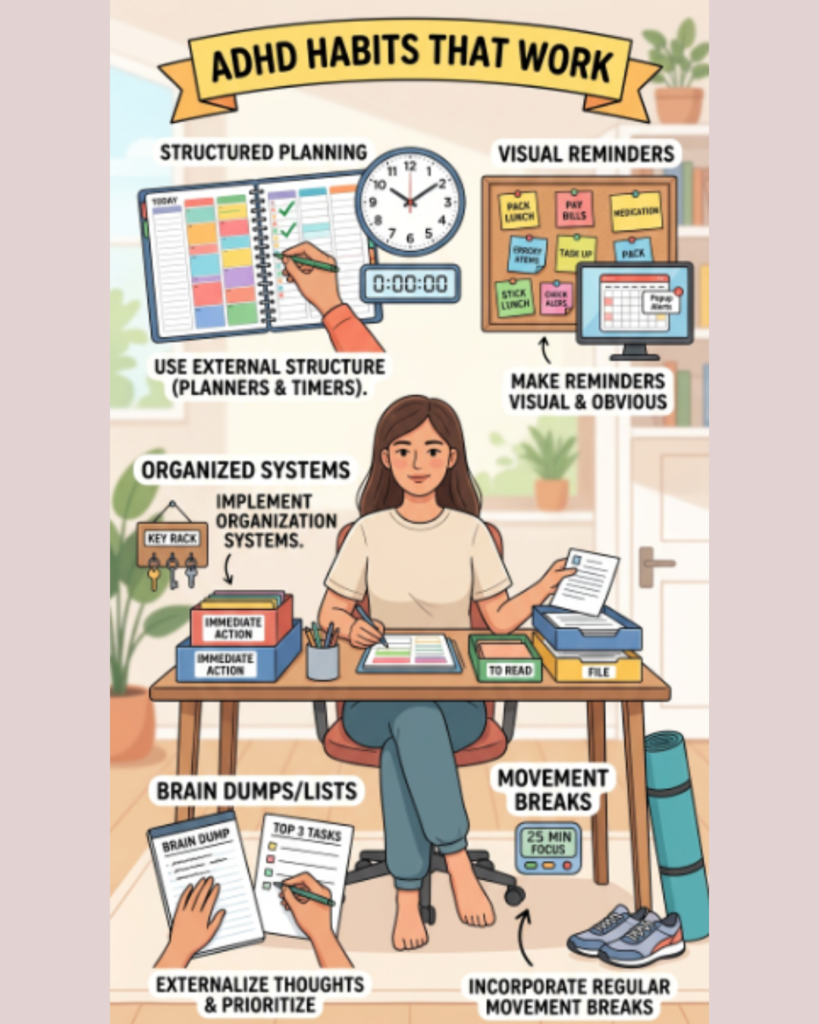
When your brain floods with random thoughts, you quickly write them on a sticky note labeled “Parking Lot” and set it aside.
Why it looks weird: You’re literally parking thoughts instead of dealing with them immediately. Why it works: It clears mental RAM so you can focus on the current task. How to try it: Keep a small notepad or phone note titled “Parking Lot” and dump every stray thought there.
7. Eating or Snacking While Moving
You walk around the house or pace while eating meals or snacks.
Why it looks weird: Most people sit down to eat. Why it works: Movement provides stimulation so your brain doesn’t get bored and wander off mid-meal. How to try it: Turn one daily meal into a “walking snack” around your living space.
8. Creating a “Dopamine Menu” of Quick Rewards
You keep a visible list of 5-minute rewards (pet the dog, watch one funny video, stretch) and pick one when motivation drops.
Why it looks weird: You’re openly bargaining with yourself for basic tasks. Why it works: ADHD brains need frequent dopamine hits to initiate and sustain effort. How to try it: Write a short list of healthy micro-rewards and keep it on your desk or phone.
How to Build These Habits Into Your Daily Routine
Pick just two habits to start with this week.
- Morning: Body doubling + brown noise while you get ready.
- Work blocks: Parking Lot notes + intentional fidgeting.
- Evening wind-down: Visible doom piles + talking tasks out loud.
Track what feels helpful in a simple note on your phone. Add one new habit every 1–2 weeks.
Common Mistakes to Avoid
- Trying all 8 habits at once (overwhelm guaranteed).
- Judging yourself for needing “weird” tricks — they’re valid tools.
- Expecting perfection — these habits support your brain, not replace it.
- Hiding your strategies from supportive people (sharing can reduce shame).
Conclusion
The “weird” ADHD habits that look strange to outsiders are often the very things that make neurodivergent brains thrive. Body doubling, visible piles, self-narration, brown noise, and the rest aren’t signs of dysfunction — they’re clever adaptations that give your brain the stimulation, structure, and dopamine it naturally craves. Start small, be kind to yourself, and experiment until you find the combination that feels like home.
You don’t have to fit into neurotypical systems. These habits let you build systems that fit you. Try just one this week and watch how much easier focus, calm, and productivity can feel. Your ADHD brain is capable of amazing things — sometimes it just needs a few “weird” shortcuts to get there. You’ve got this.