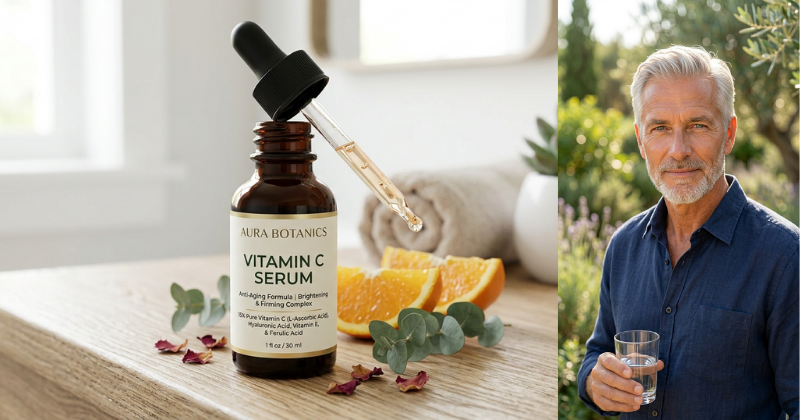
Want brighter, firmer, more youthful skin without invasive treatments? An anti-aging Vitamin C serum could be your game-changer. Vitamin C is one of the most studied, dermatologist-recommended ingredients for boosting collagen, fading dark spots, and improving skin texture — naturally.
If you’re tired of dullness, fine lines, or uneven tone, this guide will show you how Vitamin C works, how to choose a quality serum, how to use it properly, and how to combine it with other ingredients for the best anti-aging results.
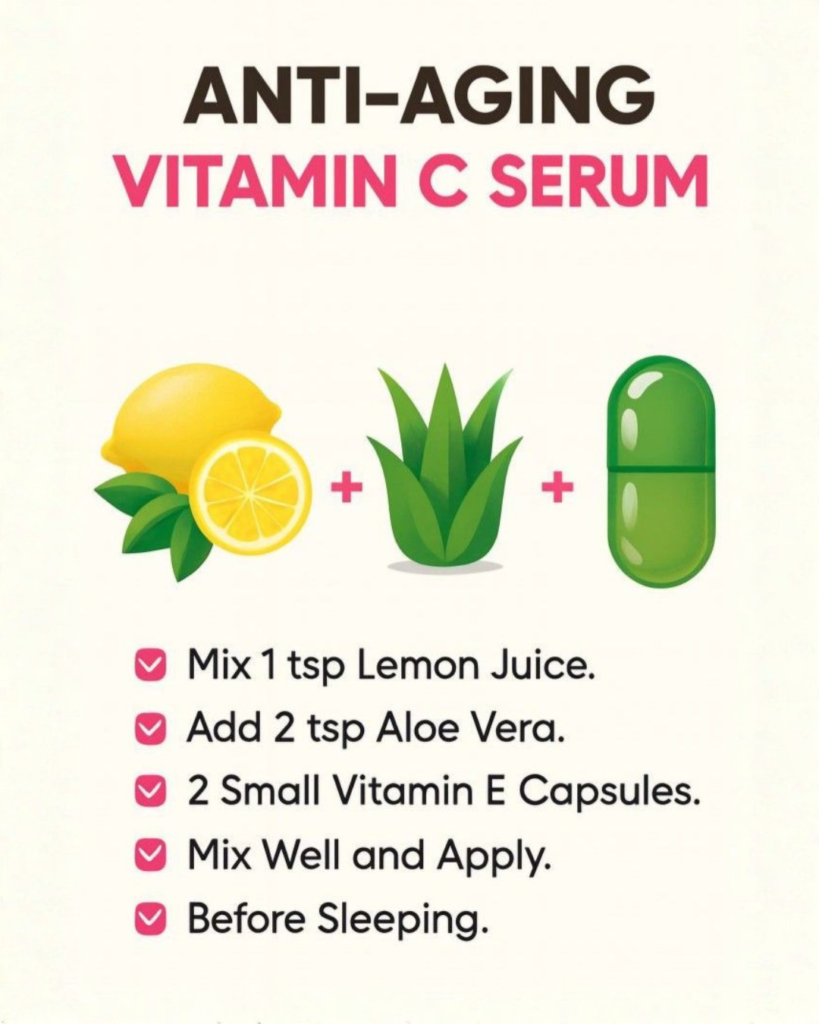
What Makes Vitamin C Great for Aging Skin
Vitamin C is a powerful antioxidant that fights free radicals — unstable molecules that accelerate skin aging. Over time, environmental stressors like UV rays and pollution break down collagen and lead to dullness, pigmentation, and fine lines. Vitamin C helps counteract that damage.
H3: Key Benefits of Vitamin C Serum
- Boosts collagen production to improve firmness
- Reduces dark spots & hyperpigmentation
- Brightens dull, uneven skin tone
- Helps protect against environmental stressors
- Enhances other skincare ingredients
Unlike many treatments that only target surface symptoms, Vitamin C gets to work at a deeper level, supporting long-term skin resilience.
How Vitamin C Works on Aging Skin
H3: Antioxidant Defense
Free radicals from sun exposure and pollution accelerate aging. Vitamin C neutralizes these molecules, reducing oxidative stress and supporting healthier skin over time.
H3: Collagen Support
As we age, collagen production naturally decreases. Vitamin C stimulates fibroblasts — cells responsible for building collagen — helping skin stay firmer and smoother.
H3: Skin Brightening
Vitamin C inhibits melanin production, which helps reduce dark spots, pigmentation, and dullness that can make skin look older.
Together, these actions make Vitamin C a central ingredient in anti-aging skincare.
Choosing the Right Vitamin C Serum
Not all Vitamin C serums are created equal. Here’s what to look for:
H3: Effective Forms of Vitamin C
- L-ascorbic acid: Most studied and powerful, but needs proper formulation
- Magnesium ascorbyl phosphate / sodium ascorbyl phosphate: Gentler, more stable forms
H3: Optimal Concentration
- Beginners: 5–10 % Vitamin C
- Experienced users: 10–20 %
Higher concentrations aren’t always better — they can be irritating if your skin is sensitive.
H3: Stable & Clean Formulation
Vitamin C oxidizes easily (turns yellow/brown). Choose serums in dark glass bottles with air-tight droppers and added stabilizers like vitamin E and ferulic acid for extra effectiveness.
How to Use Vitamin C Serum for Anti-Aging
Using it correctly boosts results and reduces irritation.
H3: Morning Routine (Best Time)
- Cleanse your face
- Apply Vitamin C serum
- Follow with moisturizer
- Finish with broad-spectrum SPF 30+
Vitamin C works even better with sunscreen to protect skin from daily UV stress.
H3: Evening Routine
You can also use it at night, but avoid pairing it with strong exfoliants on the same day to minimize irritation.
H3: Patch Test First
Apply a small amount on your jawline or wrist for 24 hours to ensure your skin tolerates it.
Common Questions & Solutions
H3: Can Vitamin C Cause Irritation?
Some people — especially sensitive skin types — may feel slight tingling at first. If irritation persists:
- Use a lower concentration
- Apply over moisturizer
- Use every other day until skin adapts
H3: Can It Replace Sunscreen?
No. Vitamin C enhances sun protection but does not replace SPF. Always wear sunscreen daily.
H3: How Soon Will I See Results?
- Brightness and hydration: ~2–4 weeks
- Fine lines and texture improvement: ~8–12 weeks
Consistency matters more than speed.
Pairing Vitamin C with Other Ingredients
When used strategically, Vitamin C becomes even more effective.
H3: Works Well With:
- Vitamin E + ferulic acid: Stabilizes and boosts performance
- Hyaluronic acid: Deep hydration and plumpness
- Niacinamide: Barrier support (use at separate times if sensitive)
H3: Avoid Mixing With (Same Time)
- Strong retinoids (use at night instead)
- High-percent AHA/BHA exfoliants
Spacing products across morning/night routines helps reduce irritation and maximizes benefits.
Best Practices for Anti-Aging Results
- Use Vitamin C daily (morning recommended)
- Always pair with SPF
- Maintain gentle cleansing and moisturizing
- Avoid harsh scrubs while using active ingredients
Your skin barrier is the foundation — protect it.
Conclusion: A Simple Step Toward Timeless Skin
An anti-aging Vitamin C serum isn’t just another trend — it’s a science-backed way to fight dullness, support collagen, and brighten your complexion over time. With the right formula used consistently, you can help your skin look firmer, fresher, and more radiant.
Start with a reliable serum, use it with SPF, and give your skin the time it needs to show results.
Healthy skin is a journey — not a sprint.
Important Disclaimer: This article is for informational purposes only and should not replace professional skincare or medical advice. For personalized skin concerns, consult a dermatologist.