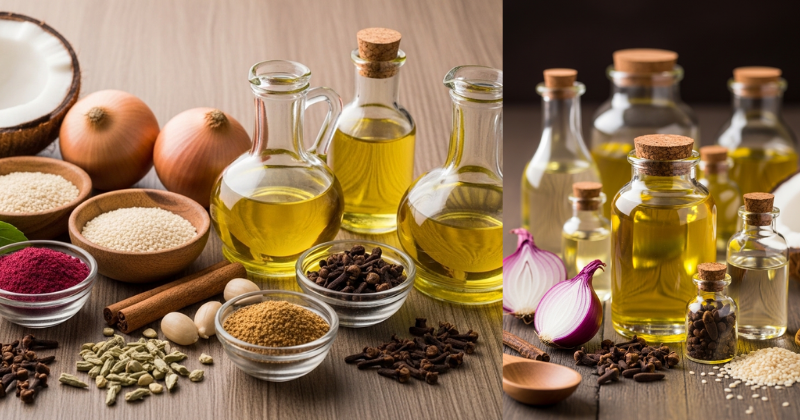
Ayurvedic hair care traditions spanning millennia have consistently emphasized onion and clove as foundational botanical compounds for scalp health and hair growth stimulation — and contemporary dermatological research increasingly validates the biochemical mechanisms underlying these traditional applications. Onion (Allium cepa) delivers organosulfur compounds that modulate follicular blood flow and inhibit the 5-alpha reductase enzyme implicated in androgenetic hair loss, while clove (Syzygium aromaticum) provides eugenol — a phenylpropanoid with documented antimicrobial activity against scalp pathogens and vasodilatory effects that enhance nutrient delivery to follicular papilla cells. This Ayurvedic onion and clove hair growth oil formulation combines these botanicals in a lipid-based delivery system optimized for scalp penetration and sustained follicular contact, representing a sophisticated intersection of traditional phytotherapy and modern trichological science.
The Phytochemical Rationale: Why Onion and Clove Target Hair Growth Mechanisms
Understanding the specific bioactive compounds in onion and clove — and their documented effects on the physiological systems governing hair growth — distinguishes this formulation from folk remedies lacking mechanistic grounding.
Onion’s Sulfur Compounds and Follicular Microcirculation
Onion’s hair growth effects are attributable primarily to its organosulfur compounds, particularly quercetin (a flavonoid antioxidant at approximately 30-50mg per 100g of onion) and a range of sulfur-containing molecules including allicin, S-allylcysteine, and diallyl disulfide. These compounds exert multiple complementary effects on the follicular microenvironment. Research published in the Journal of Dermatology documented significant hair regrowth in alopecia areata patients treated with crude onion juice applied topically twice daily for two months, with regrowth beginning at four weeks and achieving 86.9% of patients showing cosmetically acceptable regrowth by eight weeks — substantially superior to the tap water control group.
The mechanistic basis involves several pathways. Quercetin and other flavonoids in onion improve dermal microcirculation through endothelium-dependent vasodilation mediated by nitric oxide (NO) synthesis — increased blood flow to follicular dermal papilla cells enhances the delivery of oxygen, nutrients, and growth factors essential for the anagen (active growth) phase of the hair cycle. The organosulfur compounds provide sulfur — a structural component of keratin proteins through cysteine and methionine residues — directly supporting the biochemical substrate requirements for hair shaft synthesis.
Additionally, preliminary research suggests onion extract may inhibit 5-alpha reductase, the enzyme that converts testosterone to dihydrotestosterone (DHT) — the androgen primarily responsible for follicular miniaturization in androgenetic alopecia (pattern hair loss). While this mechanism requires further clinical validation, the existing evidence positions onion as a multi-target botanical affecting both follicular blood supply and potentially the hormonal mechanisms driving common hair loss patterns.
Clove’s Eugenol: Antimicrobial and Vasodilatory Dual Action
Clove buds contain 70-90% eugenol (4-allyl-2-methoxyphenol) by weight in the essential oil fraction, making it one of the most eugenol-concentrated natural sources available. Eugenol’s relevance to scalp and hair health operates through two primary mechanisms. First, eugenol demonstrates broad-spectrum antimicrobial activity against bacteria and fungi commonly implicated in scalp conditions — research documents minimum inhibitory concentrations (MICs) for eugenol against Malassezia species (the yeast driving seborrheic dermatitis and dandruff) at 0.5-2%, and against Staphylococcus aureus at similar concentrations.
Scalp inflammation from microbial overgrowth, seborrheic dermatitis, or folliculitis impairs the follicular microenvironment through inflammatory cytokine production that can prematurely shift follicles from anagen to catagen (regression phase), reducing overall hair density over time. Eugenol’s antimicrobial activity addresses this inflammation at its microbial source.
Second, eugenol functions as a peripheral vasodilator through calcium channel antagonism in vascular smooth muscle — the same mechanism that explains clove oil’s traditional use for dental pain (where improved blood flow accelerates healing). Applied to the scalp, this vasodilatory effect complements onion’s microcirculatory improvements, creating redundant pathways for enhanced follicular blood supply. Research in Phytotherapy Research documented significant increases in cutaneous blood flow following topical eugenol application, with effects persisting for 30-60 minutes post-application.
The Carrier Oil Selection: More Than Inert Vehicle
The choice of carrier oil in Ayurvedic hair oil formulations is not cosmetically arbitrary — different carrier oils provide distinct benefits through their fatty acid profiles and minor phytochemical constituents. Coconut oil (traditionally favored in South Asian Ayurvedic practices) penetrates the hair shaft more effectively than most other oils due to its high lauric acid content (approximately 50% of fatty acid composition) — lauric acid’s medium-chain length and linear structure allow it to diffuse into the hair cortex, reducing protein loss during washing and improving hair strength. Sesame oil (traditional in North Indian formulations) provides sesamin and sesamolin — lignans with documented antioxidant activity that protect against UV-induced lipid peroxidation in both scalp skin and hair proteins.
For this formulation, a coconut-sesame oil blend (3:1 ratio) combines coconut’s penetration advantage with sesame’s antioxidant protection, creating a carrier system that serves functional rather than merely diluting purposes.
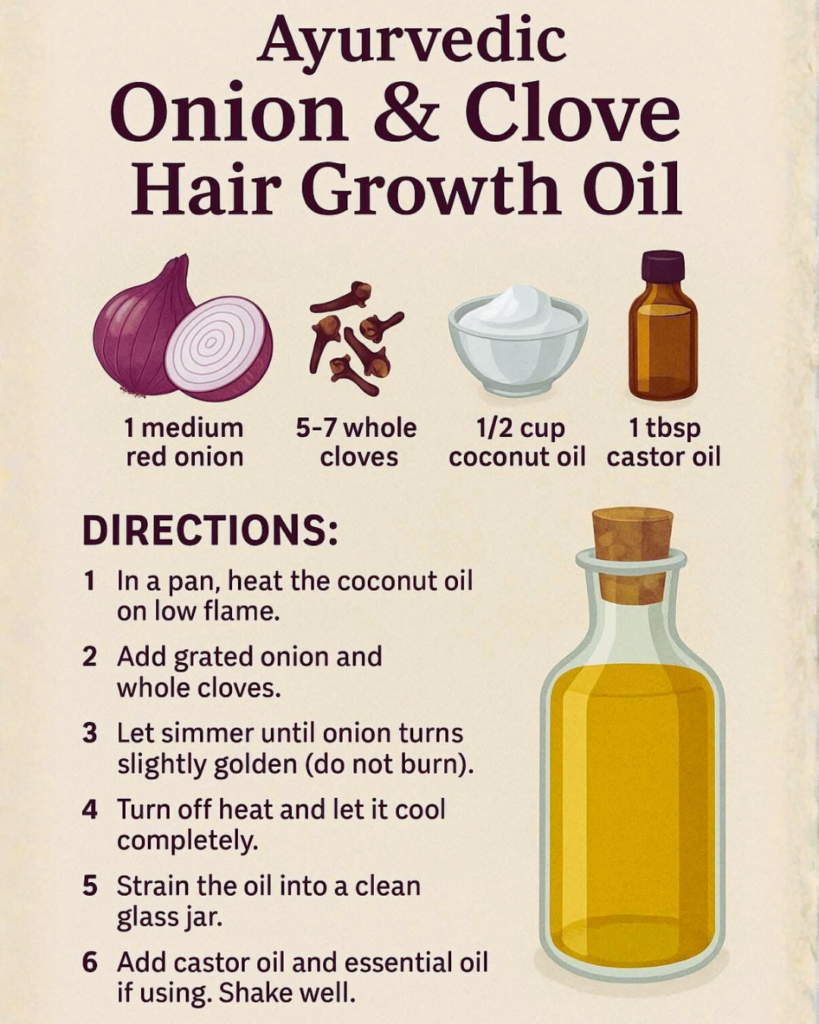
Complete Ayurvedic Onion and Clove Hair Growth Oil Recipe
This formulation produces approximately 200ml of finished oil — sufficient for 8-12 applications depending on hair length and density — using a hot infusion method that maximizes phytochemical extraction while maintaining the structural integrity of heat-sensitive compounds.
Ingredients and Their Proportions
Base ingredients:
- 150ml virgin coconut oil (cold-pressed, unrefined)
- 50ml cold-pressed sesame oil
- 2 medium red onions (approximately 200g total — red onions contain higher quercetin concentrations than yellow or white varieties)
- 2 tablespoons whole cloves (approximately 10-12g)
Optional enhancement botanicals:
- 1 tablespoon fenugreek seeds (Trigonella foenum-graecum — contains diosgenin, a phytoestrogen with preliminary hair growth evidence)
- 5-6 curry leaves (Murraya koenigii — traditional Ayurvedic hair tonic containing beta-carotene and proteins)
- 1 teaspoon black cumin seeds (Nigella sativa — thymoquinone content provides additional antimicrobial and anti-inflammatory activity)
Preparation Protocol: Hot Infusion Method
Step 1: Onion preparation and juice extraction. Peel and coarsely chop the red onions. Extract juice using a juicer, blender followed by straining through cheesecloth, or manual grating followed by squeezing. You should obtain approximately 100-120ml of onion juice from 200g of onions. Reserve both the juice and the pulp — the pulp contains fiber-bound quercetin that will extract during the oil infusion.
Step 2: Combine all ingredients in heavy-bottomed saucepan. Add coconut oil and sesame oil to your saucepan. Add the onion juice, onion pulp, whole cloves, and optional enhancement botanicals (fenugreek, curry leaves, black cumin). The mixture will appear heterogeneous at this stage — the aqueous onion juice and lipid oils won’t integrate until heating drives moisture evaporation.
Step 3: Slow heating and water evaporation (critical step). Place the saucepan over the lowest possible heat setting. The objective is gentle heating that evaporates the water content of the onion juice while extracting oil-soluble phytochemicals from the onions, cloves, and botanicals — but without reaching temperatures that degrade heat-sensitive compounds. Maintain temperature between 80-100°C (use a cooking thermometer for precision if available). Stir occasionally. You’ll observe vigorous bubbling initially as water evaporates — this will gradually diminish over 45-60 minutes as moisture content decreases.
Critical safety note: Never leave heating oil unattended. Keep a lid nearby to smother any potential oil ignition. If oil begins smoking, temperature is too high — immediately reduce heat.
Step 4: Completion indicator. The oil is ready when bubbling stops almost completely (indicating water evaporation is complete), the onion pieces and botanicals appear crispy and brown, and the oil has darkened to a rich amber color. Total heating time typically ranges from 60-90 minutes depending on the initial moisture content and heat intensity.
Step 5: Straining and storage. Remove from heat and allow to cool for 10-15 minutes until warm but no longer hot. Strain through multiple layers of cheesecloth or a fine mesh strainer into a clean, dark glass bottle. Dark glass protects against light-induced oxidation of the oil’s unsaturated fatty acids and phytochemicals. Label with the preparation date. Store in a cool, dark location. Properly prepared and stored, this oil remains stable for 3-4 months.
Application Protocol for Maximum Follicular Benefit
The efficacy of any topical hair growth treatment depends critically on application technique — specifically, ensuring the treatment reaches the scalp and follicles rather than coating only the hair shaft where growth-stimulating compounds provide no benefit.
Pre-Application Scalp Preparation
Begin with dry hair and scalp — applying to wet hair dilutes the oil and reduces scalp contact. If the scalp has significant product buildup, a clarifying shampoo wash 24 hours before treatment removes surface oils and styling residue that would otherwise prevent the treatment oil from contacting the scalp directly. Part hair into multiple sections (4-6 sections for medium-density hair, 8-10 for high-density hair) using hair clips, exposing the scalp surface systematically.
Direct Scalp Application Technique
Warm approximately 2-3 tablespoons (30-45ml) of the oil preparation by placing the bottle in a bowl of hot water for 3-5 minutes — slightly elevated temperature (approximately 35-40°C) improves the oil’s spreadability and may enhance absorption through increased scalp blood flow. Using your fingertips or a dropper applicator, apply the oil directly onto the scalp along each part line, working systematically from front to back. The goal is complete scalp coverage, not hair shaft saturation.
The Critical Massage Component
Once the scalp is covered with oil, massage using the pads of your fingers (not fingernails) with small, firm circular motions for 10-15 minutes. This massage serves two essential functions: mechanically it distributes the oil across the scalp surface and potentially into follicular openings; physiologically it stimulates scalp blood flow through mechanical pressure and possibly through neurogenic mechanisms. Research documents that scalp massage alone (independent of any topical preparation) increases hair thickness through mechanical stretching of follicular dermal papilla cells that upregulates hair cycle genes.
Contact Time and Removal
Allow the oil to remain on the scalp for a minimum of 2 hours for meaningful phytochemical absorption — overnight application (6-8 hours) is optimal if tolerable. Cover hair with a shower cap or towel to prevent oil transfer to bedding. Remove with two shampooing cycles: the first emulsifies and removes the bulk of the oil, the second cleanses remaining residue. Use lukewarm water, not hot, which can strip natural scalp lipids excessively. A final dilute apple cider vinegar rinse (1 tablespoon vinegar in 1 cup water) helps remove any remaining oil and restores scalp pH.
Treatment Frequency and Timeline
For active hair growth support, apply 2-3 times weekly. For scalp health maintenance and hair quality improvement, once weekly suffices. Realistic expectations about timeline are essential: the hair growth cycle means follicles stimulated into anagen won’t produce visible hair for 6-8 weeks, and measurable density changes require 3-4 months of consistent application. The biological timeline cannot be accelerated — persistence through this period is what distinguishes successful from abandoned treatment attempts.
Advanced Formulation Variations for Specific Conditions
The Anti-DHT Enhancement for Androgenetic Hair Loss
For individuals specifically addressing androgenetic alopecia (male or female pattern hair loss) where DHT-mediated follicular miniaturization is the primary mechanism, enhancing the base formula with saw palmetto extract provides additional 5-alpha reductase inhibition. Add 1 teaspoon of saw palmetto berry powder during the infusion process — saw palmetto’s liposterolic extract contains fatty acids and phytosterols that inhibit both type 1 and type 2 isoforms of 5-alpha reductase, potentially providing broader DHT suppression than finasteride’s type 2 selectivity.
The Anti-Inflammatory Variation for Scalp Conditions
For scalp environments complicated by seborrheic dermatitis, psoriasis, or folliculitis, adding neem leaves (Azadirachta indica — 8-10 fresh leaves or 2 tablespoons dried) during the infusion provides azadirachtin and nimbidin — compounds with documented anti-inflammatory activity through inhibition of prostaglandin synthesis and inflammatory cytokine production. Turmeric root (1/2 teaspoon powder) adds curcumin’s NF-κB inhibiting anti-inflammatory activity. This variation addresses the inflammatory component that can impair follicular function independently of direct hair growth stimulation.
Troubleshooting and Safety Considerations
Managing the Characteristic Onion Odor
The organosulfur compounds providing onion’s therapeutic benefits also produce its distinctive odor — a practical obstacle that causes some users to abandon the treatment prematurely. Several mitigation strategies reduce odor intensity. Thorough rinsing with the apple cider vinegar solution neutralizes sulfur compound residues more effectively than shampoo alone. Adding 10-15 drops of rosemary or lavender essential oil to the finished oil formulation masks onion odor with more pleasant aromatics without compromising efficacy. Applying the treatment before bed and shampooing in the morning minimizes daytime odor exposure.
If odor remains problematic despite these measures, reducing the onion quantity by half (using 1 medium onion instead of 2) while maintaining the clove and other botanicals preserves much of the formulation’s benefit with substantially reduced odor intensity.
Assessing and Managing Scalp Sensitivity
Eugenol in clove oil can produce irritation or sensitization in a small percentage of users, typically manifesting as scalp redness, itching, or tingling that persists beyond the immediate post-application period. Always perform a patch test before first use: apply a small amount of the finished oil to the inner forearm, cover with a bandage, and monitor for 24 hours. Absence of redness or itching indicates tolerance. If scalp irritation occurs during use, reduce the clove quantity by half for the next batch. Persistent irritation despite reduced clove concentration indicates individual intolerance — discontinue use and consider alternative formulations.
When to Seek Professional Assessment
Home botanical treatments are appropriate for mild to moderate hair thinning where no underlying medical condition is suspected. Sudden, rapid hair loss (telogen effluvium), patchy hair loss (alopecia areata), hair loss accompanied by scalp scarring or scaling, or failure to respond to consistent home treatment over 6 months warrants dermatological evaluation. These patterns may indicate conditions requiring medical diagnosis and treatment — autoimmune alopecia, nutritional deficiencies, thyroid dysfunction, or cicatricial (scarring) alopecias where delayed treatment can result in permanent follicular destruction.
Integrating Ayurvedic Hair Oil With Comprehensive Hair Health Practices
Topical preparations achieve maximum results when integrated within a broader hair health strategy addressing the multiple factors influencing hair growth and quality. Nutritional adequacy for protein (hair is 95% keratin protein), iron (essential for ferritin stores that correlate with hair growth rate), zinc, biotin, and silica supports the biochemical substrate requirements for hair synthesis. Stress management preserves the HPA axis regulation that when dysregulated can prematurely shift follicles from anagen to telogen. Sleep quality supports the nocturnal growth hormone pulses that influence daytime follicular activity. These systemic factors interact with topical treatments synergistically — optimal results emerge from addressing both.
Conclusion
The Ayurvedic onion and clove hair growth oil represents a sophisticated phytotherapeutic formulation whose traditional application is increasingly validated by contemporary trichological research. Onion’s quercetin and organosulfur compounds improve follicular microcirculation and potentially inhibit 5-alpha reductase, while clove’s eugenol provides antimicrobial and vasodilatory effects that create a healthier follicular environment. Prepare the formulation through careful hot infusion that extracts bioactive compounds while preserving their activity, apply with the direct scalp technique and massage protocol that ensures follicular delivery, and maintain consistent use through the 3-4 month timeline that hair biology requires for visible density changes. This is not a rapid cosmetic fix but a genuine, mechanism-based approach to supporting the physiological processes underlying healthy hair growth.
Important Disclaimer: This article is for informational purposes only and should not replace professional advice. For significant or sudden hair loss, consult healthcare providers or dermatologists to rule out underlying medical conditions. Individual results may vary, and personal circumstances should always be considered. Always perform patch tests before applying new topical preparations.