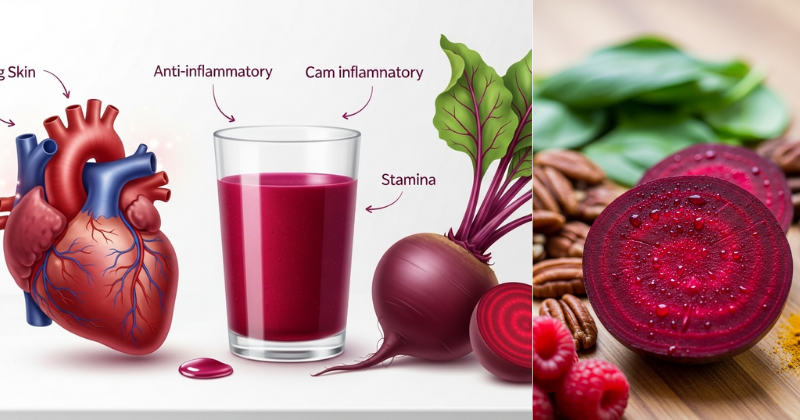
Discover the powerful beetroot health benefits, from improved heart health to glowing skin, and learn why this vibrant root deserves a place on your plate.
Have you ever walked past beets at the grocery store and wondered if they’re really worth adding to your meals? That deep red color is more than just beautiful — it’s a sign of powerful nutrients working behind the scenes. Beetroot health benefits go far beyond basic nutrition. This humble root supports heart health, boosts stamina, improves digestion, and even enhances skin glow.
If you’re looking for a simple, natural way to upgrade your diet, beetroot might be the missing piece. In this guide, you’ll discover how beetroot works inside your body, how to use it effectively, common mistakes to avoid, and practical ways to enjoy it daily. Let’s unlock the potential of this powerful root.
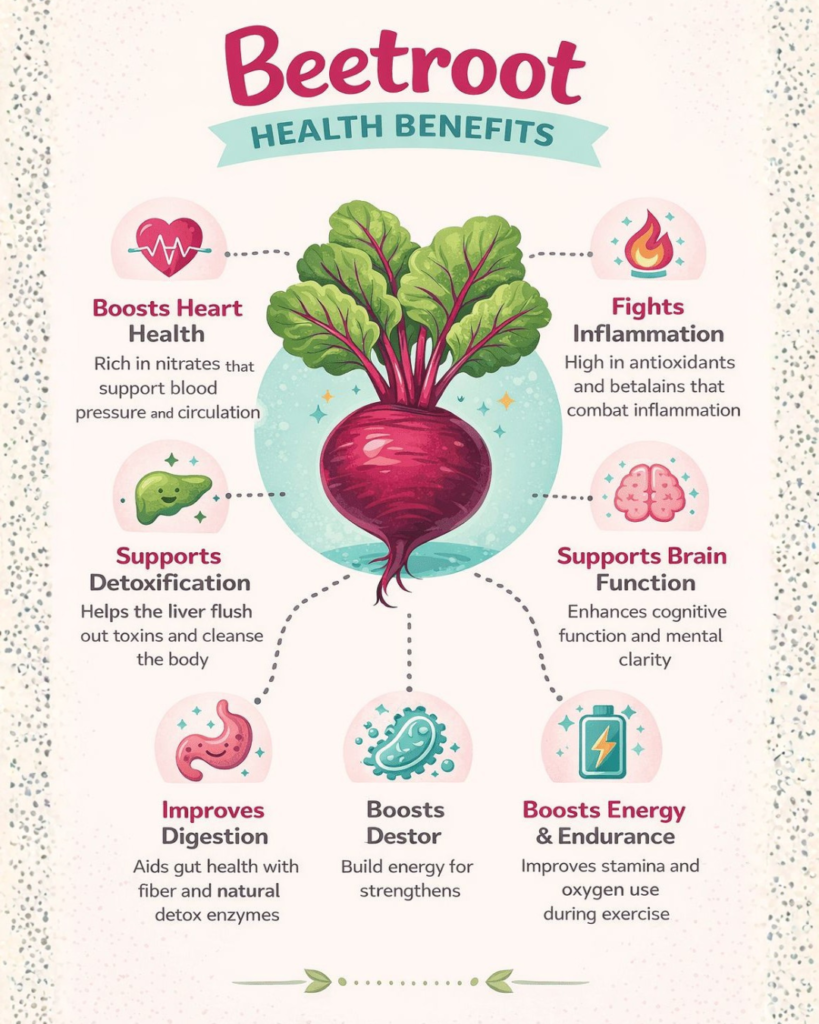
What Makes Beetroot So Powerful?
Before diving into specific beetroot health benefits, it helps to understand what makes this vegetable so special.
Beetroot is rich in:
- Natural nitrates
- Antioxidants (especially betalains)
- Fiber
- Folate (Vitamin B9)
- Potassium
- Vitamin C
These nutrients work together to support multiple systems in your body.
Natural Nitrates and Blood Flow
Beetroot is especially known for its high nitrate content. When you eat beets, your body converts nitrates into nitric oxide.
Nitric oxide helps:
- Relax and widen blood vessels
- Improve circulation
- Support healthy blood pressure
Better blood flow means better oxygen delivery to your muscles and organs.
Antioxidants for Cellular Protection
The deep red-purple color of beetroot comes from betalains. These antioxidants help reduce oxidative stress in the body.
Lower oxidative stress supports:
- Healthy aging
- Reduced inflammation
- Better skin appearance
Fiber for Digestive Health
One cup of beetroot provides a solid amount of fiber. Fiber helps regulate digestion and supports gut bacteria, which play a key role in overall wellness.
Top Beetroot Health Benefits You Should Know
Now let’s explore the most important beetroot health benefits in detail.
1. Supports Heart Health
One of the most researched beetroot health benefits is its impact on heart health.
Studies suggest that dietary nitrates from vegetables like beetroot may help support healthy blood pressure levels. Improved circulation reduces strain on the heart and promotes cardiovascular balance.
If you’re already exploring anti-inflammatory foods or heart-healthy meal plans, beetroot fits perfectly into that lifestyle.
2. Boosts Energy and Exercise Performance
Many athletes drink beetroot juice before workouts. Why?
Because nitric oxide improves oxygen delivery to muscles. This may:
- Enhance endurance
- Reduce fatigue
- Improve workout efficiency
If you ever feel tired during exercise, adding beetroot to your routine might help support stamina naturally.
3. Promotes Digestive Health
Fiber plays a major role in maintaining a healthy gut.
Beetroot supports:
- Regular bowel movements
- Healthy gut bacteria
- Reduced bloating
If you’re working on improving digestion — perhaps alongside high-fiber foods or chia seed water — beetroot can complement that plan.
4. Supports Detox Pathways
Your liver is responsible for detoxification. Beetroot contains compounds that support liver function and bile production.
While your body naturally detoxifies itself, nutrient-rich foods like beetroot help optimize this process.
5. Enhances Skin Glow
Healthy circulation means better nutrient delivery to skin cells.
Combined with antioxidants and hydration, beetroot may contribute to:
- Brighter skin
- Improved elasticity
- Reduced dullness
When paired with a balanced diet and proper skincare, this root vegetable becomes a powerful ally.
How to Add Beetroot to Your Diet (Step-by-Step Guide)
Understanding beetroot health benefits is great — but how do you actually eat it?
Let’s make it simple.
Fresh Beetroot Options
You can enjoy beetroot:
- Raw (grated in salads)
- Roasted
- Steamed
- Blended into smoothies
- Juiced
Simple Roasted Beetroot Recipe
- Wash and peel 2–3 beets
- Cut into cubes
- Toss with olive oil and a pinch of salt
- Roast at 200°C (400°F) for 30–40 minutes
Roasting enhances natural sweetness.
Beetroot Juice
Beet juice is popular for performance benefits.
To make:
- 1 medium beet
- 1 carrot
- ½ lemon
- Water as needed
Blend and strain if desired.
Drink 1–2 hours before exercise for potential stamina support.
Beetroot Powder
If you prefer convenience, beetroot powder is another option. It blends easily into smoothies or water.
Look for products without added sugar or fillers.
Advanced Strategies to Maximize Beetroot Health Benefits
Once you start incorporating beetroot, you can optimize results.
Pair with Vitamin C-Rich Foods
Vitamin C improves iron absorption from plant foods. Combine beetroot with:
- Lemon
- Oranges
- Bell peppers
This enhances nutrient uptake.
Combine with Leafy Greens
Beetroot + spinach or arugula = powerful nitrate synergy.
This combination may amplify circulation benefits.
Use It in Balanced Meals
Instead of isolating beetroot as a “superfood fix,” integrate it into:
- Grain bowls
- Mediterranean-style salads
- Smoothie bowls
Sustainable habits create sustainable results.
Common Questions About Beetroot Health Benefits
Does Beetroot Lower Blood Pressure?
Research suggests that beetroot may help support healthy blood pressure due to its nitrate content, which improves blood vessel function.
However, results vary from person to person.
Can You Eat Beetroot Every Day?
Yes, moderate daily consumption is generally safe for most people. A small serving (½–1 cup) is typically enough to gain benefits.
Why Does Urine Turn Pink After Eating Beets?
This condition is called beeturia. It’s harmless and occurs due to natural pigments in beetroot.
Common Mistakes to Avoid
Even healthy foods can be misunderstood.
Overconsuming Beetroot Juice
Juice is concentrated. Drinking large amounts may cause digestive discomfort.
Stick to moderate servings.
Ignoring Balance
Beetroot is powerful — but it’s not magic.
True health comes from:
- Balanced meals
- Physical activity
- Proper hydration
- Sleep
Forgetting Variety
Rotate beetroot with other anti-inflammatory vegetables like turmeric, leafy greens, and cruciferous vegetables.
Variety ensures broader nutrient coverage.
Maximizing Long-Term Benefits
To truly benefit from beetroot health benefits, consistency is key.
Create a Weekly Plan
For example:
- Monday: Beet salad
- Wednesday: Beet smoothie
- Friday: Roasted beet bowl
Simple planning increases adherence.
Combine with Healthy Lifestyle Habits
Pair beetroot intake with:
- Regular movement
- Strength training
- Adequate sleep
- Stress management
When your circulatory and digestive systems are supported, results multiply.
Listen to Your Body
Everyone responds differently. Monitor how you feel — energy levels, digestion, skin appearance — and adjust accordingly.
Who Should Be Cautious?
While beetroot is generally safe, some individuals should be mindful:
- People prone to kidney stones (beets contain oxalates)
- Individuals with low blood pressure
- Those on specific medications
If you have medical conditions, consult a healthcare provider before making major dietary changes.
Conclusion: A Small Root with Big Impact
Beetroot health benefits are impressive — from heart support and stamina enhancement to digestive balance and glowing skin. This vibrant root proves that powerful nutrition doesn’t have to be complicated or expensive.
By adding beetroot to your weekly routine, you support circulation, nourish your cells, and invest in long-term wellness. Start simple. Roast it. Blend it. Toss it into a salad.
Over time, these small, consistent choices transform your health from the inside out.
Your plate is powerful. Use it wisely.
Important Disclaimer: This article is for informational purposes only and should not replace professional advice. For health-related topics, consult healthcare providers. Individual results may vary, and personal circumstances should always be considered when implementing any suggestions.