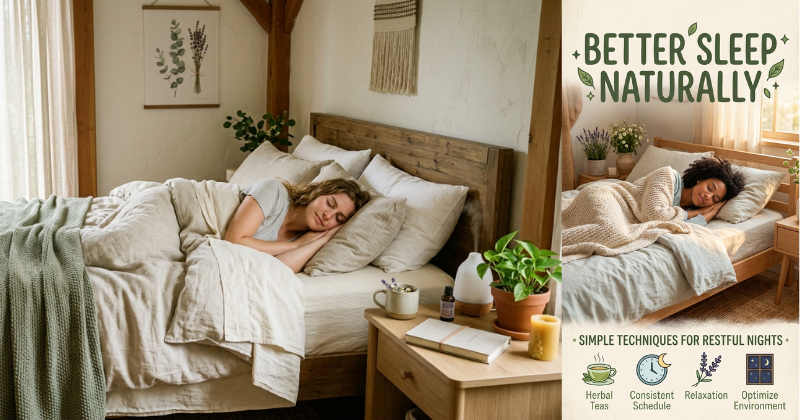
Discover how to achieve Better Sleep Naturally: 8 Habits That Actually Work. Master your circadian rhythm and unlock deep, restorative rest for a vibrant life today!
Have you ever spent a night tossing and turning, watching the minutes tick away on your alarm clock while your mind races with tomorrow’s to-do list? We have all been there, and we know exactly how it feels to drag through the next day in a fog of fatigue. Sleep isn’t just a luxury; it is the vital foundation of your physical and mental health. The good news is that you don’t need a medicine cabinet full of aids to fix it. By focusing on Better Sleep Naturally: 8 Habits That Actually Work, you can recalibrate your body’s internal clock and wake up feeling truly refreshed.
In this comprehensive guide, we are going to dive deep into sustainable, science-backed lifestyle changes that transform your relationship with rest. We will move beyond basic “sleep hygiene” and explore how your daily nutrition, movement, and environment create a symphony of relaxation. Whether you are a lifelong night owl or a stressed professional, these eight habits are designed to be achievable and empowering. Get ready to unlock your body’s natural potential for healing and vitality. You have the capability to reclaim your nights and transform your days!
Foundation: Understanding Your Internal Clock
To build confidence in your new sleep routine, it is essential to understand the “why” behind the “how.” Your body operates on a 24-hour cycle known as the circadian rhythm. This internal clock is primarily influenced by light and temperature.
The Power of Melatonin and Cortisol
Your brain produces melatonin, the “sleep hormone,” when darkness falls. Conversely, it produces cortisol, the “alertness hormone,” when the sun rises. When these are in balance, you fall asleep easily and wake up energized. However, modern life—with its blue light from screens and late-night snacking—often throws this delicate balance out of whack. If you’ve been learning about the [PINK GINGER METABOLISM BOOSTER], you already know how chemical signals drive your body’s performance; sleep is no different.
Addressing Common Hesitations
Many people hesitate to change their sleep habits because they feel they “just aren’t built for early mornings” or they believe their insomnia is permanent. Reassurance comes from the fact that the human body is remarkably adaptable. By focusing on gradual progress and supportive, non-judgmental changes, you can achieve better sleep without feeling like you are fighting your own nature.
Key Components of Restorative Sleep
- Consistency: Going to bed and waking up at the same time every day.
- Environment: Creating a “sleep sanctuary” that is dark, cool, and quiet.
- Nutrition: Eating foods that support neurotransmitter production.
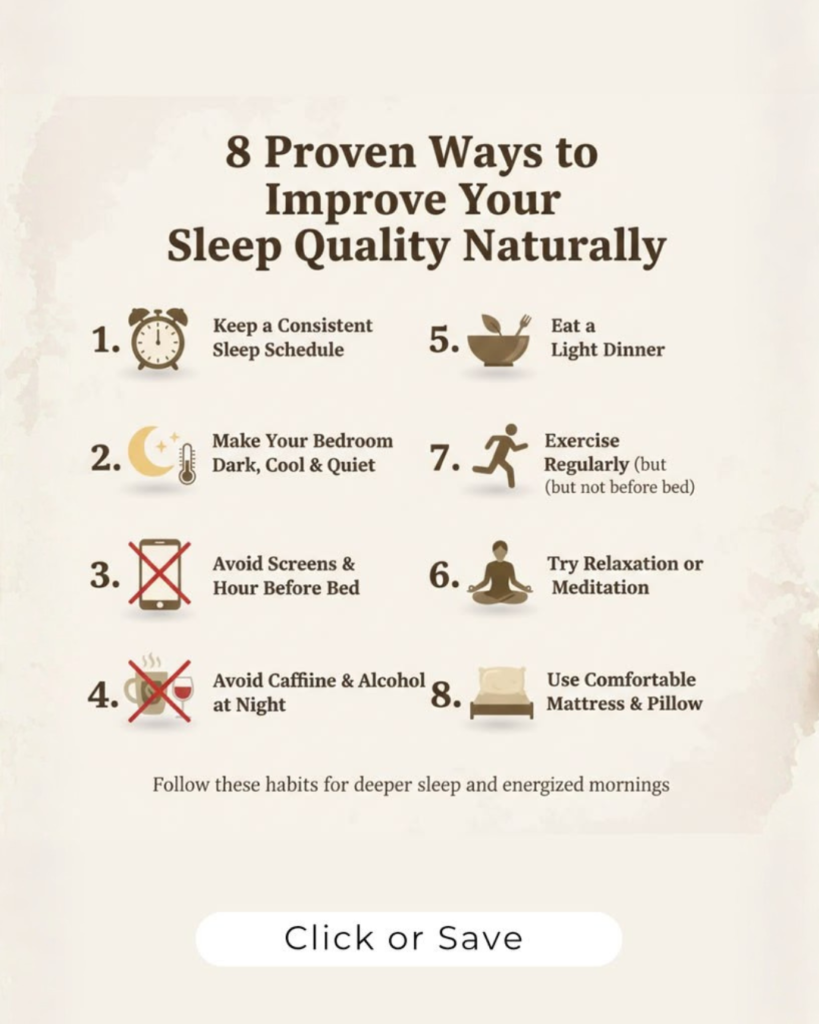
Step-by-Step Process: The 8 Habits for Success
Breaking down the path to better sleep into manageable steps makes the transformation feel exciting rather than overwhelming. Use these core methods to reset your system.
1. Harness Morning Light
How does morning sunlight improve sleep?
Exposure to bright, natural light within 30 minutes of waking up tells your brain to stop producing melatonin and start the countdown for tonight’s sleep cycle. It sets a “timer” for melatonin production to begin roughly 14 hours later.
- Practical Tip: Step outside for 10 minutes or sit by a sunny window while you enjoy your morning tea.
2. Dim the Digital World
Blue light from phones and tablets mimics sunlight, tricking your brain into staying awake.
- Actionable Step: Use a “digital sunset” rule. Turn off all screens 60 minutes before bed. This is a great time to apply the [2-Minute DIY Mist for Dry, Thirsty Hair (Aloe & Rosewater)] and indulge in some tech-free self-care.
3. Master Your Bedroom Temperature
Your body temperature needs to drop by about two degrees to initiate deep sleep.
- The Process: Set your thermostat to around 65°F (18°C). If you get cold feet, wear socks—this actually helps dilate blood vessels and radiates heat away from your core, cooling you down internally.
4. Optimize Your “Sleep Nutrition”
What you eat throughout the day dictates your nighttime chemistry.
- The Method: Focus on magnesium-rich foods like spinach and almonds. Magnesium is known as the “relaxation mineral.” You might also find that knowing [how red, green, and yellow apples support your bones] helps you choose snacks that provide steady energy without the sugar crashes that keep you awake at night.
5. Establish a “Power Down” Ritual
Your brain needs a bridge between the chaos of the day and the stillness of the night.
- Shortcuts: Try 5 minutes of journaling or reading a physical book. This signals to your nervous system that it is safe to relax.
6. Move Your Body Daily
Physical activity increases the “sleep drive”—the biological need for rest.
- Timing Consideration: Try to finish vigorous workouts at least 3 hours before bed so your core temperature has time to drop.
7. Limit Caffeine and Alcohol
Caffeine can stay in your system for up to 8 hours, while alcohol, though it makes you feel sleepy, disrupts the REM cycle, leaving you exhausted the next day.
- Expert Insight: Swap your late-afternoon coffee for a [PINK GINGER METABOLISM BOOSTER] if you need a natural zing without the jitters.
8. Use Natural Aromatherapy
Scents like lavender and cedarwood can trigger the parasympathetic nervous system.
- Practical Application: Use a lavender spray on your linens or place a sachet of dried herbs near your pillow.
Advanced Strategies: Pro Tips for Deep Rest
Once you have established the basics, you can share in expert-level insights to further customize your approach and maximize your results.
The “4-7-8” Breathing Technique
This is a creative solution for a racing mind. Inhale for 4 seconds, hold for 7, and exhale slowly for 8. This rhythmic breathing acts as a natural tranquilizer for the nervous system, forcing your heart rate to slow down.
Strategic Supplementation
While we focus on whole foods, some find success with herbal supports like Valerian root or Passionflower. Always ensure you are sourcing pure, organic versions. If you are already doing a [DETOXIFY YOUR BODY THROUGH YOUR FEET] soak, you can add magnesium flakes to the water to absorb the minerals through your skin before bed.
Experimentation and Personal Adaptation
Not every habit works for every person. Some people thrive on a 9:00 PM bedtime, while others are most productive if they sleep from midnight to 8:00 AM. The key is to discover your own rhythm and stick to it consistently, even on weekends.
Troubleshooting: Common Sleep Challenges
Address frequent obstacles with these practical solutions and maintain your motivational momentum.
“I can’t stop thinking about my work once I’m in bed.”
- The Solution: Keep a “worry lamp” or a notepad by your bed. Write down everything you are thinking about and tell yourself, “It is on the paper, so I don’t have to hold it in my head.” This provides immediate relief and prevents setbacks.
“My environment is too noisy to sleep.”
- The Solution: Invest in a white noise machine or a fan. Constant, low-level sound masks unpredictable noises like traffic or neighbors, helping you stay in deep sleep longer.
“I wake up at 3:00 AM and can’t get back to sleep.”
- The Preventive Measure: This is often a sign of a blood sugar dip. Ensure your dinner includes healthy fats and complex carbs. Avoid the “worst foods” mentioned in our [14 Best and Worst Foods for Your Liver] guide, as a stressed liver can also wake you up during the night.
Maximizing Results: Sustainable Growth
Achieving better sleep naturally is a journey, not a destination. To build upon your basic success, consider these long-term maintenance tips.
Complementary Lifestyle Strategies
Your sleep quality is the result of your entire 24-hour day. Use a [Homemade Lemon and Lilac Sugar Scrub] in a warm evening shower to physically and aromatically prepare your body for rest. The warm water helps your core temperature drop once you step out, which is a perfect biological trigger for sleep.
Inspiring Continued Learning
As you begin to feel the benefits of being well-rested—better mood, sharper focus, and more energy—use that momentum to explore other areas of wellness. Perhaps you’re ready to try [8 YOGA POSES TO STRENGTHEN YOUR CORE] now that you aren’t too tired to exercise!
Sustainable Maintenance
Don’t be discouraged by a single bad night. If you slip up and stay out late or have a sugary dessert, simply return to your 8 habits the next day. The capability to succeed lies in your consistency over time, not in being perfect every single night.
Conclusion
Embracing Better Sleep Naturally: 8 Habits That Actually Work is one of the most transformative takeaways you can implement for your health. You have discovered that by managing light, temperature, and nutrition, you can unlock a level of restorative rest that no pill can replicate. These habits are your tools to reclaim your energy and live a more empowered, vibrant life.
You have the capability to succeed and transform your nights starting this evening. Remember, the journey to wellness is built on small, sustainable steps. Pick one habit from this list—perhaps dimming the lights an hour before bed—and start tonight. Your body and mind will thank you with the deep, peaceful sleep you deserve. Achieve your best self, one night at a time!
Would you like me to create a “Sleep Sanctuary Checklist” to help you optimize your bedroom environment today?
Important Disclaimer: This article is for informational purposes only and should not replace professional advice. For health-related topics, consult healthcare providers. For financial or legal matters, seek qualified professional guidance. For safety procedures, verify current best practices and local regulations. Individual results may vary, and personal circumstances should always be considered when implementing any suggestions.