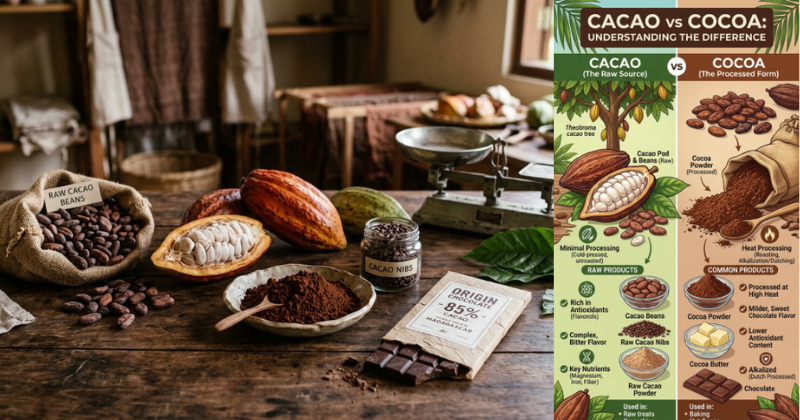
Chocolate lovers often hear the words cacao and cocoa—and many assume they’re the same. They do come from the same bean, but the difference lies in how they’re processed, how they taste, and how they’re used in recipes.
Understanding this helps you choose the right one for your baking, smoothies, and DIY wellness drinks, and ensures you get the benefits you’re looking for.
This guide breaks down what cacao is, what cocoa is, how they’re made, their benefits, and when to use each one.
What Is Cacao?
Cacao refers to the raw, minimally processed version of the cacao bean. It usually comes in three forms:
- Cacao nibs
- Cacao powder
- Cacao butter
How It’s Made
Cacao beans are:
- Harvested
- Fermented
- Dried
- Cold-pressed or ground at low temperatures
Because cacao is not exposed to high heat, it retains more of its natural compounds, including:
- Antioxidants
- Flavonoids
- Magnesium
- Trace minerals
Flavor Profile
Cacao has a strong, bitter, earthy taste—not the typical smooth sweetness of chocolate. This flavor makes it popular in:
- Smoothies
- Healthy desserts
- Raw energy balls
- Hot cacao drinks
What Is Cocoa?
Cocoa is the heated, processed version of cacao. It also comes in two forms:
- Regular cocoa powder
- Dutch-processed cocoa (alkalized for milder taste)
How It’s Made
Cocoa beans are:
- Roasted at high heat
- Processed to remove fats
- Ground into powder
Because of heat, cocoa may lose some antioxidants but gains that classic chocolate aroma and flavor we all know.
Flavor Profile
Cocoa is:
- Smoother
- Less bitter
- More chocolatey
This makes it perfect for:
- Cakes
- Cookies
- Brownies
- Hot chocolate mixes
Cacao vs Cocoa: Key Differences
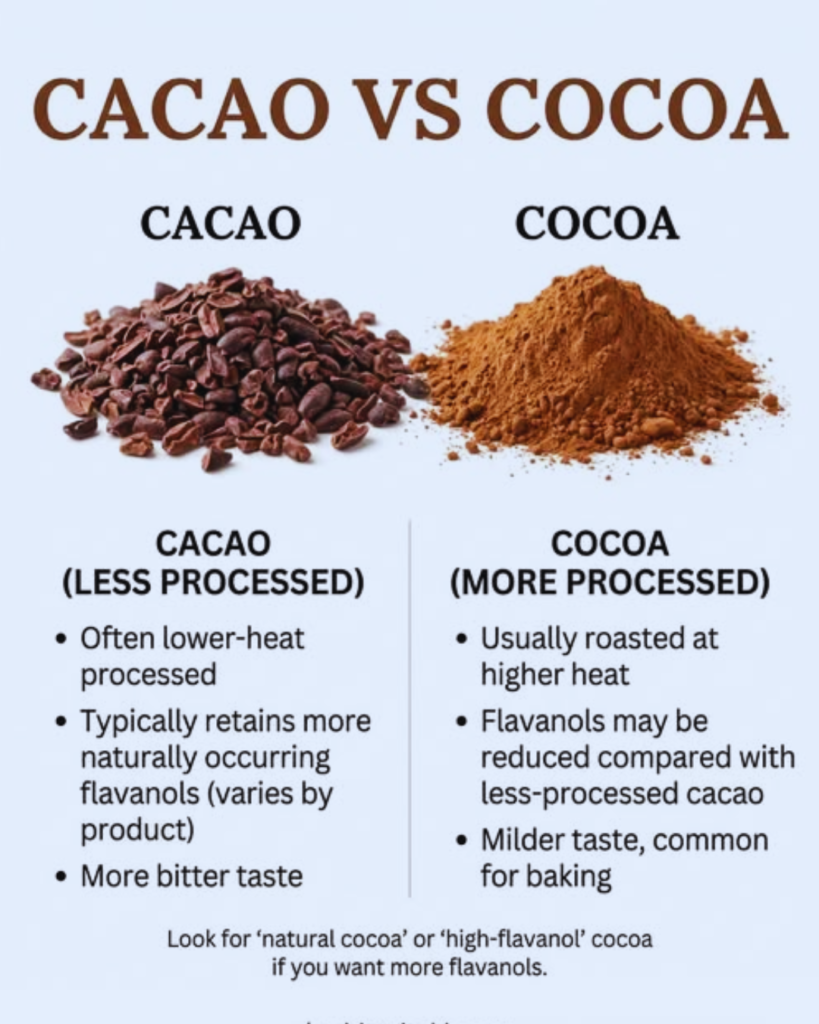
1. Processing
- Cacao: Raw, low heat, minimal processing
- Cocoa: High heat, more processed
2. Nutrient Retention
- Cacao generally keeps more minerals and antioxidants
- Cocoa still has benefits, just slightly reduced due to heat
3. Taste
- Cacao: Bitter and intense
- Cocoa: Smooth and rich
4. Price
- Cacao tends to be more expensive
- Cocoa is more affordable and common in stores
5. Usage
- Cacao: Healthy desserts, raw recipes, smoothies
- Cocoa: Baking, hot chocolate, classic chocolate desserts
Benefits of Cacao
Because it’s less processed, cacao may provide:
- Natural antioxidants
- Magnesium (supports muscles and mood)
- Iron
- Flavonoids for circulation
It’s popular in wellness drinks because of its natural mood-boosting compounds like theobromine.
Benefits of Cocoa
Even though it’s heated, cocoa still offers:
- A rich flavor perfect for baking
- Comforting warmth in hot drinks
- Some antioxidants
- A more budget-friendly option
Dutch-processed cocoa mixes best with baking recipes due to its smoother pH level.
Which One Should You Use?
Choose Cacao If:
- You want a less processed ingredient
- You’re making smoothies or raw desserts
- You enjoy intense chocolate flavor
Choose Cocoa If:
- You’re baking
- You want classic chocolate flavor
- You prefer smoother, sweeter desserts
You can use either—just adjust sweetness and taste depending on your recipe.
How to Use Each One
Cacao
- Add 1–2 tsp to smoothies
- Make a warm cacao drink with milk of your choice
- Mix into oat bowls or yogurt
Cocoa
- Use in muffins, brownies, cakes
- Make classic hot chocolate
- Add to frostings or chocolate sauces
Conclusion
Cacao and cocoa come from the same bean, but the processing changes everything—from taste to nutrients to how they perform in recipes.
If you want something nutrient-dense and raw, choose cacao.
If you want smooth, rich chocolate flavor, cocoa is your best friend.
Both can add amazing depth to your recipes—you just need to pick the one that fits your purpose.