
Cats are known for being naturally clean animals. They spend a large portion of their day grooming themselves by licking their fur and removing dirt or loose hair. However, even though cats maintain their own cleanliness, they still benefit from a few basic hygiene practices that support their health and comfort.
Proper cat hygiene involves more than occasional grooming. It includes maintaining clean fur, trimming nails, caring for ears and teeth, and keeping the litter box sanitary. A consistent routine helps prevent common issues such as matting, unpleasant odors, and infections.
This guide explains essential cat hygiene tips and simple habits that help keep your cat healthy and your home cleaner.
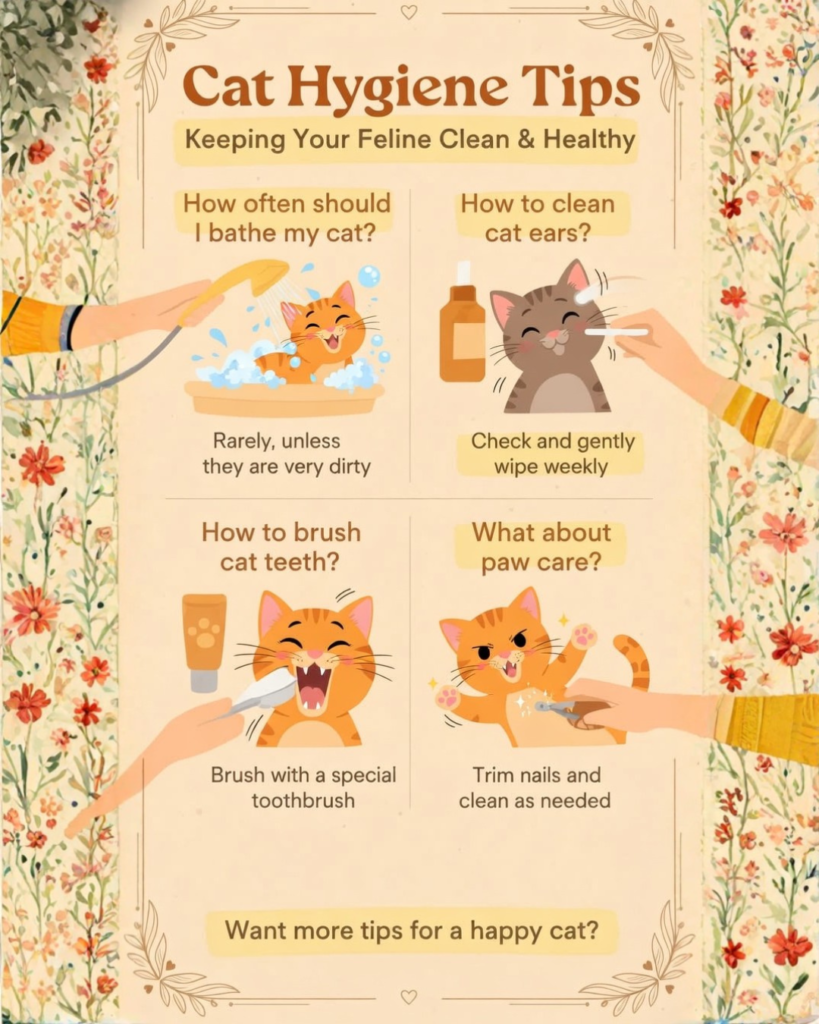
Why Cat Hygiene Is Important
Good hygiene helps protect cats from several potential problems.
These include:
- Skin irritation
- Parasites such as fleas
- Ear infections
- Dental issues
- Litter box-related health problems
Maintaining proper hygiene also helps reduce shedding and allergens in the home while making your cat more comfortable.
How Often Should You Brush Your Cat?
Brushing is one of the simplest and most effective hygiene habits for cats.
Regular brushing helps:
- Remove loose hair
- Prevent fur matting
- Reduce shedding
- Distribute natural skin oils
Brushing Frequency
The ideal brushing schedule depends on the type of fur.
Short-haired cats
2–3 times per week
Long-haired cats
Daily brushing is often recommended to prevent tangles and mats.
Regular brushing can also reduce the amount of hair cats swallow while grooming, which may help limit hairballs.
Do Cats Need Baths?
Most cats keep themselves clean and rarely require baths.
However, there are situations where bathing may be helpful:
- If the cat gets into something sticky or dirty
- When treating certain skin conditions recommended by a veterinarian
- For elderly cats that struggle to groom themselves
When bathing a cat:
- Use warm water
- Use a shampoo formulated for cats
- Dry gently with a towel
Human shampoos should not be used on cats because they may irritate the skin.
Nail Care and Trimming
Cat nails grow continuously and may require trimming to prevent overgrowth.
Long nails can:
- Scratch furniture or people
- Get caught in fabrics
- Cause discomfort when walking
Nail Trimming Tips
Trim the sharp tip of the nail carefully, avoiding the pink area called the quick.
Many cats benefit from nail trimming every 2–4 weeks depending on growth rate.
Providing scratching posts also helps cats maintain their nails naturally.
Ear Cleaning and Care
Cat ears should normally appear clean and free from strong odors.
Signs that ears may need attention include:
- Dark debris inside the ear
- Excess scratching
- Redness or irritation
If ear cleaning is needed, use a veterinarian-approved ear cleaner and gently wipe the outer ear with cotton.
Never insert objects deep into the ear canal.
Dental Hygiene for Cats
Dental care is often overlooked but plays an important role in feline health.
Plaque buildup can lead to gum disease and other oral issues.
Ways to support cat dental hygiene include:
- Dental treats designed for cats
- Special dental diets recommended by veterinarians
- Brushing with cat-safe toothpaste if the cat tolerates it
Regular veterinary checkups can also include dental evaluations.
Litter Box Hygiene
A clean litter box is essential for both the cat and the household environment.
Cats are sensitive to dirty litter boxes and may avoid using them if they are not cleaned regularly.
Basic Litter Box Routine
Scoop waste daily.
Replace litter completely and wash the box approximately once per week.
Use mild soap and water when cleaning the box, avoiding strong chemical cleaners that may deter the cat.
Managing Shedding and Hairballs
Cats naturally shed fur, especially during seasonal changes.
Brushing regularly helps remove loose hair before it spreads around the house or is swallowed during grooming.
Other helpful tips include:
- Providing a balanced diet
- Keeping cats hydrated
- Maintaining a regular grooming routine
These habits may help reduce hairballs and improve coat health.
Creating a Comfortable Grooming Routine
Cats respond best to gentle and consistent routines.
Helpful strategies include:
- Starting grooming when cats are young if possible
- Keeping sessions short and calm
- Offering treats afterward
- Using grooming tools designed for cats
Positive experiences make cats more comfortable with grooming over time.
Conclusion
Although cats are naturally clean animals, basic hygiene care still plays an important role in maintaining their health and comfort. Regular brushing, nail trimming, ear care, dental hygiene, and litter box maintenance all contribute to a cleaner and healthier environment for both cats and their owners.
By establishing a simple hygiene routine and observing any changes in your cat’s behavior or appearance, it becomes easier to support your cat’s well-being and prevent potential health problems.
Consistent care helps ensure that your cat remains comfortable, healthy, and happy throughout its life.