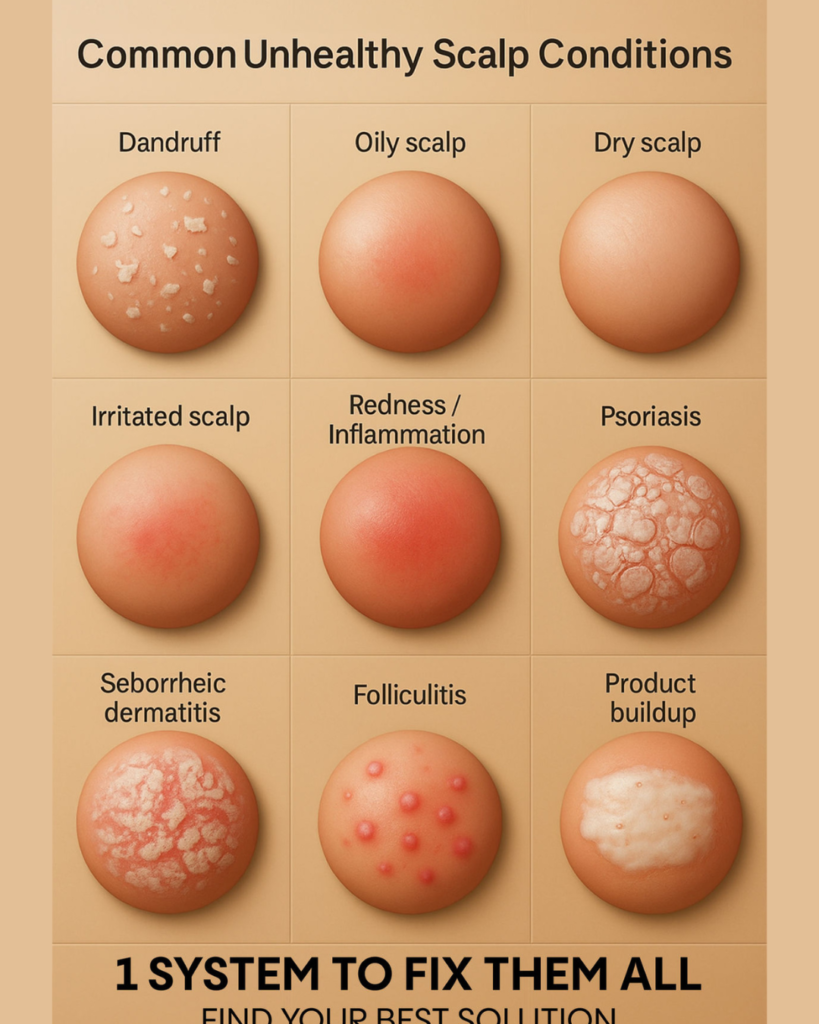
Common Unhealthy Scalp Conditions 1 SYSTEM TO FIX THEM ALL: Discover how to resolve dandruff, itchiness, and thinning with a simple, evidence-based routine.
Important Disclaimer: This article is for informational purposes only and should not replace professional advice. For health-related topics, consult healthcare providers. Individual results may vary, and personal circumstances should always be considered when implementing any suggestions.
Have you ever found yourself checking your shoulders for “snow” before a big meeting, or felt a persistent itch that just won’t quit? You are not alone. Most of us focus entirely on the hair we can see, completely forgetting the “soil” from which it grows. When you ignore your scalp, you invite a host of issues ranging from embarrassing flakes to significant thinning. But here is the exciting news: you don’t need a dozen different products to achieve a transformation. By understanding Common Unhealthy Scalp Conditions 1 SYSTEM TO FIX THEM ALL, you can streamline your routine and unlock the vibrant, healthy hair you’ve always wanted.
In this comprehensive guide, we are going to dive into the science of scalp health. You will discover how to identify your specific condition and, more importantly, how to implement a single, cohesive system to resolve it. You have the capability to reclaim your confidence and achieve a professional-level scalp reset at home. Let’s get started on this journey to a healthier you!
Foundation: Identifying Common Unhealthy Scalp Conditions
Before we fix the problem, we must understand the “why” behind it. Most scalp issues stem from an imbalance in the microbiome—the delicate ecosystem of bacteria and fungi living on your skin.
The Trio of Trouble: Dandruff, Seborrheic Dermatitis, and Dryness
While they all result in flakes, they are not the same. Dandruff is often caused by an overgrowth of a yeast-like fungus called Malassezia. Seborrheic dermatitis is a more inflammatory version of this, often appearing oily and yellow. Conversely, a dry scalp is simply a lack of moisture, much like dry skin on your elbows. Understanding these Common Unhealthy Scalp Conditions is the first step toward [sustainable wellness changes].
Why One System Works
You might wonder how one system can fix both an oily, fungal issue and a dry, flaky one. The secret lies in homeostasis. Whether your scalp is too oily or too dry, the goal is to return it to a neutral, balanced state. By following a methodical approach, you provide your skin with the tools it needs to regulate itself. This is an essential concept for [achieving long-term hair health].
Key Components of Scalp Health
- pH Balance: The scalp is naturally slightly acidic (around 5.5).
- Follicle Clarity: Removing buildup from products and dead skin.
- Circulation: Ensuring nutrients reach the hair root.
Step-by-Step: The Universal Scalp Reset System
Ready to transform? This system breaks down complex dermatological needs into manageable steps. Follow this process once or twice a week to see powerful results.
1. The Mechanical Detox (Exfoliation)
Just as you exfoliate your face, your scalp needs help removing dead cells.
- The Method: Use a silicone scalp massager or your fingertips in circular motions before washing.
- The Benefit: This physically breaks up the “biofilm” that protects harmful fungi and clears the way for active ingredients to work.
2. The Targeted Cleanse
The “system” relies on a two-wash method.
- Wash One: Use a clarifying shampoo to remove surface dirt and oils.
- Wash Two: Apply a treatment shampoo containing ketoconazole, salicylic acid, or zinc pyrithione. Let it sit for 3–5 minutes. This “dwell time” is crucial for the active ingredients to penetrate.
3. The Rebalancing Rinse
After washing, the scalp’s pH can be disrupted.
- The Shortcut: Use a diluted Apple Cider Vinegar (ACV) rinse (1 part ACV to 4 parts water).
- The Result: This flattens the hair cuticle and restores the acid mantle, making it harder for “bad” bacteria to thrive. This is a classic [home tip for shiny hair] that also serves a medical purpose.
Advanced Strategies: Pro Tips for Scalp Longevity
Once you have the basics down, you can share expert-level insights to customize your approach and build upon your initial success.
The Power of Topical Essential Oils
Scientific research has shown that certain oils, like Rosemary and Peppermint, can be as effective as some pharmaceutical treatments for stimulating blood flow. Mix two drops into a carrier oil like Jojoba—which mimics your scalp’s natural sebum—and massage it in. This is a great way to [discover the benefits of natural oils for thinning hair].
Nutritional Support from Within
Your scalp is an organ, and it requires specific nutrients to thrive. Biotin, Zinc, and Omega-3 fatty acids are the building blocks of healthy skin cells. Incorporating these into your diet helps you [achieve a holistic wellness transformation] that starts at the cellular level.
Pro-Tip: The “Cool Down” Rule
Inflammation is the enemy of hair growth. Avoid washing your hair with scalding hot water, which strips the natural protective barrier. Finish your shower with a cool rinse to soothe the skin and reduce redness. This is an achievable, cost-saving tip that yields immediate comfort.
Troubleshooting: Common Challenges and Solutions
Even with a great system, you might face some hurdles. Here is how to handle them with encouragement.
“My scalp feels tighter and itchier after washing.”
- The Solution: You might be over-cleansing.
- The Fix: If you have a dry scalp, reduce the treatment shampoo to once a week and follow up with a scalp-specific conditioner or a [DIY aloe vera mask]. Reassurance: It takes time for your oil glands to recalibrate.
“I’m seeing more hair shedding during the massage.”
- The Advice: Don’t panic!
- The Reality: These are hairs that were already in the “telogen” (falling out) phase. Mechanical massage simply clears them out to make room for new growth. You are not causing hair loss; you are making space for health.
“The flakes came back after three days.”
- The Strategy: Persistence is key. Fungal biofilms are stubborn. Stick to the Common Unhealthy Scalp Conditions 1 SYSTEM TO FIX THEM ALL for at least four weeks. Consistency is what separates those who achieve results from those who don’t.
Maximizing Results: Next Level Maintenance
To ensure your scalp remains a healthy environment for years to come, consider these long-term lifestyle integrations.
Stress and the Scalp Connection
Cortisol, the stress hormone, can trigger oil production and inflammation. Practicing [stress-management techniques] like meditation or deep breathing can actually improve your dandruff. When your internal environment is calm, your external environment follows suit.
Product Selection Savvy
Avoid products with heavy silicones or “dimethicone” near the roots. These create a plastic-like seal that traps bacteria. Opt for “non-comedogenic” scalp care. This empowers you to [unlock the full potential of your hair growth].
Featured Snippet: How do I get rid of an unhealthy scalp?
To get rid of an unhealthy scalp, follow a three-step system: 1. Mechanically exfoliate with a scalp brush to remove buildup. 2. Use a medicated shampoo containing zinc or ketoconazole, allowing it to sit for 5 minutes. 3. Restore the pH balance with a diluted apple cider vinegar rinse. Consistent application of this system addresses dandruff, oiliness, and inflammation simultaneously.
Conclusion
Mastering Common Unhealthy Scalp Conditions 1 SYSTEM TO FIX THEM ALL is a game-changer for your confidence and hygiene. You have discovered that you have the capability to succeed in transforming a problematic scalp into a healthy foundation for hair growth. By simplifying your approach and focusing on balance rather than “harsh cleaning,” you achieve a level of scalp health that commercial products alone can’t provide.
You’ve got this! Start your first mechanical exfoliation tonight and feel the immediate difference in your scalp’s ability to “breathe.”