
Nutrition advice is everywhere, and many diet “rules” spread quickly online. While some guidelines are helpful, others can be confusing or overly strict without strong evidence behind them.
Understanding which rules may not be necessary can help people build more balanced and realistic eating habits.
Here are some diet rules that are often misunderstood or exaggerated.
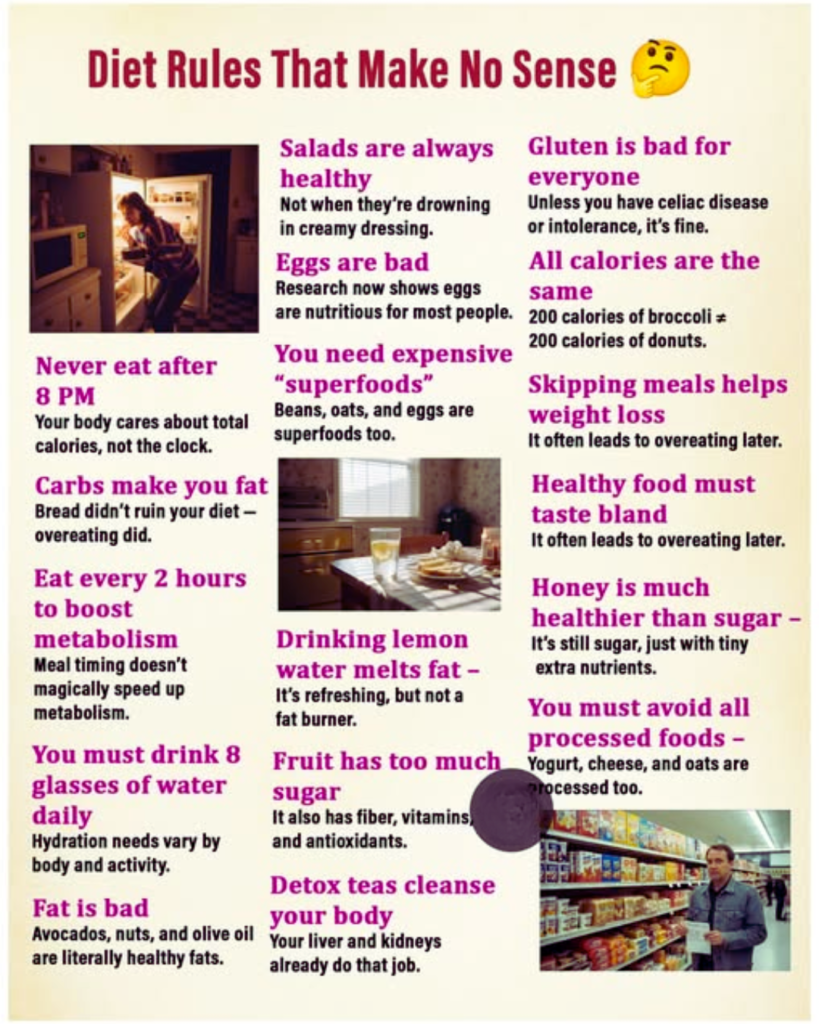
“Never Eat After 8 PM”
One common rule says eating after a certain time automatically leads to weight gain.
In reality, the body processes calories throughout the day. What often matters more is total daily intake, food choices, and lifestyle habits, rather than a strict clock time.
Late-night eating can become problematic if it leads to excessive snacking or poor food choices, but the time itself isn’t the only factor.
“Carbs Are Always Bad”
Carbohydrates are often blamed for weight gain, but not all carbs are the same.
Whole foods like:
- Oatmeal
- Brown Rice
- Sweet Potato
provide fiber and nutrients that support a balanced diet.
Highly processed foods are different from whole carbohydrates, which can be part of healthy meals.
“Fat Makes You Fat”
Dietary fat used to be widely avoided, but research has shown that certain fats are important for the body.
Healthy fats found in foods such as:
- Avocado
- Olive Oil
- Almond
play roles in nutrient absorption and overall health when consumed in balanced amounts.
“You Must Drink Detox Drinks”
Many detox diets promise to “cleanse” the body through special drinks or strict food plans.
However, the body already has natural detoxification systems, mainly through the liver and kidneys. A balanced diet, hydration, and healthy lifestyle habits generally support these systems.
“You Should Always Skip Snacks”
Snacking sometimes gets a negative reputation, but it depends on the type and portion.
Balanced snacks like fruit, yogurt, or nuts can help maintain energy levels between meals.
For example:
- Greek Yogurt
- Apple
- Walnut
can be convenient options.
“All Calories Are Exactly the Same”
While calories measure energy, the nutritional quality of foods also matters.
For instance, a meal with vegetables, protein, and whole grains provides different nutrients than highly processed foods with the same calorie amount.
Food quality and balance often play important roles in nutrition.
Focus on Sustainable Habits
Instead of strict rules, many nutrition experts encourage focusing on long-term habits such as:
- Eating a variety of whole foods
- Staying hydrated
- Including fruits and vegetables daily
- Maintaining regular meal patterns
- Paying attention to portion sizes
These habits are usually easier to maintain than restrictive diet rules.
Conclusion
Many diet rules circulating online oversimplify nutrition or ignore how individual needs differ. Rules like avoiding all carbs, skipping snacks, or never eating late at night may not apply to everyone.
Building balanced eating habits and focusing on whole foods often provides a more practical and sustainable approach to nutrition.