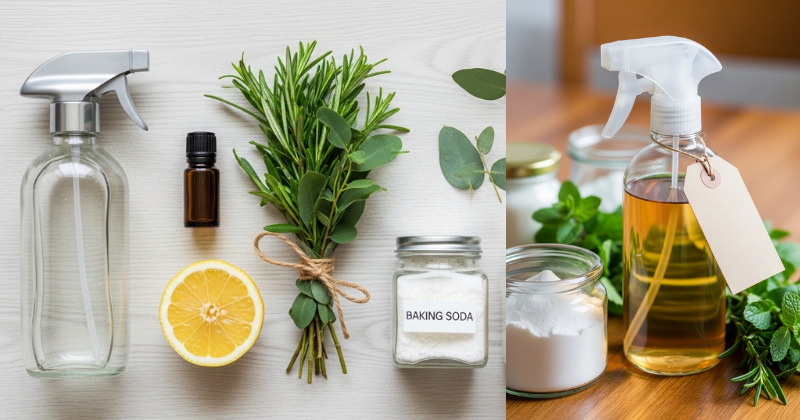
Transform your home with DIY natural cleaning products for a green home. Discover safe, affordable, and eco-friendly recipes that truly work.
Have you ever sprayed a cleaner and immediately held your breath? That sharp chemical smell might make your home feel “clean,” but it doesn’t always feel healthy. The good news? You don’t need harsh products to achieve sparkling results.
DIY natural cleaning products for a green home allow you to clean effectively while protecting your indoor air, your family, and the planet. With just a few simple ingredients—many already in your kitchen—you can create powerful, eco-friendly solutions that cut grease, remove stains, and freshen every room.
In this complete guide, you’ll learn how to make natural cleaning products step by step, discover pro tips for better results, and troubleshoot common problems. Ready to clean smarter, safer, and greener? Let’s dive in.
Why Choose DIY Natural Cleaning Products for a Green Home?
Before you grab your mixing bowl, let’s understand why this shift matters.
Many conventional cleaners contain synthetic fragrances, ammonia, chlorine, and other strong chemicals. According to environmental health research, indoor air can sometimes be more polluted than outdoor air—especially after cleaning with harsh products.
DIY natural cleaning products for a green home offer:
- Fewer harsh fumes
- Lower environmental impact
- Reduced plastic waste
- Cost savings over time
- Greater control over ingredients
And here’s the best part: they actually work when used correctly.
The Core Ingredients You’ll Need
You don’t need a long shopping list. Start with these basics:
- White vinegar
- Baking soda
- Castile soap
- Lemon juice
- Essential oils (optional for scent)
- Hydrogen peroxide (for disinfecting certain surfaces)
These ingredients form the foundation of most eco-friendly cleaning recipes.
Tools That Make It Easy
To stay organized and efficient, keep:
- Reusable spray bottles (glass preferred)
- Microfiber cloths
- Measuring cups
- Labels for each bottle
Labeling is essential. It keeps your routine safe and simple.
Step-by-Step Recipes: Make Your Own Natural Cleaning Products
Now let’s get practical. Here are easy recipes you can make in minutes.
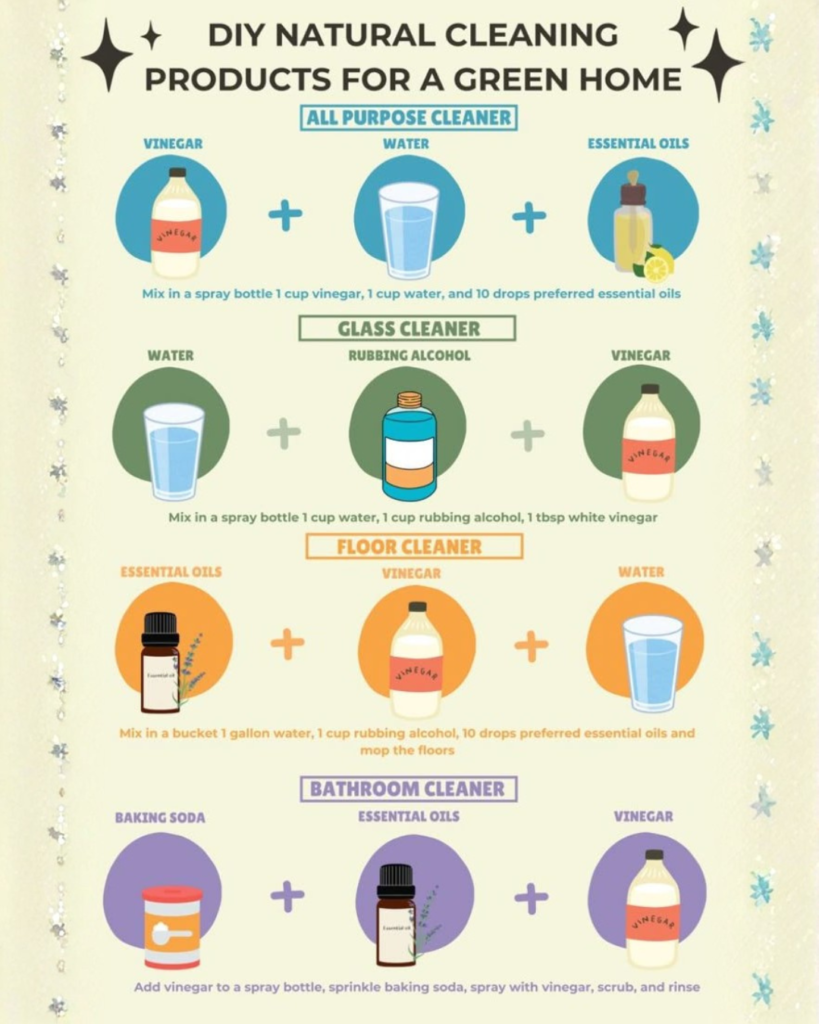
1. All-Purpose Cleaner (Kitchen & Bathroom)
This is your everyday hero.
Ingredients:
- 1 cup white vinegar
- 1 cup water
- 10–15 drops lemon or tea tree essential oil (optional)
Instructions:
- Mix in a spray bottle.
- Shake gently before use.
- Spray and wipe with a microfiber cloth.
This solution works beautifully on countertops, sinks, and tiles. Avoid using vinegar on natural stone like granite or marble.
2. Natural Glass Cleaner
Want streak-free shine? Try this.
Ingredients:
- 1 cup water
- 1 cup vinegar
- 1 tablespoon cornstarch
Shake well before each use. Spray lightly and wipe with a lint-free cloth for crystal-clear windows and mirrors.
3. DIY Bathroom Scrub
For tubs and grout, you need something stronger.
Ingredients:
- ½ cup baking soda
- 2–3 tablespoons castile soap
- A splash of water
Mix into a paste. Apply with a sponge and scrub gently. Rinse thoroughly.
Advanced Green Cleaning Strategies
Once you’re comfortable with basic recipes, it’s time to level up your DIY natural cleaning products for a green home routine.
H3: Disinfecting Without Harsh Chemicals
Many people ask: Do natural cleaners really disinfect?
Vinegar cleans well but is not a registered disinfectant. For stronger sanitizing:
- Use 3% hydrogen peroxide on non-porous surfaces
- Allow it to sit for at least 1 minute before wiping
This method is effective for cutting boards and bathroom surfaces.
H3: Seasonal Deep Cleaning
Spring and fall are perfect times for a deep eco-clean.
Focus on:
- Mattress refreshing (sprinkle baking soda, vacuum after 30 minutes)
- Refrigerator cleaning with baking soda solution
- Oven cleaning using baking soda paste overnight
Pair this with other sustainable habits like decluttering or learning how to create a zero-waste kitchen setup.
H3: Scent Without Synthetic Fragrance
If you love a fresh-smelling home:
- Simmer lemon slices and rosemary on the stove
- Add essential oils to reusable wool dryer balls
- Use dried lavender sachets in drawers
You get a naturally fresh scent without artificial chemicals.
Common Challenges When Making Natural Cleaning Products
Let’s be honest—switching to eco-friendly cleaning can come with learning curves.
“It Doesn’t Feel As Strong”
Commercial cleaners often rely on scent to signal “power.” Natural products may smell milder, but that doesn’t mean they aren’t effective.
Tip: Allow solutions to sit for a few minutes before wiping. Dwell time increases cleaning power.
“Grease Is Hard to Remove”
For stubborn grease:
- Use hot water.
- Add a few drops of castile soap.
- Sprinkle baking soda directly on tough spots.
Heat and mild abrasion make a huge difference.
“My House Doesn’t Smell Like Store-Bought Cleaners”
That “clean” scent is usually synthetic fragrance.
Instead:
- Open windows regularly
- Diffuse natural essential oils
- Keep indoor plants for natural air freshness
Over time, you’ll associate clean with neutral, fresh air—not perfume.
How to Maximize Results with DIY Natural Cleaning Products for a Green Home
Ready to take your green cleaning to the next level?
Create a Weekly Cleaning Schedule
Consistency beats marathon cleaning sessions.
- Monday: Kitchen surfaces
- Wednesday: Bathrooms
- Friday: Floors and dusting
- Weekend: Laundry and deep tasks
Small, regular efforts make your home easier to maintain.
Store Smart and Stay Safe
Even natural cleaning products require care.
- Never mix vinegar and hydrogen peroxide together
- Avoid mixing vinegar with baking soda in closed containers
- Keep products out of reach of children and pets
Safety first—always.
Reduce Waste Even Further
To truly embrace a green home:
- Use washable cloths instead of paper towels
- Refill bottles instead of buying new ones
- Compost lemon peels after use
You can also explore related topics like eco-friendly laundry tips, sustainable home organization ideas, and DIY air fresheners for a fully green lifestyle.
What Are the Best Ingredients for DIY Natural Cleaning Products?
The best ingredients for DIY natural cleaning products for a green home are:
- White vinegar (cuts grease and removes mineral buildup)
- Baking soda (gentle abrasive and deodorizer)
- Castile soap (plant-based cleanser)
- Hydrogen peroxide (surface disinfectant)
- Lemon juice (natural degreaser and freshener)
When combined correctly, these ingredients handle most household cleaning tasks effectively.
Why DIY Natural Cleaning Is Better for the Environment
Choosing eco-friendly cleaning solutions reduces:
- Chemical runoff into waterways
- Plastic packaging waste
- Indoor air pollutants
Small daily habits create long-term environmental impact. When you switch to DIY natural cleaning products for a green home, you actively support a healthier planet.
And that feels good.
Conclusion: You Can Create a Truly Green Home
DIY natural cleaning products for a green home are simple, affordable, and powerful. You don’t need complicated formulas or expensive eco-brands. You just need a few core ingredients and a willingness to try something new.
Start with one recipe. Replace one store-bought cleaner this week. Notice how your home feels—lighter, fresher, and more intentional.
Every small change adds up. And with each homemade spray and scrub, you’re building a cleaner home and a cleaner future.
You’ve got this. 🌿