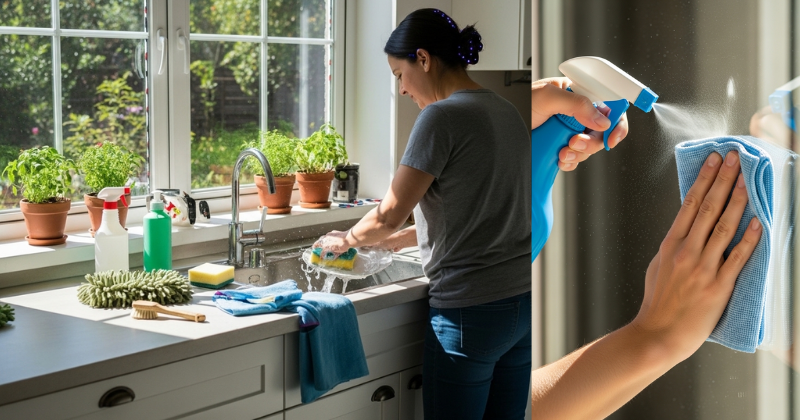
Discover easy DIY non toxic cleaning recipes to sparkle your home safely. Learn how simple kitchen staples can transform your cleaning routine and protect your family today!
Have you ever finished cleaning your bathroom only to realize you’re holding your breath because of the harsh chemical fumes? We’ve all been there, scrub brush in hand, wondering if the “clean” smell is actually just a cocktail of synthetic irritants. It’s a common frustration to want a sparkling home but feel uneasy about the long list of unpronounceable ingredients in store-bought bottles. But what if you could achieve a professional-level deep clean using items already sitting in your pantry? Switching to DIY non toxic cleaning recipes isn’t just a trend; it’s a powerful way to reclaim your home’s air quality and save money simultaneously.
In this comprehensive guide, you will discover how to unlock the cleaning potential of simple, natural ingredients like vinegar, baking soda, and essential oils. You’ll gain the confidence to ditch the toxic sprays for good and replace them with effective, eco-friendly alternatives. This transformation is easier than you think, and the benefits for your health and environment are immense. You have the capability to create a sanctuary that is truly clean, from the inside out. Let’s dive into the world of [Eco-Friendly Home Care] and start mixing!
Section 1: The Foundation – Why Switch to Non-Toxic? (H2)
To build your confidence in this journey, it’s essential to understand the “why” behind DIY non toxic cleaning recipes. Many commercial cleaners contain volatile organic compounds (VOCs) that can trigger asthma, allergies, and skin irritation. By taking control of your ingredients, you eliminate these hidden risks.
Many beginners hesitate, wondering if “natural” actually means “effective.” Reassure yourself that these ingredients have been used for generations because they work on a molecular level. Vinegar is an acid that cuts through grease, while baking soda is a mild abrasive that lifts stains without scratching. You aren’t sacrificing power; you’re simply choosing a smarter, safer way to [Purify Your Living Space].
H3: The Power of pH Balance
Cleaning is essentially chemistry. Acidic cleaners (like vinegar or lemon) are perfect for dissolving mineral deposits and soap scum. Alkaline cleaners (like baking soda or washing soda) are the masters of cutting through organic grease and grime. Knowing which to use and when is the secret to DIY success.
H3: Cost-Saving Benefits
Think about how much you spend on specialized cleaners for glass, floors, and counters. Most DIY non toxic cleaning recipes cost only pennies per bottle. Over a year, this switch can save you hundreds of dollars while reducing plastic waste in our landfills.
Section 2: Core Recipes – Step-by-Step Guidance (H2)
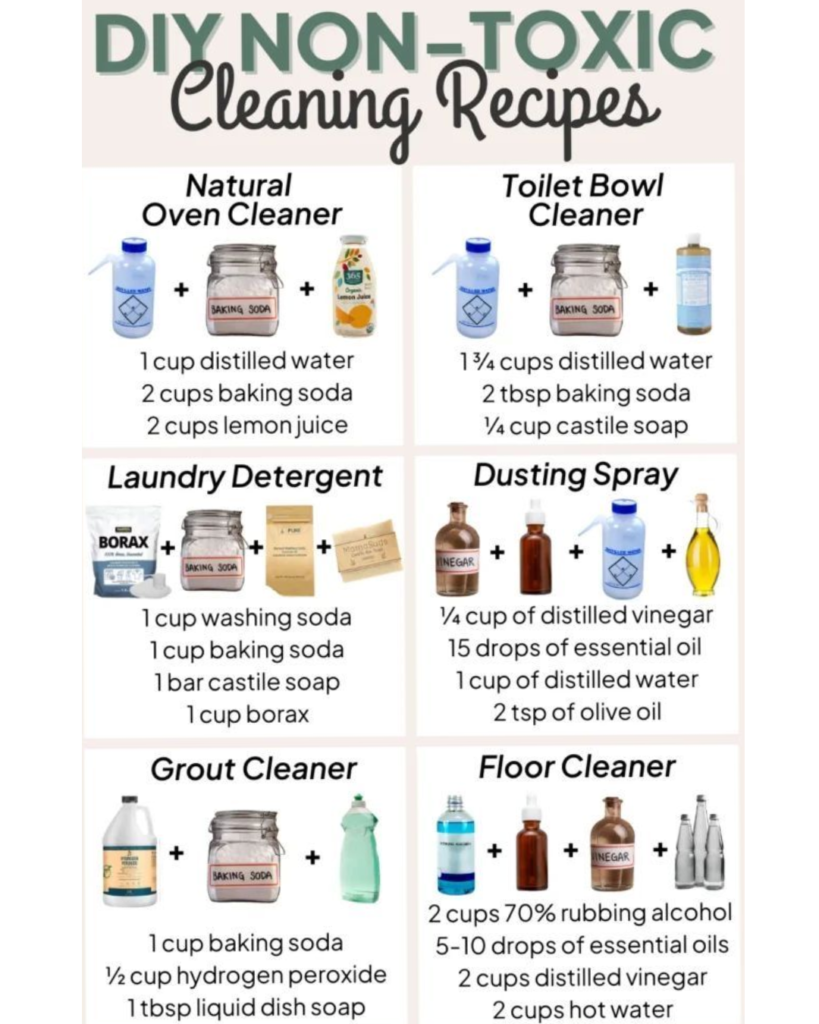
Ready to transform your cleaning cupboard? You don’t need a lab—just a few spray bottles and these actionable steps. Here are the foundational recipes every home needs.
1. The Ultimate All-Purpose Spray
This is your “go-to” for countertops, baseboards, and dusting.
- Ingredients: 1 cup distilled water, 1 cup white vinegar, 15 drops of lemon essential oil.
- Steps: Pour the water and vinegar into a glass spray bottle. Add the essential oil. Shake well before each use.
- Action: Spray onto surfaces and wipe with a microfiber cloth for a streak-free shine.
2. The “No-Scratch” Scrub
Perfect for sinks, tubs, and tile grout.
- Ingredients: 1/2 cup baking soda, enough liquid castile soap to make a paste, 5 drops of tea tree oil.
- Steps: In a small bowl, mix the baking soda with the soap until it looks like frosting. Add the tea tree oil for its antibacterial properties.
- Action: Apply with a sponge, scrub gently, and rinse with warm water.
3. Sparkling Glass & Mirror Cleaner
Achieve a crystal-clear finish without the ammonia smell.
- Ingredients: 2 cups water, 1/2 cup white vinegar, 1/4 cup rubbing alcohol (70% concentration).
- Steps: Combine all ingredients in a spray bottle.
- Tip: Use a crumpled newspaper or a dedicated glass cloth to wipe for the best results.
4. Natural Floor Refresh
Safe for wood, tile, and laminate.
- Ingredients: 1 gallon warm water, 1/2 cup white vinegar, 2 drops of dish soap.
- Steps: Mix in a large mop bucket.
- Note: For finished wood floors, ensure the mop is damp, not soaking wet, to prevent warping.
Section 3: Advanced Strategies – Pro Tips for Tough Jobs (H2)
Once you’ve mastered the basics, you can share expert-level insights by tackling the most difficult areas of the home. These creative solutions prove that DIY non toxic cleaning recipes can handle even the grimiest scenarios.
- The Oven Deep Clean: Make a thick paste of baking soda and water. Coat the inside of your oven (avoid the heating elements) and let it sit overnight. In the morning, spray with vinegar to create a foaming action that lifts the burnt-on grease. Wipe clean with a damp cloth.
- Natural Drain Maintenance: Pour 1/2 cup of baking soda down the drain, followed by 1/2 cup of vinegar. Cover the drain for 5 minutes as it fizzes, then flush with a kettle of boiling water to keep pipes clear and fresh-smelling.
- Fabric Refresh: Mix 1/2 cup of water with 1/4 cup of vodka (yes, vodka!) and 10 drops of lavender oil. Lightly mist upholstery to neutralize odors without synthetic perfumes.
H3: The Role of Essential Oils
Essential oils do more than just smell good. Lemon and orange oils are powerful degreasers. Tea tree and eucalyptus have antimicrobial properties. Lavender and peppermint provide a calming or energizing atmosphere while you work.
Section 4: Troubleshooting – Overcoming Common Challenges (H2)
Even with the best recipes, you might face an obstacle. Addressing these frequent concerns with practical solutions will help you stay consistent.
- Problem: “I hate the smell of vinegar.”
- Solution: The vinegar scent disappears completely once it dries. However, you can “infuse” your vinegar by letting citrus peels sit in a jar of vinegar for two weeks before making your recipes. This creates a powerful, orange-scented cleaner.
- Problem: “Natural cleaners aren’t killing bacteria.”
- Solution: While vinegar is effective against many germs, it is not a registered disinfectant. For high-risk areas like raw meat prep surfaces, use 3% hydrogen peroxide in a separate spray bottle. Note: Never mix vinegar and hydrogen peroxide in the same bottle as it creates peracetic acid, which is irritating.
- Problem: “Hard water spots won’t budge.”
- Solution: Heat your vinegar in the microwave for 30 seconds before spraying it on shower heads or faucets. The heat accelerates the reaction with the calcium deposits.
Preventive Measures
Always label your bottles clearly. Even though these ingredients are non-toxic, they should still be stored out of reach of children and pets. Perform a patch test on a small, hidden area when using a new recipe on delicate surfaces like stone or antique wood.
Section 5: Maximizing Results – Next Level Maintenance (H2)
How do you build upon your success? To truly achieve a healthy home, look at how these DIY non toxic cleaning recipes fit into your broader lifestyle.
- Microfiber Magic: Pair your natural sprays with high-quality microfiber cloths. These cloths are designed to mechanically remove bacteria and dirt, making your cleaners even more effective.
- Daily Habits: A quick spray of your All-Purpose solution on the shower walls after each use can prevent mold and mildew before they start, saving you hours of scrubbing later.
- Indoor Air Quality: Complement your cleaning with [Natural Air Purifiers] like spider plants or aloe vera. These plants help filter the air that your new cleaning routine is keeping fresh.
- Community Impact: Share your favorite recipes with friends! By encouraging others to go non-toxic, you contribute to a healthier local environment and less chemical runoff in our water systems.
Conclusion
You have now discovered the transformative power of DIY non toxic cleaning recipes. By choosing to mix your own solutions, you are protecting your family’s health, saving money, and respecting the planet. This journey is entirely achievable, and you have the capability to maintain a spotless home without a single harsh chemical.
Remember the key takeaways: use vinegar for grease and minerals, baking soda for scrubbing, and essential oils for an extra boost. Every bottle you mix is a step toward a more vibrant, sustainable lifestyle. Go ahead—unlock the potential of your pantry and enjoy the peace of mind that comes with a truly clean home. You’ve got this!