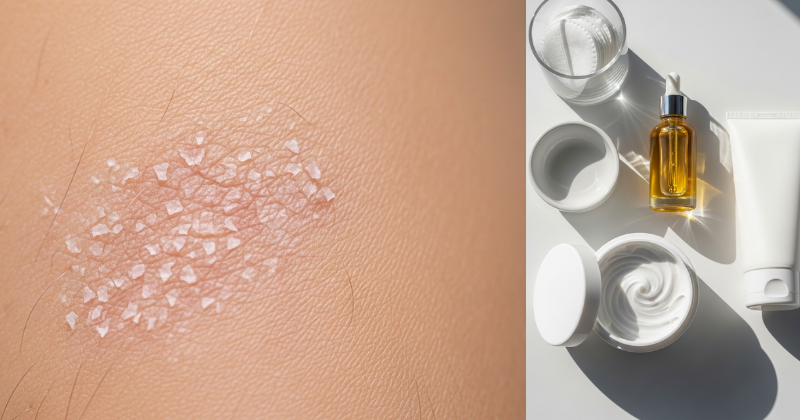
Dry skin — characterized by transepidermal water loss (TEWL) exceeding the skin’s capacity to maintain barrier integrity — affects an estimated 40-50% of adults chronically and nearly everyone episodically during winter or in low-humidity environments. This DIY shea butter salve addresses dry skin through the same dermatological principles employed in pharmaceutical emollients: occlusion to prevent water loss, emollience to improve barrier lipid composition, and humectancy to attract moisture into the stratum corneum. Shea butter (Vitellaria paradoxa) provides an exceptional lipid matrix rich in stearic acid, oleic acid, and the triterpene compounds (lupeol, α-amyrin, β-amyrin) with documented anti-inflammatory activity, while complementary ingredients enhance penetration and target specific aspects of barrier dysfunction. This formulation delivers professional-grade dry skin relief in a preparation you can make in under 20 minutes with ingredients whose complete composition you understand and control.
The Dermatological Science of Dry Skin and Barrier Function
Understanding the specific physiological disruptions underlying dry skin transforms salve formulation from intuitive mixing into purposeful biochemical engineering of barrier restoration.
The Stratum Corneum Barrier and TEWL
The outermost layer of skin — the stratum corneum — functions as the primary barrier against water loss and environmental insult. It consists of terminally differentiated keratinocytes (corneocytes) embedded in a lipid-rich extracellular matrix organized into lamellar bilayers. These lipids, comprising approximately 50% ceramides, 25% cholesterol, and 15% free fatty acids in healthy skin, form the “mortar” between the cellular “bricks” of the barrier architecture.
Dry skin reflects disruption of this barrier through multiple convergent mechanisms: reduced ceramide synthesis (occurring with aging, eczema, or genetic predisposition), increased ceramidase activity that degrades existing ceramides, cholesterol depletion, and structural disorganization of the lamellar lipid bilayers. These disruptions increase TEWL from the normal 5-10 g/m²/h to values exceeding 15-20 g/m²/h in severely dry skin, creating the dehydration, flaking, roughness, and inflammatory irritation that characterize the condition.
Effective treatment requires restoring both the lipid quantity and the organizational structure of the barrier. Simple occlusion (petroleum jelly, mineral oil) reduces TEWL but doesn’t provide the specific lipids required for barrier repair. The shea butter salve addresses both dimensions simultaneously.
Shea Butter’s Unique Fatty Acid and Triterpene Profile
Shea butter contains a fatty acid profile (approximately 40-55% oleic acid, 35-45% stearic acid, 3-7% palmitic acid, 3-5% linoleic acid) that closely approximates the fatty acid ratios beneficial for barrier lipid synthesis. Stearic acid — a saturated C18 fatty acid — is a direct precursor to ceramide synthesis through its incorporation into ceramide fatty acid chains. Oleic acid — a monounsaturated C18 fatty acid — improves barrier fluidity and penetration of accompanying compounds through temporary lipid bilayer reorganization.
Beyond its lipid content, shea butter provides an unsaponifiable fraction (5-17% by weight) containing triterpenes, phytosterols, and tocopherols that contribute anti-inflammatory and antioxidant activity independent of its moisturizing effects. Lupeol, α-amyrin, and β-amyrin — pentacyclic triterpenes present at concentrations of 1-5% of total unsaponifiable matter — inhibit inflammatory mediators including TNF-α, IL-6, and COX-2 through mechanisms characterized in dermatological research. These compounds address the inflammatory component of dry skin that simple occlusion cannot.
Research published in the Journal of Oleo Science documented significant improvements in skin elasticity, barrier function, and inflammatory markers following four weeks of topical shea butter application — effects attributed to this combined lipid-triterpene profile.
Complete Shea Butter Salve Recipe: Formulation and Rationale
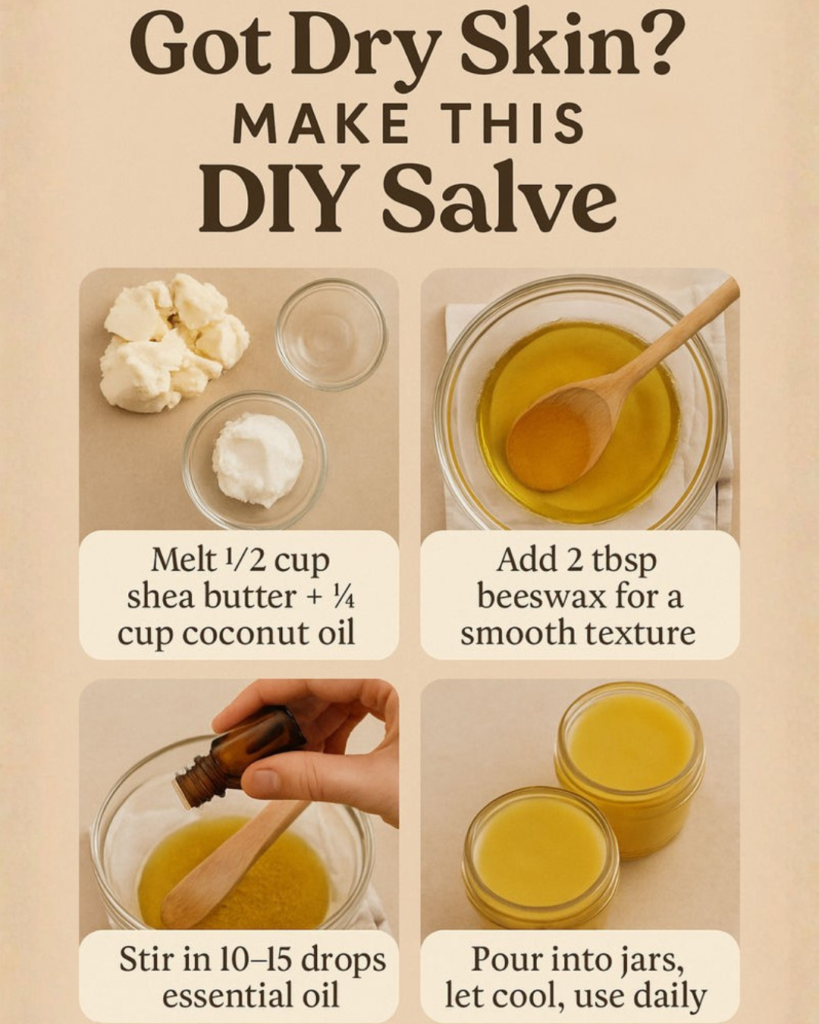
This recipe produces approximately 120ml (4 oz) of finished salve — sufficient for 4-6 weeks of full-body dry skin treatment or 2-3 months of targeted application to hands, elbows, and problem areas.
Core Ingredients and Their Functional Roles
Primary ingredients:
- 100g (approximately 1/2 cup) raw, unrefined shea butter (preferably Grade A, ivory or yellow in color indicating minimal processing)
- 2 tablespoons (30ml) sweet almond oil or jojoba oil
- 1 tablespoon (15g) beeswax pellets or candelilla wax (for vegan formulation)
- 1/2 teaspoon vitamin E oil (alpha-tocopherol — functions as antioxidant preservative and skin penetration enhancer)
Optional enhancement ingredients:
- 10-15 drops lavender or chamomile essential oil (anti-inflammatory aromatics)
- 1/4 teaspoon calendula extract (Calendula officinalis — additional anti-inflammatory triterpene alcohols)
- 5 drops rosehip seed oil (trans-retinoic acid content supports barrier repair)
Ingredient selection rationale: Raw, unrefined shea butter retains the complete unsaponifiable fraction lost during refining processes — refined shea butter provides the fatty acids but lacks the triterpene anti-inflammatory compounds. Sweet almond oil (approximately 65% oleic acid) or jojoba oil (a liquid wax ester with superior skin affinity) improves the salve’s spreadability and provides additional emollient properties. Beeswax creates structural firmness that prevents the salve from being excessively soft at room temperature while providing mild occlusive properties. Vitamin E prevents oxidative rancidity of the unsaturated fatty acids in shea butter and almond oil, extending shelf life from weeks to months.
Step-by-Step Preparation Protocol
Equipment needed: Double boiler or heat-safe bowl set over a pot of simmering water, stirring implement (glass rod, stainless steel spoon, or wooden stick), small glass jars or tins (4 oz capacity with tight-fitting lids), optional digital thermometer for precision.
Step 1: Set up double boiler. Fill the bottom pot with 1-2 inches of water and bring to a gentle simmer. The double boiler method prevents direct heat exposure that can degrade heat-sensitive compounds — the water bath maintains temperature at approximately 100°C maximum, well below the degradation temperatures of shea butter’s triterpenes and vitamin E’s tocopherols.
Step 2: Melt the base ingredients. Add the shea butter and beeswax to the top vessel of the double boiler. These are the highest-melting-point ingredients (shea butter melts at 32-38°C, beeswax at 62-64°C) and require the most heating time. Stir occasionally as melting progresses. Complete melting typically requires 8-12 minutes depending on initial ingredient temperature and water bath temperature.
Step 3: Add liquid oils. Once the shea butter and beeswax are completely melted (no solid pieces visible), add the sweet almond or jojoba oil. Stir to integrate completely. Remove from heat — this step is critical. Adding the optional ingredients (vitamin E, essential oils, extracts) while the mixture is still on heat can volatilize aromatics and degrade heat-sensitive compounds.
Step 4: Add enhancement ingredients off-heat. Allow the melted base to cool for 2-3 minutes to approximately 60-65°C (warm to the touch but not hot), then add vitamin E oil, essential oils, and any optional extracts. Stir thoroughly to distribute evenly throughout the base.
Step 5: Pour into containers. Working quickly before the mixture begins solidifying, pour into your prepared jars or tins. A funnel or small pouring pitcher improves precision and reduces spillage. Fill to within 1/4 inch of the rim to allow for slight contraction as the salve cools.
Step 6: Cooling and solidification. Allow to cool at room temperature undisturbed for 3-4 hours until completely solid. Resist the urge to move or cap the containers during cooling — movement can create textural irregularities in the finished salve. Once solid, cap tightly and label with ingredients and preparation date.
Storage and shelf life: Store in a cool, dark location. The combination of saturated fats, vitamin E antioxidant, and minimized air exposure provides 4-6 months shelf life. Signs of rancidity (off odor, color changes) indicate it’s time to discard and prepare a fresh batch.
Advanced Formulation Variations for Specific Skin Conditions
The Eczema-Specific Anti-Inflammatory Version
For skin complicated by atopic dermatitis or eczema where inflammation and barrier dysfunction are both present, enhancing the base formula with additional anti-inflammatory botanicals provides targeted benefit. Replace 1 tablespoon of the sweet almond oil with calendula-infused oil (calendula flowers infused in carrier oil for 4-6 weeks, strained), and add 1/2 teaspoon of evening primrose oil (Oenothera biennis — high in gamma-linolenic acid, an omega-6 fatty acid with documented anti-inflammatory effects in atopic skin). Add 5 drops of German chamomile essential oil (Matricaria chamomilla — contains α-bisabolol and chamazulene with COX and 5-LOX inhibitory activity).
Research published in Dermatologic Therapy documented significant reductions in eczema severity scores with topical gamma-linolenic acid application, attributed to the incorporation of this fatty acid into ceramide structures that modulates inflammatory eicosanoid production.
The Winter Protection Maximum Occlusion Formula
For severely dry, cracked skin or exposure to harsh winter conditions, increasing the occlusive component provides enhanced barrier protection. Increase beeswax to 2 tablespoons (doubling the base recipe amount) and add 1 teaspoon of lanolin — a wool-derived wax with exceptional water-holding capacity and occlusive properties. The increased wax content produces a firmer salve with superior protective qualities for hands, feet, and exposed skin in cold, dry environments.
Lanolin’s composition (approximately 25% wax esters, 75% complex alcohols and fatty acids) creates an occlusive layer that reduces TEWL by up to 30-40% more effectively than petroleum jelly in comparative studies — though its animal origin makes it inappropriate for vegan formulations.
The Anti-Aging Barrier Repair Enhancement
For mature skin where barrier dysfunction accompanies chronological aging, adding ingredients that support both lipid barrier restoration and dermal matrix integrity creates a more comprehensive treatment. Add 1/2 teaspoon of rosehip seed oil (contains trans-retinoic acid — a natural retinoid supporting cellular turnover and collagen synthesis) and 1/4 teaspoon of sea buckthorn oil (Hippophae rhamnoides — exceptionally high in palmitoleic acid, an omega-7 fatty acid that declines with age and supports barrier repair and wound healing).
Research in the Journal of Cosmetic Dermatology documented significant improvements in skin hydration, elasticity, and wrinkle depth with regular topical palmitoleic acid application over 16 weeks — effects attributed to its incorporation into phospholipid membranes and its role as a signaling lipid influencing fibroblast activity.
Application Technique for Maximum Barrier Restoration
The efficacy of any topical emollient depends substantially on application timing and technique — factors that determine how much active ingredient reaches the stratum corneum versus remaining on the skin surface.
The Post-Bath Moisture Trapping Protocol
The optimal application window for emollient salves is within 3 minutes of bathing or washing — when the stratum corneum is maximally hydrated (water content elevated from baseline 10-20% to 30-40%). Applying occlusive emollients during this window traps the absorbed water within the stratum corneum, preventing its rapid evaporation back into the environment. This “soak and seal” approach is the gold standard in clinical dermatology for dry skin and eczema management.
After bathing, pat skin until no longer dripping but still visibly moist (not completely dry). Immediately apply the shea butter salve generously to affected areas, using gentle pressure to spread the salve into a thin, even layer. The slight moisture on the skin’s surface aids spreading and creates the optimal hydration environment for the subsequent hours.
Strategic Application Zones
Not all dry skin areas require equal treatment intensity. The hands, feet, elbows, and knees — areas subject to high mechanical stress and lower sebaceous gland density — benefit from more generous application and potentially twice-daily treatment. The face and neck — if affected by dryness — require lighter application to avoid pore occlusion. The trunk — typically less severely affected — may require only targeted treatment of dry patches rather than full coverage.
For severe hand dryness (occupational hand dermatitis, chronic handwashing), the “glove occlusion” technique amplifies results: apply salve generously to hands before bed, don cotton gloves, and leave overnight. The occlusion from the gloves enhances both salve penetration and water retention, producing measurably greater barrier improvement than open application.
Troubleshooting Common DIY Salve Challenges
Texture Problems: Too Soft or Too Hard
Salve texture depends on the wax-to-oil ratio and ambient temperature. If your salve is excessively soft (more like a cream than a firm salve), the wax content is insufficient for your climate. Remelt the batch, add an additional 1/2 tablespoon of beeswax, stir thoroughly, and re-pour. Conversely, if the salve is too hard (difficult to spread at room temperature), the wax percentage is too high. Remelt, add an additional 1 tablespoon of liquid oil, and re-pour.
The “spoon test” helps calibrate texture before committing to final pouring: after melting and combining all ingredients, place a small amount (1/2 teaspoon) on a cool spoon and refrigerate for 2-3 minutes. The resulting texture on the cool spoon approximates the final room-temperature salve texture, allowing adjustment before pouring the full batch.
Graininess or Grainy Texture After Solidification
Grainy texture in solidified salve results from crystallization of the stearic acid and other saturated fats in shea butter — a physical chemistry phenomenon that occurs when cooling happens too rapidly or when the mixture is disturbed during solidification. Prevention involves slow, undisturbed cooling at room temperature rather than refrigeration, and stirring very thoroughly during the melting phase to create a homogeneous melt.
If graininess occurs in a finished batch, remelt the entire salve in a double boiler, allow to cool slightly, then whip with a hand mixer or immersion blender as it cools to approximately 35-40°C (slightly above shea butter’s melting point). Continue whipping as it cools and thickens, creating a whipped butter texture that’s smooth rather than grainy. This technique produces a softer, fluffier product — but one that’s texturally superior to grainy salve.
Oxidative Rancidity and Shelf Life Extension
The primary degradation pathway for this salve is oxidative rancidity of its unsaturated fatty acids — particularly the oleic and linoleic acid in shea butter and almond oil. Vitamin E provides significant protection, but additional precautions extend shelf life further. Store salve in opaque containers that block light (amber glass or opaque tins), keep in cool locations away from heat sources, and minimize air exposure by keeping containers tightly capped when not in use. Consider making smaller batches (half the recipe) if you won’t use 120ml within 3-4 months.
For extended preservation, adding rosemary oleoresin extract (ROE) at 0.1-0.5% of total formula weight provides additional antioxidant protection — ROE contains carnosic acid and rosmarinic acid with potent free radical scavenging that complements vitamin E’s antioxidant mechanism.
Integrating Salve Treatment With Comprehensive Dry Skin Management
Addressing Environmental and Lifestyle Contributors
Topical treatment achieves maximum results when environmental factors exacerbating dry skin are simultaneously addressed. Indoor humidity during heating season often falls to 10-20% — well below the 40-50% considered ideal for skin barrier health. A bedroom humidifier maintaining 40-45% relative humidity measurably reduces overnight TEWL. Hot, prolonged bathing strips barrier lipids — 10-minute lukewarm showers preserve barrier integrity better than long hot baths. Harsh soaps with high pH disrupt the skin’s acid mantle — pH-balanced cleansers or cleansing oils maintain the acidic surface environment that supports barrier function.
Nutritional Support for Barrier Integrity
Topical treatment supports the barrier from the outside; adequate nutrition provides the biochemical substrates for barrier synthesis from within. Essential fatty acids (particularly omega-3 and omega-6 fatty acids) are literal components of ceramides — deficiency impairs barrier lipid synthesis regardless of topical treatment. Vitamin A supports keratinocyte differentiation. Zinc is a cofactor for enzymes involved in lipid metabolism. Ensuring dietary adequacy of these nutrients — through diet or targeted supplementation — creates the internal environment for barrier health that topical treatments enhance rather than compensate for.
Conclusion
This DIY shea butter salve delivers professional dermatological dry skin relief through the same occlusive, emollient, and anti-inflammatory mechanisms employed in pharmaceutical barrier repair treatments — but using ingredients whose complete composition you control and understand. Shea butter’s unique fatty acid and triterpene profile addresses both lipid replacement and inflammatory modulation. The simple double-boiler preparation requires no specialized equipment or techniques. Application within the optimal post-bath window maximizes water retention and barrier restoration. Prepare your first batch this week, commit to consistent application for the 2-3 week period required for barrier restoration to manifest, and discover that genuinely effective dry skin treatment doesn’t require expensive commercial formulations whose ingredients you can’t pronounce.