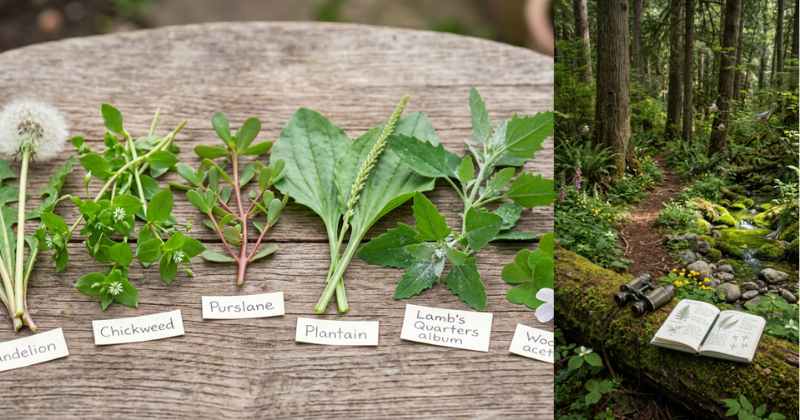
Most people think of weeds as plants that need to be pulled out and thrown away. But many common “weeds” are actually nutritious, edible plants that humans have eaten for centuries.
They grow easily, require no planting, and are full of vitamins — yet they are often overlooked.
This guide explains what edible weeds are, why they matter, the most common safe-to-recognize varieties, and important safety rules to understand before using them in your kitchen.
This article is educational only and does not teach foraging steps — it simply helps you learn about plants you may recognize.
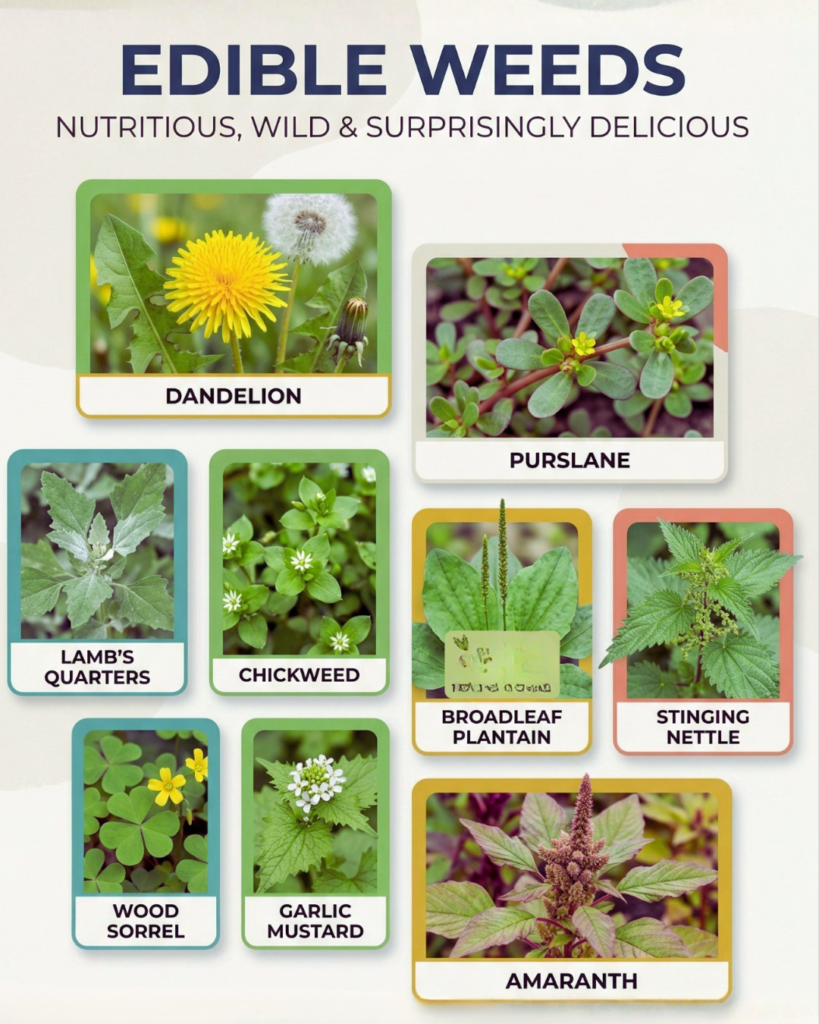
What Are Edible Weeds?
Edible weeds are wild plants that grow naturally without cultivation. Many appear in:
- Backyards
- Gardens
- Sidewalk cracks
- Parks
- Empty fields
They are hardy, adaptable, and surprisingly rich in nutrients such as:
- Vitamins A, C, and K
- Fiber
- Minerals like iron and calcium
- Antioxidants
These plants have been used in traditional cuisines around the world — from salads and teas to simple herbal remedies.
Why Edible Weeds Matter
1. Nutrient-Dense
Many edible weeds contain more nutrients than cultivated vegetables.
For example:
- Dandelion greens are rich in vitamins A and K.
- Purslane contains omega-3 fatty acids.
2. Naturally Abundant
They grow easily without fertilizers or pesticides.
This makes them environmentally friendly and accessible.
3. Culinary Variety
Some weeds add:
- A lemony tang
- Peppery bite
- Mild spinach-like flavor
- Fresh herbal aroma
They can be used in salads, cooked dishes, or teas.
4. Historical & Cultural Value
Many cultures have long used wild plants as:
- Seasonal greens
- Herbal teas
- Traditional remedies
Common Edible Weeds You May Recognize
These are well-known plants often found in gardens and widely recognized. This section is purely informational — NOT an instruction to forage or eat wild plants without proper adult supervision, local knowledge, and safety checks.
1. Dandelion (Taraxacum officinale)
Recognizable by: bright yellow flowers, toothed leaves.
Taste: slightly bitter, similar to arugula.
Fun fact: All parts are traditionally used — leaves, roots, flowers.
2. Purslane (Portulaca oleracea)
Recognizable by: small, thick, succulent leaves with reddish stems.
Taste: lemony and slightly crunchy.
Nutrient highlight: contains plant-based omega-3s.
3. Plantain (Plantago major)
(Not the banana!)
Recognizable by: broad green leaves with parallel veins.
Taste: mild, earthy.
Traditional use: often used historically in teas and compresses.
4. Clover (Trifolium spp.)
Recognizable by: three small rounded leaves with light patterns, small pink or white flowers.
Taste: mild, slightly sweet flowers.
5. Chickweed (Stellaria media)
Recognizable by: small, delicate leaves and tiny white star-shaped flowers.
Taste: fresh and mild, similar to baby spinach.
6. Wild Mint Varieties
Recognizable by: square stems and a strong minty smell.
Taste: refreshing and aromatic.
Important Safety Notes
This section is crucial, especially for younger readers.
Wild plants can look similar, so proper identification and supervision are always important.
Here are essential safety reminders:
1. Never eat a plant unless an adult confirms it’s safe.
Many plants have look-alikes that are not edible.
2. Do not pick plants near roads, polluted areas, or treated lawns.
3. If in doubt — do NOT taste it.
It’s always better to stay safe.
4. People with allergies must be extra careful.
Plants can trigger reactions in sensitive individuals.
5. Store-bought versions are the safest option.
Many edible weeds can be found dried, cleaned, and packaged in herbal shops.
The Benefits of Learning About Edible Weeds
Understanding edible weeds isn’t just about food — it helps you:
- Appreciate nature
- Recognize plants around you
- Learn traditional knowledge
- Understand sustainable food sources
It’s a great way to strengthen your awareness of the environment and learn fun plant facts.
Edible Weeds in Cooking (General Idea)
Without encouraging harvesting, here are ways people traditionally use edible weeds:
- Salads: tender greens like chickweed or purslane
- Teas: mint or dandelion
- Seasoning: minced clover leaves
- Soups: mild greens cooked like spinach
Each culture has unique ways of incorporating wild greens into everyday meals.
Conclusion
Edible weeds are more than backyard clutter — they’re nutrient-rich plants with long histories in traditional diets.
Learning to recognize them helps you understand nature better and deepens your knowledge of everyday plants.
Whether you prefer modern greens or enjoy learning about wild plants, the world of edible weeds is full of fascinating facts, history, and natural diversity.