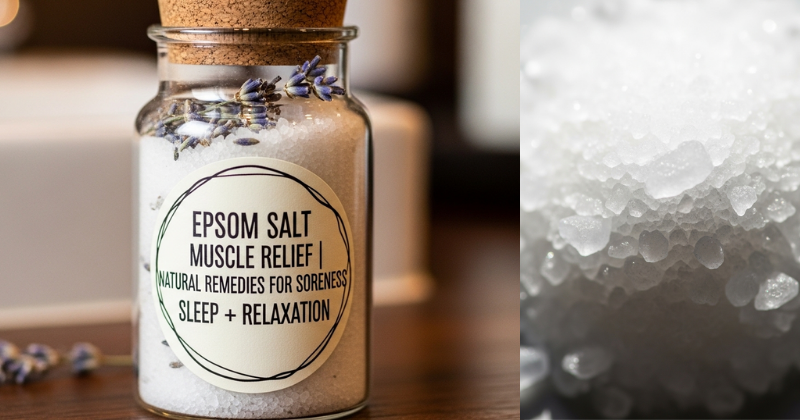
Discover Epsom salt muscle relief and natural remedies for soreness, sleep, and relaxation. Learn how to use magnesium sulfate to transform your wellness today.
Have you ever finished a long day or an intense workout feeling like your muscles are made of lead? Perhaps you struggle to switch your brain off at night, tossing and turning while your body feels tight and restless. We have all been there—searching for a simple, affordable way to melt away the tension without relying on complex chemicals. The good news is that the solution might already be sitting in your bathroom cabinet. Epsom salt muscle relief is one of the most time-tested natural remedies for soreness, sleep, and relaxation, used for generations to restore the body and mind.
In this comprehensive guide, you will discover how this humble mineral compound can become your ultimate self-care tool. We are going to explore the science of magnesium sulfate, the best ways to prepare a therapeutic soak, and how to combine it with other botanical boosters to maximize your results. You have the capability to unlock a deeper level of recovery and achieve a state of total tranquility from the comfort of your own home. Let’s dive into the world of mineral-based wellness and see how you can transform your evening routine into a professional-grade spa experience!
Important Disclaimer: This article is for informational purposes only and should not replace professional advice. For health-related topics, consult healthcare providers. For safety procedures, verify current best practices and local regulations. Individual results may vary, and personal circumstances should always be considered when implementing any suggestions.
Foundation: The Science of Magnesium Sulfate (H2)
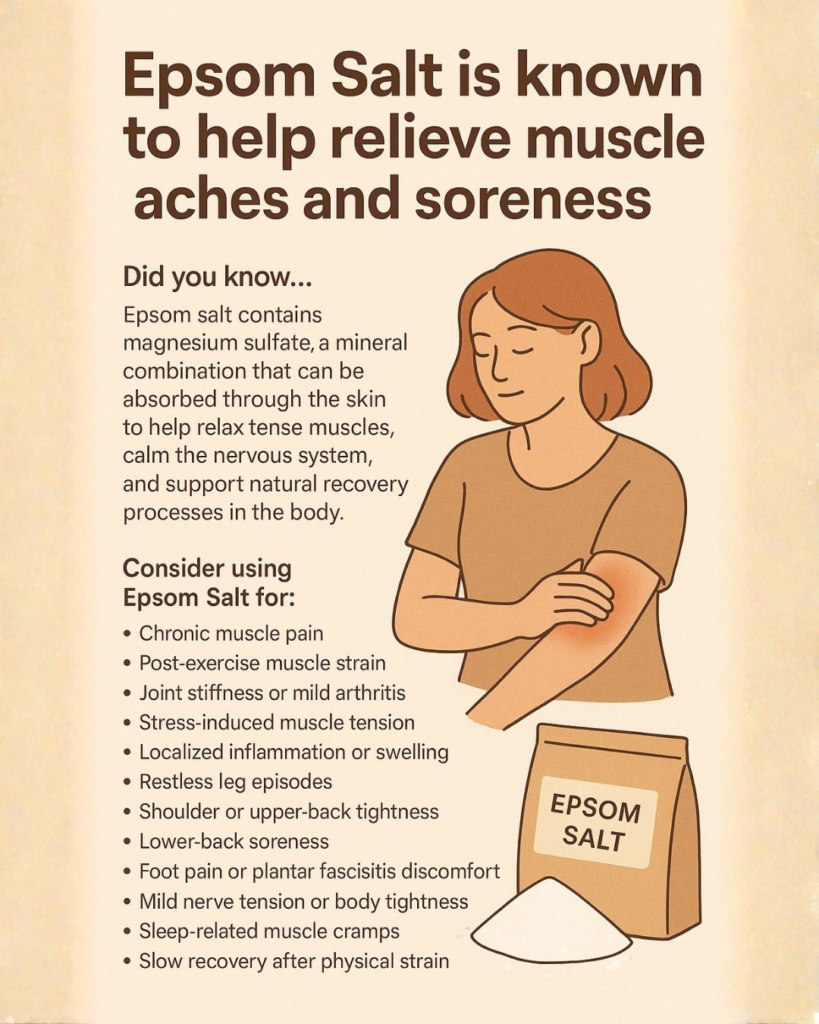
Before you run the tap, it is essential to build confidence in why this remedy actually works. Unlike table salt, Epsom salt is a pure mineral compound of magnesium and sulfate. These two components are vital for hundreds of functions in your body. Magnesium is often called the “spark plug” of the human body because it helps regulate over 300 enzymes. When you use Epsom salt muscle relief techniques, you are essentially giving your body the building blocks it needs to repair itself.
Many beginners worry that a simple bath won’t be enough to handle “real” muscle pain. Reassure yourself that the benefits of [Magnesium Absorption] and heat therapy are well-documented. Warm water helps dilate blood vessels, which improves circulation, while the magnesium in the salt helps move lactic acid out of the muscles. By choosing this natural path, you are supporting your [Body’s Recovery Cycle] in a way that is gentle, sustainable, and incredibly effective.
H3: The Role of Magnesium in Relaxation
Magnesium plays a critical role in the production of GABA, a neurotransmitter that encourages relaxation and sleep. When your magnesium levels are healthy, your nervous system can more easily switch from “fight or flight” mode into “rest and digest” mode.
H3: Sulfate and Detoxification
While magnesium gets most of the credit, the sulfate in Epsom salt is equally important. Sulfates help flush toxins from the cells and improve the absorption of nutrients, making your soak a dual-purpose treatment for both recovery and internal cleansing.
Step-by-Step: The Perfect Recovery Soak (H2)
To achieve the best results, you need a process that maximizes the mineral concentration and the therapeutic effect of the water. Follow these clear, actionable steps to master the art of the Epsom salt bath.
1. Measure Your Dosage
Don’t just sprinkle a handful! For a standard-sized bathtub, you should use at least 2 cups of high-quality Epsom salt. If you are targeting specific areas like feet, use 1/2 cup in a large basin of water.
2. Set the Temperature
The water should be warm (between 92°F and 100°F) but not scalding. Water that is too hot can actually stress the nervous system rather than soothe it.
3. The Duration Secret
To allow for proper mineral absorption, you must soak for at least 15 to 20 minutes. This gives your pores time to open and the magnesium to do its work.
4. Rinse and Hydrate
After your soak, rinse off any excess salt in a quick cool shower. Most importantly, drink a large glass of water immediately after. Like a massage, an Epsom bath can be dehydrating as it draws out impurities.
Advanced Strategies: Pro Tips for Custom Recovery (H2)
Once you have mastered the basic soak, you can share expert-level insights by adding “boosters” to your routine. These strategies allow you to customize your Epsom salt muscle relief for specific wellness goals, such as [Deeper Sleep] or [Reduced Inflammation].
- The Essential Oil Synergy: Add 5-10 drops of Lavender for sleep or Eucalyptus for muscle cooling. Pro Tip: Always mix your essential oils into the dry salt before adding them to the water. This ensures the oil is distributed evenly and doesn’t just float on top where it can irritate your skin.
- The “Baking Soda” Detox: Mix 1 cup of baking soda with your 2 cups of Epsom salt. The baking soda helps neutralize skin acidity and softens the water, making it even more effective for soothing itchy skin or minor irritations.
- The Post-Workout Compress: If you don’t have time for a full bath, create a concentrated compress. Dissolve 2 tablespoons of Epsom salt in a cup of warm water, soak a towel in it, and apply it directly to a sore muscle for 10 minutes.
How often should you use Epsom salt for muscle soreness? (H3)
For active muscle recovery and general wellness, using an Epsom salt soak 2 to 3 times a week is ideal. This frequency allows you to maintain consistent magnesium levels without over-drying your skin. If you are experiencing acute soreness after a heavy lifting session, a daily soak for three consecutive days can help accelerate the healing process.
Troubleshooting: Common Challenges and Solutions (H2)
Even with such a simple remedy, obstacles can arise. Address these frequent concerns with solutions to stay motivated on your wellness journey.
- Obstacle: “My skin feels dry or itchy after a bath.”
- Solution: Epsom salt can be slightly drying. Add a tablespoon of coconut oil or jojoba oil to your bath water to lock in moisture, and always apply a natural lotion after you towel off.
- Obstacle: “I don’t have a bathtub.”
- Solution: You can still achieve Epsom salt muscle relief! Use an Epsom salt scrub in the shower. Mix the salt with a little olive oil and gently massage it onto sore muscles. The magnesium will still absorb through the skin before you rinse it off.
- Obstacle: “I don’t feel a difference in my sleep.”
- Solution: Timing is everything. Aim to finish your soak about 30 to 60 minutes before bed. As your body temperature drops after the bath, it signals to your brain that it’s time to produce melatonin.
Maximizing Results: Beyond the Bathtub (H2)
To truly transform your recovery, you should look at how this habit fits into your larger [Sustainable Lifestyle Changes]. Epsom salt is a powerful tool, but it works best when supported by other healthy choices.
- Magnesium-Rich Diet: Complement your soaks by eating foods high in magnesium, such as spinach, pumpkin seeds, and dark chocolate.
- Active Recovery: On the days you soak, try to include light stretching or a short walk. This keeps the blood flowing and helps the magnesium reach the muscle fibers more effectively.
- Mindful Environment: Turn off your phone and dim the lights during your soak. This turns the physical treatment into a mental “reset,” addressing the psychological roots of muscle tension.
- Consistency Over Intensity: A 20-minute soak three times a week is much better for your nervous system than a 2-hour soak once a month.
Conclusion
You have now discovered that Epsom salt muscle relief is much more than an old-fashioned remedy—it is a scientifically-backed, achievable way to take control of your physical and mental recovery. By understanding the power of magnesium sulfate and following the step-by-step methods outlined here, you are empowering yourself to live with less pain and more peace.
Remember the key takeaways: use the right dosage, stay in for at least 20 minutes, and don’t be afraid to customize with essential oils. This is a journey of gradual progress and self-care that pays massive dividends in how you feel every single day. Go ahead—run the water, pour the salt, and achieve the relaxation you’ve been working so hard for. You’ve got this!