
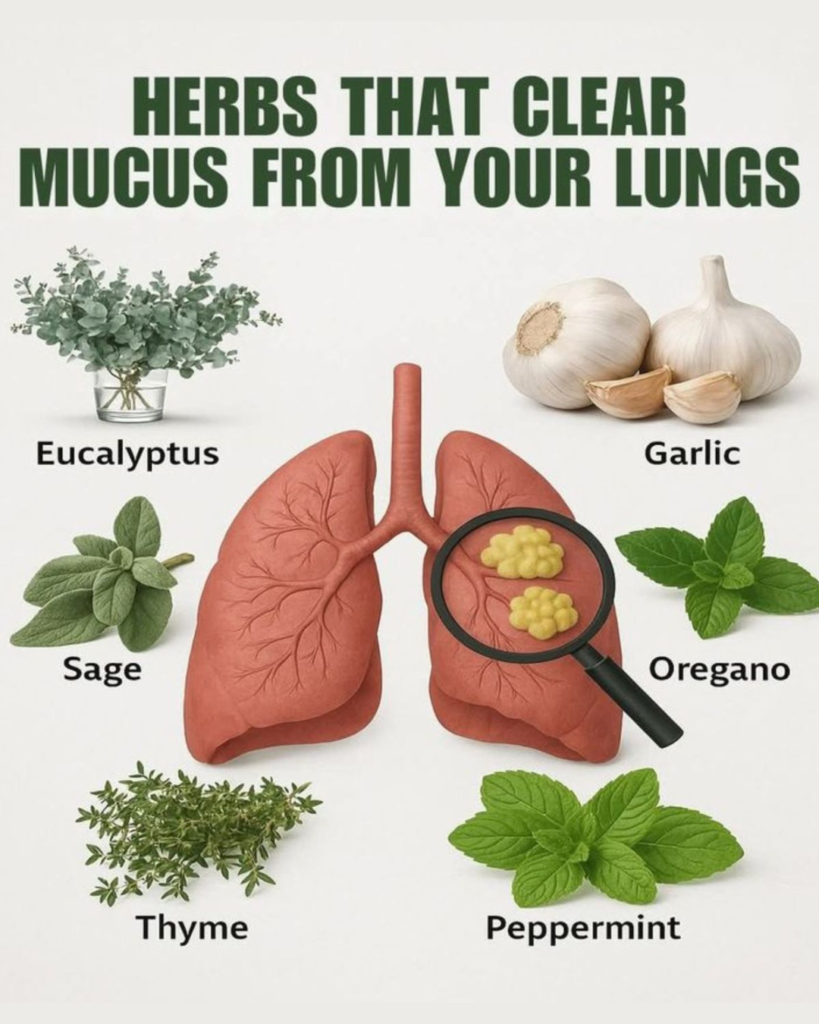
Discover the best herbs that help clear mucus from your lungs naturally. Breathe easier and support your respiratory health with these safe, effective remedies!
Have you ever felt like you were breathing through a heavy, wet blanket? That stubborn, tight feeling in your chest—often accompanied by a persistent cough—is usually the result of excess phlegm or congestion. While your body produces mucus to trap irritants, too much of it can leave you feeling fatigued and uncomfortable. But what if you could tap into nature’s pharmacy to find relief? You are about to discover the incredible power of herbs that help clear mucus from your lungs naturally, transforming your respiratory health from congested to crystal clear.
By incorporating these time-tested botanical allies into your daily routine, you will unlock a more breathable life. Whether you are dealing with seasonal changes or looking for long-term lung support, these natural solutions offer a gentle yet effective alternative to harsh synthetic options. This guide will empower you with the knowledge to choose the right herbs and use them safely. Let’s embark on this journey toward deeper, easier breaths together!
Important Disclaimer: This article is for informational purposes only and should not replace professional advice. For health-related topics, consult healthcare providers. For safety procedures, verify current best practices and local regulations. Individual results may vary, and personal circumstances should always be considered when implementing any suggestions.
Foundation: Understanding Natural Expectoration
Before we dive into the specific plants, let’s build your confidence in how herbal respiratory support actually works. When we talk about herbs that help clear mucus from your lungs naturally, we are usually referring to two types of actions: expectorants and mucolytics. Understanding these basic concepts will help you choose the right remedy for your specific needs.
An expectorant helps your body “expel” mucus by making it easier to cough up, while a mucolytic actually breaks down the chemical structure of the phlegm, thinning it out so it isn’t so sticky. Many beginners worry that herbal remedies might be too complex or “woo-woo,” but the science of plant-based respiratory care is well-documented. These plants contain specific compounds, like saponins and essential oils, that interact with your respiratory lining to promote healing. You have the capability to support your lungs using the same ingredients that healers have used for centuries!
H3: The Anatomy of Congestion
Mucus is your body’s front-line defense. It traps dust, bacteria, and smoke. However, during a [Body Detox] or a seasonal cold, the production goes into overdrive. When mucus becomes too thick, it stays stuck in the lower bronchial tubes, which is why we need botanical help to move it along.
H3: Why Choose Herbs Over Aerosols?
Many over-the-counter decongestants can leave you feeling “wired” or cause dryness in the throat. Natural herbs often provide a “secondary benefit.” For example, while a herb clears your lungs, it might also provide antioxidants or boost your immune system. It’s a holistic approach that treats you as a whole person, not just a set of symptoms.
Step-by-Step: The Best Herbs for Lung Clearance
Ready to breathe deeper? Here are the top-tier herbs that help clear mucus from your lungs naturally, broken down by their unique strengths.
1. Mullein (Verbascum thapsus)
Mullein is often called the “lung herb” for a good reason. It is a premier expectorant that helps to break up congestion and soothe inflamed membranes.
- How to use: The most common method is Mullein tea. Steer clear of the fuzzy hairs by using a very fine strainer or a coffee filter.
- Transformation: You’ll notice that “dry” coughs become more productive, allowing you to clear the debris from your lungs efficiently.
2. Thyme (Thymus vulgaris)
Thyme is more than just a kitchen staple! It contains thymol, a powerful antimicrobial compound that helps relax the bronchial muscles.
- How to use: You can make a strong tea or use a “steam tent.” Place fresh thyme in a bowl of hot water, put a towel over your head, and inhale.
- Pro Tip: Thyme is incredibly easy to grow. You might find it as simple as learning [How to Regrow Green Onions in Water] to keep a fresh supply on your windowsill year-round.
3. Peppermint (Mentha piperita)
The menthol in peppermint is a natural decongestant. It thins mucus and helps to “re-open” the airways, making it a favorite for those feeling “stuffed up.”
- How to use: Peppermint tea or essential oil diffusers are excellent.
- Actionable Step: Try a peppermint chest rub by mixing peppermint oil with a carrier oil like the one used in the 3-Ingredient DIY Furniture Polish That Keeps Dust Away for WEEKS! (though use high-quality skin-grade oil for your body!).
4. Licorice Root (Glycyrrhiza glabra)
Licorice root acts as a demulcent, meaning it creates a protective film over the throat and bronchial tubes. It reduces the irritation that causes you to cough unnecessarily.
- Safety Note: If you have high blood pressure, consult a doctor before using licorice root, as it can affect sodium levels.
Advanced Strategies: Maximizing Herbal Potency
Once you’ve mastered the basics, you can share in these expert-level insights to get the most out of your herbal routine. Customizing your approach ensures that you aren’t just treating symptoms, but nurturing long-term lung resilience.
- The Power of Blending: Don’t feel restricted to just one herb! Mixing Mullein (to move mucus) with Marshmallow Root (to soothe the throat) creates a “synergistic” effect that is much stronger than either herb alone.
- Timing Your Intake: For respiratory issues, it is often better to drink small sips of herbal tea throughout the day rather than one large mug. This keeps the active compounds circulating in your system consistently.
- The “Double-Steam” Method: For deep-seated lung congestion, try drinking a hot cup of Thyme tea while sitting in a steamy bathroom. The internal and external moisture work together to melt the mucus away.
H3: Seasonal Considerations
In the spring, focus on herbs with anti-histamine properties like Nettle. In the winter, when the air is dry and wood-burning stoves might be in use, focus on demulcent herbs like Slippery Elm to protect the lung tissue from particulates.
Troubleshooting: Common Challenges with Herbal Remedies
Even natural paths can have a few bumps. If you aren’t seeing the results you expected, don’t give away your jars just yet! Here are solutions to frequent obstacles.
- Challenge: “The tea tastes too bitter.”
- Solution: Many medicinal herbs are naturally bitter. Add a teaspoon of raw honey. Honey itself is a mild mucolytic and will make the herbs that help clear mucus from your lungs naturally much more palatable.
- Challenge: “I’m coughing more than before.”
- Solution: This is often a sign the herbs are working! Expectorants are designed to make you cough so that the mucus can leave your body. If the cough is productive (bringing things up), you are on the right track.
- Challenge: “The herbs feel too drying.”
- Solution: You might be overusing “drying” herbs like Sage or Thyme. Balance them out by increasing your water intake or adding “moistening” herbs like Plantain leaf to your mix.
Preventive Measures
Always source organic herbs. Lungs are sensitive, and the last thing you want to do is inhale or ingest pesticides while trying to clear out toxins. Much like you’d [4 Easy Steps to Strengthen Weak Nails at Home 💅✨] with quality products, quality ingredients matter for your internal health too.
Next Level Tips: Building a Breathable Lifestyle
To build upon the success of your herbal remedies, look at the bigger picture of your environment and habits. These complementary strategies will help ensure your lungs stay clear for the long haul.
- Hydration is Mandatory: No herb can thin mucus if you are dehydrated. Think of water as the “solvent” that allows the herbs to do their job. Aim for at least 8 glasses of water a day.
- Clean Your Air: Dust is a major lung irritant. Use a [Homemade Dish Soap Recipe (From Scratch)] to keep your kitchen surfaces clean and reduce the airborne particles that trigger mucus production.
- Postural Drainage: If you have heavy congestion, try “postural drainage.” Lie on your back with pillows under your hips so your chest is lower than your stomach. Gravity will help the herbs that help clear mucus from your lungs naturally move that phlegm toward your throat so you can clear it.
Conclusion: Breathe Deeply and Live Fully
You have the power to transform your respiratory health through the simple, intentional use of nature’s gifts. By discovering the right herbs that help clear mucus from your lungs naturally, you aren’t just treating a cough—you are supporting your body’s vital ability to oxygenate and thrive.
The journey to clear lungs is one of gradual progress and self-care. Whether it’s a warm mug of Mullein tea in the morning or a Peppermint steam at night, these small actions add up to a significant increase in your quality of life. You are capable of taking charge of your wellness. Now, take a deep breath, choose your first herb, and feel the difference today!