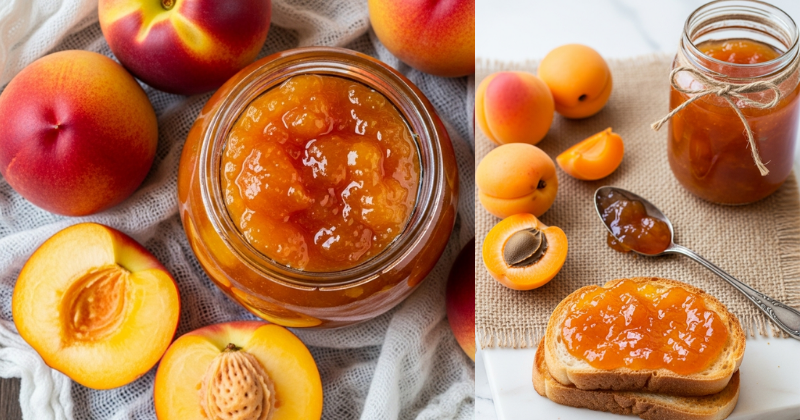
Salut les gourmands!
There exists a brief, almost sacred window each summer when apricots achieve their ultimate expression—a fleeting moment of perfect ripeness when golden flesh yields to gentle pressure, when fragrance becomes so intoxicating it seems impossible that a single fruit could contain such aromatic complexity, when the balance between sweetness and acidity aligns in that sublime equilibrium that defines stone fruit perfection. Capturing this ephemeral moment in a jar of homemade apricot jam represents more than preservation; it becomes an act of devotion to seasonality, a meditation on transformation, and ultimately, a defiant gesture against winter’s inevitability.
My own relationship with apricot jam began not in my kitchen but in my grandmother’s—a sun-drenched room in southern France where copper preserving pans sat like ancient altars, where the ritual of summer preservation marked time more reliably than any calendar. She taught me that jam making is never merely cooking fruit with sugar; it’s alchemy, patience, and the profound satisfaction of transforming abundance into concentrated essence that carries summer’s warmth through the darkest months. This recipe honors that tradition while revealing the scientific principles that transform simple ingredients into liquid gold—the pectin chemistry, the sugar crystallization physics, the Maillard reactions that create depth beyond mere sweetness.
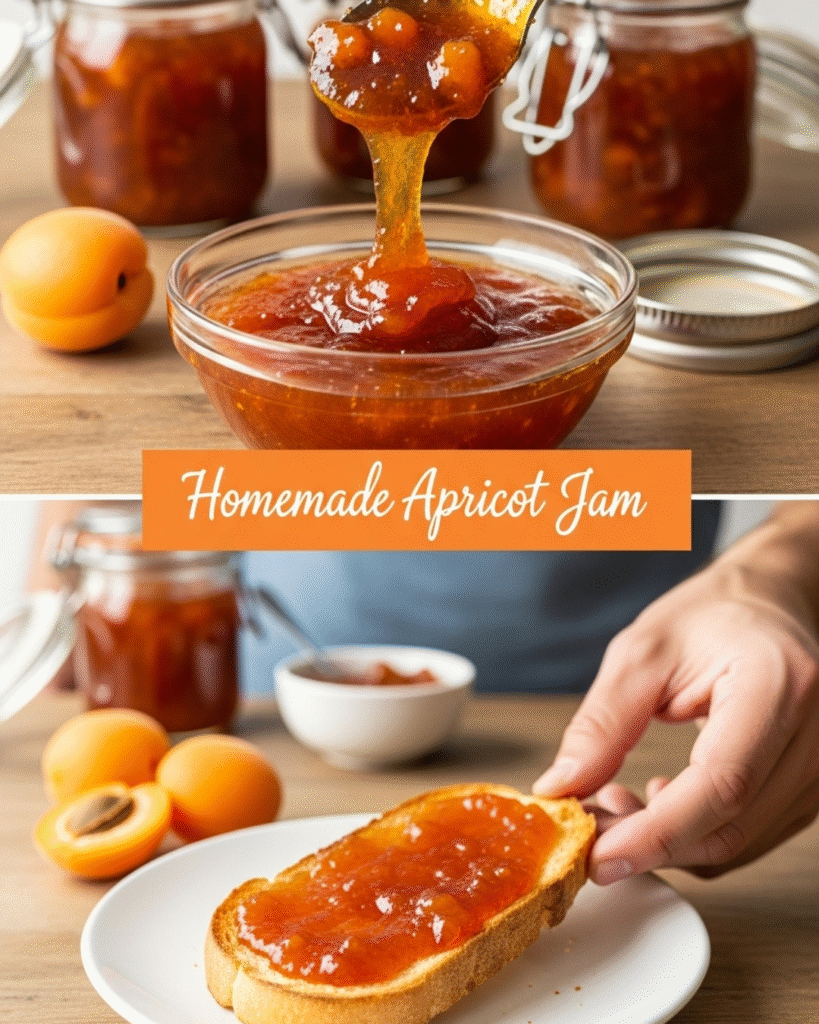
Présentation de la recette: The Philosophy Behind Preserved Perfection
Temps de préparation: 30 minutes (the meditation of preparation—washing, pitting, chopping each apricot with intention)
Temps de cuisson: 45-60 minutes (the alchemical transformation where patience becomes virtue)
Temps de refroidissement: 12-24 hours (the essential maturation where flavors integrate and deepen)
Rendement: Approximately 6-7 jars of 250ml (enough to last until next season’s apricots arrive, if you possess extraordinary restraint)
Niveau de difficulté: Intermédiaire (technically simple, spiritually profound)
Origine et tradition: Apricot jam (confiture d’abricots in French, marmellata di albicocche in Italian) belongs to that ancient lineage of preservation techniques that predate refrigeration, when capturing summer’s bounty represented survival strategy as much as culinary art. The Mediterranean basin—from Provence through northern Italy to Greek islands—claims this preserve as cultural patrimony, each region insisting their technique produces superior results. The truth? Exceptional apricot jam emerges from understanding fruit chemistry and respecting the transformation process, regardless of geography.
The magic of apricot jam lies in apricots’ natural pectin content—higher than many fruits, allowing for beautiful gel formation without commercial pectin additives. The fruit’s inherent acidity (pH 3.3-4.0) creates the acidic environment necessary for proper gelling while simultaneously acting as natural preservative inhibiting microbial growth. When you make apricot jam, you’re participating in biochemistry, physics, and microbiology simultaneously—though it feels like pure sensory poetry.
Ingrédients: The Sacred Elements of Transformation
The profound simplicity of this recipe—essentially two primary ingredients—places extraordinary emphasis on quality. Each component must be impeccable, as there’s nowhere for mediocrity to hide.
Les abricots (The Golden Protagonists)
- 2kg fresh, ripe apricots – Select fruit at perfect ripeness: yielding slightly to gentle pressure but not mushy, fragrant enough that you can smell them from arm’s length, displaying deep orange color with possible red blush. Underripe apricots lack flavor complexity and contain excess pectin that creates overly firm, marmalade-like texture; overripe fruit produces jam that won’t set properly due to pectin degradation.
The variety matters profoundly, though availability often determines choice. Bergeron apricots—those large, intensely flavored French cultivars—create the most complex jam with perfect sweet-tart balance. Blenheim apricots from California offer similar intensity. Moorpark and Tilton varieties work beautifully if others prove unavailable. Avoid those sad, cottony supermarket specimens shipped unripe from distant continents—they’ll never achieve the flavor intensity that makes homemade jam transcendent.
Petit conseil pro: If you can source apricots directly from orchards or farmers markets at peak season (typically June through July in northern hemisphere), buy extra and freeze them whole for jam-making later. Frozen apricots actually work beautifully for jam—the freezing process ruptures cell walls, releasing juices more readily and creating slightly softer texture that some prefer.
Le sucre (The Crystalline Alchemist)
- 1.2-1.4kg granulated white sugar (60-70% of fruit weight, depending on desired sweetness and fruit acidity) – Sugar functions far beyond mere sweetening: it’s preservative, gelling agent facilitator, and texture modifier. The sugar concentration in finished jam (typically 60-65%) creates hostile osmotic environment for microbial growth, enabling shelf-stable preservation without refrigeration.
White granulated sugar remains traditional and optimal for apricot jam—its neutral flavor allows fruit character to dominate, its fine crystal structure dissolves readily during cooking, and its pure sucrose composition provides consistent, predictable results. Some recipes incorporate brown sugar or honey for complexity, though these alternatives alter gel formation dynamics and flavor profiles significantly.
The sugar ratio sparks endless debate among jam makers. French tradition often uses equal weight sugar to fruit (1:1 ratio), creating intensely sweet, firmly-set preserves. Modern preferences trend toward reduced sugar (60-70% fruit weight), producing jam that tastes more fruit-forward, less cloying, though requiring precise cooking to achieve proper set without sugar’s full gelling assistance.
Le citron (The Acidic Mediator)
- Juice of 2-3 lemons (approximately 60-90ml fresh juice) – Lemon juice serves multiple critical functions: it lowers pH, activating pectin’s gelling capacity (pectin requires acidic environment, ideally pH 3.0-3.5, to form proper gel structure); it brightens apricot flavor, preventing the muddy, overly-sweet character that afflicts poorly balanced jams; and it provides additional natural preservative capacity through its citric acid content.
Always use fresh lemon juice—bottled versions contain preservatives and lack the aromatic essential oils that contribute subtle complexity. The amount varies based on apricot acidity; taste your fruit raw and adjust accordingly. Very tart apricots need minimal lemon; sweeter varieties benefit from the full amount.
Ingrédients optionnels (The Creative Enhancements)
While traditional apricot jam stands complete in its minimalist perfection, these optional additions create variations that expand your preserve repertoire:
- 1 vanilla bean, split and scraped – introduces warm, floral notes that complement apricot’s inherent perfume
- 5-6 whole cardamom pods, lightly crushed – adds exotic, aromatic complexity reminiscent of Middle Eastern pastries
- 2-3 sprigs fresh thyme – creates surprisingly beautiful savory-sweet dimension, removed before jarring
- 50ml amaretto or apricot brandy – deepens flavor while adding sophisticated boozy note (alcohol evaporates during cooking, leaving only essence)
- 1 cinnamon stick – warm spice that particularly complements less-flavorful commercial apricots
Préparation: The Ritual of Transformation
Jam making demands presence—not frantic multitasking but focused attention to sensory cues that signal each phase’s completion. This isn’t mere cooking; it’s a conversation with fruit, sugar, and heat, each element communicating through appearance, aroma, and behavior.
Étape 1: La préparation des fruits (The Meditation of Preparation)
Wash apricots gently under cool running water, handling them with the respect their delicate flesh deserves. Pat dry with clean kitchen towels.
Cut each apricot in half along its natural seam, twisting gently to separate halves. Remove the pit—that hard stone containing bitter almond-flavored kernel (some traditional recipes crack several pits, extracting kernels to cook with jam for subtle almond essence, though this requires caution as kernels contain trace amygdalin which metabolizes to cyanide; I leave this romantic but potentially problematic technique to those with expertise).
Examine each apricot half, removing any bruised or damaged portions—these oxidized areas contribute off-flavors and brown discoloration to finished jam. Cut apricots into quarters or smaller pieces depending on preferred final texture. I favor roughly ½-inch chunks that break down during cooking but retain some textural presence rather than completely smooth purée.
The weight consideration: After pitting and any trimming, weigh your prepared fruit. This weight determines sugar quantity in our ratio-based approach rather than the initial 2kg which included pits. If you have 1.6kg prepared fruit, use 960g-1.12kg sugar depending on your sweetness preference.
Étape 2: La macération (The Patient Extraction)
Place prepared apricots in your preserving pan or large, heavy-bottomed pot—copper pans remain traditional and offer superior heat distribution, though stainless steel works perfectly. Add your calculated sugar quantity and fresh lemon juice.
Stir gently, ensuring sugar contacts all fruit surfaces. Cover and allow to macerate at room temperature for 2-12 hours, preferably overnight. During this patient waiting, osmosis draws juice from apricot cells into the sugar, creating a syrup that will become your jam’s liquid medium while concentrating fruit flavors through partial dehydration.
The biochemical poetry: As you return hours later, you’ll discover the solid fruit-sugar mixture transformed into swimming fruit pieces surrounded by amber liquid—the sugar dissolved completely into extracted apricot juice, creating the foundation for your jam. This maceration isn’t mere convenience; it’s essential chemistry that produces superior flavor, texture, and color compared to immediately cooking fruit with sugar.
Étape 3: La cuisson initiale (The First Transformation)
Place your maceration vessel over medium-high heat. As temperature rises, watch the mixture transform—at first, nothing visible changes; then small bubbles form at the pan’s edges; suddenly, the entire surface erupts into rolling boil, foam rising dramatically.
This foam—primarily proteins and pectins released from fruit cells—needs removal for aesthetic and textural reasons. Use a large spoon or specialized skimming spoon to remove foam, scraping it into a bowl. Don’t discard this foam! Though not pretty enough for gift jars, it’s absolutely delicious—refrigerate and use within a week on morning toast or stirred into yogurt. This is the jam maker’s privilege, the reward for your labor.
Once skimmed, reduce heat to maintain vigorous but controlled boil—bubbles breaking the surface continuously, but not so violent that mixture spatters dangerously or risks scorching. This moderate boil concentrates the jam through water evaporation while cooking the fruit to complete tenderness.
The sensory journey: Initially, your jam smells raw, green, almost vegetable-like—undercooked fruit releasing volatile compounds. As cooking progresses (20-30 minutes), the aroma sweetens, deepens, becomes recognizably “jammy.” The color shifts from pale orange toward deeper amber-gold. The bubbles change character—large, slow bubbles of early boiling become smaller, faster, almost viscous.
Étape 4: Le test de la prise (The Precise Assessment)
Determining when jam reaches proper set separates successful preserves from disappointing failures—too soon, and jam remains liquid syrup; too late, and it becomes rigid, overly-firm paste that resists spreading.
The wrinkle test (traditional and reliable): Place several small plates in your freezer before beginning jam making. After 30-40 minutes of cooking, remove pan from heat. Drop a teaspoon of jam onto a frozen plate, return to freezer for 60 seconds. Push the jam blob with your finger—if the surface wrinkles and stays separated rather than running back together, your jam has reached setting point. If it remains liquid or runs together, continue cooking and test again in 5 minutes.
The temperature method (precise and scientific): Use an instant-read or candy thermometer to monitor jam temperature. Jam reaches setting point at 220°F (104-105°C) at sea level—this temperature indicates sufficient water evaporation to achieve 65% sugar concentration necessary for proper gel formation. Adjust for altitude: subtract approximately 2°F for each 1,000 feet above sea level.
The sheet test (experienced and intuitive): Dip a clean wooden spoon into jam, lift it out, turn it horizontally. Watch how jam drips off. Initially, it runs off in thin, rapid stream. As setting point approaches, it thickens, dropping in two distinct streams that eventually merge into a “sheet” that hangs briefly from the spoon before falling. This visual cue indicates pectin gelation beginning.
I prefer combining methods—monitoring temperature while periodically performing wrinkle tests. This redundancy prevents the heartbreak of jam that won’t set or conversely, overcooked jam with rigid, marmalade-like texture.
Petit conseil pro: Remove jam from heat slightly before you think it’s ready—it continues thickening as it cools, and slightly soft jam easily fixes by brief re-cooking, while overly-firm jam requires dilution and re-cooking, compromising flavor. Better to err cautious.
Étape 5: L’ajout des aromatics optionnels (The Final Flavor Layering)
If incorporating optional flavorings (vanilla, cardamom, thyme, spirits), add them during the final 10 minutes of cooking. This timing preserves their delicate aromatic compounds that would volatilize if added earlier. Whole spices like vanilla beans and cardamom pods are removed before jarring—their essence remains while physical presence doesn’t.
Spirits (amaretto, brandy) added at this stage flash off their alcohol quickly—within 2-3 minutes—while leaving concentrated flavor. The brief exposure to heat prevents the raw alcohol note that would result from adding after cooking completes.
Étape 6: La mise en pot (The Sacred Preservation)
While jam cooks, prepare your jars. Wash glass canning jars and lids in hot, soapy water, rinse thoroughly. Place jars in a large pot, cover with water, bring to boil, and boil for 10 minutes to sterilize. Keep jars in hot water until needed. Place lids in a small saucepan of simmering (not boiling) water.
When jam reaches setting point, work quickly while mixture remains hot. Remove sterilized jars from water bath using jar lifters or tongs, pouring water back into pot. Place jars on clean kitchen towels (thermal shock from cold counters can crack hot jars).
Using a canning funnel if available (makes the process infinitely tidier), ladle hot jam into jars, filling to within ¼ inch of rim. This headspace allows for expansion while creating proper vacuum seal. Wipe jar rims meticulously with clean, damp cloth—any jam residue prevents proper seal formation.
Place hot lids on jars, screw bands on until finger-tight (not torqued down with maximum force, which can prevent air escape necessary for vacuum formation). Invert jars for 5 minutes, then turn upright. This brief inversion distributes heat throughout the jam while sterilizing the jar lid interior.
The satisfaction symphony: Within 30 minutes to 2 hours, you’ll hear it—that distinctive “ping” as each jar’s lid seals, creating the vacuum that preserves your jam for months. Each ping represents success, transformation completed, summer captured in glass. Lids that don’t seal (centers remain raised rather than depressed) indicate incomplete sterilization or improper headspace—refrigerate these jars and use within 3 weeks.
Étape 7: Le vieillissement patient (The Essential Maturation)
Resist the overwhelming temptation to immediately open a jar. Your jam, though technically “done,” benefits profoundly from maturation—allow minimum 24 hours, preferably one week, before tasting. During this rest period, pectin molecules complete their alignment into optimal gel structure, flavors that seemed separate during hot tasting meld into unified complexity, and the jam achieves its final, ideal texture.
Store sealed jars in a cool, dark location—basement or pantry, away from direct heat or light that degrades color and flavor over time. Properly sealed, your apricot jam remains safe and delicious for 12-18 months, though quality peaks within the first year.
Petit conseil pro: The Accumulated Wisdom of Repeated Practice
Through dozens of apricot jam batches—successes that drew tears of joy, failures that taught humility—I’ve accumulated insights that elevate good jam to transcendent preservation.
The fruit ripeness paradox: Perfectly ripe apricots—those you’d eat fresh with juice running down your chin—actually contain less pectin than slightly underripe fruit. For optimal gel formation without added pectin, include 10-15% underripe apricots (firmer, less fragrant, paler color) with your ripe fruit. This blending provides natural pectin insurance while maintaining flavor complexity.
The stirring wisdom: During cooking, stir regularly but not constantly. Jam benefits from undisturbed boiling that concentrates through evaporation, but periodic stirring prevents scorching—especially as jam thickens and becomes prone to sticking. Develop a rhythm: vigorous boil for 3-4 minutes, brief stirring, return to boil. This balance optimizes evaporation while protecting against burnt-bottom disaster that ruins entire batches.
The color preservation secret: Apricot jam naturally darkens during cooking through Maillard reactions and caramelization—chemical transformations between sugars and amino acids that create complex flavors but duller color. To maintain vibrant orange, consider adding small amount (¼ teaspoon) ascorbic acid (vitamin C powder, available at pharmacies) with lemon juice. This antioxidant prevents oxidative browning without altering flavor.
The texture customization: Prefer smooth jam? Use a potato masher or immersion blender during cooking to break down fruit pieces completely. Love chunky, rustic preserves? Cut apricots larger and limit stirring, allowing pieces to retain integrity. Desire something between? Mash approximately half the fruit early in cooking, leaving remaining pieces intact for textural contrast.
The set-correction protocol: If your cooled jam proves too soft (happens occasionally despite careful testing), simply return it to the preserving pan, bring to boil, cook additional 5-10 minutes while monitoring temperature and performing wrinkle tests. Re-jar in clean, sterilized jars. If jam sets too firmly, add water or fresh apricot juice (2-4 tablespoons per jar), bring to boil to incorporate, re-jar. Both corrections work beautifully—imperfection becomes opportunity for refinement rather than failure.
The flavor depth enhancement: Consider roasting apricots before jam making—halve and pit fruit, arrange cut-side up on parchment-lined baking sheet, roast at 400°F (200°C) for 15-20 minutes until edges caramelize slightly. This develops deep, complex caramel notes through Maillard reactions while concentrating flavors through moisture evaporation. Proceed with recipe as written using roasted fruit.
La science derrière la magie: Understanding Jam Chemistry
For those who, like me, find profound satisfaction in understanding the “why” beneath the “how,” jam making offers fascinating insight into food science principles operating in your kitchen.
The Pectin Gel Formation
Pectin—a complex polysaccharide found in fruit cell walls—creates jam’s characteristic gel through a process requiring three components in precise balance: pectin, acid, and sugar.
In acidic conditions (pH 3.0-3.5), pectin molecules lose their negative charges that normally cause mutual repulsion. Neutralized, they can approach closely enough to form hydrogen bonds, creating a three-dimensional network that traps water molecules, producing gel structure. Sugar enhances this process by competing for water, reducing water available to hydrate pectin, forcing pectin molecules even closer together.
Apricots naturally contain sufficient pectin for gel formation without commercial pectin addition—their cell walls contain both high-methoxyl pectin (requiring sugar and acid for gelation) and some low-methoxyl pectin (gelling with calcium ions present naturally). This innate pectin abundance makes apricot jam beginner-friendly compared to low-pectin fruits like strawberries requiring pectin supplementation.
The Preservation Mechanisms
Traditional jam’s shelf stability results from multiple preservation factors working synergistically:
Water activity reduction: The high sugar concentration (60-65% in finished jam) binds water molecules through osmotic interaction, making water unavailable to microorganisms that require free water for metabolic processes. This “bound water” environment prevents bacterial and fungal growth even at room temperature.
Acidic pH: Apricots’ natural acidity (pH 3.3-4.0), enhanced by lemon juice addition, creates hostile environment for most spoilage organisms. Only yeasts and molds tolerate such acidity, hence the importance of proper sealing that excludes oxygen these organisms require.
Heat sterilization: The boiling temperature during cooking destroys vegetative bacteria, yeasts, and molds. Filling jars while jam remains above 185°F (85°C) pasteurizes jar interiors, while the vacuum seal formed during cooling prevents recontamination.
The Maillard Complexity
Those deep, caramel notes developing in well-made jam beyond simple fruit-sugar flavor result from Maillard reactions—non-enzymatic browning occurring between amino acids (from fruit proteins) and reducing sugars when heated. This reaction generates hundreds of flavor compounds, including furans, pyrazines, and other heterocyclic aromatics that create complexity impossible to achieve through fruit alone.
The Maillard reaction requires time and temperature—hence patient cooking at controlled boil produces more complex jam than rapid, high-temperature cooking. This also explains why homemade jam achieves depth commercial products lack: industrial processing prioritizes speed over flavor development.
Accompagnements suggérés: Honoring Your Preserved Masterpiece
Apricot jam transcends its identity as mere toast topping—though spread on warm, buttered sourdough, it achieves a perfection that requires no elaboration. Consider these inspired applications:
Pour le petit-déjeuner: Layer into yogurt parfaits with granola and fresh berries; swirl into oatmeal or porridge; spread on warm croissants or pain au chocolat; incorporate into French toast batter for fruit-studded breakfast elegance.
Pour la pâtisserie: Apricot jam functions as professional pastry ingredient—it glazes fruit tarts (heat slightly for brushable consistency); fills Austrian Sachertorte between cake layers; becomes Linzer torte’s traditional filling; sandwiches butter cookies into jewel-like treats. Pastry chefs heat and strain apricot jam to create abricotage—the glossy glaze coating professional fruit tarts.
Pour les applications salées: Surprisingly, apricot jam transitions beautifully into savory contexts—glaze roasted chicken during final minutes of cooking; mix with Dijon mustard and black pepper for pork chop marinade; thin with vinegar and shallots for salad vinaigrette with fruit essence; serve with cheese boards where its sweetness complements sharp aged cheeses magnificently.
Pour les moments de plaisir simple: Sometimes, the most profound pleasure emerges from simplicity—a spoonful straight from the jar, eaten standing at the kitchen counter, eyes closed, transported back to summer’s abundance. This is legitimate consumption, not guilty indulgence. I encourage it frequently.
Les accords de fromage: Apricot jam creates inspired cheese pairings: tangy chèvre finds perfect counterpoint in jam’s sweetness; aged Comté or Gruyère develops new dimensions when accompanied by apricot preserve; creamy Brie gains sophistication with a small dollop alongside.
À vos tabliers: The Invitation to Preserve
This homemade apricot jam represents more than preserved fruit—it’s an archive of summer, a defiant gesture against industrial food systems that ship mediocrity across continents, and ultimately, a profound act of care for yourself and those you feed. Each jar contains hours of patient attention, quality ingredients selected deliberately, and the satisfaction that emerges from mastering a traditional technique our ancestors practiced for millennia.
Your first batch might not achieve perfection—the set might be slightly soft, the color perhaps darker than you envisioned, the flavor still revealing room for refinement in future iterations. This is expected, welcome even, as each batch teaches lessons impossible to convey through written instruction. You’ll develop intuition about visual cues that signal doneness, olfactory sensitivity to the moment when jam transitions from cooking fruit to preserved perfection.
I encourage you to make this recipe repeatedly throughout apricot season, each time with slightly different fruit at varying ripeness stages, perhaps experimenting with sugar ratios or incorporating those optional aromatics. Document your observations—tasting notes, cooking times, gel formation success. This systematic experimentation develops expertise while creating a personalized recipe reflecting your specific preferences and ingredients.
Share your jars—few gifts communicate care more eloquently than homemade preserves, each jar representing hours of your attention and skill. That small jar of amber-gold jam becomes tangible affection, edible proof that someone invested time and effort specifically for the recipient. This is the currency of genuine relationship, far more meaningful than any commercially available luxury.
À vos tabliers, and may your pantry always contain jars of summer’s golden essence, ready to brighten the darkest winter morning!
Bon appétit!