Discover the ultimate recipe for magnesium lotion to soothe sore muscles, improve sleep, and boost your daily wellness routine with this easy DIY guide.
Important Disclaimer: This article is for informational purposes only and should not replace professional advice. For health-related topics, consult healthcare providers. For financial or legal matters, seek qualified professional guidance. For safety procedures, verify current best practices and local regulations. Individual results may vary, and personal circumstances should always be considered when implementing any suggestions.
Why You Need a Recipe for Magnesium Lotion in Your Life
Have you ever felt that nagging tightness in your shoulders after a long day, or found yourself tossing and turning at night despite feeling exhausted? You aren’t alone. Many people are turning to transdermal magnesium—magnesium absorbed through the skin—as a natural way to support their bodies. Learning a recipe for magnesium lotion allows you to skip the expensive store-bought versions and create a customized, high-quality product right in your own kitchen.
Magnesium is an essential mineral responsible for over 300 biochemical reactions in the human body. It helps regulate nerve function, blood pressure, and even muscle relaxation. While you can get magnesium through diet, many find that topical application is a gentle and effective way to increase their levels without the digestive upset sometimes caused by oral supplements. By making your own, you unlock the power of self-care and take control of the ingredients touching your skin.
The Science of Transdermal Absorption
When you apply magnesium topically, it bypasses the digestive system. This is particularly helpful for those with sensitive stomachs. A homemade lotion combines the potency of magnesium oil with the moisturizing benefits of natural butters, making it a luxurious addition to your nightly routine.
Why DIY is Better
Store-bought magnesium lotions often contain synthetic fragrances, parabens, and stabilizers. When you follow a recipe for magnesium lotion at home, you ensure that only nourishing, organic ingredients like shea butter and coconut oil are entering your pores. Plus, it’s incredibly cost-effective!
Getting Started: Ingredients and Tools for Success
Before you start mixing, it’s important to understand what makes a magnesium lotion work. You don’t need a lab to do this—just a few high-quality staples and a little bit of enthusiasm. Building your foundation with the right supplies ensures a smooth, shelf-stable result that feels like a dream on your skin.
The Essential Components
- Magnesium Chloride Flakes: This is the star of the show. Unlike Epsom salts (magnesium sulfate), magnesium chloride is often cited as being more easily absorbed by the skin.
- Distilled Water: To prevent mold and bacteria growth, always use distilled water rather than tap water.
- Carrier Butters and Oils: Shea butter and coconut oil provide the “lotion” base, offering deep hydration.
- Beeswax: This acts as an emulsifier, helping the oil and water stay bonded together.
Necessary Equipment
You likely already have these in your kitchen! You will need a small saucepan, a glass measuring cup (to act as a double boiler), a kitchen scale or measuring spoons, and a hand mixer or immersion blender. A clean glass jar for storage is the final piece of the puzzle.
A Note for Beginners
If you’ve never used magnesium oil before, you might experience a slight tingling sensation. This is completely normal! Starting with a lotion rather than a straight spray helps buffer the magnesium, making it much more comfortable for sensitive skin. You’re doing something wonderful for your body, so give yourself grace as you learn the process.
Step-by-Step Recipe for Magnesium Lotion
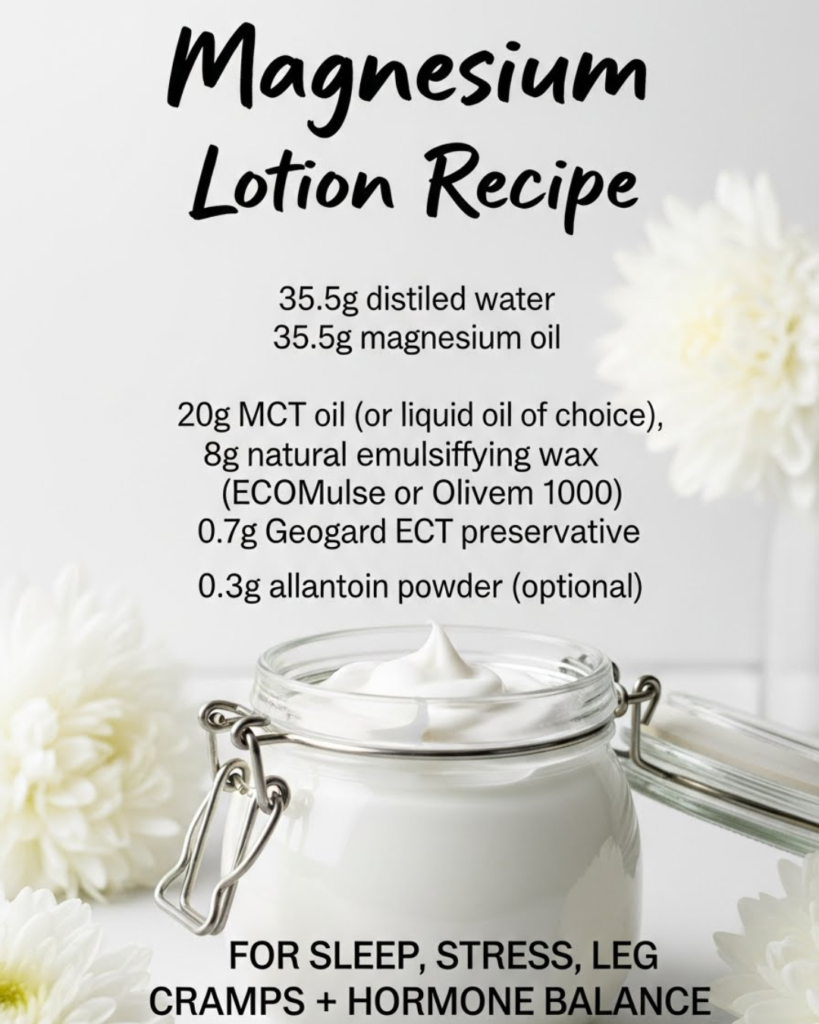
Ready to transform your wellness routine? Follow these steps to create a creamy, whipped magnesium butter that rivals any high-end spa product.
Phase 1: Creating the Magnesium “Oil”
First, you need to turn those dry flakes into a concentrated liquid.
- Boil 1/2 cup of distilled water.
- Add 1/2 cup of magnesium chloride flakes to a glass bowl.
- Pour the boiling water over the flakes and stir until completely dissolved.
- Let this cool completely. This is now your “magnesium oil.”
Phase 2: Melting the Base
While your magnesium liquid is cooling, prepare your moisturizing base.
- In a double boiler (or a glass bowl over a pot of simmering water), combine 1/2 cup of shea butter, 1/4 cup of coconut oil, and 2 tablespoons of beeswax.
- Melt the mixture over low heat until it is a clear, uniform liquid.
- Remove from heat and let it cool until it starts to look slightly opaque but is still soft (about 30–60 minutes in the fridge).
Phase 3: The Emulsification
This is where the magic happens!
- Use a hand mixer to whip the cooled oils until they are slightly fluffy.
- Very slowly—one teaspoon at a time—drizzle the cooled magnesium oil into the butter while continuing to blend.
- Continue whipping until you achieve a thick, creamy consistency similar to buttercream frosting.
- Transfer your finished lotion into a clean glass jar.
Expert Tips and Customization Strategies
Once you’ve mastered the basic recipe for magnesium lotion, you can start to get creative. Personalizing your blend allows you to target specific needs, such as sleep support or intense muscle recovery.
Aromatherapy Additions
Essential oils can elevate your lotion from a simple remedy to a sensory experience.
- For Sleep: Add 15 drops of Lavender or Roman Chamomile.
- For Sore Muscles: Try Peppermint or Eucalyptus for a cooling sensation.
- For Relaxation: Frankincense and Bergamot offer a grounding, earthy scent.
Adjusting Consistency
If you prefer a lighter lotion, you can increase the amount of coconut oil and decrease the shea butter. For a heavy, “body butter” feel, stick to the recipe above. If you live in a very warm climate, adding an extra teaspoon of beeswax will help keep the lotion from melting in the jar.
Pro-Tip: The “Cooling” Rule
The biggest mistake beginners make is trying to mix the magnesium oil into the butters while they are still hot. If the temperatures are too different, the lotion will separate. Patience is your best friend here! Ensure both components are at room temperature for a perfect emulsion.
Troubleshooting Common Challenges
DIY projects don’t always go perfectly the first time, and that’s okay! Here is how to fix the most common issues so you can stay encouraged on your journey.
My Lotion Separated!
If you see liquid pooling at the bottom of your jar, don’t worry. This usually happens if the magnesium oil was added too quickly. To fix it, simply dump everything back into a bowl, melt it down gently, let it cool again, and re-whip.
It’s Too Gritty
If the lotion feels “sandy,” it’s likely that the magnesium flakes didn’t fully dissolve in the water, or the shea butter cooled too slowly and formed crystals. To prevent this, ensure the water is boiling when you add the flakes, and try to cool your melted oils in the refrigerator to speed up the setting process.
It Feels Sticky
Magnesium is a mineral (essentially a salt), so it can leave a slightly tacky residue on the skin. To minimize this, apply the lotion to damp skin right after a shower, or rub it in thoroughly until fully absorbed. A little goes a long way!
Maximizing Results for Long-Term Wellness
To truly see the benefits of your recipe for magnesium lotion, consistency is key. Integrating this into your daily habits will lead to the best results over time.
Where to Apply
For the best absorption, apply the lotion to “thin-skinned” areas like the tops of your feet, the insides of your arms, or your stomach. If you are using it for restless legs, massage a generous amount into your calves about 30 minutes before bed.
Building a Routine
Try keeping your jar of magnesium lotion on your nightstand. Making it the last thing you do before sleep not only helps your body relax but also ensures you don’t forget your daily dose. Over a few weeks, many users report feeling more “even-keeled” and waking up feeling more refreshed.
Complementary Strategies
While topical magnesium is fantastic, it works best when paired with other healthy habits.
- Hydration: Magnesium helps regulate electrolytes, so drink plenty of water.
- Epsom Salt Baths: On days when you are extra sore, a soak can provide additional relief.
- Mindfulness: Pair your lotion application with deep breathing to signal to your nervous system that it is time to wind down.
Conclusion
Creating your own recipe for magnesium lotion is more than just a DIY project; it’s a powerful step toward taking ownership of your physical well-being. By following these simple steps, you’ve learned how to harness the benefits of an essential mineral in a way that is gentle, effective, and completely natural.
You now have the tools to soothe your muscles, calm your mind, and enjoy a deeper sense of relaxation every single day. Remember, wellness is a journey of small, consistent actions. Your body will thank you for the extra care you’re providing.
Would you like me to help you create a label design or a printable instruction card for your new homemade lotion?