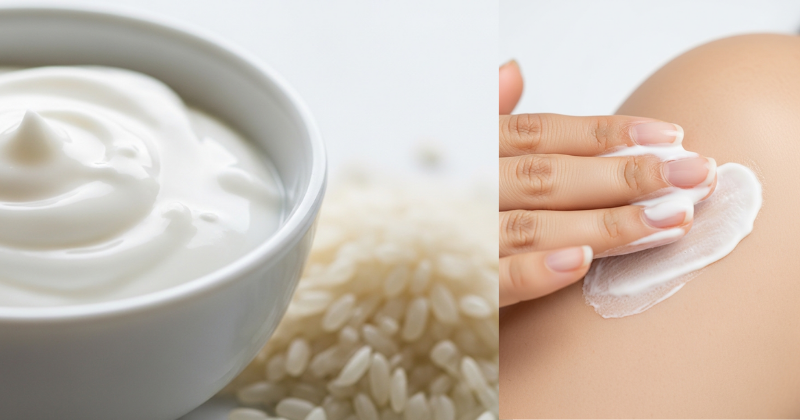
Japanese women have maintained some of the world’s most celebrated skin — characterized by luminosity, even tone, and remarkable resilience against visible aging — for centuries, and rice has been central to their skincare traditions throughout. Modern cosmetic biochemistry now explains precisely why: rice contains a convergence of bioactive compounds that address skin radiance through multiple simultaneous molecular mechanisms. A homemade rice milk facial cream delivers ferulic acid, inositol, allantoin, ceramide precursors, and gamma-oryzanol directly to skin in a fresh, preservative-free preparation that commercial products cannot replicate at equivalent potency. This complete guide walks you through the biochemical rationale, the precise formulation, and the application science behind a rice milk facial cream that genuinely transforms your skin’s luminosity — grounded in phytochemistry and dermatological evidence rather than wishful tradition.

The Biochemistry of Rice’s Skin-Brightening Properties
Before preparing a single gram of this cream, understanding the specific molecular mechanisms behind rice’s glow-inducing effects transforms your approach from intuitive folk remedy to scientifically purposeful skincare.
Ferulic Acid: The Photoprotective Antioxidant
Ferulic acid — a hydroxycinnamic acid present in rice bran at concentrations of 0.5-1.5mg per gram — is among the most rigorously studied antioxidant compounds in cosmetic dermatology. Its significance extends well beyond general antioxidant activity: ferulic acid exhibits a unique property of doubling its own antioxidant potency upon ultraviolet light exposure, through a photochemical activation mechanism that increases its radical-scavenging capacity precisely when UV-induced reactive oxygen species (ROS) generation peaks.
In practical skincare terms, ferulic acid neutralizes superoxide radicals, hydroxyl radicals, and singlet oxygen species generated by UV exposure and metabolic processes — the same ROS that oxidize melanin precursors into the brown pigments of post-inflammatory hyperpigmentation and photoaging dark spots. Research published in the Journal of Investigative Dermatology demonstrated that topical ferulic acid reduces UV-induced p53 mutation frequency in keratinocytes — a finding with direct implications for both skin luminosity and long-term photoprotection. When combined with vitamins C and E (which this formulation includes through complementary ingredients), ferulic acid creates a synergistic antioxidant system four times more potent than any single antioxidant alone.
Inositol and the Ceramide Connection
Rice — particularly brown rice and rice bran — contains significant quantities of inositol (cyclohexanehexol), a carbohydrate with documented roles in skin barrier function maintenance. Inositol serves as a precursor to phosphatidylinositol, a key phospholipid in ceramide-producing sphingolipid pathways in the stratum corneum. The stratum corneum’s lamellar lipid bilayers — composed of approximately 50% ceramides, 25% cholesterol, and 15% free fatty acids — constitute the primary barrier against transepidermal water loss (TEWL) and environmental irritant penetration.
When the ceramide content of these lamellar bilayers falls below optimal levels (as occurs with aging, excessive cleansing, and environmental stress), TEWL increases, skin appears dull and dehydrated, and barrier-disrupting irritants access deeper skin layers more readily. Inositol-rich preparations support ceramide pathway activity, contributing to the “glass skin” luminosity that results from optimal stratum corneum hydration and integrity.
Allantoin: The Cell Renewal Compound
Rice contains allantoin — a purine derivative also found in comfrey root and wheat germ — at concentrations sufficient to produce dermatological effects when concentrated in a cream preparation. Allantoin’s primary cosmetic mechanism involves stimulating epidermal growth factor (EGF) receptor pathways, accelerating keratinocyte proliferation and differentiation. This accelerated cell turnover removes the dull, oxidized, glycation-damaged corneocytes that accumulate on the skin surface over time, replacing them with newly differentiated cells whose intact lipid bilayers and hydrated keratin matrix produce the light-reflecting surface associated with glowing skin.
Allantoin also exhibits keratolytic properties at higher concentrations — gently loosening corneocyte adhesion to facilitate natural desquamation — and mild anti-irritant activity through inhibition of calcium-dependent inflammatory pathways. This combination of cell renewal stimulation and anti-inflammatory activity makes it particularly valuable for achieving glow without the irritation that stronger exfoliants like retinoids or alpha-hydroxy acids can produce.
The Homemade Rice Milk Facial Cream Recipe: Complete Formulation
This formulation produces approximately 60ml of finished cream — approximately a 4-6 week supply with twice-daily facial application — using a layered emulsion approach that maximizes ingredient stability and skin penetration.
Ingredients and Their Functional Roles
For the rice milk base:
- 100g short-grain white rice or, preferably, brown rice (higher bran content = more ferulic acid and gamma-oryzanol)
- 400ml filtered water (distilled water preferred for formulation stability)
For the cream emulsion:
- 3 tablespoons freshly prepared rice milk (water-soluble active compounds)
- 2 tablespoons rice bran oil (emollient, gamma-oryzanol source, ceramide support)
- 1 tablespoon shea butter (occlusive barrier, ursolic acid anti-inflammatory)
- 1 teaspoon beeswax or candelilla wax for vegan formulation (emulsion stabilizer, texture agent)
- 1 teaspoon vitamin E oil (tocopherol — antioxidant preservation + skin penetration enhancement)
- 1/2 teaspoon vegetable glycerin (humectant — draws atmospheric moisture to skin surface)
- Optional: 3 drops rosehip seed oil (trans-retinoic acid, linoleic acid for brightening enhancement)
Step-by-Step Preparation Protocol
Step 1: Prepare Concentrated Rice Milk (30 minutes). Rinse your rice thoroughly under cold water to remove surface starch. Combine rinsed rice with filtered water in a saucepan and bring to a gentle simmer — not a rolling boil, which accelerates degradation of heat-sensitive polyphenols. Simmer uncovered for 20-25 minutes until the water has reduced by approximately 40% and turned milky white from starch and protein extraction. The concentration of bioactive compounds in the water increases as it reduces — this step is where most of rice’s water-soluble actives (ferulic acid, inositol, allantoin) transfer into your cream base.
Strain the cooked rice through a fine mesh sieve, pressing gently to extract all the starchy liquid. Allow this rice milk to cool completely to room temperature — approximately 25°C. You should have approximately 200-250ml of opaque, creamy rice milk. Store what you won’t immediately use refrigerated for up to 5 days.
Step 2: Create the Oil Phase. In a small heat-proof bowl set over a pan of simmering water (bain-marie method), combine the shea butter and beeswax. Heat gently, stirring occasionally, until both are completely melted and combined — approximately 5 minutes. Add the rice bran oil and vitamin E oil, stir to incorporate, and remove from heat. Allow this oil phase to cool to approximately 40°C — warm but not hot to the touch.
Step 3: Warm the Water Phase. Measure 3 tablespoons of your prepared rice milk into a separate small bowl and warm gently to approximately 38-40°C. Add the vegetable glycerin and stir to combine. Both phases should now be approximately the same temperature — temperature matching is critical for stable emulsion formation.
Step 4: Emulsification. The most technically demanding step — and the one that determines your cream’s final texture and stability. Pour the warm rice milk mixture into the oil phase slowly and in a thin, steady stream while whisking continuously with a small whisk or electric milk frother. The shear force of whisking disperses the water phase into the oil phase as microscopic droplets, creating the oil-in-water emulsion that gives cream its smooth, spreadable texture. Continue whisking as the mixture cools — approximately 3-5 minutes of consistent agitation.
As the mixture reaches approximately 30°C, it will begin to thicken noticeably. This is the beeswax crystallizing and the shea butter solidifying into the emulsion matrix, providing the structural lattice that keeps oil and water droplets dispersed. If you observe separation at this stage, the temperature differential between phases was likely too large — return to the bain-marie briefly to rewarm and repeat emulsification.
Step 5: Add Optional Actives and Transfer. Once the cream has reached approximately 25°C, add rosehip seed oil if using and stir gently to incorporate. Transfer immediately to a sterilized glass jar (sterilize with 70% isopropyl alcohol and allow to fully dry before use). An airless pump container significantly extends shelf life by minimizing oxygen exposure. Refrigerate and use within 3-4 weeks, or within 1 week if stored at room temperature.
Advanced Formulation Variations for Targeted Results
The Brightening-Enhanced Formula for Hyperpigmentation
For skin with existing dark spots, post-inflammatory hyperpigmentation, or uneven tone, enhancing the base formula with complementary tyrosinase-inhibiting compounds amplifies the brightening effect substantially. Adding 1/4 teaspoon of niacinamide (vitamin B3 — inhibits melanosome transfer from melanocytes to keratinocytes, reducing visible pigmentation) during the water phase, and substituting 1 teaspoon of the rice bran oil with cold-pressed mulberry root extract-infused oil (mulberry’s oxyresveratrol is among the most potent plant-derived tyrosinase inhibitors documented), creates a brightening formulation targeting hyperpigmentation through three simultaneous pathways: antioxidant inhibition of melanin oxidation (ferulic acid), melanosome transfer inhibition (niacinamide), and tyrosinase inhibition (mulberry/rice bran phytosterols).
The Anti-Aging Variant for Mature Skin
For mature skin where collagen support alongside luminosity is the priority, substituting the plain shea butter with sea buckthorn-infused shea (sea buckthorn’s palmitoleic acid — omega-7 — is a direct substrate for new skin cell membrane synthesis) and adding 1/4 teaspoon of peptide serum (available from cosmetic suppliers) during the final cooling phase creates a formulation addressing both radiance and structural support simultaneously.
Seasonal Adaptations by Climate
In humid tropical or subtropical climates (Southeast Asia, coastal Mediterranean, Caribbean), the cream’s occlusive components — shea butter and beeswax — can feel heavy, particularly for oily or combination skin types. Reduce shea butter to 1 teaspoon and replace the remaining volume with additional rice milk and a small amount of aloe vera gel, producing a lighter gel-cream texture appropriate for warm, humid conditions without sacrificing the bioactive compound delivery. In cold, dry climates (Nordic regions, continental winters), increasing shea butter to 3 tablespoons and adding a few drops of squalane provides enhanced barrier occlusion against wind and cold-induced TEWL.
Troubleshooting Common Formulation Challenges
Emulsion Separation After Preparation
Separation — visible as water pooling at the bottom or oil droplets floating on the surface — indicates emulsion instability resulting from temperature mismatch between phases, insufficient agitation duration, or wax quantity insufficient for the water content. The fix involves rewarming the separated cream in a bain-marie until fully liquid, adding an additional 1/2 teaspoon of beeswax or 1/4 teaspoon of emulsifying wax (a more reliable natural emulsifier available from cosmetic suppliers), and re-whisking through the entire cooling cycle. For consistent results without emulsification uncertainty, BTMS-50 (behentrimonium methosulfate and cetearyl alcohol — plant-derived) at 5% of total formulation weight provides reliable emulsification that eliminates this common challenge.
Cream Texture Too Heavy or Greasy
If the finished cream feels excessively occlusive or leaves a greasy film, the oil-to-water ratio is weighted too heavily toward lipid phase. Reduce shea butter to 1/2 tablespoon and beeswax to 1/2 teaspoon, compensating with an additional tablespoon of rice milk in the water phase. This adjustment shifts the final formulation toward a lighter, lotion-like texture that absorbs more rapidly — better suited for daytime wear under sunscreen or makeup.
Short Shelf Life and Rancidity
Without commercial preservatives, this formulation’s primary instability risk comes from microbial growth in the water phase and oxidative rancidity in the oil phase. Vitamin E addresses oxidative rancidity effectively. Microbial stability requires either consistent refrigeration (limiting room-temperature exposure to application only), addition of a natural preservative (Leucidal Liquid at 2-4%, derived from fermented radish root, extends shelf life to 8-12 weeks), or preparation of very small weekly batches that are used completely before spoilage occurs. Always use clean implements to dispense product — dipping fingers directly into the jar introduces contamination that rapidly degrades preservative-free formulations.
Maximizing Long-Term Glow Results
Building a Rice-Based Skincare System
The rice milk facial cream achieves its maximum potential when integrated within a coordinated skincare routine where each step builds upon the previous one’s mechanism. A rice water toner (the strained soaking water from raw rice, applied directly after cleansing) provides an initial layer of ferulic acid and inositol delivery before the cream seals these compounds against the skin. A weekly rice bran exfoliating mask — mixing rice bran powder with honey and yogurt — accelerates the cell turnover that reveals the radiant new skin beneath oxidized surface cells. This layered system creates cumulative compound delivery across multiple formulation formats, producing results meaningfully superior to any single product.
Nutrition as the Internal Complement
The same phytochemicals responsible for rice’s topical glow-inducing effects — ferulic acid, gamma-oryzanol, and inositol — also benefit skin when consumed as part of the diet. Brown rice and rice bran provide dietary ferulic acid that accumulates in skin tissue through systemic circulation, offering photoprotective effects from within. Adequate dietary protein ensures the amino acid availability for collagen synthesis that topical preparations cannot independently supply. The luminosity that rice milk facial cream supports externally is profoundly amplified when matched by the nutritional substrate for genuine skin cell renewal internally.
Conclusion
Homemade rice milk facial cream delivers a precisely targeted set of bioactive compounds — ferulic acid, inositol, allantoin, gamma-oryzanol, and ceramide precursors — that work through complementary molecular mechanisms to produce the radiant, even-toned, luminous skin associated with centuries of Asian beauty traditions. The formulation is accessible, genuinely effective, and completely transparent in its ingredient chemistry — a rare combination in the skincare landscape. Prepare your first batch this weekend using the complete protocol provided, apply morning and evening after cleansing, and commit to eight weeks of consistent use for the full spectrum of results that surface cell renewal, barrier restoration, and antioxidant photoprotection collectively achieve. Your skin’s capacity for genuine, healthy luminosity is built into its biology — this cream simply gives it the molecular tools to express it fully.