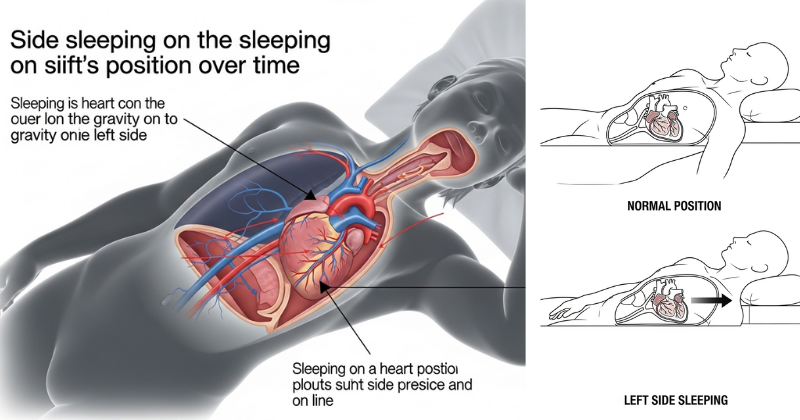
Side sleeping affects how your heart rests inside your chest, but does it actually change heart position over time? Here’s what science says.
Have you ever wondered whether your favorite sleep position could shift your heart? If you sleep on your left or right side every night, it’s natural to question how side sleeping affects your heart position over time.
Sleep takes up nearly one-third of your life. That means your body stays in certain positions for thousands of hours every year. So it’s reasonable to ask: does side sleeping move your heart? Does left-side sleeping help or strain it? And can long-term side sleeping change your anatomy?
In this article, you’ll discover how side sleeping affects your heart position over time, what actually shifts inside your chest when you lie down, and how to choose the best sleep position for heart health—without fear or confusion.
Let’s clear up the myths and focus on facts.
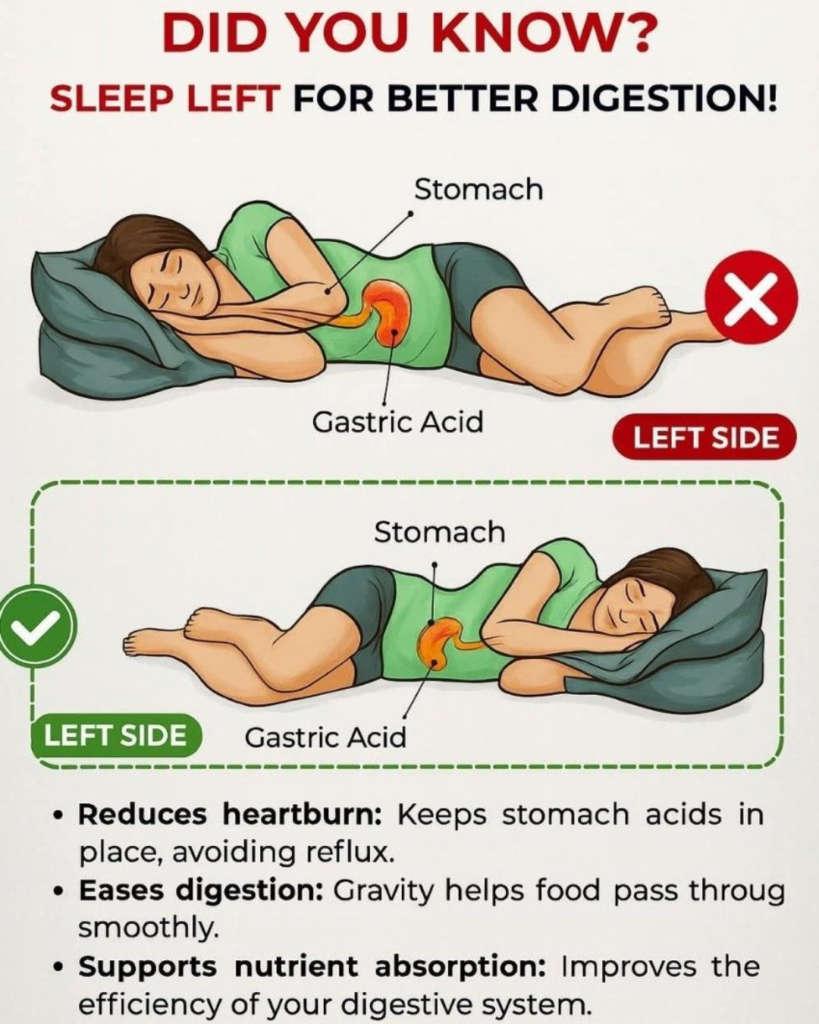
Understanding Your Heart’s Natural Position
Before exploring how side sleeping affects your heart position over time, you need to understand where your heart actually sits.
Your heart is not centered perfectly in your chest. It sits slightly left of the midline, protected by:
- The rib cage
- The sternum (breastbone)
- The lungs
- The diaphragm
It is also anchored by major blood vessels like the aorta and vena cava. These structures prevent your heart from freely “moving around.”
Is the Heart Fixed in Place?
Your heart is stable but not rigid.
It shifts slightly with:
- Breathing
- Body position
- Gravity
- Fullness of nearby organs
However, these shifts are temporary and normal.
Why Gravity Matters
When you lie on your side, gravity causes organs—including the heart—to settle slightly toward the lower side. This is not permanent repositioning. It is simply how soft tissue responds to gravity.
So when asking how side sleeping affects your heart position over time, the key word is: temporary.
What Happens to Your Heart When You Sleep on Your Side?
Let’s break it down clearly.
Left-Side Sleeping and Heart Position
When you lie on your left side:
- The heart rests closer to the chest wall
- The left lung compresses slightly
- You may feel your heartbeat more clearly
This is why some people notice stronger heartbeats in this position.
For certain individuals—especially during pregnancy—left-side sleeping is often recommended because it can improve circulation and reduce pressure on major blood vessels.
Right-Side Sleeping and Heart Orientation
When you lie on your right side:
- The heart shifts slightly toward the center
- Pressure on the left chest wall decreases
- Some people feel fewer palpitations
Neither side permanently moves your heart. Instead, the position simply changes how it rests relative to gravity.
Does Side Sleeping Change Heart Structure?
No evidence shows that healthy adults experience permanent structural changes in heart position from side sleeping.
Your rib cage and connective tissues maintain long-term anatomical stability.
How Side Sleeping Affects Your Heart Position Over Time: The Long-Term View
Now let’s directly answer the central question.
Can Side Sleeping Permanently Move Your Heart?
Short answer: No, side sleeping does not permanently shift your heart’s position over time in healthy individuals.
Temporary changes occur due to gravity and lung compression, but your heart returns to its usual orientation when you stand or change position.
What Research Suggests
Imaging studies using MRI and echocardiography show that heart orientation changes slightly depending on posture. However:
- These changes are reversible
- They do not alter anatomy long-term
- They do not “stretch” or displace the heart
Your body is built to handle positional shifts.
When Position May Matter
There are exceptions. Certain conditions may make position more noticeable:
- Heart failure
- Enlarged heart (cardiomegaly)
- Acid reflux affecting chest sensation
- Pregnancy
In these cases, sleep position can influence comfort and circulation, but still does not physically relocate the heart permanently.
Benefits and Considerations of Side Sleeping for Heart Health
Understanding how side sleeping affects your heart position over time also means exploring whether it helps or harms cardiovascular health.
Potential Benefits of Left-Side Sleeping
Some research suggests left-side sleeping may:
- Improve lymphatic drainage
- Enhance circulation
- Reduce pressure on the inferior vena cava (especially in pregnancy)
This is why doctors often recommend left-side sleeping during pregnancy.
When Right-Side Sleeping May Feel Better
Some people with heart conditions report feeling more comfortable on the right side.
Possible reasons include:
- Reduced awareness of heartbeat
- Less chest wall pressure
- Improved breathing comfort
Comfort matters. Quality sleep is crucial for heart health overall.
Common Concerns About Side Sleeping and the Heart
Let’s address frequent worries.
Why Do I Feel My Heartbeat More on My Left Side?
When lying on your left side, your heart is closer to your chest wall. That proximity makes the heartbeat easier to feel.
This does not mean your heart is stressed.
Can Side Sleeping Cause Heart Problems?
For most healthy individuals, no.
Heart disease risk is influenced by:
- Diet
- Physical activity
- Smoking
- Blood pressure
- Genetics
Sleep position alone does not cause heart disease.
Should People With Heart Conditions Avoid Side Sleeping?
This depends on personal comfort and medical guidance.
Some individuals with advanced heart conditions may feel discomfort on one side. In that case, adjusting position based on comfort is reasonable.
Optimizing Sleep for Heart Health
While understanding how side sleeping affects your heart position over time is helpful, sleep quality matters even more.
1. Prioritize Overall Sleep Duration
Aim for 7–9 hours nightly. Chronic sleep deprivation increases:
- Blood pressure
- Inflammation
- Cardiovascular risk
2. Improve Sleep Environment
- Keep your room cool and dark
- Use supportive pillows
- Reduce screen exposure before bed
3. Combine Sleep With Heart-Healthy Habits
To truly protect your heart:
- Eat balanced meals
- Exercise regularly
- Manage stress
- Stay hydrated
If you’ve explored topics like nourishing your organs daily or best foods for heart health, you already know lifestyle consistency is key.
When to Talk to a Doctor
Although side sleeping is generally safe, consult a healthcare provider if you experience:
- Persistent chest pain
- Shortness of breath
- Severe palpitations
- Swelling in legs
- Sudden fatigue
These symptoms are unrelated to sleep position and require evaluation.
The Bigger Picture: Position vs. Overall Health
It’s easy to worry about how side sleeping affects your heart position over time. But here’s the empowering truth:
Your body is resilient.
Your heart is protected.
Your rib cage stabilizes it.
Your connective tissues anchor it.
Position changes are natural and temporary.
The real long-term heart protectors are:
- Nutrition
- Movement
- Sleep quality
- Stress management
- Avoiding smoking
Focus on those pillars, and your heart will thank you.
Conclusion: Sleep Comfortably, Sleep Confidently
So, how does side sleeping affect your heart position over time?
It causes temporary shifts due to gravity—but does not permanently move or damage your heart in healthy individuals.
You can sleep on your left or right side without fear. Choose the position that feels most comfortable and allows deep, restorative rest.
Your heart is designed to adapt.
Your body is built for movement and variation.
Sleep peacefully knowing that consistency in healthy habits—not sleep position—is what truly protects your heart for the long run.
Important Disclaimer: This article is for informational purposes only and should not replace professional advice. For health-related topics, consult healthcare providers. For financial or legal matters, seek qualified professional guidance. For safety procedures, verify current best practices and local regulations. Individual results may vary, and personal circumstances should always be considered when implementing any suggestions.