Eat your skincare and transform your glow from the inside out. Discover how the right foods nourish your skin naturally for lasting radiance.
Have you ever invested in expensive serums and creams, only to feel like your glow fades too quickly? What if the real secret to radiant skin wasn’t just in your bathroom cabinet—but on your plate?
Learning how to eat your skincare is one of the most empowering wellness shifts you can make. Instead of chasing quick fixes, you fuel your skin from within using nutrient-rich foods that support collagen, hydration, and repair. This inside-out approach works with your body, not against it.
In this guide, you’ll discover how to eat your skincare step by step. You’ll learn which vitamins and foods truly matter, how to build skin-loving meals, and how to maximize results for long-term radiance. Ready to unlock your glow naturally? Let’s begin.
Why Eating Your Skincare Works: The Foundation
Before you change your grocery list, it helps to understand why this method works.
Your skin is your largest organ. It constantly renews itself, builds collagen, and fights environmental stress. To do that well, it needs nutrients—just like your heart or brain. When your diet lacks key vitamins and minerals, your skin often shows it through dryness, dullness, breakouts, or premature aging.
Eating your skincare focuses on:
- Supporting collagen production
- Reducing inflammation
- Protecting against oxidative stress
- Improving hydration from within
Let’s break down the core nutrients that matter most.
Vitamin C: Your Collagen Booster
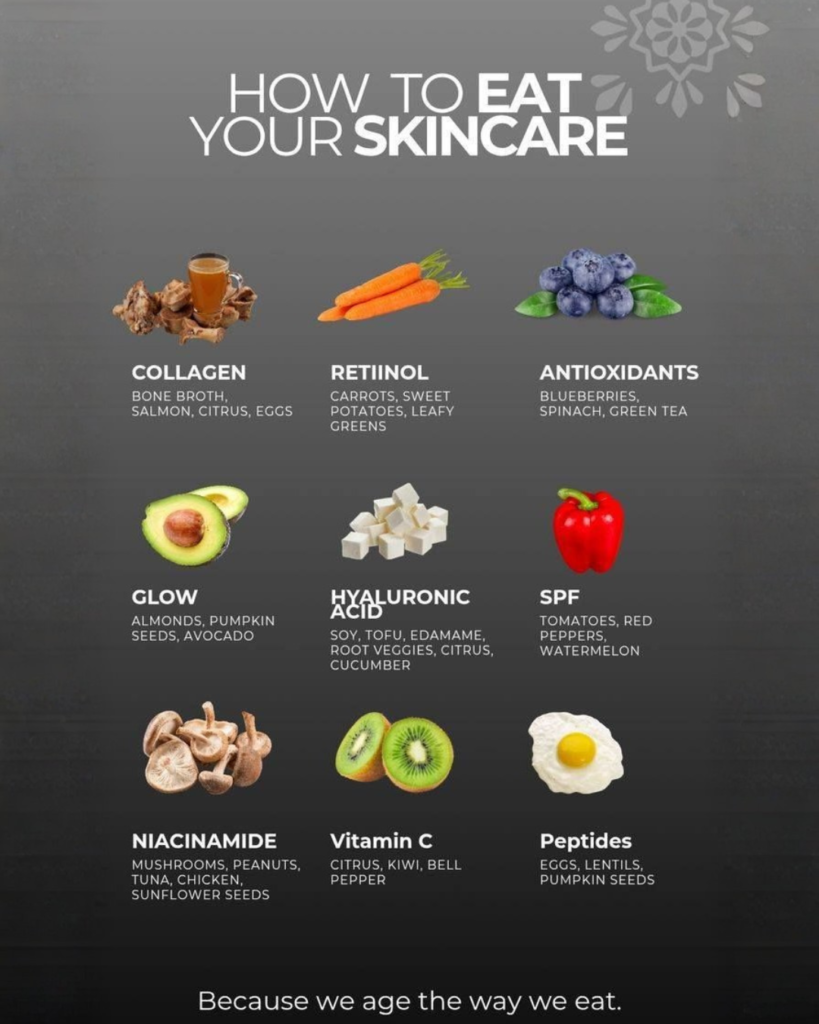
Vitamin C is essential for collagen synthesis. Without it, your body literally cannot build strong, healthy collagen fibers.
Foods rich in vitamin C include:
- Oranges
- Strawberries
- Bell peppers
- Kiwi
- Broccoli
When you consistently include vitamin C, you support firmer-looking skin and improved brightness.
Healthy Fats: Natural Moisturizers From Within
If your skin feels dry no matter what cream you use, you may need more healthy fats.
Omega-3 fatty acids help maintain your skin barrier and reduce inflammation. You can find them in:
- Salmon
- Sardines
- Chia seeds
- Flaxseeds
- Walnuts
Think of these as edible moisturizers. They help your skin retain water and stay supple.
Antioxidants: Your Glow Protectors
Antioxidants fight free radicals caused by pollution, UV exposure, and stress. Over time, free radical damage contributes to premature aging.
Colorful foods are your best friend here:
- Blueberries
- Spinach
- Carrots
- Sweet potatoes
- Dark chocolate (in moderation)
The more color on your plate, the more protection your skin receives.
How To Eat Your Skincare: Step-by-Step Plan
Now that you know the basics, let’s turn knowledge into action.
Step 1: Build a Skin-Loving Plate
Use this simple formula at every meal:
- Half your plate: Colorful vegetables or fruits
- Quarter plate: Lean protein (chicken, fish, legumes)
- Quarter plate: Whole grains or fiber-rich carbs
- Add: A source of healthy fat
For example:
- Grilled salmon
- Quinoa
- Roasted sweet potatoes
- Spinach salad with olive oil
That’s a skincare meal in action.
Step 2: Hydrate Strategically
Drinking water alone is helpful, but hydration also comes from food.
Water-rich foods include:
- Cucumber
- Watermelon
- Lettuce
- Zucchini
You can also support hydration with herbal teas. If you’ve explored night drinks for glowing skin, you already know how soothing teas can improve both sleep and skin repair.
Step 3: Support Gut Health
Healthy skin often starts with a healthy gut. Research shows a strong connection between gut microbiome balance and conditions like acne and eczema.
Add:
- Yogurt with live cultures
- Kefir
- Sauerkraut
- Kimchi
- Fiber-rich foods
When your digestion improves, your skin often follows.
Advanced Skin Nutrition Strategies
Once you’ve mastered the basics of how to eat your skincare, you can elevate your routine with targeted nutrients.
Collagen-Supporting Combinations
Your body produces collagen best when certain nutrients work together.
Pair:
- Vitamin C + Iron (spinach with lemon dressing)
- Protein + Vitamin C (chicken with bell peppers)
- Bone broth + leafy greens
These combinations maximize absorption and effectiveness.
Zinc for Breakout-Prone Skin
If you struggle with breakouts, zinc may help regulate oil production and inflammation.
Good sources include:
- Pumpkin seeds
- Chickpeas
- Lentils
- Beef
Many dermatologists highlight zinc’s role in acne support due to its anti-inflammatory properties.
Vitamin A for Cell Turnover
Vitamin A supports skin cell renewal. It’s found in:
- Carrots
- Sweet potatoes
- Mango
- Dark leafy greens
However, balance is key. More is not always better.
Common Challenges When Eating Your Skincare
Let’s address what might be holding you back.
“Healthy Food Is Too Expensive”
Skin nutrition doesn’t require luxury ingredients. Frozen vegetables, canned beans, and seasonal produce are affordable and nutrient-dense.
Buy:
- Frozen berries instead of fresh
- Canned salmon instead of fresh fillets
- Local seasonal fruits
Simple swaps make a big difference.
“I Don’t See Results Fast”
Eating your skincare is not a quick fix. Skin cells renew roughly every 28 days. Give your body at least 4–8 weeks to show visible improvement.
Consistency beats perfection.
“I Already Use Good Skincare Products”
Great! Think of internal nutrition as support, not replacement.
Your external routine (cleansing, moisturizing, SPF) works even better when paired with internal nourishment. If you’re exploring DIY skincare recipes, combining them with proper nutrition amplifies results.
How To Maximize Your Results Long-Term
Ready to take this to the next level? Here’s how to truly transform your glow.
Create a Weekly Skin-Focused Meal Plan
Choose 5–7 core meals you rotate weekly:
- Omega-3 rich fish bowl
- Lentil and spinach stew
- Berry and chia breakfast bowl
- Avocado toast with eggs
- Green smoothie with kiwi and flax
Planning reduces stress and keeps your skin nutrition consistent.
Reduce Skin-Stressing Foods
Highly processed foods, excess sugar, and deep-fried meals may increase inflammation in some people.
Instead of strict restriction, aim for balance:
- 80% nourishing foods
- 20% flexibility
Sustainable habits create lasting results.
Support Sleep and Stress Management
Your skin repairs overnight. Pair your diet with:
- 7–9 hours of sleep
- Stress-reducing activities like walking or journaling
- Regular physical movement
Nutrition, rest, and lifestyle form the glow triangle.
What Is the Best Food for Glowing Skin?
There isn’t one single “best” food for glowing skin. Instead, the best approach is a balanced diet rich in:
- Vitamin C (for collagen)
- Omega-3 fatty acids (for hydration)
- Antioxidants (for protection)
- Zinc (for inflammation support)
- Protein (for structure and repair)
When combined consistently, these nutrients create visible improvements in tone, texture, and resilience.
Important Disclaimer
This article is for informational purposes only and should not replace professional advice. For health-related topics, consult healthcare providers. Individual results may vary, and personal circumstances should always be considered when implementing any suggestions.
Final Thoughts: Your Glow Starts Within
Now you know how to eat your skincare—and it’s simpler than you imagined.
You don’t need extreme diets or expensive supplements. You need colorful produce, healthy fats, balanced meals, and consistency. When you nourish your body daily, your skin reflects that care.
Start small. Add one skin-loving meal tomorrow. Swap one processed snack for berries and nuts. Drink one extra glass of water.
Your transformation doesn’t happen overnight. But with steady habits, you’ll discover something powerful: the most radiant skincare routine begins in your kitchen.
You’ve got this. 🌿