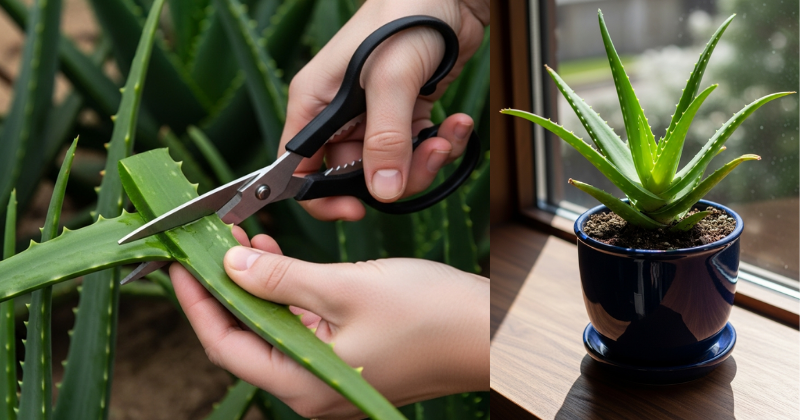
Growing aloe vera from cuttings is more than propagation—it’s an intimate dance with plant resilience, a testament to nature’s extraordinary capacity for renewal. Within each severed leaf lies dormant potential, waiting for your gentle guidance to transform separation into spectacular rebirth. This ancient succulent, revered across millennia for its healing properties, offers home gardeners a profound lesson: even in fragmentation, life finds its way forward.
The Sacred Anatomy of Aloe Vera Propagation
Understanding aloe vera’s botanical architecture transforms propagation from mechanical procedure into mindful partnership. Unlike the delicate herbs that demand constant attention, aloe vera embodies desert wisdom—patience, conservation, and strategic timing.
The Living Tissue: What Makes Cuttings Viable
Not all aloe vera segments possess equal potential for regeneration. The most promising cuttings emerge from mature plants, those sun-weathered warriors that have weathered at least three growing seasons. These established specimens carry genetic memory, cellular instructions encoded through countless cycles of growth and dormancy.
The ideal cutting measures 8-12 centimeters in length, harvested from healthy outer leaves where vigor concentrates most intensely. Within this green flesh resides a gel-filled chamber surrounded by protective epidermis—a complete ecosystem condensed into portable form.
The Callusing Ritual: Nature’s Protective Boundary
Here lies the most counterintuitive wisdom of succulent propagation: immediate planting invites disaster. Fresh wounds weep moisture, creating gateways for bacterial invasion and fungal colonization. The callusing period—typically 3-7 days depending on ambient humidity—allows the cut surface to form a protective cork layer, a botanical scar tissue that seals vulnerability.
I place my cuttings on a wooden tray near a window where indirect light bathes them gently, watching each day as the raw edge transforms from glistening vulnerability to matte resilience. This waiting period is meditation, a reminder that growth often requires strategic pause rather than frantic action.
The Theatrical Preparation: Setting Your Stage for Success
Propagation success begins long before cutting touches soil. Every element—container, medium, placement—contributes to the symphony of new life.
Choosing the Perfect Vessel
Terracotta pots whisper ancient wisdom through their porous walls, allowing excess moisture to evaporate while maintaining stable temperatures. Select containers with drainage holes generous enough to prevent waterlogging, that silent killer of succulent ambitions. A 15-20 centimeter diameter pot provides adequate root expansion without overwhelming young plants with excessive soil volume.
Crafting the Ideal Growing Medium
Aloe vera demands soil that mimics its native arid landscapes—gritty, fast-draining, slightly alkaline. Combine equal parts standard potting soil, coarse sand, and perlite or pumice to create texture that water flows through like desert rain through canyon stones. Some gardeners add crushed granite or decomposed lava rock, materials that anchor roots while preventing compaction.
The medium should feel substantial yet airy, holding shape when compressed but crumbling easily when disturbed. This paradoxical texture—simultaneously structured and ephemeral—reflects the plant’s evolutionary adaptation to environments where water arrives suddenly but departs quickly.
The Planting Ceremony: Anchoring Future Growth
With callused cutting and prepared medium assembled, the sacred moment of planting arrives. This transaction between gardener and plant establishes the foundation for months of development ahead.
Create a shallow depression in your soil medium, approximately one-third the cutting’s total length. Position the cutting upright, ensuring the callused end makes complete contact with surrounding particles. The orientation matters profoundly—plant tissue recognizes gravitational pull, directing root formation downward while leaf tissue reaches skyward.
Gently firm soil around the cutting’s base, providing stability without compression that could damage emerging roots. Unlike traditional cuttings that benefit from immediate watering, aloe vera cuttings thrive with delayed moisture. Wait 7-10 days before introducing water, allowing root initiation to begin in relatively dry conditions that discourage rot while encouraging adventurous root exploration.
During this establishment phase, resist the temptation toward intervention. The cutting draws upon internal moisture reserves, gradually depleting gel content while simultaneously generating new cellular structures. This internal transformation remains invisible to observing eyes, yet proceeds with quiet determination beneath the soil surface.
Nurturing the Awakening: Environmental Orchestration
Successful propagation extends beyond correct planting technique into sustained environmental management. Aloe vera cuttings demand specific conditions that balance stress and support, challenging roots to develop while preventing overwhelming adversity.
Light: The Animating Force
Position newly planted cuttings in bright, indirect light—the luminous quality found near south-facing windows filtered through sheer curtains or in outdoor locations beneath shade cloth. Direct midday sun scorches vulnerable tissue before root systems establish adequate water uptake capacity. Conversely, insufficient light produces etiolated growth, pale and stretched as the plant desperately seeks photosynthetic fuel.
Observe leaf color as your guidance system. Healthy aloe vera displays blue-green or gray-green tones with occasional bronze edges. Yellowing suggests excessive light exposure, while dark green coloration with elongated spacing between leaves signals inadequate illumination.
Temperature and Humidity: Climate Considerations
Aloe vera prospers in temperatures between 13-27°C, tolerating brief excursions beyond these boundaries but suffering permanent damage during extended exposure to extremes. Indoor propagation naturally provides stable conditions, though outdoor efforts must account for seasonal fluctuations and microclimate variations.
Contrary to expectations, aloe vera appreciates moderate humidity during establishment phases. Arid conditions accelerate desiccation before root systems develop, while excessive moisture encourages pathogenic proliferation. Aim for 40-50% relative humidity—the comfortable range most humans naturally maintain in living spaces.
The Vigilant Observation: Reading Botanical Signals
Plants communicate continuously through subtle morphological changes, offering feedback about their internal states and environmental satisfaction. Learning this silent language transforms propagation from hopeful experiment into responsive partnership.
Signs of Successful Root Development
Approximately 3-4 weeks post-planting, new roots begin anchoring the cutting into its medium. Visual confirmation arrives through subtle firmness—the cutting resists gentle tugging where previously it shifted easily. Some gardeners observe slight color intensification as newly functional roots begin transporting nutrients and water more efficiently.
The first true sign of establishment appears as new leaf growth emerging from the central growing point. This tender tissue, lighter in color and softer in texture than mature leaves, announces that the cutting has transitioned from survival mode into active growth phase.
Troubleshooting Common Challenges
Rotting remains the primary threat to aloe vera cuttings. Mushy, discolored tissue at the soil line signals excessive moisture or premature planting before adequate callus formation. Remove affected cuttings immediately, trim away compromised tissue, allow extended callusing, and replant in fresh, dry medium.
Desiccation presents the opposite challenge—cuttings shrivel and deflate as internal moisture reserves deplete before root establishment. This typically indicates insufficient humidity, excessive light exposure, or inadequate initial cutting size. Increase ambient moisture slightly through nearby water trays or brief misting (avoiding direct spray on plant tissue), adjust light levels, and ensure future cuttings contain adequate gel reserves.
Advanced Strategies: Elevating Your Propagation Practice
Once basic techniques yield consistent success, experimental refinement opens new dimensions of horticultural mastery. These advanced approaches draw upon both traditional wisdom and contemporary understanding of plant physiology.
Rooting Hormone Application
While aloe vera readily roots without supplementation, applying rooting hormone powder to callused surfaces can accelerate establishment and increase success rates, particularly with smaller cuttings or challenging environmental conditions. Select formulations containing indole-3-butyric acid (IBA) at 0.1-0.3% concentration, applying light dusting immediately before planting.
Seasonal Timing Optimization
Spring and early summer propagation capitalizes on plants’ natural growth cycles, when cellular division proceeds most vigorously and environmental conditions naturally align with aloe vera preferences. Autumn propagation succeeds but requires more careful monitoring as decreasing light levels and cooler temperatures slow establishment. Avoid winter propagation unless you can provide supplemental lighting and consistent warmth.
Creating Optimal Microclimates
Serious propagators construct dedicated spaces—greenhouse benches, enclosed grow tents, or modified windowsill setups—where temperature, humidity, and light remain within ideal parameters. Even simple modifications like placing cuttings on heat mats or near south-facing windows behind sheer curtains dramatically improve success rates.
The Long Game: From Cutting to Mature Specimen
Successful rooting marks the beginning rather than conclusion of your propagation journey. The months following establishment determine whether your cutting matures into a robust, productive plant or struggles perpetually as a stunted survivor.
Transitioning to Regular Care
Once new growth confirms establishment, gradually increase watering frequency while maintaining the cardinal rule: allow soil to dry completely between irrigations. During active growing seasons, this typically means watering every 7-14 days depending on pot size, medium composition, and environmental conditions.
Begin fertilization 6-8 weeks post-planting using balanced, diluted succulent fertilizer at quarter-strength monthly during spring and summer. Aloe vera thrives on nutrient moderation—overfertilization produces rapid, weak growth susceptible to pest invasion and structural collapse.
Multiplication Through Success
Your propagated aloe vera will eventually produce offsets—small plants developing around the base of the mother specimen. These “pups” can be separated and potted individually once they reach approximately one-fifth the parent’s size, perpetuating the cycle of botanical abundance. Each generation carries forward the resilience you nurtured through careful propagation.
Conclusion: The Gardener’s Transformation
Growing aloe vera from cuttings transcends botanical technique, becoming a practice of presence, patience, and partnership with living systems. Each successful propagation reinforces fundamental truths: that endings contain beginnings, that patience often outperforms intervention, and that life possesses remarkable resilience when provided appropriate conditions.
Your journey with aloe vera propagation will teach lessons extending far beyond succulent cultivation. Begin with a single cutting, observe carefully, respond thoughtfully, and trust the ancient wisdom encoded within plant cells. Before long, you’ll possess not just additional plants, but deeper understanding of growth itself—botanical and personal, intertwined in the sacred work of cultivation.