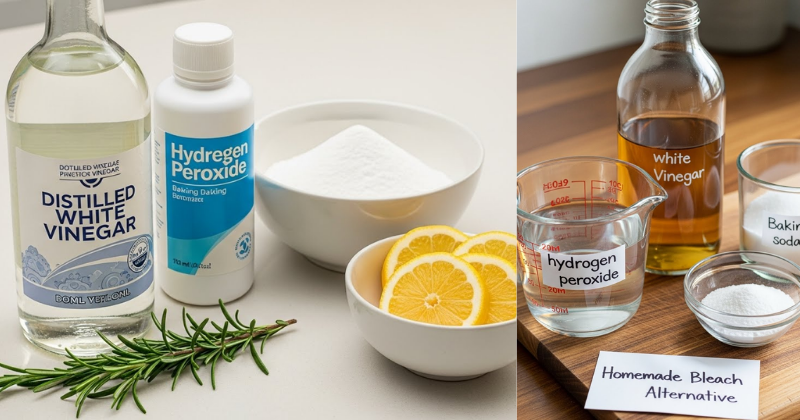
Learn how to make homemade bleach alternative to brighten laundry and disinfect surfaces naturally without the harsh fumes or toxic chemicals of traditional bleach.
Have you ever opened a bottle of laundry bleach and felt your eyes sting or your breath catch from those overwhelming fumes? Most of us grew up believing that a “clean” home has to smell like a laboratory, but those harsh chemicals often do more harm than good to our respiratory systems and the environment. If you are looking for a way to keep your whites sparkling and your countertops germ-free without the toxic baggage, you are in the right place. Learning how to make homemade bleach alternative is a game-changer for anyone pursuing a non-toxic lifestyle.
In this guide, you will discover how to harness the brightening power of hydrogen peroxide and the grease-cutting strength of citrus to achieve professional-level cleanliness. We will walk you through a simple, cost-effective process that transforms your cleaning routine into a safer, more sustainable practice. You don’t need to sacrifice power for safety; by the end of this article, you will feel empowered to ditch the blue bottle forever and unlock a fresher, healthier home for your family!
Foundation: Why Switch to a Bleach Alternative?
Building confidence in natural DIY solutions starts with understanding the “why” behind the swap. Traditional chlorine bleach (sodium hypochlorite) is a powerful oxidizer, but it is also highly corrosive and can react with other household cleaners to create dangerous gases.
The Problem with Chlorine
Many people hesitate to switch because they fear losing that “sanitized” feeling. However, chlorine bleach is known to irritate the skin, lungs, and eyes. It can also weaken the fibers of your favorite clothes over time, leading to premature holes and yellowing. By choosing a homemade bleach alternative, you are preserving the longevity of your fabrics while protecting your indoor air quality.
The Power of Hydrogen Peroxide
The primary hero in our natural recipe is hydrogen peroxide. Unlike chlorine, hydrogen peroxide breaks down into simple water and oxygen. It is a natural whitening agent and a potent disinfectant that is safe for most surfaces and colored fabrics (when diluted properly). It provides the “Oxi” power you see in expensive store-bought tubs but at a fraction of the cost.
Reassurance for Beginners
If you are new to DIY cleaners, don’t worry! Transitioning to a non-toxic kitchen and laundry room is a journey of gradual progress. You don’t have to be a chemist to succeed. This recipe uses basic ingredients you likely already have in your medicine cabinet and pantry, making it one of the easiest simple swaps for a non-toxic kitchen or laundry setup.
Step-by-Step: The Ultimate Natural Whitening Recipe
Ready to mix your first batch? This process is broken down into manageable steps to ensure your solution is both safe and effective.
What You Will Need
- 1 ½ cups Hydrogen Peroxide (3% concentration): The brightening and disinfecting agent.
- ½ cup Distilled White Vinegar (Optional for laundry): Helps strip away mineral buildup.
- 1 tablespoon Lemon Juice: Adds citric acid for extra whitening power.
- 10-15 drops Lemon Essential Oil: For a fresh scent and antimicrobial properties.
- Distilled Water: To fill the remainder of a half-gallon jug.
The Core Method
- Select Your Container: Use an opaque (dark) bottle. Hydrogen peroxide breaks down and loses its potency when exposed to light, so a brown or dark blue glass bottle is ideal.
- Combine the Actives: Pour the hydrogen peroxide, lemon juice, and essential oils into the bottle.
- Add the Vinegar (Carefully): If you are using this specifically for laundry, add the vinegar now. Note: Never mix vinegar with commercial bleach, but it is safe with hydrogen peroxide in these ratios.
- Dilute: Fill the rest of the bottle with distilled water.
- Store Safely: Cap the bottle tightly and give it a gentle swirl (don’t shake aggressively). Label it clearly and store it in a cool, dark place.
How to Use It
- In the Laundry: Add 1 cup of this homemade bleach alternative to the bleach dispenser of your washing machine. It works wonders on white towels and bedsheets!
- As a Surface Spray: Pour some into a spray bottle for use on non-porous countertops. Let it sit for 5-10 minutes for full disinfection before wiping.
Advanced Strategies: Pro Tips for Stubborn Stains
Once you have mastered the basic recipe, you can share expert-level insights with friends and family. There are several ways to customize your approach for specific challenges.
Solar Bleaching: Nature’s Secret Weapon
One of the most effective ways to build upon your success is to utilize the power of the sun. After treating your whites with your homemade bleach alternative and washing them, hang them outside on a clothesline. The UV rays act as a natural bleaching agent that works in tandem with the lemon juice in your mixture to “unlock” an even brighter white.
Boosting with Oxygen Powder
For heavily soiled items like cloth diapers or garden-stained clothes, you can create a “soak.” Mix your liquid alternative with a tablespoon of sodium percarbonate (oxygen bleach powder). This creates a high-intensity bubbling action that lifts deep-set dirt without damaging the environment.
Custom Scent Profiles
While lemon is the classic “clean” scent, you can experiment with:
- Tea Tree Oil: Great for extra-strength disinfection on bathroom surfaces.
- Eucalyptus: Excellent for a refreshing “spa-like” laundry scent.
- Lavender: Perfect for whitening bed linens to encourage a restful night’s sleep.
Troubleshooting: Common Challenges and Solutions
DIY cleaning sometimes involves a bit of trial and error. Here is how to handle frequent obstacles with encouragement.
“My whites aren’t as bright as I expected”
- The Solution: Natural alternatives work best when combined with heat. Try using a warm or hot water setting on your machine (if the fabric allows). Also, ensure you aren’t overloading the washer; clothes need room to move so the peroxide can reach every fiber.
“I’m worried about color fading”
- Preventive Measures: While this recipe is much safer than chlorine, lemon juice and peroxide can still cause slight fading on very dark or sensitive silks. Always perform a patch test on an inconspicuous area before applying to the whole garment.
“The solution seems to be losing its fizz”
- Alternative Approach: Remember that hydrogen peroxide is light-sensitive. If you used a clear bottle, the solution may have turned into plain water. Switch to a dark bottle and make smaller batches more frequently to ensure you are always using the most active ingredients.
Maximizing Results: A Holistic Clean Home
To achieve the best results, look beyond just one product. A truly healthy home is built on a foundation of complementary strategies.
Complementary Cleaning Habits
- Water Quality: Hard water can leave minerals on your clothes that make them look grey. Consider using a water softener or adding a bit of baking soda to your wash to help your homemade bleach alternative work more efficiently.
- Filter Maintenance: Just like you would change a filter for a [water filtration upgrade], make sure to clean your washing machine’s lint trap and drum regularly. This prevents “re-depositing” dirt onto your clean whites.
- Air Quality: Since you’ve removed the toxic bleach fumes, keep the air fresh by using [homemade shower melts] or a natural diffuser instead of synthetic air fresheners.
Featured Snippet: Does hydrogen peroxide disinfect as well as bleach?
Yes, 3% hydrogen peroxide is recognized by the CDC as an effective disinfectant. It kills bacteria, viruses, and fungi by producing destructive free radicals that attack membrane lipids and DNA. For full disinfection, it should be left on a surface for at least 5 to 10 minutes before wiping.
Conclusion
Learning how to make homemade bleach alternative is more than just a cleaning hack; it is a transformative step toward an empowering, sustainable lifestyle. You have discovered that you have the capability to succeed in creating a sparkling clean home without relying on hazardous chemicals. By choosing these natural ingredients, you achieve the dual goal of a pristine environment and improved personal wellness.
You’ve got this! Start by grabbing a dark bottle and mixing your first batch today. Once you see your whites glowing and smell the fresh scent of real lemons, you’ll never want to go back to the harsh alternatives. Your home is your sanctuary—keep it bright, keep it safe, and keep it natural.