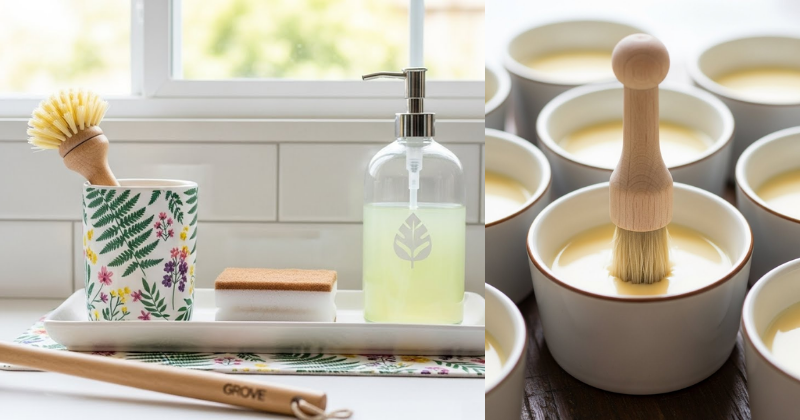
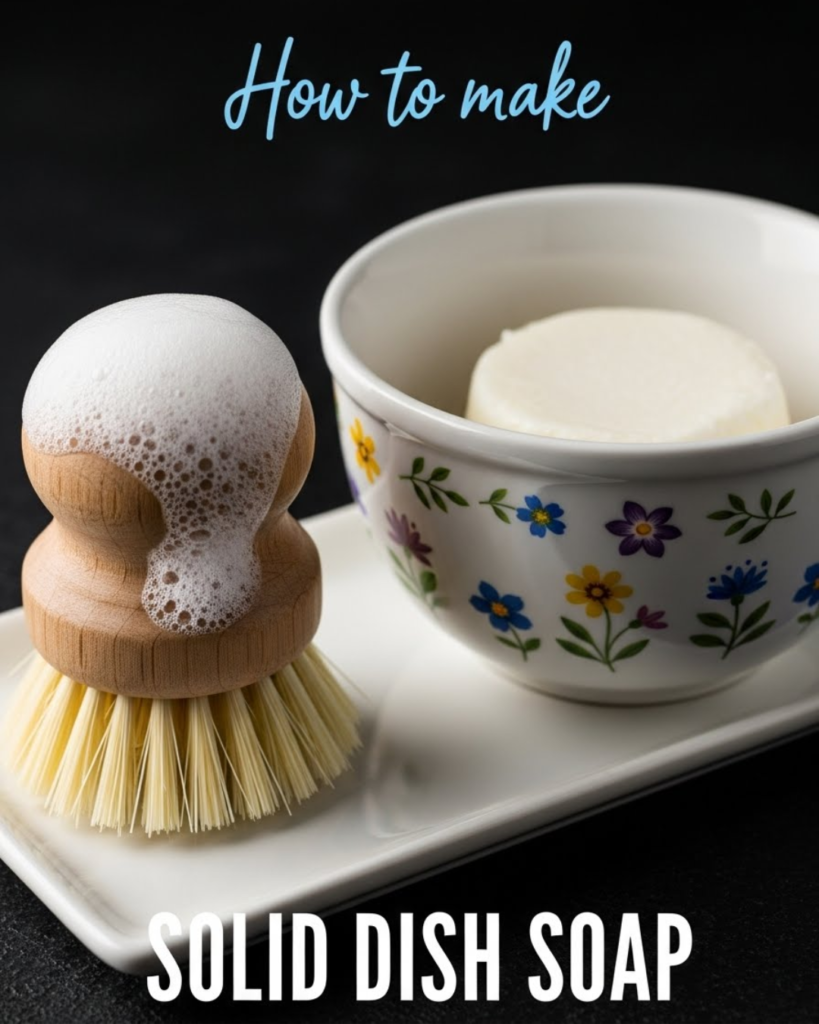
Are you ready to say goodbye to plastic bottles cluttering your kitchen sink and embrace a sustainable, powerful cleaning solution? Learning How to make SOLID DISH SOAP is one of the most rewarding and impactful Home Tips & DIY projects you can undertake. This transformation not only offers significant cost-saving benefits but is also a fantastic step toward sustainable lifestyle changes. Solid dish soap, often called a “dish block,” is surprisingly easy to make, incredibly effective at tackling grease, and entirely zero-waste. We promise this guide provides the achievable, step-by-step guidance you need to transform your dishwashing routine. Get ready to discover how to craft your own tough-on-grease, earth-friendly dish soap and achieve a cleaner kitchen environment.
🛑 Important Disclaimer
Important Disclaimer: This article is for informational purposes only and should not replace professional advice. For health-related topics, consult healthcare providers. For financial or legal matters, seek qualified professional guidance. For safety procedures, verify current best practices and local regulations. Individual results may vary, and personal circumstances should always be considered when implementing any suggestions.
🧼 Section 1: Foundation First: Understanding the Components of Solid Soap
To successfully understand how to make SOLID DISH SOAP, it’s crucial to build confidence with basic concepts about the ingredients and the chemistry involved. Unlike liquid soap, solid soap requires specific surfactants and hardening agents to deliver cleaning power in bar form.
H3: Building Confidence with Basic Concepts: Key Ingredients
Our basic recipe relies on a safe, powerful combination of natural cleansers and structuring agents.
| Ingredient | Purpose in Solid Dish Soap | Why We Use It |
| SCI (Sodium Cocoyl Isethionate) | Primary Surfactant (Cleanser) | Derived from coconut oil, it creates rich lather and is effective on grease. |
| Stearic Acid | Hardener/Thickener | Gives the bar its solid structure and increases longevity. |
| Distilled Water | Solvent for Surfactant | Needed to dissolve the SCI and form the liquid phase before setting. |
| Optional: Citric Acid/Vinegar | Boosts cleaning power and adds shine. | Helps cut through mineral deposits (hard water) and adds natural disinfection. |
- The Scientific Difference: Traditional bar soap (made with Lye/Sodium Hydroxide) is usually too mild and can leave a residue on dishes. Our formula uses SCI, a detergent-based surfactant, which ensures powerful, residue-free cleaning and makes it highly effective against oil and grease.
- Encouraging Reassurance for Beginners: While this involves mixing powders, it is a simple melt-and-mix process. There is no handling of raw lye, making this a safe and achievable Home Tips & DIY project for first-timers.
H3: Addressing Common Concerns: Safety and Ventilation
Working with fine powders and heating ingredients requires basic safety considerations.
- Powder Caution: When working with SCI powder, always wear a mask (such as an N95 or simple dust mask) and goggles. The fine particles can irritate the lungs and eyes. Work in a well-ventilated area.
- Tool Requirements: Use a dedicated set of tools for soap making that you don’t use for cooking. This includes a heat-safe bowl, measuring spoons, a scale, and silicone molds.
🛠️ Section 2: Step-by-Step Process: Core Methods for Mixing and Setting
This section provides the clear, actionable language to guide you through how to make SOLID DISH SOAP from start to finish.
Core Recipe (Yields one large 10 oz block)
| Ingredient | Quantity (by Weight) |
| Sodium Cocoyl Isethionate (SCI) Powder | $50 \text{g}$ |
| Stearic Acid | $25 \text{g}$ |
| Distilled Water (Hot) | $10 \text{g}$ |
| Optional: Citric Acid | $10 \text{g}$ |
| Optional: Essential Oil (Lemon/Tea Tree) | $5 \text{g} \text{ (approx. } 1 \text{ teaspoon)}$ |
Step-by-Step Guidance (The Melt and Mix Method)
- Preparation and Safety (Timing and Planning Considerations): Put on your mask and goggles. Measure all ingredients accurately using a digital scale. Sterilize your silicone molds.
- Dissolve the SCI (Actionable Language): Place the SCI powder in a heat-safe mixing bowl. Slowly pour the $10 \text{g}$ of hot distilled water over the powder. Mix gently with a silicone spatula. The mixture will be paste-like and crumbly; it may take time for the SCI to absorb the water.
- Melt the Solids: Place the mixing bowl over a double boiler (a pot of simmering water) on low heat. Add the $25 \text{g}$ of Stearic Acid (and the Citric Acid, if using). The gentle heat is needed to melt the Stearic Acid and soften the SCI paste into a dough-like consistency.
- Mix and Combine: Stir and knead the mixture constantly as the Stearic Acid melts (about $5 \text{-} 10 \text{ minutes}$). The goal is a uniform, thick dough, similar to playdough or cookie dough.
- Add Finishing Touches: Once the mixture is fully combined and removed from the heat, quickly knead in the $5 \text{g}$ of essential oils. This is a crucial practical tip and shortcut to ensure the scent doesn’t evaporate from the heat.
- Press and Mold: Working quickly while the dough is still warm and malleable, press the mixture firmly into your silicone mold or container. Tamp it down hard to remove any air pockets.
- Setting and Curing: Allow the solid dish soap block to cool and set completely at room temperature for at least $24 \text{ hours}$. For maximum hardness and longevity, let it cure for an additional $1 \text{-} 2 \text{ days}$ before use.
🍋 Section 3: Advanced Strategies: Customization and Enhancements
Once you master how to make SOLID DISH SOAP, you can apply expert-level insights to customize your approach for specific needs, leveraging other natural cleaning agents.
H3: Creative Solutions: Boosters for Hard Water and Tough Grease
You can boost the bar’s performance by adding natural minerals.
| Additive | Quantity (added in Step 4) | Purpose |
| Washing Soda (Sodium Carbonate) | $5 \text{g}$ | Excellent grease cutter, increases $\text{pH}$ for better saponification. |
| White Kaolin Clay | $5 \text{g}$ | Adds a creamy lather and helps soften the final bar texture slightly. |
| Borax | $5 \text{g}$ | Natural disinfectant and powerful mineral cleaner (use gloves). |
- Encourage Experimentation: Start with one booster per batch. For example, adding Citric Acid ($10 \text{g}$) is particularly effective against hard water residue, helping dishes sparkle. This provides multiple options to suit different preferences.
H3: Pro Tips for Tool and Supply Management
The best Home Tips & DIY success includes mastering the surrounding processes.
- Cleaning Up: Don’t wash your soap-making tools in the sink! Wipe the bowls and spatulas clean with paper towels immediately while the residue is still soft, then wash them normally. This prevents plumbing clogs.
- Storage Solution: To maximize the cost-saving benefits of your DIY soap, use a soap lift or a dedicated dish to ensure the bar dries completely between uses. This prevents the bar from becoming soft and mushy.
📉 Section 4: Troubleshooting and Common Challenges
Even with achievable, step-by-step guidance, the saponification and setting process can sometimes go awry. Here are solutions to common problems when you make SOLID DISH SOAP.
Featured Snippet Potential: “Why is my homemade solid dish soap crumbling and not holding its shape?”
If your homemade solid dish soap is crumbling, the ratio of liquid to solid was likely incorrect, or the components were not fully mixed or melted. The most common cause is not enough heat or mixing time, preventing the Stearic Acid and SCI from forming a homogeneous dough. To fix this, re-melt the mixture gently over a double boiler, adding $1 \text{-} 2 \text{ more grams}$ of hot distilled water if needed, and mix/knead until a uniform, pliable dough forms. Ensure you press it very firmly into the mold to eliminate air pockets.
Practical Troubleshooting Tips (Mixture Consistency)
- Problem: The mixture is too dry and crumbly, even after kneading.
- Obstacle: Not enough water or the SCI hasn’t absorbed the water fully.
- Solution: Encouragement for Setbacks: Gently re-heat the mixture over the double boiler and slowly introduce an additional $1 \text{-} 2 \text{ grams}$ of hot distilled water, mixing until it reaches a thick dough consistency.
- Problem: The soap is too soft and quickly turns mushy when used.
- Obstacle: Too much water or not enough Stearic Acid.
- Solution: Preventive Measures: Next time, ensure your measurements are exact, especially the water. You can re-melt the current batch and incorporate $5 \text{g}$ of additional melted Stearic Acid to boost hardness.
- Problem: The bar develops white, crystalline spots after setting.
- Obstacle: This is typically undissolved Citric Acid or Stearic Acid.
- Solution: Offer Alternative Approaches: These spots are harmless but can reduce lather. Ensure all dry additives are fully mixed into the warm dough before molding. Using powdered (not granular) Citric Acid helps.
🌎 Section 5: Maximizing Results: Next Level Sustainability
The choice to make SOLID DISH SOAP is a powerful one for sustainable lifestyle changes. This section focuses on the benefits and complementary zero-waste strategies.
- Show How to Build Upon Basic Success: Companion Scrubber Integration. Pair your dish block with natural cleaning tools like a wooden dish brush, a compostable loofah, or a copper scrubber (for tough pots). The zero-waste ethos extends beyond the soap itself, promoting a holistic sustainable lifestyle.
- Maintenance and Long-Term Considerations: The Zero-Waste Cycle. The final, small scraps of your dish block should not be thrown away. Collect the remnants in a jar, add a small amount of hot water, and shake to dissolve them into a small amount of liquid pre-treatment spray for stubborn, baked-on food.
- Suggest Complementary Strategies: Kitchen Composting. Utilize the same General Lifestyle/Casual Tips mindset to introduce kitchen composting for food scraps. This complements your zero-waste solid dish soap journey, drastically reducing your household’s environmental impact and leading to a sustainable lifestyle. (Internal Linking Opportunity: Check out “Beginner’s Guide to Effective Kitchen Composting.”)
✅ Conclusion: Your Capability to Achieve Zero-Waste Cleaning
You have successfully learned how to make SOLID DISH SOAP, mastering the safe use of SCI and Stearic Acid to create a powerful, zero-waste alternative to plastic-bottled liquid soap. By implementing this detailed, achievable, step-by-step guidance, you have demonstrated your capability to succeed in highly impactful Home Tips & DIY projects. This transformative shift to solid dish soap is a conscious step toward a cleaner, greener home and significant cost-saving benefits.
Ready to embrace your zero-waste dishwashing journey? Which essential oil—Lemon for freshness or Tea Tree for extra sanitizing power—will you infuse into your first dish block?