
Learn how to soothe an overloaded nervous system naturally. Discover effective techniques to calm stress, improve resilience, and reclaim your inner peace today.
Have you ever felt like your internal “engine” is constantly revving, even when you are trying to relax? Perhaps you feel jumpy at sudden noises, struggle to focus, or find yourself snapping at loved ones over the smallest things. If this sounds familiar, you are likely experiencing an overloaded nervous system. In our fast-paced, high-stimulation world, it is incredibly common for our bodies to remain stuck in “fight or flight” mode long after the actual threat has passed. The good news is that you don’t have to stay in this state of high alert. You can learn how to soothe an overloaded nervous system and return to a state of calm, safety, and connection.
In this guide, we will explore the science of your body’s stress response and provide you with a toolkit of actionable, natural techniques. By understanding how to regulate your physiology, you will gain the power to transform your daily experience from one of frantic survival to one of thriving resilience. You have the capability to rewire your response to stress, and it starts with the simple, supportive steps outlined below. Let’s discover how to unlock a more peaceful version of you.
Important Disclaimer: This article is for informational purposes only and should not replace professional advice. For health-related topics, consult healthcare providers. For safety procedures, verify current best practices and local regulations. Individual results may vary, and personal circumstances should always be considered when implementing any suggestions.
Understanding the Foundation of Nervous System Regulation (H2)
To effectively learn how to soothe an overloaded nervous system, you first need to understand the basic “wiring” of your body. Your Autonomic Nervous System (ANS) is divided into two main branches: the Sympathetic (the accelerator) and the Parasympathetic (the brakes). When you are overloaded, your “accelerator” is floored, leaving you feeling anxious, hyper-vigilant, or physically exhausted but “wired.”
Many people worry that they are “broken” because they can’t just “calm down” through willpower alone. Reassure yourself that your nervous system is actually doing its job—it’s trying to protect you. However, it has lost its ability to toggle back to the “rest and digest” state. By focusing on [Vagus Nerve Stimulation] and gentle somatic practices, you can signal to your brain that the danger is over. This isn’t about ignoring stress; it’s about building a more flexible system that can bounce back more quickly.
H3: The Signs of a Dysregulated System
An overloaded system doesn’t always look like panic. It can manifest as chronic digestive issues, a “brain fog” that won’t lift, or feeling “tired but wired” at bedtime. Identifying these subtle signals is the first step toward healing.
H3: Why Traditional Stress Management Often Fails
Many people try to “think” their way out of stress. However, when your system is overloaded, the logic centers of your brain are partially offline. To truly soothe the system, we must use “bottom-up” approaches—using the body to calm the mind.
Step-by-Step: Core Methods to Calm the System (H2)
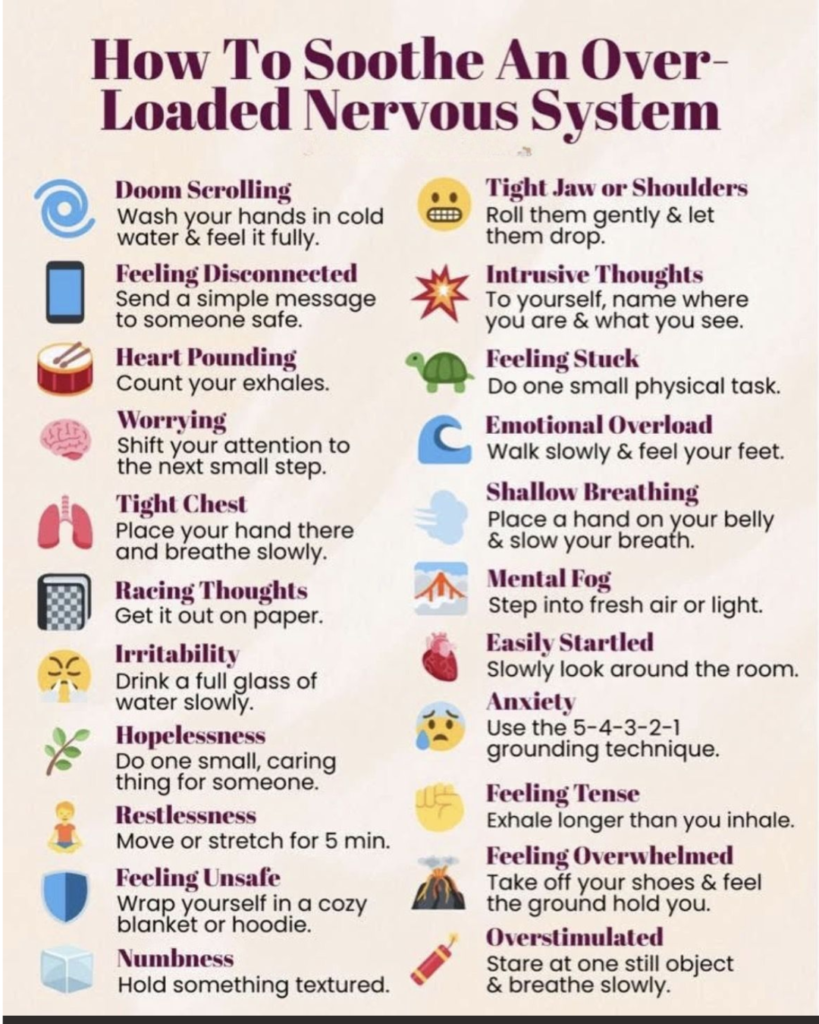
When you feel the “buzz” of overload, you need immediate, manageable steps to shift your state. Use these core methods to begin the process of down-regulating your stress response.
1. The Power of Extended Exhalation
Breathwork is the most direct bridge to your nervous system.
- The Process: Inhale slowly through your nose for a count of 4. Then, exhale through pursed lips (like you’re blowing through a straw) for a count of 8.
- Why it works: Long exhales stimulate the Vagus nerve, which acts as the body’s natural brake system. Repeat this for 2 to 5 minutes to feel an immediate shift.
2. Somatic Grounding (The 5-4-3-2-1 Technique)
When your mind is racing, you need to bring your awareness back to the physical world.
- The Steps: Name 5 things you can see, 4 things you can touch, 3 things you can hear, 2 things you can smell, and 1 thing you can taste.
- Action: This forces your brain to process sensory data, which pull you out of the “threat” of your thoughts and into the safety of the present moment.
3. Therapeutic Cold Exposure
If you are in a state of high acute anxiety, you can “reset” your system with temperature.
- The Method: Splash ice-cold water on your face or hold an ice pack to your chest for 30 seconds.
- Why it works: This triggers the “Mammalian Dive Reflex,” which naturally slows the heart rate and redirects blood flow to the brain and heart, forcing a physiological “pause.”
Advanced Strategies: Pro Tips for Long-Term Resilience (H2)
Once you’ve mastered the basic tools for how to soothe an overloaded nervous system, you can move into expert-level insights. These strategies focus on [Building Nervous System Capacity] so that you are less likely to become overloaded in the future.
- Co-Regulation: Humans are social creatures. Sometimes, the fastest way to soothe your system is to be in the presence of someone (or a pet) with a calm system. A long hug or a quiet conversation can act as an external “regulator” for your internal state.
- Weighted Pressure: Using a weighted blanket or a heavy pillow on your lap provides deep touch pressure. This stimulates serotonin production and provides a sense of “containment” that is deeply soothing to a frayed system.
- Mindful Movement: Instead of high-intensity cardio which can sometimes mimic the stress response, opt for [Restorative Yoga] or Tai Chi. These slow, intentional movements allow the body to discharge stored tension without triggering more adrenaline.
Troubleshooting: Common Challenges and Obstacles (H2)
Even with the best intentions, you might face setbacks. Learning how to soothe an overloaded nervous system is a practice, not a perfect science. Here is how to handle frequent obstacles.
- Obstacle: “I feel more anxious when I try to be still.”
- Solution: This is common! For some, stillness feels like a threat. If meditation is too much, try “active” soothing like walking slowly or humming. Humming creates internal vibration that stimulates the Vagus nerve without requiring you to sit still.
- Obstacle: “I don’t have time for a 20-minute practice.”
- Solution: Nervous system regulation happens in “micro-moments.” Ten seconds of deep breathing while waiting for the kettle to boil is more effective than doing nothing at all.
- Obstacle: “The techniques worked at first, but now they don’t.”
- Solution: Your system may have become habituated. Rotate your tools. If breathing isn’t working today, try the cold water splash or a [Somatic Shaking Exercise] to release energy.
Maximizing Results: Building a Resilient Lifestyle (H2)
To achieve lasting change, you must look beyond the moment of crisis. Sustainable lifestyle changes ensure that your nervous system remains flexible and robust.
- Prioritize Sleep Hygiene: A sleep-deprived brain is a reactive brain. Ensure your environment is dark and cool to support the production of melatonin, which helps stabilize the system.
- Limit Sensory Input: We are bombarded by blue light and “outrage” media. Create “digital sunsets” where you put away all screens at least an hour before bed.
- Nutrition for the Nerves: Focus on magnesium-rich foods and Omega-3 fatty acids. These nutrients are essential for nerve function and help dampen the inflammatory response associated with chronic stress.
- Nature Immersion: Spending time in green spaces is scientifically proven to lower cortisol. Whether it’s a forest walk or just sitting on the grass, nature helps “pace” our nervous system back to a natural rhythm.
Conclusion
You have now discovered the essential tools for how to soothe an overloaded nervous system. By understanding the balance between your sympathetic and parasympathetic branches, you are no longer at the mercy of your stress response. This transformation is entirely achievable, and you have the capability to reclaim your peace through consistent, gentle practice.
Remember the key takeaways: use long exhales to hit the brakes, use grounding to stay present, and prioritize long-term resilience through sleep and movement. You are not broken; you are simply human in an overwhelming world. Go ahead—take that first deep breath and start your journey toward a calmer, more empowered life. You’ve got this!