
Introduction
It might sound like a strange question—how to stay poor—but if you look closely, many people unknowingly follow patterns that keep them financially stuck for years.
Poverty isn’t always just about income. It’s often shaped by habits, mindset, and daily decisions. The small things—how you spend, what you learn, who you listen to—quietly build your financial future over time.
Understanding these patterns is powerful. Because once you recognize what keeps you stuck, you can start doing the opposite.
In this guide, you’ll learn:
- The most common habits that keep people financially struggling
- Why these habits are so powerful
- Practical shifts you can make to move forward
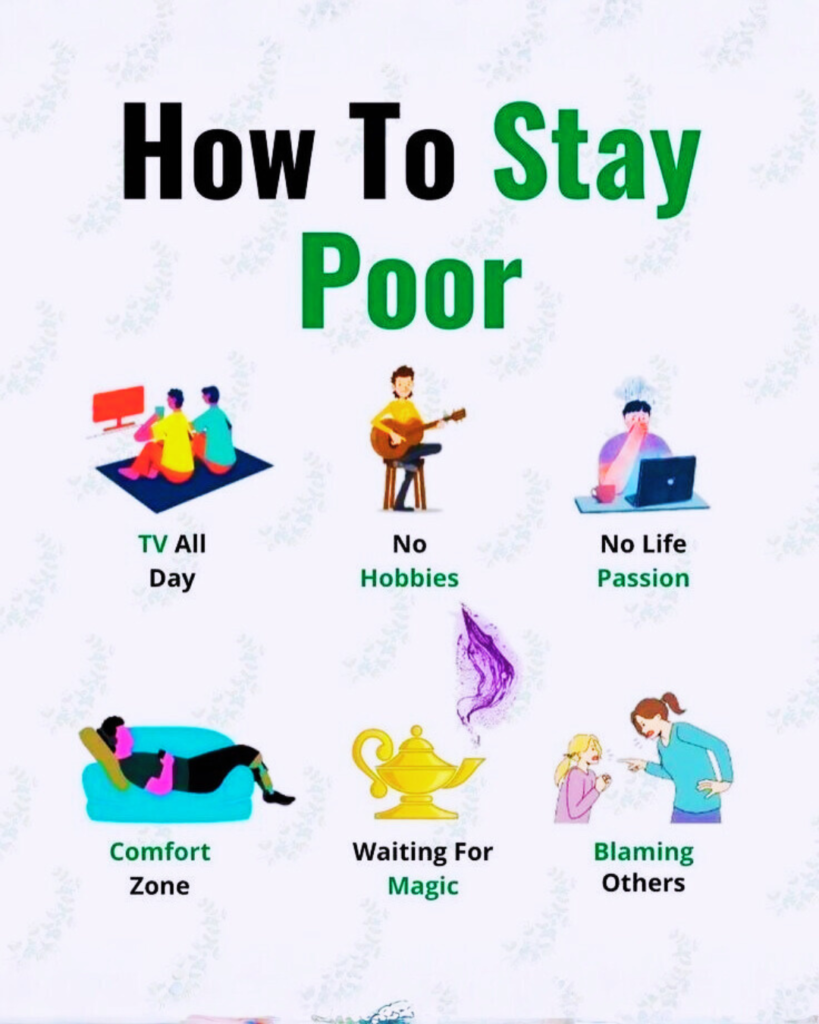
1. Never Track Your Money
What Happens
If you don’t track your income and expenses, money disappears without explanation.
Why It Keeps You Stuck
You can’t improve what you don’t measure. Without awareness, overspending becomes normal.
What to Do Instead
- Write down daily expenses
- Use simple budgeting methods
- Review your spending weekly
2. Spend Everything You Earn
What Happens
Your income increases… but your expenses increase too.
Why It Keeps You Stuck
No savings means:
- No safety net
- No investment opportunities
- Constant financial stress
What to Do Instead
- Save a small percentage first (even 5–10%)
- Treat savings like a fixed expense
3. Avoid Learning New Skills
What Happens
You rely on the same skill set for years.
Why It Keeps You Stuck
Income growth is directly linked to skill growth. No improvement = limited earning potential.
What to Do Instead
- Learn in-demand skills (digital, technical, creative)
- Invest time daily (even 30 minutes)
4. Depend on One Source of Income
What Happens
You rely only on one job or one paycheck.
Why It Keeps You Stuck
If that income stops, everything stops.
What to Do Instead
- Explore side income opportunities
- Use your existing skills in different ways
5. Ignore Opportunities Because of Fear
What Happens
You hesitate, overthink, and delay action.
Why It Keeps You Stuck
Opportunities often require discomfort. Avoiding risk limits growth.
What to Do Instead
- Take small, calculated risks
- Start before you feel “ready”
6. Stay Around Negative Mindsets
What Happens
You’re surrounded by people who believe:
- “Nothing works”
- “Success is luck”
Why It Keeps You Stuck
Your environment shapes your thinking—and your thinking shapes your actions.
What to Do Instead
- Follow people who share useful knowledge
- Limit exposure to constant negativity
7. Focus Only on Short-Term Comfort
What Happens
You prioritize instant gratification:
- Buying instead of saving
- Comfort instead of growth
Why It Keeps You Stuck
Short-term pleasure often sacrifices long-term progress.
What to Do Instead
- Balance enjoyment with discipline
- Think long-term when making decisions
8. Avoid Planning Your Life
What Happens
You move without clear direction.
Why It Keeps You Stuck
Without goals:
- You drift
- You react instead of act
What to Do Instead
- Set simple financial goals
- Break them into small steps
9. Fear Change and Stay in Your Comfort Zone
What Happens
You stay in the same routines—even if they don’t work.
Why It Keeps You Stuck
Growth requires change. Comfort keeps things the same.
What to Do Instead
- Try new approaches
- Accept discomfort as part of progress
10. Give Up Too Early
What Happens
You try something… then quit when results are slow.
Why It Keeps You Stuck
Most progress takes time. Quitting resets your effort to zero.
What to Do Instead
- Focus on consistency over perfection
- Give strategies time to work
The Psychology Behind Staying Stuck
Many of these habits are not about laziness—they’re about:
- Lack of awareness
- Fear of failure
- Habit loops built over time
The brain prefers what is familiar, even if it’s not beneficial. That’s why change feels uncomfortable at first.
Practical Daily Shift (Simple Routine)
You don’t need a complete life overhaul. Start with:
- Track one day of spending
- Save a small fixed amount
- Learn something new for 20–30 minutes
- Reflect on one decision before spending
Small actions, repeated daily, create long-term change.
Common Mistakes to Avoid
1. Trying to Change Everything at Once
This leads to burnout. Focus on one habit at a time.
2. Comparing Yourself to Others
Everyone starts at a different point. Focus on your progress.
3. Waiting for the Perfect Moment
There is no perfect time—only starting points.
Conclusion
Staying poor is rarely about one big mistake. It’s usually the result of small habits repeated over time.
The good news is that the opposite is also true.
By becoming aware of these patterns and making small, consistent changes, you can gradually move toward better financial stability and growth.
You don’t need to do everything at once. Just start with one habit—and build from there.