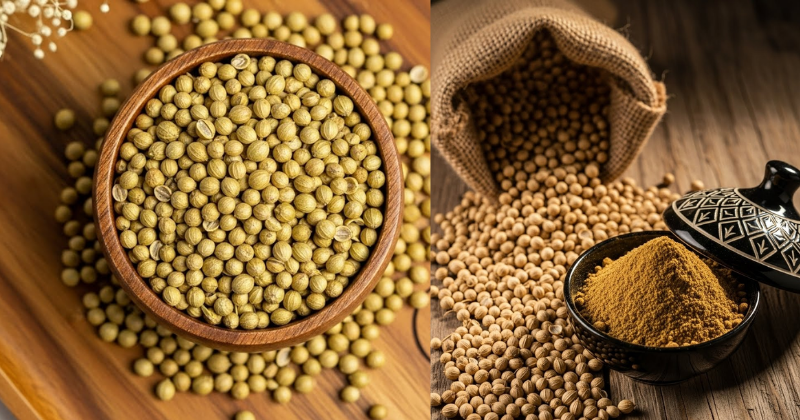
Ready to transform your cooking and elevate your home wellness? Discover how to use CORIANDER SEEDS various methods, from toasting and grinding for maximum flavor, to brewing for digestive relief. This comprehensive guide provides achievable, step-by-step guidance to help you unlock the potential of this versatile spice, ensuring you achieve both superior culinary results and gentle self-care.
🌶️ Section 1: Foundation First: Understanding Coriander Seeds
Coriander seeds (Coriandrum sativum) are the dried fruit of the cilantro plant, but their flavor profile is drastically different from the fresh herb. To maximize their use, you must build confidence with basic concepts about their flavor composition and freshness.
H3: Building Confidence with Basic Concepts: Flavor Profile and Formats
Understanding the difference between the seed and its green counterpart is the first step in learning how to use coriander seeds various methods effectively.
- The Flavor Transformation: While cilantro leaves offer a bright, citrusy, and sometimes soapy flavor, coriander seeds provide warm, nutty, sweet, and complex citrus notes (specifically orange peel). They are an essential ingredient in many global cuisines, from Indian curries to European sausages.
- Formats: You will primarily encounter coriander seeds in two forms:
- Whole Seeds: The best option for freshness and deep flavor.
- Ground Coriander: Convenient, but its volatile oils evaporate quickly, leading to a duller taste.
- Encouraging Reassurance for Beginners: Don’t be intimidated! Using whole seeds and grinding them yourself is an achievable Home Tips & DIY task that offers enormous flavor rewards.
H3: Addressing Common Concerns: Maximizing Freshness
A dull spice means a dull meal. Coriander seeds contain essential volatile oils (like linalool) that are responsible for their powerful aroma and flavor.
- The Freshness Rule: Once the seeds are ground, the surface area increases dramatically, and these volatile oils rapidly oxidize and dissipate.
- Actionable Tip: Always buy coriander seeds whole. Grind only what you need, right before you use it, to ensure you achieve the most intense flavor in your dishes. You will truly discover the difference this makes.
🍳 Section 2: Step-by-Step Process: Core Culinary Methods
The primary way to use coriander seeds in the kitchen is through careful preparation designed to activate and release their full flavor potential.
Step 1: The Essential Technique: Dry Roasting (Actionable Language)
Dry roasting is non-negotiable for unlocking the warm, nutty complexity of the seeds. This step is key to knowing how to use coriander seeds various methods like a professional chef.
- Preparation: Place the whole seeds in a small, dry skillet or frying pan over medium heat. Do not add any oil.
- Toasting: Heat the seeds gently, shaking the pan frequently to ensure even exposure. The seeds will start to turn a shade darker and become incredibly fragrant, often described as smelling warm, like popcorn, and intensely citrusy.
- Timing and Planning Considerations: This process typically takes only $3 \text{-} 5 \text{ minutes}$. Watch carefully, as they can burn quickly! Burnt spices taste bitter.
- Cooling: Immediately transfer the toasted seeds to a cold plate. Leaving them in the hot pan will cause carry-over cooking, which can scorch them.
Step 2: Grinding for Maximum Impact (Core Methods)
Once toasted, the coriander seeds are ready to be ground.
- Tool Requirements: Use a clean spice grinder, a dedicated coffee grinder, or a mortar and pestle.
- Grinding: Grind the toasted seeds until they reach the consistency needed for your recipe—usually a fine powder.
- Storage: Use the ground coriander immediately. If you must store a small batch, place it in an airtight container away from light and heat, but plan to use it within a few weeks for best results.
Step 3: Infusion and Brining (Practical Tips and Shortcuts)
Beyond grinding, whole coriander seeds are fantastic for infusion.
- Brining: Add $1 \text{-} 2 \text{ tablespoons}$ of whole seeds to brines for poultry or pork. The subtle, citrus notes penetrate the meat, enhancing the final flavor profile.
- Pickling: Coriander seeds are a star in pickling mixes, lending their warmth to vegetables and balancing the acidity of the vinegar.
🍵 Section 3: Advanced Strategies: Therapeutic and Beverage Uses
The versatility of coriander seeds extends far beyond the spice rack, offering gentle support for Wellness Topics and creative beverage applications.
H3: Creative Solutions: Brewing Coriander Seed Tea for Digestion
Historically, coriander seeds have been used as a natural remedy for digestive discomfort. This simple tea is a great addition to your self-care routine.
- Recipe: Lightly crush $1 \text{ teaspoon}$ of whole seeds (no need to toast).
- Steeping: Place the crushed seeds in a cup and pour $8 \text{ ounces}$ of boiling water over them.
- Brew Time: Steep for $10 \text{-} 15 \text{ minutes}$, then strain.
- Benefits: This tea is known to act as a carminative, helping to relieve gas and bloating. It’s a wonderfully gentle and natural way to support gradual progress toward better gut health.
H3: Encouraging Experimentation: Flavoring Beverages and Spirits
The sweet, citrusy notes of coriander seeds make them an exceptional aromatic for beverages.
- Garnishes and Muddle: Lightly crushed coriander seeds can be muddled into citrusy cocktails or added to gin before distillation, where their botanical notes shine.
- Brewing: Add a few seeds to your French press coffee grounds or tea infuser for a warm, unexpected twist. Encourage experimentation by pairing them with cinnamon sticks or orange zest. This is a great example of General Lifestyle/Casual Tips that elevate the everyday. (Internal Linking Opportunity: Check out “Home Bartending: Essential Spices for Cocktails.”)
🔪 Section 4: Troubleshooting and Common Challenges
Even when you know how to use coriander seeds various methods, you might face challenges related to bitterness or storage.
Featured Snippet Potential: “Why does my ground coriander taste bitter?”
Ground coriander often tastes bitter or metallic because the seeds were either over-toasted (scorched) during the dry roasting process, or the pre-ground spice is stale. To prevent this, ensure you remove the seeds immediately once they become fragrant during toasting. Always buy coriander seeds whole and grind them fresh right before use, as the volatile oils responsible for the sweet, citrus flavor rapidly dissipate, leaving behind a dull, bitter residue.
Practical Troubleshooting Tips (Flavor and Quality)
- Problem: My dish tastes too strong or overwhelming.
- Obstacle: Overuse of the spice, or the ground spice was added too early in a long-cooked dish.
- Solution: Practical Examples: Remember that coriander seeds are potent. Start with $1/2 \text{ teaspoon}$ of freshly ground spice for a family-sized meal and taste-test before adding more. For stews and sauces, add the ground spice closer to the end of the cooking time to preserve its brightest notes.
- Problem: The seeds are difficult to crush, even after toasting.
- Obstacle: Using a poor quality grinder or mortar and pestle.
- Solution: Offer Alternative Approaches: If you don’t have a spice grinder, place the toasted seeds in a small, sturdy zip-top bag, lay a kitchen towel over it, and use the bottom of a heavy skillet to crush them before grinding the remainder with the mortar.
- Problem: Stale, whole seeds.
- Obstacle: Seeds stored improperly for too long.
- Solution: Preventive Measures: Coriander seeds should smell fragrant even before toasting. If they have no aroma, they have lost most of their essential oils. It’s time to purchase a new batch from a reliable source.
🍽️ Section 5: Maximizing Results: Global Cuisine and Flavor Pairing
To truly maximize results with your coriander seeds, you need to understand where they fit into the global culinary landscape and which flavors they complement best.
- Show How to Build Upon Basic Success:Global Application.Coriander seeds are essential in Indian Garam Masala, Mexican Adobos and rubs, Ethiopian Berbere, and many Mediterranean spice blends. By knowing how to use coriander seeds various methods and blending them with different spices, you can unlock endless flavor combinations.
- Try pairing them with cumin (for earthy warmth), cinnamon (for sweetness), and black pepper (for heat).
- Maintenance and Long-Term Considerations: Flavor Harmony. Coriander seeds pair exceptionally well with root vegetables (carrots, potatoes), pork, lentils, and citrus fruits. When creating a new rub or blend, think of the seeds as the bridge between citrus and warm, savory notes.
- Suggest Complementary Strategies: Growing Your Own. For the ultimate fresh flavor, consider growing cilantro in your Gardening Topics plot. Allow the plant to bolt (flower and go to seed). Harvesting your own seeds guarantees peak freshness and flavor. This deeper connection with nature adds a layer of satisfaction to your cooking. *(Internal Linking Opportunity: Learn *“How to Grow Cilantro and Harvest Seeds.”)
✅ Conclusion: Your Capability to Master Coriander
You have now gained the knowledge on how to use CORIANDER SEEDS various methods, transforming this humble spice into a powerful tool for cooking and self-care. By prioritizing dry roasting, practicing immediate grinding, and utilizing coriander seeds for everything from digestive tea to complex rubs, you have demonstrated your capability to succeed in mastering flavor. This simple adjustment in your kitchen routine will transform your dishes, adding depth and complexity to every meal.
Ready to put these methods to the test? Will you start by toasting a batch of coriander seeds for an Indian curry, or will you brew a calming digestive tea first?