
Menopause is a natural stage of life that marks the end of menstrual cycles. It usually happens between ages 45 and 55, but every woman experiences it differently. While it’s a normal part of aging, menopause comes with noticeable changes in the body and mind. Understanding these changes can help women manage symptoms, maintain health, and embrace this new chapter with confidence.
This article explains what happens during menopause, why these changes occur, common symptoms, and practical ways to feel your best during this transition.
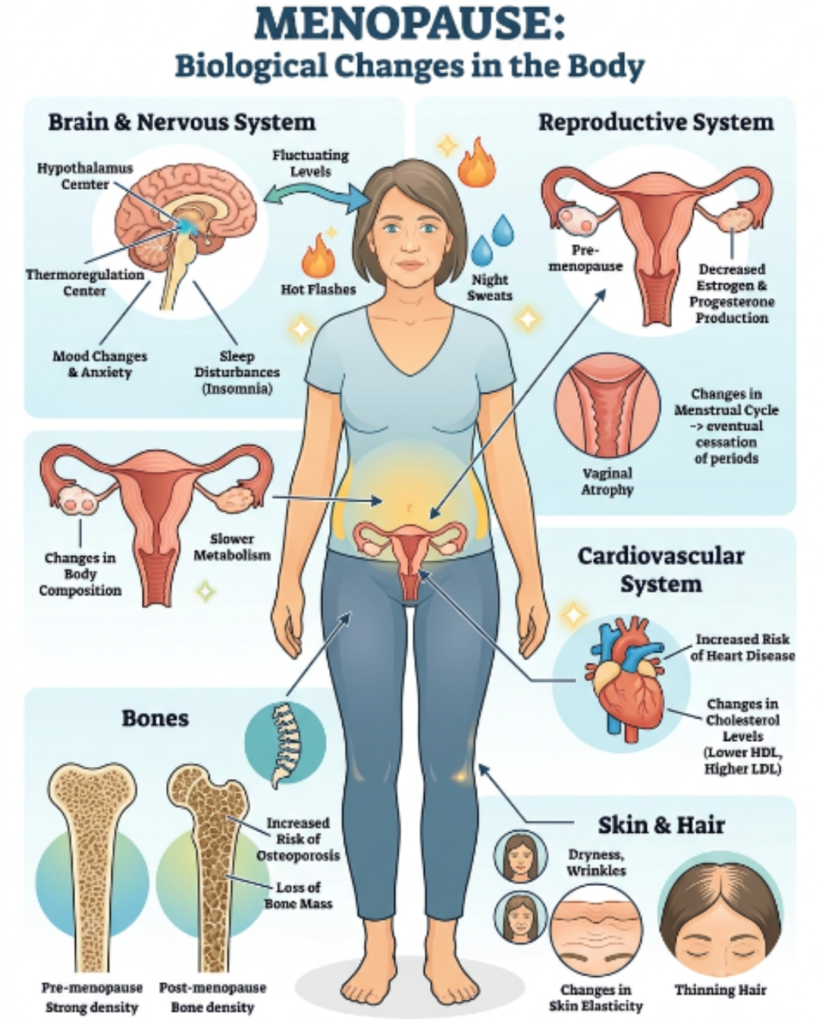
Why Menopause Happens
Menopause occurs when the ovaries produce less estrogen and progesterone — hormones that regulate menstruation, fertility, and many other body functions. As hormone levels decline, the body gradually stops releasing eggs and periods eventually end. This hormonal shift affects multiple systems in the body, which is why women often notice changes in energy, mood, skin, and metabolism.
Changes You Might Notice in Your Body
1. Menstrual Changes
Periods may become irregular before they stop completely. You might notice:
- Shorter or longer cycles
- Lighter or heavier bleeding
- Skipped periods
These changes are a natural part of the transition.
2. Hot Flashes and Night Sweats
One of the most common symptoms is sudden warmth in the face or chest, often followed by sweating. Night sweats can disrupt sleep and cause fatigue. These are caused by changes in the body’s temperature regulation due to lower estrogen levels.
3. Sleep Disturbances
Hormonal changes can affect sleep patterns. Many women experience:
- Trouble falling asleep
- Waking up at night
- Less deep sleep
Improving sleep habits, keeping a cool bedroom, and limiting caffeine can help.
4. Mood Changes
Mood swings, irritability, and anxiety may occur. These shifts are related to hormone fluctuations and can affect daily life. Staying active, practicing mindfulness, and talking to friends or a healthcare professional can support emotional health.
5. Vaginal and Bladder Changes
Lower estrogen levels can affect vaginal tissues, causing:
- Vaginal dryness
- Discomfort during sex
- Increased risk of urinary tract infections
Using lubricants, staying hydrated, and pelvic floor exercises can help maintain comfort and health.
6. Skin, Hair, and Nail Changes
The drop in estrogen can affect collagen and moisture levels, leading to:
- Thinner skin
- Fine lines or wrinkles
- Dry skin
- Hair thinning or slower growth
- Brittle nails
Moisturizing, gentle skincare, and a balanced diet with protein and healthy fats can slow these effects.
7. Bone and Muscle Health
Estrogen helps protect bones. After menopause, the risk of bone loss and osteoporosis increases. Women may also notice:
- Decreased muscle mass
- Joint stiffness
Weight-bearing exercises, calcium and vitamin D intake, and strength training help maintain bone and muscle health.
8. Metabolism and Weight Changes
Some women experience:
- Slower metabolism
- Increased belly fat
- Slight weight gain
Healthy eating, regular physical activity, and staying hydrated can manage weight changes.
9. Cognitive Changes
Some women report:
- Difficulty concentrating
- Mild memory lapses
- Slower processing
Maintaining mental activity, sleep, stress management, and regular exercise can support brain health.
Practical Tips for Managing Menopause
- Eat a balanced diet: Include fruits, vegetables, whole grains, lean protein, and healthy fats.
- Exercise regularly: Walking, yoga, and strength training improve mood, metabolism, and bone health.
- Prioritize sleep: Create a consistent bedtime routine and a cool, dark bedroom.
- Stay hydrated: Water helps with skin health, digestion, and overall comfort.
- Support mental health: Meditation, journaling, or therapy can ease mood swings.
- Pelvic health: Kegel exercises and vaginal moisturizers help with dryness and urinary issues.
- Regular check-ups: Screen for bone density, cholesterol, and blood pressure changes.
Conclusion
Menopause is a natural transition with many physical and emotional changes. Understanding what to expect can make this stage of life smoother and more empowering. By focusing on nutrition, movement, sleep, and emotional support, women can maintain health, confidence, and comfort through this chapter. Embrace menopause as a chance to care for your body and mind in new ways — less worry, more self-care, and more peace.