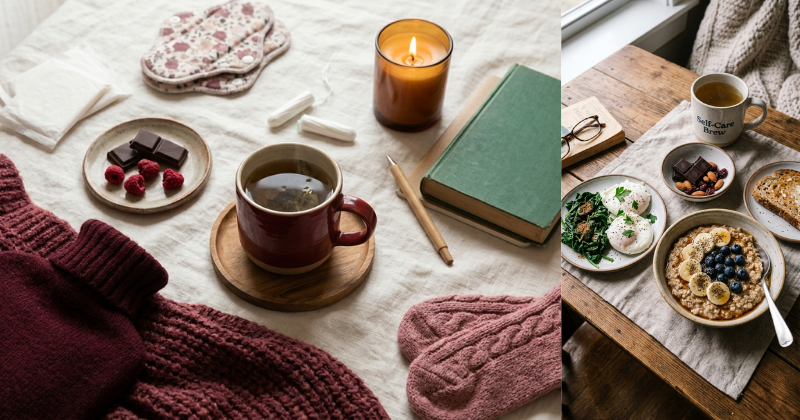
Tired, crampy, low-energy during your period? Menstrual phase nutrition can help you feel more stable, less bloated, and better supported—naturally.
Your menstrual phase (the days you’re actively bleeding) is not the time to push harder, restrict food, or ignore your body’s signals. Hormone levels are at their lowest. Iron levels may drop. Energy can dip. And cravings often increase.
Instead of fighting your body, this is the time to nourish it intentionally. In this guide, you’ll learn what to eat during your period, which nutrients matter most, how to reduce cramps naturally, and how to support your body without extreme dieting or restriction.
Understanding the Menstrual Phase (What’s Happening in Your Body)
Before adjusting your diet, it helps to understand what’s going on hormonally.
During the menstrual phase:
- Estrogen and progesterone are low
- The uterine lining sheds
- Iron is lost through bleeding
- Energy levels often decrease
According to organizations like the American College of Obstetricians and Gynecologists, fatigue and cramping are common symptoms during menstruation.
This is not weakness. It’s physiology.
H3: Common Symptoms You Might Experience
- Lower energy
- Cravings (especially chocolate or carbs)
- Headaches
- Bloating
- Mood sensitivity
- Menstrual cramps
Menstrual phase nutrition is about supporting these symptoms — not suppressing them.
Key Nutrients Your Body Needs During Your Period
Let’s focus on what truly makes a difference.
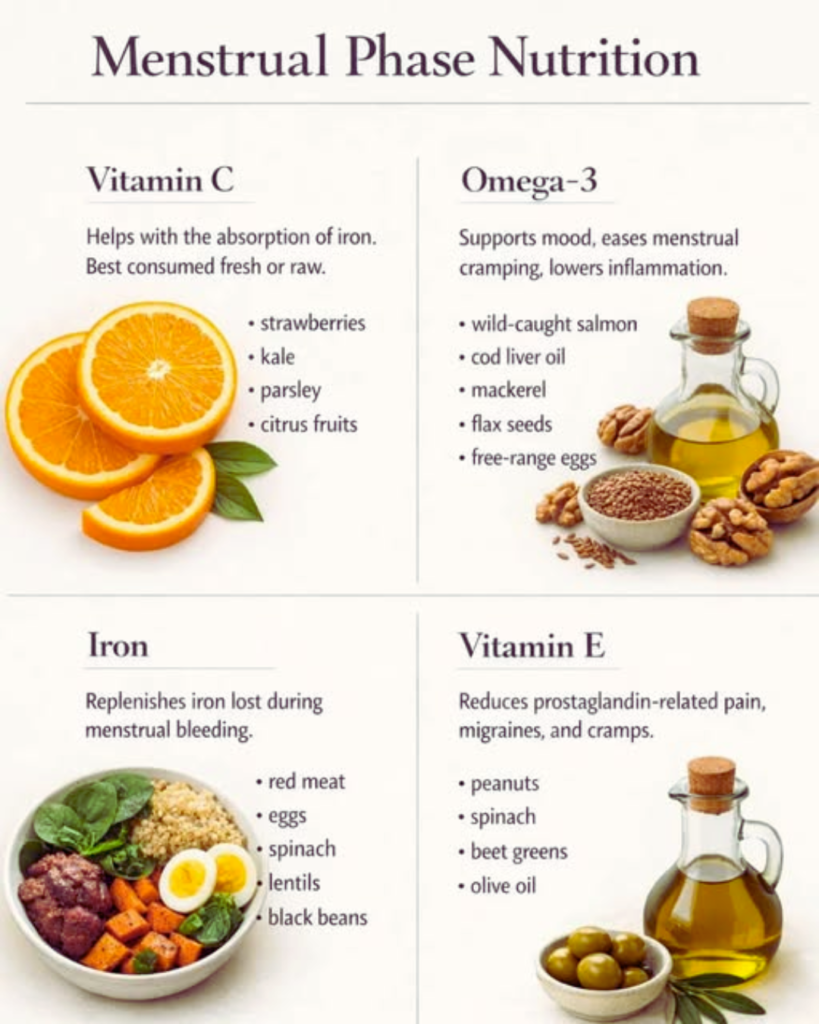
H3: Iron (To Replace What You Lose)
Iron loss during menstruation can contribute to fatigue, especially if your flow is heavy.
Iron-rich foods:
- Lentils
- Spinach
- Red meat
- Chickpeas
- Pumpkin seeds
Tip: Pair plant-based iron with vitamin C (like lemon or oranges) to improve absorption.
H3: Magnesium (For Cramps & Relaxation)
Magnesium helps relax muscles and may ease menstrual cramps.
Add:
- Almonds
- Dark leafy greens
- Dark chocolate (70%+)
- Avocado
This explains why chocolate cravings are so common — your body might be asking for magnesium.
H3: Omega-3 Fatty Acids (For Inflammation)
Omega-3s help reduce inflammation, which plays a role in period pain.
Sources:
- Salmon
- Sardines
- Walnuts
- Chia seeds
- Flaxseeds
These fats support hormone balance and mood stability.
What to Eat During Your Period (Simple Meal Ideas)
Now let’s make this practical.
H3: Comforting but Nourishing Breakfast Options
- Oatmeal with chia seeds and berries
- Eggs with sautéed spinach
- Greek yogurt with nuts and honey
Warm foods often feel better during the menstrual phase because they support digestion and circulation.
H3: Balanced Lunch & Dinner Ideas
Focus on:
- Protein + complex carbs + healthy fats
Examples:
- Lentil soup with whole-grain bread
- Grilled salmon with quinoa and roasted vegetables
- Chicken with sweet potatoes and greens
These combinations stabilize blood sugar and prevent energy crashes.
H3: Smart Snacks for Cravings
Instead of fighting cravings, upgrade them:
- Dark chocolate + almonds
- Dates with peanut butter
- Banana with tahini
- Herbal tea with a square of chocolate
Restriction often increases cravings. Balanced nourishment reduces them.
Foods That May Worsen Symptoms
You don’t need to eliminate everything — but awareness helps.
H3: Highly Processed Salty Foods
They can increase bloating and water retention.
H3: Excess Sugar
Large sugar spikes may worsen fatigue and mood swings.
H3: Too Much Caffeine
While moderate caffeine is okay for many, excessive amounts can increase anxiety and breast tenderness in some women.
Notice how your body responds rather than following extreme rules.
Natural Ways to Support Energy & Reduce Cramps
Menstrual phase nutrition works even better with supportive habits.
H3: Stay Hydrated
Dehydration can worsen headaches and fatigue.
Warm water, herbal teas (like ginger or chamomile), and mineral-rich broths can feel soothing.
H3: Gentle Movement
Light stretching or walking can improve circulation and reduce cramps.
This is not the phase for intense workouts. It’s a phase for restoration.
H3: Prioritize Rest
Your body is literally shedding tissue. It makes sense to slow down.
If possible:
- Go to bed earlier
- Reduce social overload
- Avoid over-scheduling
Supporting your cycle means honoring its rhythm.
Can Nutrition Really Reduce Period Pain?
This is a common question.
Research suggests that diets rich in anti-inflammatory foods (like omega-3s and leafy greens) may reduce menstrual discomfort over time. However, results vary depending on underlying conditions like endometriosis or hormonal imbalances.
Nutrition is not a magic fix — but it’s a powerful foundation.
Long-Term Cycle Syncing: Why It Matters
Menstrual phase nutrition is just one part of a larger cycle-syncing approach.
In different phases of your cycle, your body benefits from:
- Higher protein and grounding foods during menstruation
- Lighter, fresh foods during ovulation
- Complex carbs and magnesium during the luteal phase
Learning your cycle helps you plan better, train smarter, and work with your hormones instead of against them.
When to Seek Medical Advice
If you experience:
- Extremely heavy bleeding
- Severe, debilitating pain
- Periods lasting longer than 8 days
- Dizziness or fainting
Consult a healthcare professional to rule out underlying conditions.
Conclusion: Nourish, Don’t Restrict
Your period is not the time for dieting, punishment workouts, or self-criticism. It’s a time for nourishment.
Menstrual phase nutrition focuses on iron, magnesium, healthy fats, warm meals, and stable blood sugar. Small changes can help reduce fatigue, ease cramps, and improve overall comfort.
Listen to your body. Feed it intentionally. Rest when needed.
You don’t need to fight your cycle. You can support it.
Important Disclaimer: This article is for informational purposes only and should not replace professional advice. For health-related topics, consult healthcare providers. Individual results may vary, and personal circumstances should always be considered when implementing any suggestions.