
A meteor shower is one of the easiest and most magical sky events you can enjoy without a telescope—just your eyes, a little patience, and the right timing. If you’ve ever wished on a shooting star or felt that quiet thrill of looking up at the night sky, this guide will show you exactly how to watch the next meteor shower from your own backyard, even if you’ve never done it before.
Meteor showers happen several times a year, and many of them are visible to the naked eye. You don’t need expensive equipment, advanced astronomy knowledge, or a remote location. With the right preparation, you can turn an ordinary night into an unforgettable experience. In this article, you’ll discover when meteor showers happen, how to spot them easily, what to expect, and how to make the most of every streak of light you see.
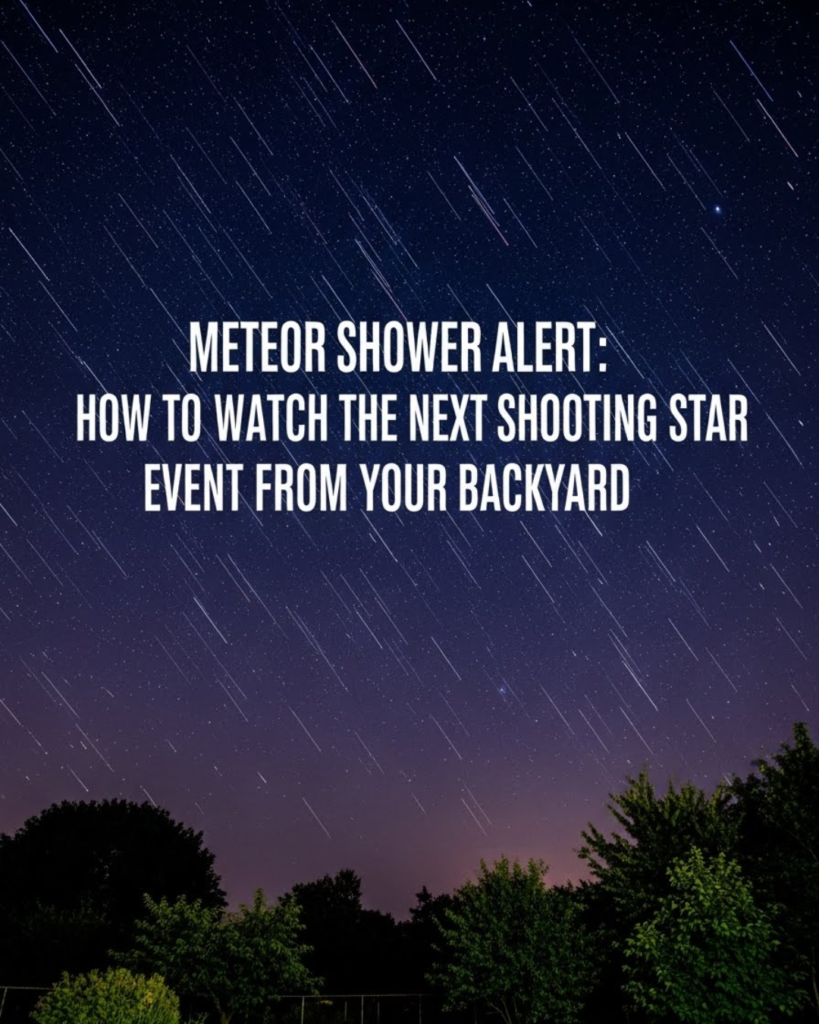
Understanding Meteor Showers: The Basics
Meteor showers may look mysterious, but the science behind them is surprisingly simple. Once you understand what’s happening, watching them becomes even more exciting.
What Is a Meteor Shower?
A meteor shower occurs when Earth passes through a stream of debris left behind by a comet or asteroid. These tiny particles—often no larger than grains of sand—enter Earth’s atmosphere at high speed and burn up, creating bright streaks of light we call shooting stars.
Despite their dramatic appearance, meteors are harmless. They burn up high in the atmosphere long before reaching the ground.
Why Meteor Showers Happen on Specific Dates
Meteor showers happen at roughly the same time every year because Earth follows the same orbit around the Sun. When our planet crosses the same debris trail annually, we get a predictable meteor display.
Popular meteor showers include:
- The Perseids (August)
- The Geminids (December)
- The Quadrantids (January)
- The Lyrids (April)
Knowing these dates helps you plan ahead and avoid missing the peak nights.
Meteor vs. Meteorite vs. Asteroid
It’s easy to mix these up, so here’s a quick clarification:
- Meteor: The streak of light you see in the sky
- Meteorite: A fragment that survives and reaches the ground
- Asteroid: A large rocky body orbiting the Sun
Most meteor showers involve particles far too small to become meteorites.
When Is the Best Time to Watch a Meteor Shower?
Timing is everything when it comes to meteor watching. The good news is that you don’t need to stay up all night to enjoy the show.
Peak Nights and Hours
Each meteor shower has a peak night when activity is highest. On these nights, you may see anywhere from 10 to 60 meteors per hour under ideal conditions.
The best time to watch is usually:
- After midnight
- Before dawn
During these hours, your side of Earth is facing into the debris stream, increasing your chances of seeing more meteors.
Moon Phase Matters
The Moon can either enhance or ruin your viewing experience. A bright full moon can wash out faint meteors, while a new moon creates dark skies perfect for stargazing.
If the Moon is bright:
- Position yourself so it’s behind a building or tree
- Focus on the darkest part of the sky
Even during a full moon, brighter meteors—called fireballs—can still be visible.
How Long to Watch
Give yourself at least 30 to 45 minutes. Your eyes need time to adjust to the dark, and meteor activity can come in bursts rather than evenly spaced events.
How to Watch a Meteor Shower From Your Backyard
You don’t need to travel far or buy special equipment. With a little preparation, your backyard can be the perfect viewing spot.
Find the Right Location
Choose a place with:
- Minimal streetlights
- A wide view of the sky
- Comfortable seating
If possible, turn off nearby lights or move to the darkest corner of your yard.
Dress and Prepare Comfortably
Meteor watching involves a lot of waiting. Stay comfortable so you can enjoy the experience.
- Wear warm clothing, even in summer
- Bring a blanket or reclining chair
- Have hot tea or water nearby
Comfort keeps you outside longer—and increases your chances of seeing more meteors.
Where to Look in the Sky
You don’t need to stare directly at the constellation where the meteor shower originates (called the radiant). Instead:
- Look about halfway up the sky
- Focus on darker areas away from the Moon
- Let your eyes relax rather than scanning constantly
Meteors can appear anywhere, so a broad view is best.
Pro Tips to See More Shooting Stars
Once you’ve mastered the basics, a few expert tips can help you maximize your experience.
Avoid Screens Before Watching
Phone and tablet screens ruin night vision. If you must use your phone:
- Lower screen brightness
- Use a red-light mode if available
Better yet, check times and directions before going outside.
Be Patient and Stay Still
The more relaxed you are, the more you’ll notice. Sudden movements or constant repositioning can make you miss brief flashes.
Think of meteor watching as quiet observation rather than active searching.
Watch With Others
Sharing the experience makes it more fun. One person might spot a meteor you miss, and reacting together adds to the excitement.
It also makes long viewing sessions feel shorter.
Common Meteor Shower Questions (Quick Answers)
How many meteors can I expect to see?
On an average night, you may see:
- 10–20 meteors per hour
- More during peak times
- Fewer in light-polluted areas
Even one bright meteor can make the night memorable.
Can I watch a meteor shower from the city?
Yes, but expect fewer meteors. City viewers should:
- Focus on brighter showers like Geminids
- Look for rooftops or balconies with open views
- Be patient
Dark skies improve results, but they’re not required.
Do I need binoculars or a telescope?
No. Meteor showers are best viewed with the naked eye. Binoculars actually limit your field of view and make it harder to catch fast-moving streaks.
Maximizing the Experience: Make It a Ritual
Meteor showers can become more than a one-time activity—they can be a calming ritual that reconnects you with nature.
Create a Simple Skywatching Routine
- Mark meteor shower dates on your calendar
- Prepare a small “sky kit” with a blanket and flashlight
- Invite friends or family
Over time, you’ll become more confident and relaxed under the stars.
Pair Meteor Watching With Mindfulness
Many people find meteor showers deeply calming. Watching the sky:
- Slows racing thoughts
- Encourages quiet reflection
- Creates a sense of awe
It’s a gentle reminder of how vast and beautiful the universe is.
Explore Related Sky Events
Once you enjoy meteor showers, you may also like:
- Moon phases and supermoons
- Planet watching (Jupiter, Mars, Venus)
- Lunar eclipses
These make great internal links for future astronomy articles.
Conclusion: Your Front-Row Seat to the Night Sky
Watching a meteor shower from your backyard is one of the simplest yet most powerful ways to connect with the universe. You don’t need expertise or equipment—just curiosity, patience, and a willingness to look up. Every shooting star is a reminder that extraordinary moments often happen quietly, right above us.
By learning when to watch, where to look, and how to prepare, you unlock an experience that feels both ancient and personal. So mark the next meteor shower on your calendar, step outside, and let the night sky surprise you. You’re more than ready to enjoy the show. 🌠