Introduction
Feeling down, stressed, or anxious? While professional help is essential for mental health, nutrition can play a powerful role in supporting mood and emotional well-being. Certain foods contain nutrients that help regulate neurotransmitters like serotonin and dopamine, which influence happiness and calmness.
In this guide, you’ll learn:
- Why diet affects mood
- The best natural antidepressant foods
- How to include them in your daily routine
How Diet Impacts Mood
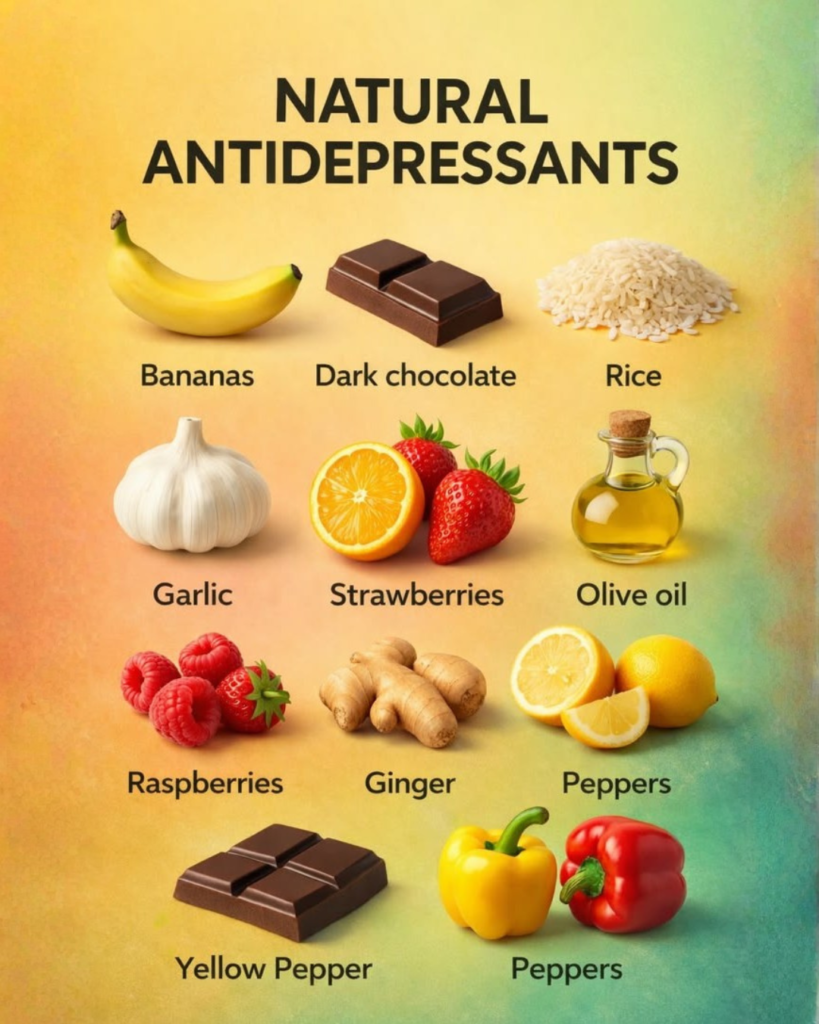
Your brain relies on nutrients from food to produce chemicals that regulate emotions:
- Serotonin: Controls mood, sleep, and appetite
- Dopamine: Drives motivation and pleasure
- Omega-3 fatty acids: Support brain cell communication
A diet low in essential nutrients can worsen mood disorders, while nutrient-rich foods may reduce anxiety and depressive symptoms naturally.
Top Natural Antidepressant Foods
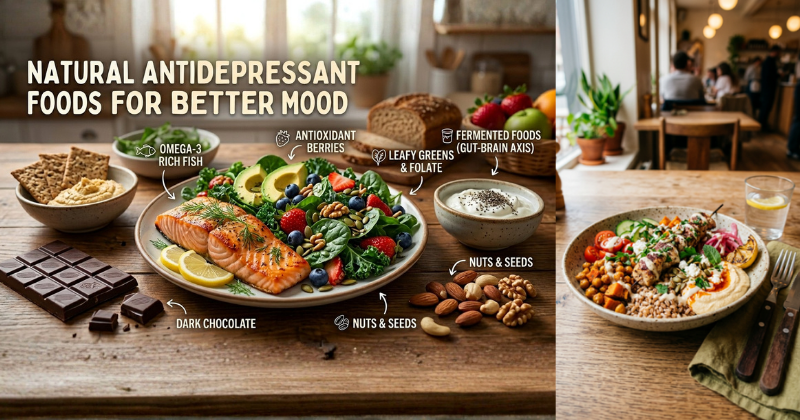
1. Fatty Fish
Examples: Salmon, mackerel, sardines, trout
Why It Helps:
- Rich in omega-3 fatty acids
- Supports serotonin production
- Reduces inflammation linked to depression
Tip: Eat fatty fish 2–3 times per week or consider omega-3 supplements if needed.
2. Dark Leafy Greens
Examples: Spinach, kale, Swiss chard
Why It Helps:
- High in folate, which regulates dopamine
- Provides magnesium to reduce stress and anxiety
Tip: Include a serving in salads, smoothies, or sautés daily.
3. Berries
Examples: Blueberries, strawberries, blackberries
Why It Helps:
- Packed with antioxidants
- Reduce oxidative stress in the brain
- Can improve memory and mood
Tip: Add berries to breakfast, yogurt, or smoothies.
4. Nuts and Seeds
Examples: Walnuts, almonds, pumpkin seeds, flaxseeds
Why It Helps:
- Provide magnesium, zinc, and healthy fats
- Support neurotransmitter function and reduce inflammation
Tip: Snack on a small handful daily or sprinkle on salads.
5. Whole Grains
Examples: Oats, quinoa, brown rice, whole wheat
Why It Helps:
- Steady source of glucose for brain energy
- Supports serotonin levels due to complex carbs
Tip: Replace refined carbs with whole grains for better mood stability.
6. Fermented Foods
Examples: Yogurt, kefir, sauerkraut, kimchi
Why It Helps:
- Probiotics support gut health
- Gut microbiome influences mood through the gut-brain axis
Tip: Include a small serving daily to support mental well-being.
7. Dark Chocolate
Why It Helps:
- Contains flavonoids and small amounts of caffeine
- Boosts serotonin and endorphin levels
Tip: Choose chocolate with 70% cocoa or higher, and enjoy in moderation.
8. Eggs
Why It Helps:
- High in protein and B vitamins
- Support dopamine and serotonin production
- Contain choline for brain function
Tip: Incorporate eggs in breakfast or salads for sustained energy and mood support.
9. Citrus Fruits
Examples: Oranges, lemons, grapefruits
Why It Helps:
- Rich in vitamin C
- Reduces cortisol (stress hormone)
- Supports overall brain function
Tip: Snack on fresh fruit or add lemon to water for a mood lift.
Practical Tips for Using These Foods
- Eat a variety to cover different nutrients
- Combine with protein and healthy fats for balanced blood sugar
- Stay hydrated—dehydration can worsen mood
- Limit processed foods that spike blood sugar and increase anxiety
Conclusion
Mood and mental health are closely connected to nutrition. By including natural antidepressant foods like fatty fish, leafy greens, berries, nuts, and fermented foods, you can support your brain chemistry, reduce stress, and enhance emotional well-being. Small, consistent dietary changes can make a noticeable difference in your daily mood.