
Creating luxuriously smooth lips requires neither expensive formulations nor complex procedures, but rather an understanding of two remarkably effective natural ingredients. This sugar and coconut oil combination represents a dermatologically sound approach to lip exfoliation that respects the delicate physiology of labial tissue while delivering immediate, visible results.
Understanding the Dermatological Science Behind Lip Exfoliation
The unique structural characteristics of lip tissue necessitate specialized care approaches that differ fundamentally from general facial skincare protocols. Comprehending these distinctions enables informed decisions regarding appropriate exfoliation methods and ingredient selection.
Labial skin possesses distinctive physiological properties that render it particularly vulnerable to environmental stressors and dehydration. The vermilion border, the visible red portion of lips, contains only 3-5 cellular layers compared to 16-20 layers in typical facial skin. This reduced thickness, combined with the absence of sebaceous glands and minimal melanin production, creates tissue that requires gentle yet effective maintenance strategies.
The stratum corneum, the outermost epidermal layer, undergoes continuous renewal through desquamation—the natural shedding of dead keratinocytes. On lips, this process occurs more rapidly than on other body surfaces, with complete cellular turnover approximately every 10-14 days. However, environmental factors including cold temperatures, low humidity, and UV exposure can disrupt this renewal cycle, causing accumulation of desiccated cells that manifest as flaking, roughness, and diminished aesthetic appearance.
The Mechanical Exfoliation Paradigm
Physical exfoliation employs abrasive particles to manually remove accumulated dead cells, immediately revealing the healthier tissue beneath. This mechanical approach contrasts with chemical exfoliation methods utilizing alpha-hydroxy acids or enzymatic preparations. For lip tissue, gentle mechanical exfoliation proves optimal due to the area’s small surface and the need for immediate visible improvement without extended contact times required by chemical agents.
Sugar Granules as Optimal Exfoliating Particles
Granulated sugar provides ideal exfoliating properties through its crystalline structure, water solubility, and appropriate particle dimensions. Unlike harsher abrasives such as salt crystals, which can create microscopic tissue damage, sugar granules offer sufficient mechanical action while dissolving gradually during application, progressively reducing abrasiveness and preventing over-exfoliation.
The hygroscopic nature of sucrose molecules attracts moisture from the surrounding environment, contributing secondary humectant properties that complement the primary exfoliating function. As sugar dissolves, it creates a mild osmotic gradient that draws hydration toward the tissue surface, temporarily plumping lip cells while the mechanical action proceeds.
Coconut Oil’s Multifunctional Properties
Coconut oil (Cocos nucifera) contributes multiple beneficial effects through its complex lipid composition, dominated by medium-chain saturated fatty acids. Lauric acid, comprising approximately 50% of coconut oil’s fatty acid profile, demonstrates antimicrobial properties while providing excellent skin penetration due to its molecular structure.
The oil functions simultaneously as exfoliation medium, emollient, and occlusive barrier. During scrubbing, it suspends sugar granules while lubricating tissue to minimize friction-induced irritation. Post-exfoliation, the oil creates a protective lipid layer that reduces transepidermal water loss, addressing the fundamental vulnerability of lip tissue lacking natural sebum production.
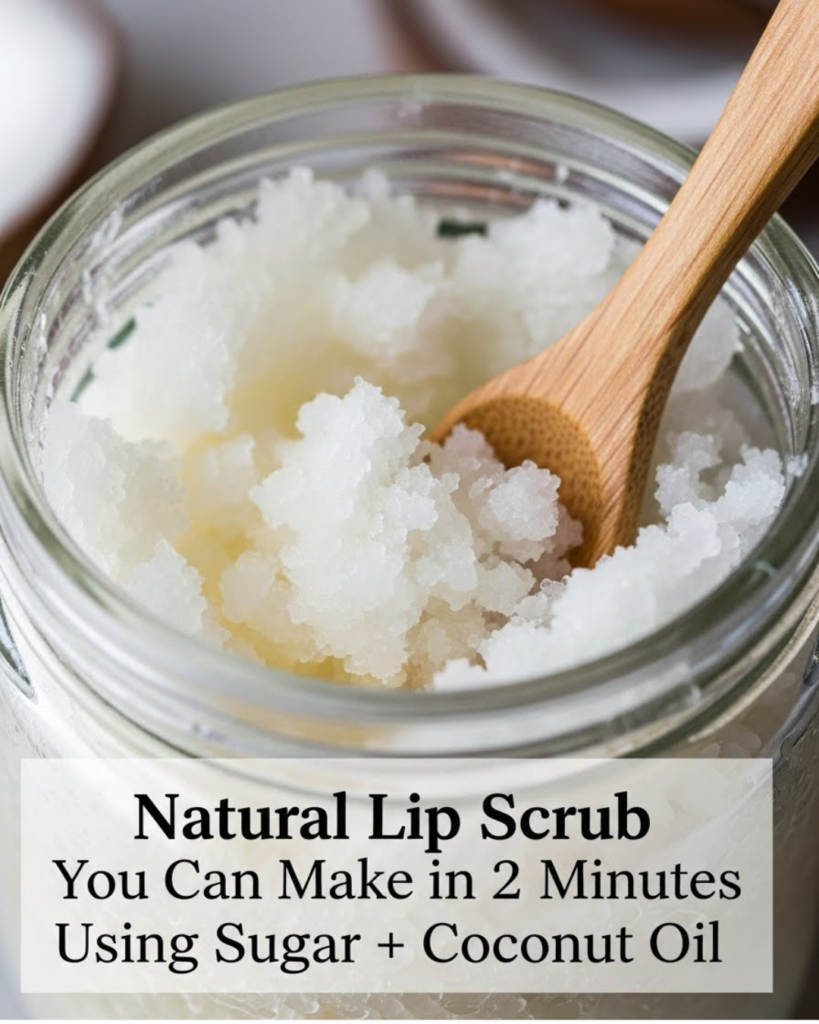
Creating Your Two-Minute Sugar and Coconut Oil Lip Scrub
The remarkable simplicity of this preparation belies its effectiveness, demonstrating how proper ingredient understanding enables creation of sophisticated skincare products from minimal components.
Essential Components:
- 5 milliliters (1 teaspoon) of granulated white sugar
- 5 milliliters (1 teaspoon) of virgin coconut oil
- Optional enhancement: 1-2 drops of vitamin E oil for additional antioxidant protection
- Small mixing container (glass or ceramic preferred)
- Clean mixing implement
Preparation Protocol:
Begin by ensuring your coconut oil achieves appropriate consistency. If solid due to temperature below 24°C, warm briefly between palms or place container in warm water until liquefied. The oil should flow freely but need not be hot—room temperature liquid state proves optimal for mixing and application.
Measure sugar into your mixing container, followed by coconut oil in equal proportion. The 1:1 ratio creates ideal consistency, though personal preference may guide minor adjustments. Those favoring gentler exfoliation might reduce sugar to 0.75 teaspoons, while individuals with significant accumulation of dry tissue may increase sugar to 1.25 teaspoons for enhanced mechanical action.
Stir components thoroughly, ensuring complete sugar dispersion throughout the oil phase. The mixture should achieve a wet sand consistency—granules fully coated with oil but maintaining distinct particulate character rather than dissolving into homogeneous paste.
Immediate Application Technique
Transfer a small quantity of scrub mixture to clean fingertips, applying to completely dry lips. Moisture presence dilutes the oil phase while dissolving sugar prematurely, reducing effectiveness. Using gentle circular motions, massage the scrub across entire lip surface for 60-90 seconds, maintaining consistent pressure that creates noticeable friction without discomfort.
Focus attention on areas exhibiting pronounced dryness or flaking, typically concentrated at the lip center and along the vermilion border. The mechanical action should feel stimulating rather than abrasive—if sensation becomes uncomfortable, reduce pressure immediately.
Removal and Post-Treatment Care
After adequate exfoliation duration, rinse lips thoroughly with lukewarm water, gently wiping away sugar residue and excess oil with a soft, damp cloth. Pat dry carefully, avoiding rubbing motions that might irritate freshly exfoliated tissue.
The coconut oil naturally leaves a beneficial residual layer that requires no additional removal. This remaining lipid film provides immediate moisturization and protection while the exposed fresh cells acclimate to environmental conditions. However, if excess oil feels uncomfortable, blot gently with tissue rather than washing aggressively.
Advanced Customization Strategies for Enhanced Results
While the basic sugar-coconut oil formulation delivers excellent results, thoughtful modifications enable personalization addressing specific concerns or preferences while maintaining the preparation’s simplicity and safety profile.
Therapeutic Essential Oil Integration
Enhance your lip scrub through judicious essential oil addition, selecting options offering both sensory appeal and functional benefits. Peppermint essential oil (1 drop per preparation) provides cooling sensation through menthol content while stimulating local circulation, creating temporary lip plumping effects. Lavender essential oil offers calming aromatherapeutic properties alongside mild antiseptic characteristics.
Exercise caution with essential oil incorporation, as lip tissue’s high absorption capacity and proximity to oral mucosa demand conservative dosing. Never exceed 1-2 drops per preparation, and perform patch testing on inner wrist before lip application if using unfamiliar essential oils.
Natural Colorant and Flavor Additions
Transform functional lip care into sensory experience through natural additives. Cocoa powder (1/4 teaspoon) creates chocolate-tinted scrub with antioxidant polyphenols, while beetroot powder provides rosy hue alongside betalain compounds. Vanilla extract or almond extract (2-3 drops) contribute pleasant flavor dimension without compromising exfoliating effectiveness.
These additions serve aesthetic and olfactory purposes primarily, though some offer secondary nutritional benefits. Avoid artificial colorants or synthetic fragrances, as these provide no functional advantage while potentially introducing irritants to sensitive labial tissue.
Sugar Variety Experimentation
While standard granulated white sugar performs admirably, exploring alternative sugar types reveals subtle performance variations. Brown sugar, containing residual molasses, offers slightly gentler exfoliation through smaller average crystal size while contributing trace minerals and darker color. Turbinado or raw sugar provides larger, more irregular crystals for intensive exfoliation addressing severely chapped lips, though increased abrasiveness demands careful pressure modulation.
Avoid powdered or confectioner’s sugar, as the fine particle size eliminates effective mechanical action while cornstarch additives create undesirable paste consistency compromising spreadability.
Alternative Oil Considerations
Though coconut oil provides excellent properties, individual sensitivities or preferences might necessitate substitution. Sweet almond oil offers similar emollient characteristics with lighter texture and hypoallergenic properties beneficial for reactive skin types. Jojoba oil, technically a liquid wax rather than true oil, provides sebum-like properties with exceptional stability and extended shelf life.
Avoid mineral oil or petroleum-derived products despite their occlusive properties, as these substances lack the nutritional fatty acid profiles and potential beneficial effects associated with plant-derived lipids.
Addressing Common Challenges and Concerns
Even straightforward preparations occasionally present unexpected difficulties requiring systematic problem-solving approaches that preserve the treatment’s effectiveness while ensuring user comfort and safety.
Managing Over-Exfoliation Symptoms
Excessive enthusiasm during initial applications sometimes results in over-exfoliation, manifesting as increased sensitivity, redness, or even minor bleeding from compromised tissue. If this occurs, discontinue exfoliation immediately and apply pure coconut oil or another gentle emollient every 2-3 hours to support healing. Resume exfoliation only after complete symptom resolution, employing reduced pressure and shortened duration.
Prevention proves far simpler than remediation. Begin conservatively with 30-second application duration and gentle pressure, gradually increasing intensity only after confirming tolerance across multiple sessions. Remember that effective exfoliation requires consistency rather than aggressive single treatments.
Addressing Coconut Oil Sensitivity
A small percentage of individuals experience contact dermatitis or comedogenic reactions to coconut oil despite its generally excellent tolerance profile. If burning, itching, or increased breakouts around the lip periphery develop, substitute alternative carrier oils such as grapeseed oil, sunflower oil, or fractionated coconut oil, which maintains coconut oil’s benefits while removing potentially problematic proteins.
Seasonal Adaptation Requirements
Environmental conditions dramatically influence optimal exfoliation frequency and formulation adjustments. Winter’s low humidity and cold temperatures accelerate cellular desiccation, potentially requiring 2-3 weekly treatments for maintenance. Conversely, summer’s elevated humidity reduces dead cell accumulation, allowing weekly or biweekly exfoliation sufficiency.
Adjust sugar-to-oil ratio seasonally as well. Winter applications benefit from slightly increased oil proportion (1.25 teaspoons oil to 1 teaspoon sugar) for enhanced moisturization, while summer might employ marginally increased sugar for addressing sunscreen and environmental debris accumulation.
Storage and Preparation Timing
While fresh preparation for each use ensures optimal ingredient activity and eliminates preservation concerns, some individuals prefer batch preparation for convenience. If pre-mixing larger quantities, store in small glass containers away from heat and light, using within one week to prevent rancidity. However, the genuine two-minute preparation time renders batch preparation largely unnecessary while guaranteeing maximum freshness and potency.
Maximizing Long-Term Lip Health and Appearance
Successful lip care transcends isolated exfoliation treatments, requiring integration within comprehensive maintenance protocols addressing multiple aspects of labial tissue health and protection.
Establishing Optimal Treatment Frequency
Determine personalized exfoliation schedules based on individual desquamation rates and environmental exposures. Most individuals achieve optimal results with 1-2 weekly treatments, though those in harsh climates or with naturally accelerated cell turnover might benefit from thrice-weekly applications. Avoid daily exfoliation regardless of temptation, as excessive mechanical disruption prevents adequate cellular regeneration and compromises barrier function.
Monitor tissue response continuously, adjusting frequency if persistent sensitivity or inadequate improvement manifests. Lip care requires individualized approaches respecting unique physiological variations rather than adherence to rigid universal protocols.
Complementary Hydration Strategies
Exfoliation removes cellular barriers to moisture absorption but provides no intrinsic hydration. Follow each treatment with intensive moisturizing products formulated specifically for lip tissue. Natural options include shea butter, cocoa butter, or specialized lip balms containing beeswax, which create protective barriers while delivering nutritive compounds.
Maintain consistent daily lip balm application even on non-exfoliation days, reapplying every 2-3 hours and always before outdoor exposure or sleep. This preventive approach minimizes dead cell accumulation requiring removal while maintaining tissue health proactively.
Photoprotection Considerations
UV radiation damages lip tissue as severely as other body surfaces despite this vulnerability receiving insufficient attention in sun protection discussions. Select daily lip products containing mineral sunscreens such as zinc oxide or titanium dioxide, providing broad-spectrum protection without chemical absorber concerns appropriate for frequently ingested lip products.
The relationship between regular exfoliation and sun protection proves particularly important, as removal of the stratum corneum temporarily reduces natural UV defense mechanisms. Never exfoliate immediately before extended sun exposure, and always apply SPF protection post-treatment when outdoor activities follow.
Nutritional Support for Lip Health
External care achieves optimal results when complemented by systemic nutritional support. Adequate hydration (approximately 2 liters daily) maintains cellular turgor while supporting natural desquamation processes. Essential fatty acids from dietary sources including fish, flaxseed, and walnuts provide building blocks for healthy cellular membranes and natural lipid barrier formation.
B-complex vitamins, particularly riboflavin (B2) and niacin (B3), play crucial roles in epithelial tissue health, with deficiencies manifesting prominently in lip chapping and angular cheilitis. A balanced diet rich in vegetables, whole grains, and lean proteins generally provides adequate micronutrient intake supporting optimal labial tissue function.
Conclusion
The transformation achievable through this simple sugar and coconut oil lip scrub demonstrates that effective skincare requires understanding rather than complexity or expense. By respecting the unique physiology of labial tissue while employing ingredients whose properties align perfectly with this tissue’s specific needs, you create professional-quality results within your own home using components already present in most kitchens.
Success lies in consistent application of proper technique rather than aggressive treatment or expensive formulations. The two minutes required for preparation and application represent a minimal investment yielding immediate aesthetic improvements and long-term tissue health benefits. Your commitment to this gentle, natural approach positions you to maintain perpetually smooth, healthy lips regardless of environmental challenges or seasonal variations—proof that the most elegant solutions often emerge from the simplest combinations of thoughtfully selected natural ingredients.