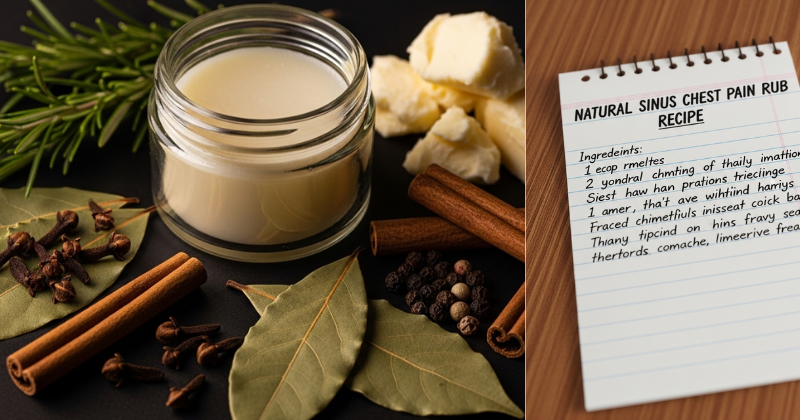
Creating a natural sinus and chest pain rub represents an evidence-informed integration of traditional aromatherapy principles with contemporary understanding of topical absorption mechanisms and mucosal response pathways. While such preparations cannot replace medical intervention for serious respiratory conditions, formulating your own therapeutic rub allows precise control over ingredient selection, concentration ratios, and allergen avoidance while providing symptomatic relief through well-documented physiological mechanisms. This comprehensive guide examines the scientific basis for natural chest rubs, provides detailed formulation protocols, and explains the biochemical interactions that underlie their effectiveness in addressing sinus congestion and associated thoracic discomfort.
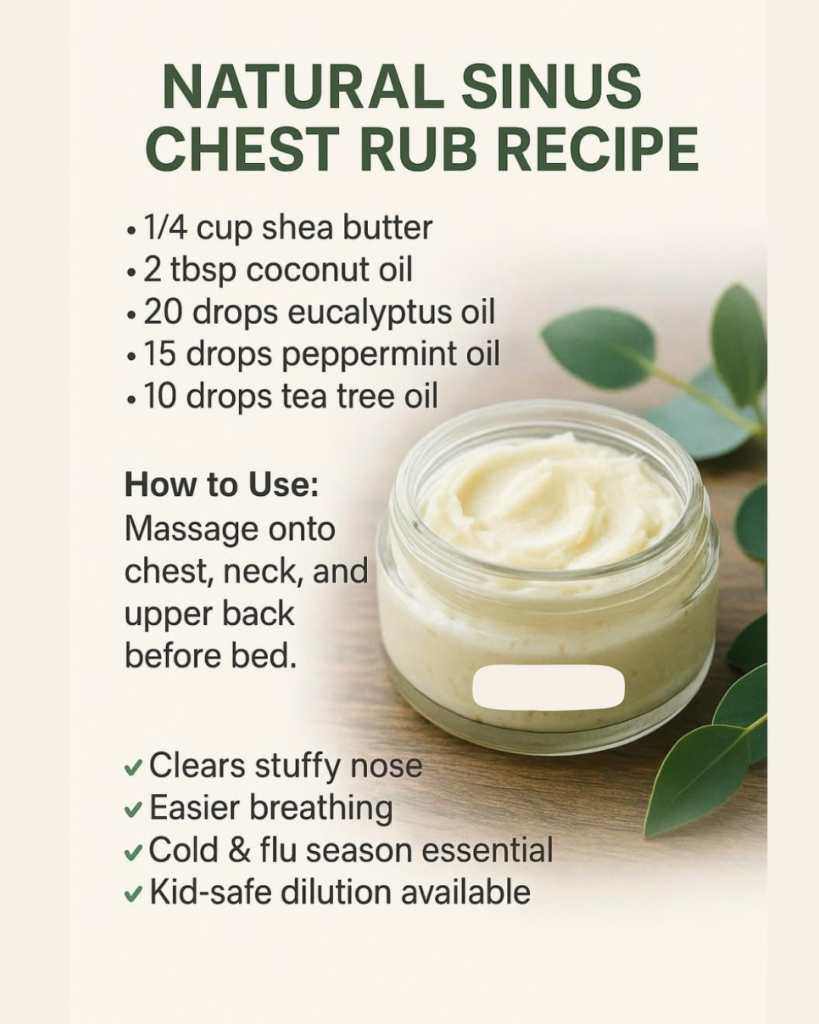
The Physiological Basis of Topical Respiratory Relief
Understanding how topical applications influence respiratory symptoms requires examining the interplay between dermal absorption, olfactory stimulation, and neurological response pathways that collectively produce the sensations of relief.
Transdermal Delivery and Counterirritant Mechanisms
Topical chest rubs operate primarily through counterirritant action—a neurological phenomenon wherein mild cutaneous stimulation modulates pain perception through competing sensory signals. Essential oils containing compounds like menthol, camphor, and eucalyptol activate transient receptor potential (TRP) channels in cutaneous nerve endings, particularly TRPM8 (cold receptors) and TRPA1 (irritant receptors). This activation creates cooling or warming sensations that effectively compete with deeper pain signals from inflamed sinuses or congested bronchial passages, reducing perceived discomfort through a process called gate control theory of pain modulation.
The lipophilic nature of many essential oil constituents facilitates dermal penetration, allowing volatile compounds to accumulate in subcutaneous tissues where they exert localized anti-inflammatory effects. Research published in the Journal of Pharmaceutical Sciences demonstrates that menthol and camphor can penetrate the stratum corneum and reach concentrations in underlying tissues sufficient to influence local prostaglandin synthesis and inflammatory mediator release, contributing to actual physiological changes beyond mere sensory distraction.
Aromatherapeutic Inhalation Effects
Volatile compounds released from chest rubs enter the nasal passages through both direct inhalation and vapor diffusion from body heat. Upon reaching the olfactory epithelium, these molecules bind to olfactory receptors, triggering neural signals that travel directly to the limbic system—the brain region governing emotional responses and autonomic functions. This direct neurological pathway explains why certain aromas can rapidly influence breathing patterns, perceived congestion, and subjective comfort levels.
Additionally, inhaled vapors interact with respiratory mucosa directly. Eucalyptol (1,8-cineole), the primary constituent of eucalyptus oil, has been shown in clinical trials to reduce mucus production and enhance mucociliary clearance—the mechanism by which respiratory epithelium removes particulates and excessive secretions. A study in Respiratory Research found that eucalyptol supplementation significantly reduced sputum production in patients with respiratory conditions, suggesting that inhalation of eucalyptus-containing preparations may produce measurable decongestant effects.
The Placebo Effect and Sensory Expectation
Scientific rigor requires acknowledging the substantial placebo component in any therapeutic intervention, particularly those involving familiar sensory experiences. The cooling sensation produced by menthol, for instance, does not actually lower tissue temperature but creates a neurological perception of coolness that many interpret as improved breathing. This subjective improvement, while not reflecting actual airway diameter changes, nonetheless provides genuine relief from discomfort and anxiety associated with congestion—outcomes with legitimate therapeutic value even if the underlying mechanisms differ from assumptions.
Essential Ingredients and Their Therapeutic Properties
Formulating an effective natural chest rub requires understanding the specific compounds responsible for therapeutic effects and their appropriate concentration ranges for safety and efficacy.
Carrier Oils: The Foundation Matrix
Carrier oils serve multiple critical functions: they dilute essential oils to safe topical concentrations, facilitate dermal application, and provide emollient properties that prevent skin irritation. The selection of carrier oil influences absorption kinetics and overall sensory experience.
Coconut Oil (Fractionated or Virgin) offers medium-chain triglycerides that penetrate readily without excessive greasiness. Its semi-solid consistency at room temperature provides ideal texture for chest rub formulations. Virgin coconut oil contains lauric acid, which demonstrates antimicrobial properties, though these effects are minimal at topical application concentrations.
Sweet Almond Oil provides excellent skin compatibility with low allergenic potential, making it suitable for sensitive skin applications. Its oleic acid content facilitates essential oil penetration while forming an occlusive barrier that reduces transepidermal water loss.
Jojoba Oil, technically a liquid wax ester rather than a triglyceride, closely mimics human sebum composition and exhibits exceptional stability against oxidative degradation. This stability extends shelf life and prevents rancidity in stored preparations.
Primary Essential Oils: Active Therapeutic Agents
Eucalyptus Oil (Eucalyptus globulus or E. radiata) contains 60-85% eucalyptol (1,8-cineole), the compound responsible for its characteristic aroma and decongestant properties. Clinical research supports eucalyptol’s mucolytic effects and anti-inflammatory action on respiratory epithelium. Safe topical concentration ranges from 1-3% in final formulations for adults, with lower concentrations (0.5-1%) recommended for children over age two. Eucalyptus globulus contains higher eucalyptol concentrations, while E. radiata offers a gentler profile suitable for sensitive populations.
Peppermint Oil (Mentha × piperita) derives its cooling sensation from menthol content (30-50% in quality oils). Menthol’s activation of TRPM8 cold receptors produces the characteristic cooling effect that many associate with easier breathing. Additionally, menthol demonstrates mild analgesic properties through modulation of kappa-opioid receptors and voltage-gated sodium channels. Recommended concentrations range from 1-2% in finished products, with caution near facial mucous membranes where excessive concentrations can cause irritation.
Rosemary Oil (Rosmarinus officinalis, cineole chemotype) contains camphor, alpha-pinene, and 1,8-cineole in varying ratios depending on chemotype. The cineole chemotype offers respiratory benefits similar to eucalyptus while adding complementary aromatic complexity. Rosemary oil demonstrates antioxidant and anti-inflammatory properties attributable to rosmarinic acid derivatives, though topical bioavailability of these compounds requires further investigation.
Lavender Oil (Lavandula angustifolia) contributes anxiolytic effects mediated primarily through linalool and linalyl acetate. While not directly decongestant, lavender’s documented effects on autonomic nervous system regulation and stress response make it valuable for addressing the anxiety and sleep disruption often accompanying respiratory congestion. Its inclusion moderates the potentially irritating effects of more stimulating oils.
Optional Therapeutic Additions
Tea Tree Oil (Melaleuca alternifolia) offers antimicrobial properties through terpinen-4-ol, though its effectiveness against respiratory pathogens via topical application remains questionable. Its inclusion may provide psychological reassurance regarding infection control.
Frankincense Oil (Boswellia carterii) contains alpha-pinene and other monoterpenes that demonstrate anti-inflammatory effects in some studies, though clinical evidence specifically supporting respiratory benefits is limited. Its warm, resinous aroma contributes to the overall sensory experience.
Beeswax or Candelilla Wax can be incorporated to create a salve consistency rather than liquid oil, improving adherence to skin and reducing transfer to clothing. Wax content of 10-15% by weight produces a semi-solid balm texture.
Precise Formulation Protocol: Creating Your Therapeutic Chest Rub
This section provides a scientifically-informed recipe with explicit measurements, procedural details, and quality control considerations for producing a safe, effective natural chest rub.
Basic Formulation (2-ounce batch)
Base Components:
- 45 grams (approximately 3 tablespoons) coconut oil or carrier oil blend
- 7 grams beeswax (optional, for salve consistency)
Essential Oil Blend (total: 30-40 drops, representing approximately 2% dilution):
- 12 drops eucalyptus oil (Eucalyptus radiata preferred)
- 10 drops peppermint oil
- 8 drops lavender oil
- 5 drops rosemary oil (cineole chemotype)
- 3-5 drops tea tree oil (optional)
This formulation yields approximately 2 ounces (60 ml) of finished product with essential oil concentrations within safe topical application ranges for adults.
Step-by-Step Preparation Methodology
Phase 1: Equipment Preparation and Sterilization
Gather the following implements: double boiler or heat-safe glass bowl over saucepan, digital scale (0.1-gram precision), glass stirring rod or stainless steel spoon, clean storage container (preferably dark glass), and pipettes for essential oil measurement. Sterilize all equipment contacting the preparation using isopropyl alcohol or boiling water to minimize microbial contamination that could compromise shelf stability.
Phase 2: Carrier Oil and Wax Heating
Measure carrier oil(s) precisely using the digital scale—volumetric measurements introduce unnecessary variability. If incorporating beeswax for salve consistency, combine measured oil and wax in the double boiler. Heat gently until wax melts completely, maintaining temperature below 75°C (167°F) to prevent degradation of thermolabile compounds. Stir occasionally to ensure homogeneous melting. This low-temperature approach preserves the integrity of carrier oil constituents while achieving necessary fluidity for mixing.
Phase 3: Essential Oil Integration
Remove the oil/wax mixture from heat and allow cooling to approximately 45-50°C (113-122°F). This temperature remains warm enough to maintain fluidity while cool enough to prevent excessive volatilization of essential oils upon addition. Add essential oils individually using calibrated pipettes, counting drops precisely. Each drop from a standard orifice reducer represents approximately 0.05 ml, allowing reasonably accurate dilution calculations.
Stir the mixture thoroughly for 2-3 minutes to ensure even distribution of essential oils throughout the carrier matrix. Inadequate mixing creates concentration gradients that result in variable therapeutic effects and potential irritation from localized high-concentration zones.
Phase 4: Container Transfer and Cooling
Pour the liquid preparation into pre-sterilized storage containers while still fluid. Dark amber or cobalt blue glass containers provide optimal protection against photodegradation of essential oil constituents. Fill containers nearly to capacity to minimize headspace and reduce oxidative degradation during storage. Allow the preparation to cool undisturbed at room temperature—rapid cooling or agitation during solidification can create undesirable crystallization patterns in wax-containing formulations.
Phase 5: Labeling and Documentation
Label containers with formulation date, ingredient list, and concentration information. Maintain a preparation log documenting exact quantities used, supplier sources, and any observations during manufacturing. This documentation facilitates troubleshooting and allows refinement of future batches based on performance and stability observations.
Quality Considerations and Shelf Life
Properly formulated natural chest rubs maintain potency for 6-12 months when stored correctly. Factors affecting stability include:
Oxidative Degradation: Exposure to oxygen gradually degrades both carrier oils and essential oil components, producing off-odors and potentially irritating peroxidation products. Minimize headspace in containers and consider adding 0.1-0.5% vitamin E (tocopherol) as an antioxidant preservative.
Light Exposure: Photodegradation affects sensitive compounds like linalool and alpha-pinene. Dark glass containers and storage in cool, dark locations preserve potency.
Microbial Contamination: While essential oils provide some antimicrobial protection, water-free formulations generally resist microbial growth. Avoid introducing moisture during use—never dip wet fingers into the container.
Application Methodology and Safety Protocols
Effective use of natural chest rubs requires understanding proper application techniques and recognizing contraindications that might preclude safe use in certain populations.
Topical Application Guidelines
Apply approximately 1-2 grams (roughly 1/4 to 1/2 teaspoon) to the chest area, distributing the preparation over the sternum and upper thoracic region using gentle circular motions. The mild friction during application enhances dermal absorption while the body heat from the chest area promotes volatilization of aromatic compounds for inhalation. Extend application to the upper back between shoulder blades if tolerated, as this provides additional surface area for volatile release.
Avoid application to broken skin, mucous membranes, or the face of young children where accidental eye contact poses risk. The intense cooling sensation from menthol-containing preparations can cause distress if applied near eyes or nostrils. For infants under 2 years, essential oil-containing chest rubs are contraindicated due to potential respiratory depression from camphor and menthol—use carrier oil alone with very gentle massage instead.
Reapplication frequency should not exceed 3-4 times daily, with minimum intervals of 4-6 hours between applications. Excessive application does not enhance effectiveness and increases risk of dermal sensitization or systemic absorption reaching concerning levels.
Contraindications and Population-Specific Cautions
Pediatric Considerations: Children metabolize certain essential oil constituents differently than adults. Camphor and menthol pose particular risks in children under 2 years, potentially triggering laryngospasm or respiratory depression. For children 2-6 years, reduce essential oil concentrations by 50% relative to adult formulations. Eucalyptus globulus should be avoided in favor of the gentler E. radiata chemotype.
Pregnancy and Lactation: While topical essential oil application generally presents lower risk than oral ingestion, pregnant individuals should consult healthcare providers before use. Rosemary oil, in particular, has emmenagogue properties that raise theoretical concerns during pregnancy, though topical application at recommended concentrations has not demonstrated adverse effects in clinical studies.
Respiratory Conditions: Paradoxically, individuals with reactive airway disease (asthma) or severe respiratory sensitivity may experience bronchospasm from inhaled essential oil vapors. Perform patch testing and initial applications in well-ventilated environments, discontinuing use if breathing difficulty occurs.
Dermal Sensitivity: Essential oils are potent allergens and irritants in susceptible individuals. Conduct a patch test by applying a small amount to the inner forearm 24 hours before full application, monitoring for erythema, pruritus, or vesiculation.
Customization Strategies and Formulation Variations
The base formulation provided allows numerous modifications to address individual preferences, specific symptom profiles, or ingredient availability constraints.
Adjusting Viscosity and Texture
The inclusion or omission of beeswax dramatically affects final consistency. For a purely liquid oil suitable for massage application, eliminate wax entirely. For a firmer salve that maintains shape at room temperature, increase beeswax to 20% by weight. Candelilla wax or carnauba wax serve as vegan alternatives, though they require slightly higher concentrations (increase by 20-30%) to achieve equivalent firmness due to their different melting profiles and hardness characteristics.
Adding shea butter (10-20% by weight) creates a creamy texture with enhanced emollient properties, particularly beneficial for individuals with dry skin or those in low-humidity environments where standard oil-based preparations may feel excessively greasy.
Essential Oil Profile Modifications
For Enhanced Decongestant Effects: Increase eucalyptus and peppermint proportions while reducing lavender content. Consider adding ravintsara oil (Cinnamomum camphora ct. cineole), which contains very high 1,8-cineole concentrations (>50%) for maximum mucolytic effects.
For Evening Use and Sleep Support: Increase lavender proportion to 40-50% of total essential oil content while reducing stimulating peppermint. Add Roman chamomile or marjoram oil, both demonstrating sedative properties in aromatherapy research.
For Sensitive Skin Formulations: Reduce total essential oil concentration to 1-1.5%, eliminate potentially irritating constituents like peppermint and rosemary, and focus on gentler oils like lavender and E. radiata eucalyptus.
Complementary Therapeutic Additions
Menthol Crystals: Pharmaceutical-grade menthol crystals can be dissolved directly into warm carrier oil (0.5-2% by weight) for precise menthol concentration control independent of peppermrint oil variability.
Camphor: While naturally present in rosemary oil, additional pharmaceutical camphor can be incorporated at 1-3% concentration for enhanced counterirritant effects. However, camphor regulations vary by jurisdiction and pediatric contraindications are absolute.
Cayenne or Ginger Oleoresin: These warming agents activate TRPV1 heat receptors, creating opposite sensory effects to cooling menthol. Some formulations benefit from combining warming and cooling sensations for enhanced complexity of pain modulation, though this requires careful concentration balancing to avoid excessive irritation.
Efficacy Assessment and Outcome Measurement
Evaluating the effectiveness of homemade therapeutic preparations presents challenges but provides valuable information for formulation refinement and realistic expectation setting.
Subjective Symptom Monitoring
Maintain a symptom journal documenting congestion severity, chest discomfort intensity, and sleep quality using standardized rating scales (0-10 numeric scales provide adequate resolution). Record applications timing and any environmental or concurrent treatment variables. This systematic approach reveals patterns indicating whether the preparation provides meaningful relief or requires reformulation.
Compare outcomes during periods of chest rub use versus periods without application during similar illness phases. While individual anecdotal evidence cannot establish causation, systematic self-observation provides personalized data regarding utility in your specific context.
Recognizing Limitations and Seeking Medical Care
Natural chest rubs address symptomatic discomfort but do not treat underlying pathology. Symptoms warranting medical evaluation include: fever exceeding 38.5°C (101.3°F) persisting beyond 3 days, progressive dyspnea or respiratory distress, productive cough with purulent or blood-tinged sputum, unilateral facial pain suggesting sinusitis requiring antibiotics, or symptoms persisting beyond 10-14 days without improvement.
The preparation described provides supportive care comparable to commercial mentholated products but should not delay appropriate medical intervention when indicated. View this natural remedy as complementary to, not replacement for, evidence-based medical treatment when clinical circumstances warrant professional assessment.
Comparative Analysis: Natural Formulations Versus Commercial Products
Understanding how homemade preparations relate to commercial alternatives provides context for realistic expectations and informed decision-making.
Active Ingredient Concentration Comparisons
Commercial products like Vicks VapoRub contain camphor (4.8%), menthol (2.6%), and eucalyptus oil (1.2%) in a petrolatum base. The formulation provided here delivers comparable or slightly lower concentrations of similar active constituents—by design, given that commercial products have established safety profiles through decades of use. Matching or slightly reducing these concentrations provides similar therapeutic effects while maintaining safety margins.
Excipient Considerations
Commercial preparations utilize petrolatum, a petroleum-derived occlusive that some consumers prefer to avoid for environmental or preference reasons. Natural formulations using plant-derived carriers satisfy this preference while providing equivalent or superior skin-conditioning properties. However, petrolatum’s extreme stability and resistance to oxidation provide longer shelf life than natural oils—a trade-off worth considering for infrequently used preparations.
Cost-Effectiveness Analysis
Initial investment in essential oils and carrier materials appears expensive, but per-unit costs favor homemade preparations substantially. A 2-ounce batch costs approximately $3-5 in materials once supplies are purchased, compared to $6-10 for commercial equivalents. The primary economic advantage emerges from the versatility of purchased essential oils, which serve multiple applications beyond chest rub formulation.
Integration with Comprehensive Respiratory Wellness Strategies
Maximizing therapeutic outcomes from natural chest rubs requires situating their use within broader approaches to respiratory health and immune support.
Environmental Humidity Optimization
Mucus viscosity and ciliary function respond significantly to ambient humidity. Using humidifiers to maintain 40-50% relative humidity supports mucociliary clearance mechanisms and reduces the viscosity of respiratory secretions, complementing the effects of topical decongestant preparations. This synergy between environmental modification and topical application enhances overall symptom relief.
Hydration and Nutritional Factors
Adequate systemic hydration influences mucus consistency and immune function. Consuming 2-3 liters of water daily (adjusted for body weight and activity) supports the body’s natural clearance mechanisms. Some evidence suggests that certain nutrients—zinc, vitamin C, and vitamin D—support immune function, though supplementation should be undertaken judiciously and preferably under professional guidance.
Steam Inhalation Synergy
Combining chest rub application with steam inhalation creates additive effects. The heat from steam enhances volatile release from topically applied preparations while simultaneously warming and humidifying airways. Adding 1-2 drops of eucalyptus oil to steam water (never applied to skin at this concentration) intensifies decongestant effects, though care must be taken to avoid burns from excessive steam temperature or proximity.
Advancing Beyond Basic Formulations
Once comfortable with fundamental chest rub preparation, several advanced techniques allow further customization and enhanced therapeutic profiles.
Incorporating Infused Oils
Carrier oils can be infused with dried herbs containing respiratory-supportive compounds before use in final formulations. Thyme (Thymus vulgaris), containing thymol and carvacrol, or mullein (Verbascum thapsus), traditionally used for respiratory support, can be infused into carrier oils through gentle heat infusion or solar infusion methods. While the concentration of active compounds extracted through these traditional methods cannot be precisely quantified, they add complexity and potential synergistic benefits.
Seasonal Formulation Adjustments
Winter formulations might emphasize warming essential oils (ginger, black pepper) and thicker consistencies, while summer versions could favor lighter textures and higher proportions of cooling peppermint. This seasonal customization addresses both environmental conditions and the different pathogen profiles typically encountered across seasons.
Creating Multi-Product Systems
Develop complementary products—nasal inhalers using the same essential oil profile in different concentration ranges, room diffuser blends for overnight use, or bath salts incorporating similar aromatic constituents. This systems approach provides multiple delivery routes for active compounds, addressing symptoms through diverse physiological pathways simultaneously.
Formulating Natural Relief: Scientific Foundation Meets Traditional Wisdom
The intersection of evidence-based understanding and traditional practices yields natural chest rubs that provide genuine, measurable symptomatic relief within appropriately defined limitations. By comprehending the biochemical mechanisms underlying these preparations—counterirritant pathways, aromatherapeutic neurological effects, and direct mucosal interactions—you can formulate products optimized for your specific needs while maintaining realistic expectations regarding their scope and magnitude of effects.
The formulation protocols detailed here represent tested approaches balancing therapeutic efficacy with safety considerations across diverse populations. Whether seeking alternatives to commercial products, desiring ingredient transparency and control, or simply engaging with the satisfying process of creating effective remedies from natural materials, you now possess the scientific framework and practical methodology to produce professional-quality natural chest rubs.
Remember that these preparations complement rather than replace medical care when warranted, and that the most effective approach to respiratory wellness integrates multiple strategies addressing environmental, behavioral, nutritional, and symptomatic dimensions simultaneously. Your homemade natural chest rub represents one valuable component within this comprehensive framework—a tangible expression of self-care grounded in both scientific understanding and the therapeutic power of intentional preparation.
Important Disclaimer: This article is for informational purposes only and should not replace professional advice. For health-related topics, consult healthcare providers. For financial or legal matters, seek qualified professional guidance. For safety procedures, verify current best practices and local regulations. Individual results may vary, and personal circumstances should always be considered when implementing any suggestions.