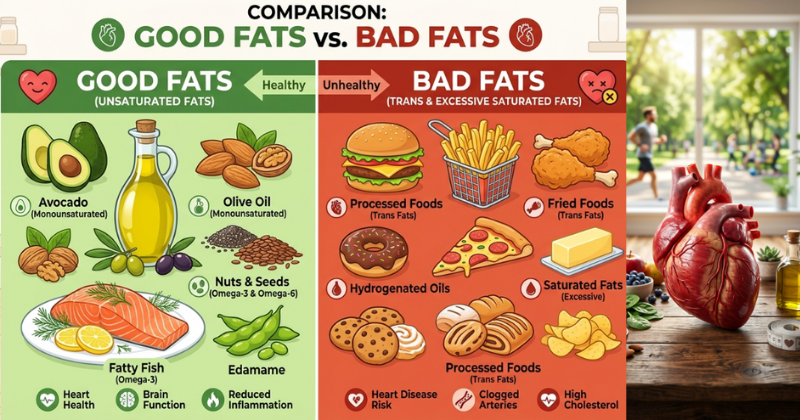
For decades, fats have gotten a bad reputation. Many of us grew up thinking all fats make you gain weight, clog arteries, or cause health problems. The truth is far more nuanced. Not all fats are harmful — in fact, the right fats are essential for energy, brain function, hormone balance, and overall health.
Choosing the right fats can transform how your body feels, how your energy lasts throughout the day, and even how your skin and hair look. This guide explains the different types of fats, why some are essential, and practical ways to include them in your diet without overdoing it.
By the end of this article, you’ll know which fats to embrace, which to limit, and simple swaps that can make a big difference.
Why Fats Matter
Fats aren’t just “energy storage.” They:
- Help absorb vitamins A, D, E, and K
- Support hormone production
- Protect organs
- Keep your skin, hair, and nails healthy
- Stabilize blood sugar and keep you full
Eliminating all fats can lead to low energy, dry skin, hormone imbalance, and constant cravings. The goal is quality over quantity.
Types of Fats
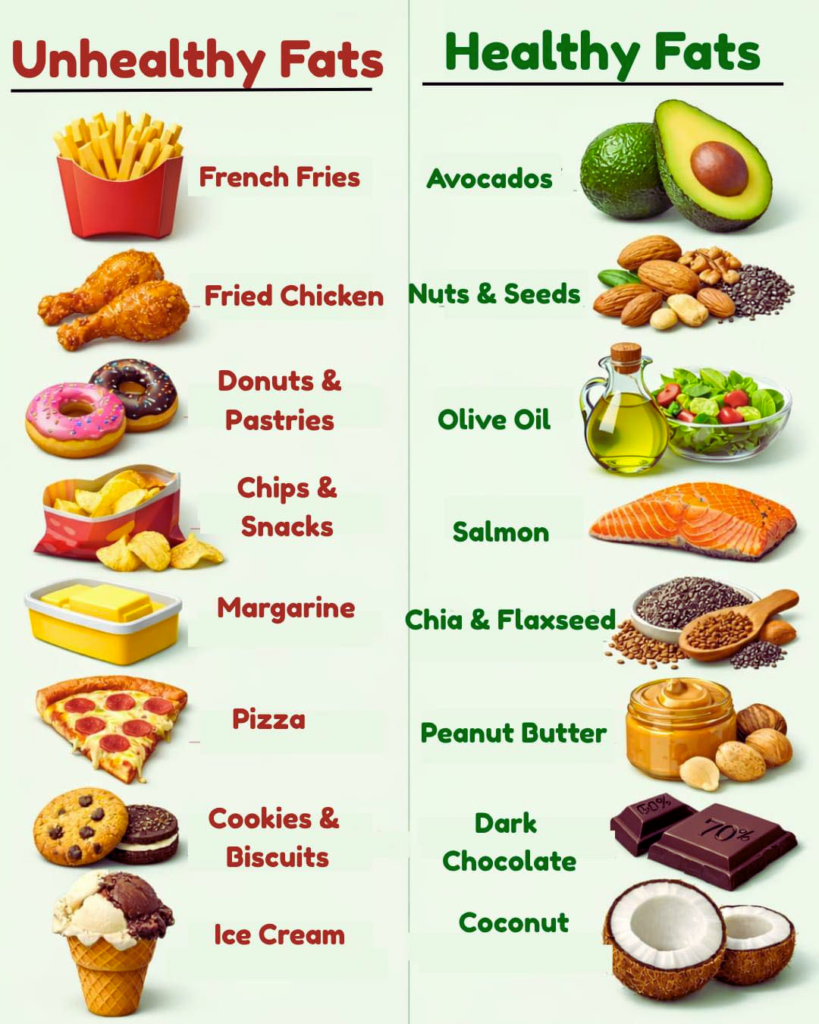
Healthy Fats to Embrace
- Monounsaturated fats: olive oil, avocado, almonds, cashews
- Polyunsaturated fats: salmon, walnuts, chia seeds, flax seeds
- Omega-3 fatty acids: fatty fish, flaxseed, walnuts — excellent for heart and brain health
Benefits: steady energy, reduced inflammation, better brain and heart function.
Fats to Limit
- Trans fats: found in some packaged snacks, fried foods, and baked goods
- Excess saturated fats: butter, fatty cuts of meat — not all saturated fats are harmful, but moderation is key
Why limit: these fats can raise bad cholesterol and increase inflammation if consumed too often.
How to Include Healthy Fats in Your Diet
1. Breakfast
- Add avocado or olive oil to eggs or toast
- Sprinkle chia or flax seeds on yogurt or oatmeal
2. Snacks
- Handful of nuts or seeds
- Nut butter on fruit or whole-grain crackers
3. Lunch & Dinner
- Use olive oil in salad dressings
- Include fatty fish like salmon or mackerel
- Roast vegetables with a drizzle of healthy oil
4. Swaps That Make a Difference
- Butter → olive oil or avocado
- Fried snacks → roasted nuts or seeds
- Creamy sauces → Greek yogurt-based dressings
Small changes like these can significantly improve your daily fat quality without feeling restrictive.
Tips for Balanced Fat Intake
- Portion control matters: even healthy fats are calorie-dense
- Combine fats with protein and fiber for sustained energy
- Avoid packaged foods with “partially hydrogenated oils”
- Focus on whole, minimally processed sources
- Rotate different healthy fats to maximize nutrients
Step-by-Step Plan for a Week of Healthy Fats
Day 1–2: Add avocado to breakfast, include nuts for a snack
Day 3–4: Swap butter for olive oil in cooking
Day 5–6: Include fatty fish like salmon in lunch or dinner
Day 7: Sprinkle seeds (chia, flax, pumpkin) on yogurt or salads
By the end of the week, you’ll notice more stable energy, reduced cravings, and a subtle lift in mood and focus.
Conclusion
Not all fats are bad — in fact, the right fats are essential for a healthy, energized body. By understanding which fats to embrace and which to limit, you can improve your digestion, energy levels, and overall wellness. Simple swaps and mindful choices create lasting benefits. Embrace fats, but choose wisely — your health game will change completely.