
Your body needs many vitamins and minerals to stay healthy, but something many people don’t realize is that some nutrients work better when they are taken together. Certain combinations improve absorption, strengthen body systems, and help your body actually use the nutrients you consume.
Whether nutrients come from food or supplements, pairing the right ones can make a big difference for bone health, immunity, digestion, and energy levels.
Let’s explore some of the most effective vitamin and mineral combinations that support better absorption and overall health.
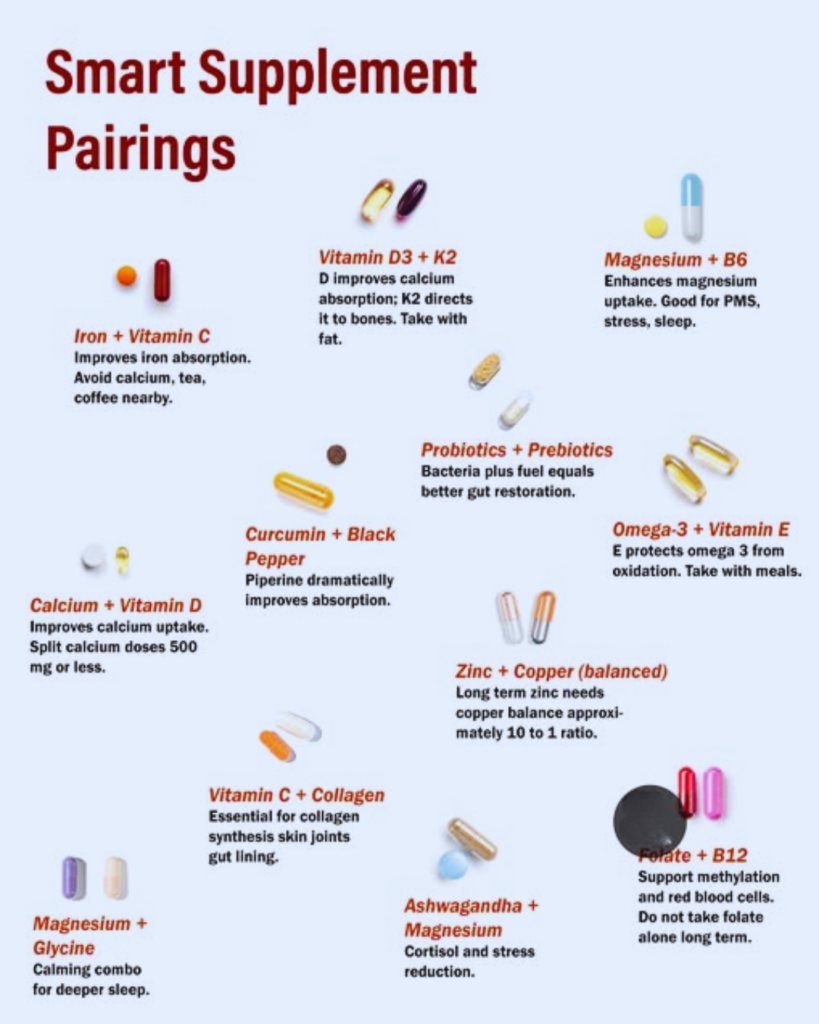
Why Nutrient Pairing Matters
Not all vitamins and minerals act alone. Some nutrients depend on others to be absorbed properly or activated inside the body.
For example:
• Some vitamins help minerals enter the bloodstream
• Certain nutrients protect others from breaking down
• Some combinations improve digestion and gut health
Without the right pairing, your body may absorb less of the nutrients you’re consuming, even if you’re eating well.
This is why nutrition experts often talk about nutrient synergy — when nutrients work together to support health.
1. Vitamin D + Calcium
The Bone Strength Duo
One of the most important nutrient pairings is vitamin D and calcium.
Calcium is essential for:
- Strong bones
- Teeth health
- Muscle function
- Nerve signaling
However, calcium absorption depends heavily on vitamin D.
Vitamin D helps your intestines absorb calcium effectively and directs it to the bones where it is needed.
Food Sources
Calcium-rich foods:
- Dairy products
- Yogurt
- Almonds
- Leafy greens
Vitamin D sources:
- Sun exposure
- Fatty fish
- Fortified foods
When these nutrients work together, they support healthy bone density and reduce the risk of bone weakness.
2. Vitamin C + Iron
The Energy Support Pair
Iron is crucial for producing hemoglobin, which carries oxygen throughout the body.
However, plant-based iron (non-heme iron) can be harder for the body to absorb.
Vitamin C helps by significantly increasing iron absorption.
Food Pairing Examples
Great combinations include:
- Spinach with lemon juice
- Lentils with tomatoes
- Beans with bell peppers
These pairings help the body absorb iron more efficiently and may help support healthy energy levels.
3. Magnesium + Vitamin D
The Activation Pair
Magnesium plays an important role in activating vitamin D inside the body.
Without enough magnesium, the body may struggle to properly utilize vitamin D.
Together they support:
- Bone health
- Muscle function
- Immune balance
- Energy metabolism
Food Sources
Magnesium-rich foods include:
- Nuts
- Seeds
- Whole grains
- Dark leafy vegetables
This combination is particularly helpful for maintaining balanced nutrient levels.
4. Vitamin K2 + Calcium
Directing Calcium to the Right Place
Vitamin K2 helps guide calcium into bones and teeth instead of allowing it to accumulate in arteries or soft tissues.
This pairing helps support:
- Bone strength
- Heart health
- Proper calcium distribution
Vitamin K2 essentially acts as a traffic controller for calcium in the body.
Natural Sources
Vitamin K2 can be found in:
- Fermented foods
- Certain cheeses
- Egg yolks
5. Zinc + Vitamin A
Immune Support Combination
Zinc helps the body transport and use vitamin A effectively.
These nutrients work together to support:
- Immune system function
- Vision health
- Skin repair
Without enough zinc, vitamin A may not function properly within the body.
Food Sources
Zinc-rich foods:
- Pumpkin seeds
- Seafood
- Nuts
Vitamin A sources:
- Carrots
- Sweet potatoes
- Dark leafy greens
6. Fat + Fat-Soluble Vitamins
The Absorption Booster
Some vitamins dissolve in fat and need dietary fat for proper absorption.
These include:
- Vitamin A
- Vitamin D
- Vitamin E
- Vitamin K
Eating these vitamins with healthy fats helps your body absorb them more effectively.
Healthy Fat Sources
Good options include:
- Avocados
- Olive oil
- Nuts
- Seeds
For example, adding olive oil to a salad helps the body absorb fat-soluble vitamins from vegetables.
Tips for Better Nutrient Absorption
To help your body make the most of vitamins and minerals:
• Eat a variety of whole foods
• Combine nutrient-rich ingredients in meals
• Avoid excessive processed foods
• Maintain balanced hydration
• Get adequate sunlight exposure
A balanced diet naturally creates many beneficial nutrient combinations.
Final Thoughts
Nutrition is not only about what you eat, but also how nutrients interact inside your body. Certain vitamins and minerals work best together, improving absorption and supporting key body functions like bone health, immunity, and energy production.
By understanding simple nutrient pairings like vitamin D with calcium or vitamin C with iron, you can help your body use nutrients more efficiently.
Small changes in how you combine foods can make a big difference for long-term health.