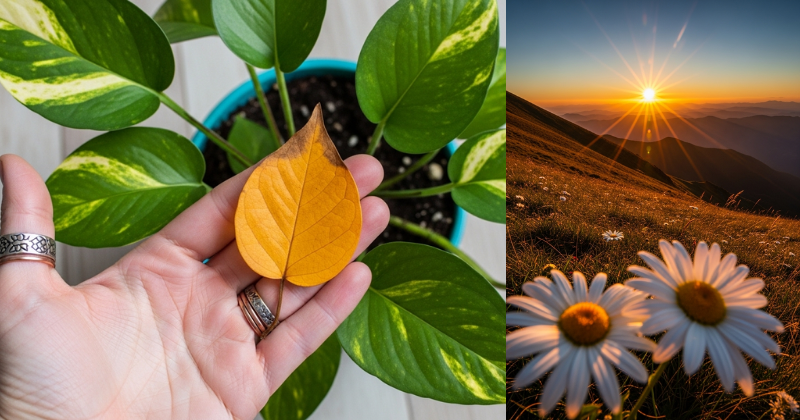
The yellowing of houseplant foliage represents one of nature’s most eloquent languages—a visual poetry of distress written in chlorophyll’s gradual retreat, revealing the deeper hues that lurk beneath green’s verdant mask. When your beloved pothos, fiddle leaf fig, or peace lily begins this chromatic transformation, it whispers secrets about water, light, nutrients, and the delicate equilibrium required for botanical vitality within our domesticated spaces.
Understanding why house plants turn yellow demands more than mere diagnostic lists—it requires cultivating an intimate relationship with these living companions, learning to read their silent communications, and developing the intuitive wisdom that transforms plant care from obligation into meditation. This exploration will guide you through the multifaceted reasons behind leaf yellowing, equipping you with both scientific understanding and practical interventions that restore your green allies to their full luminous glory.
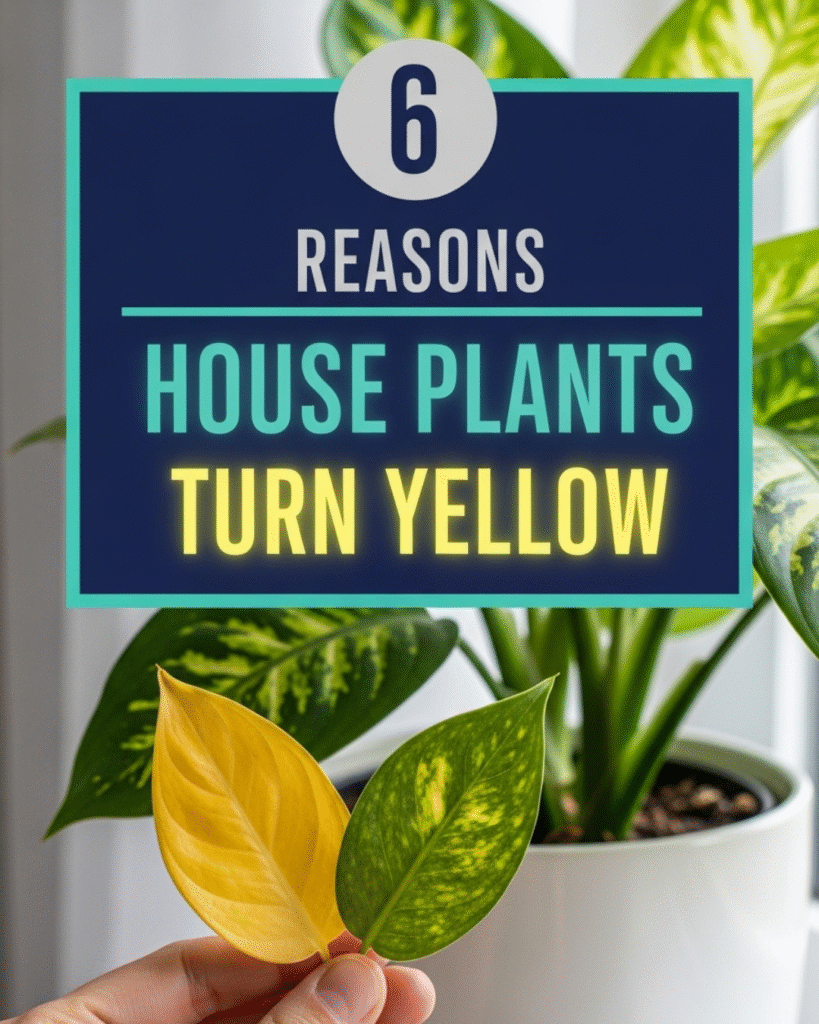
The Poetry of Chlorophyll: Understanding Leaf Yellowing’s Biological Essence
Before diagnosing specific causes, we must first appreciate the extraordinary biological dance that creates and maintains the green we so cherish in our leafy companions—a process as miraculous as it is fragile.
The Chlorophyll Orchestra
Green leaves owe their color to chlorophyll—a complex molecule orchestrating the photosynthetic miracle that transforms light into life. This pigment resides within chloroplasts, cellular organelles where sunlight’s energy converts carbon dioxide and water into glucose and oxygen. The green you observe represents the wavelengths chlorophyll reflects, having absorbed the red and blue spectrums for its alchemical work.
When conditions shift—water scarcity, nutrient depletion, light insufficiency—the plant strategically dismantles chlorophyll molecules, salvaging nitrogen and other precious elements before sacrificing the leaf entirely. This metabolic retreat reveals carotenoids and xanthophylls—yellow and orange pigments that existed all along, masked by chlorophyll’s dominance. The yellowing you witness isn’t disease but rather elegant resource reallocation, the plant’s survival wisdom made visible.
The Gradient of Distress
Yellowing patterns speak volumes about underlying causes. Uniform yellowing across all foliage suggests systemic issues—inadequate light reaching the entire plant, water stress affecting all tissues equally, or age-related senescence proceeding naturally. Conversely, yellowing concentrated in specific zones reveals targeted deficiencies: lower leaves yellowing while new growth remains green indicates mobile nutrient deficiencies (nitrogen, phosphorus, potassium) being redirected to younger tissues; yellowing between veins while veins remain green signals immobile nutrient deficiencies (iron, manganese, magnesium) that cannot relocate once deposited.
Learning to read these patterns transforms you from passive caretaker to plant whisperer, interpreting botanical semaphore with increasing fluency.
The Drowning Root: Overwatering’s Silent Suffocation
Perhaps the most common tragedy in houseplant cultivation—well-intentioned love expressed through excessive watering—creates a slow asphyxiation that manifests first as yellowing foliage, then progresses to root rot and plant mortality if uncorrected.
The Oxygen Imperative
Roots require oxygen for cellular respiration—the metabolic process generating energy from stored sugars. In well-draining soil with appropriate porosity, air occupies spaces between soil particles, providing continuous oxygen access. When soil remains waterlogged, water displaces air, creating anaerobic conditions where roots literally suffocate.
Without adequate oxygen, roots cannot maintain ion pumps—the cellular machinery transporting nutrients from soil into plant tissues. This disruption manifests above ground as yellowing leaves, often beginning with lower, older foliage. The yellowing progresses from leaf edges inward, frequently accompanied by a soft, mushy texture and occasionally a fetid odor from decomposing roots.
The Intervention: Restoring Breath to Drowning Roots
If you suspect overwatering, immediate action prevents progression to irreversible root rot. Remove the plant from its container and examine roots—healthy roots appear white to light tan and firm, while rotted roots display brown or black coloration with soft, mushy texture that sloughs away when touched.
Trim away all compromised roots using sterilized scissors, cutting back to firm, healthy tissue. Repot in fresh, well-draining medium appropriate for your plant species—most tropical houseplants thrive in mixtures combining potting soil, perlite, and orchid bark in ratios creating substantial porosity. Select containers with drainage holes—non-negotiable for preventing water accumulation.
Adjust your watering philosophy from scheduled intervals to response-based care. Insert your finger two inches into soil; water only when this depth feels dry. Different species demand different moisture levels—succulents and cacti prefer extended dry periods, while ferns and calatheas require consistent (but not soggy) moisture. This attentive, responsive approach honors each plant’s unique requirements rather than imposing arbitrary schedules.
The Thirsty Cell: Underwatering’s Gradual Desiccation
While overwatering claims many houseplants, the opposite extreme—chronic underwatering—creates its own spectrum of yellowing, wilting, and eventual decline through cellular dehydration and metabolic compromise.
The Hydraulic Architecture
Water functions as more than simple hydration—it maintains turgor pressure (the hydraulic tension keeping cells rigid and leaves upright), serves as the solvent for nutrient transport through xylem and phloem, enables stomatal opening for gas exchange, and provides the medium for every biochemical reaction sustaining life. When water availability drops below critical thresholds, plants initiate drought stress responses including stomatal closure, growth cessation, and strategic leaf sacrifice.
Underwatered plants typically display yellowing that begins at leaf tips and margins, progressing inward as desiccation advances. Leaves may curl, develop brown crispy edges, and feel papery rather than the succulent flexibility of healthy foliage. The yellowing often appears more sudden than the gradual progression seen with overwatering, reflecting acute rather than chronic stress.
The Revival: Rehydration with Reverence
Severely dehydrated soil often becomes hydrophobic—water runs off the surface or channels through gaps without actually saturating the root zone. Revival requires patient, thorough rehydration rather than a single deluge.
Place the pot in a basin of room-temperature water, allowing capillary action to draw moisture upward through drainage holes. Maintain this bottom-watering for 30-45 minutes, then drain thoroughly. Top-water slowly, pausing to allow absorption rather than rushing water through dry channels. You may need to repeat this process several times before soil achieves uniform moisture.
Monitor your plant’s recovery—turgor typically returns within 24-48 hours if damage hasn’t progressed to tissue death. Yellowed leaves rarely regain their green—chlorophyll destruction is irreversible—but new growth should emerge healthy and vibrant if you’ve corrected the underlying water deficit.
Establish a more attentive watering rhythm, perhaps using moisture meters for precision or simply developing the tactile wisdom that comes from regular soil-checking. Some plants benefit from bottom-watering as standard practice, ensuring thorough root zone saturation while preventing the surface water accumulation that invites fungal issues.
The Light Spectrum: Illumination Deficiency and Chlorophyll Collapse
Light represents the fundamental energy source powering photosynthesis—without adequate illumination, plants cannot maintain the metabolic processes sustaining growth, and yellowing becomes inevitable as chlorophyll production diminishes below degradation rates.
The Photon Economy
Different plant species evolved under varying light conditions—rainforest understory dwellers like pothos and philodendrons adapted to dappled, filtered light, while desert natives and high-altitude species require intense, direct illumination. When we relocate these plants to our homes, matching their evolutionary light requirements becomes critical for their continued vitality.
Insufficient light manifests distinctively: widespread yellowing affecting the entire plant rather than isolated areas, elongated stems with increased internodal spacing (etiolation) as the plant searches for stronger illumination, smaller new leaves compared to older growth, and an overall leggy, sparse appearance. Lower leaves yellow first as the plant prioritizes limited resources toward new growth positioned to capture maximum available light.
The Illumination: Strategic Light Optimization
Assess your home’s light conditions honestly. South-facing windows (in the Northern Hemisphere) provide the brightest light, east windows offer gentle morning sun, west windows deliver intense afternoon rays, and north windows supply the dimmest, most indirect illumination. Match plants to appropriate zones: light-hungry specimens (fiddle leaf figs, succulents, many flowering plants) near south or west windows; moderate-light species (pothos, philodendrons, dracaenas) in east windows or slightly back from bright windows; low-light tolerant plants (snake plants, ZZ plants, some ferns) in north windows or interior positions.
If natural light proves insufficient, supplemental grow lights offer elegant solutions. Full-spectrum LED grow lights most closely mimic solar radiation, supporting photosynthesis without excessive heat generation. Position lights 6-12 inches from foliage for 12-16 hours daily, adjusting distance based on plant response—too close causes bleaching, too distant fails to provide adequate intensity.
Rotate plants weekly, ensuring all sides receive equal exposure and preventing the lopsided growth that develops when foliage perpetually reaches toward single-direction light sources. This simple practice creates more symmetrical, aesthetically pleasing specimens while ensuring comprehensive light distribution.
The Nutrient Void: Mineral Deficiencies and Metabolic Compromise
Beyond water and light, plants require an array of mineral nutrients—macronutrients in substantial quantities and micronutrients in trace amounts—each fulfilling specific metabolic functions. Deficiencies create characteristic yellowing patterns that, when properly interpreted, reveal precisely which elements require supplementation.
The Essential Elements Decoded
Nitrogen Deficiency: The most common nutritional cause of yellowing, nitrogen deficiency produces uniform chlorosis beginning with older, lower leaves (nitrogen being mobile, the plant relocates it to new growth). Entire leaves turn pale yellow-green, eventually becoming entirely yellow before dropping. Growth slows dramatically as nitrogen comprises essential components of chlorophyll, amino acids, and nucleic acids.
Iron Deficiency: Creates interveinal chlorosis—yellowing between leaf veins while veins themselves remain green—most pronounced in new growth. Iron, being immobile once deposited, cannot relocate from old to new tissues, so deficiency appears first in young leaves. This pattern commonly results from alkaline soil pH preventing iron uptake despite adequate soil iron content.
Magnesium Deficiency: Produces interveinal chlorosis similar to iron deficiency but affecting older leaves first (magnesium being mobile). The pattern often creates a distinctive “Christmas tree” appearance—yellow tissue with green venation branching like evergreen boughs.
Potassium Deficiency: Causes yellowing and necrosis (brown dead tissue) at leaf margins and tips, progressively moving inward. Older leaves show symptoms first as potassium relocates to younger growth.
The Fertilization: Nutritional Renaissance
Address nutrient deficiencies through appropriate fertilization, selecting formulations matched to your plant’s needs and growth phase. Balanced fertilizers (equal N-P-K ratios like 10-10-10 or 20-20-20) suit most foliage plants during active growth. Flowering plants benefit from higher phosphorus formulations during bloom periods, while nitrogen-heavy feeds support lush foliage development.
Apply diluted liquid fertilizers every 2-4 weeks during the growing season (spring and summer), reducing to monthly or discontinuing entirely during dormancy (fall and winter when growth naturally slows). I prefer half-strength applications more frequently rather than full-strength infrequently—this approach prevents salt accumulation and fertilizer burn while maintaining consistent nutrient availability.
For iron deficiency, chelated iron supplements or acidifying amendments (sulfur, aluminum sulfate) that lower soil pH and improve iron availability prove more effective than simple iron addition. Magnesium deficiency responds to Epsom salt application (magnesium sulfate): dissolve one tablespoon per gallon of water and apply as you would regular watering monthly.
Flush soil periodically—saturate thoroughly with plain water until substantial drainage emerges—removing accumulated fertilizer salts that can reach toxic concentrations, interfering with water uptake and creating yellowing that mimics both overwatering and underwatering symptoms.
The Seasonal Rhythm: Natural Senescence and Dormancy Cycles
Not all yellowing signals distress—understanding plants’ natural rhythms prevents unnecessary interventions in response to normal physiological processes.
The Deciduous Wisdom
Many houseplants, particularly tropical species, cyclically shed older leaves as part of normal growth and renewal. As new foliage emerges at growing tips, lower leaves age, yellow, and drop—the plant’s elegant efficiency redistributing finite resources toward productive young tissues rather than maintaining aged, less photosynthetically active foliage.
This natural senescence typically affects 1-2 leaves at a time, proceeding gradually rather than the rapid, widespread yellowing characteristic of environmental stress or disease. The yellowing begins at the leaf base, progressing outward in orderly fashion, and affected leaves eventually detach cleanly, leaving no stub or wound.
The Dormancy Dance
Seasonal light and temperature changes trigger dormancy in many houseplants—a rest period where metabolic activity slows, growth ceases, and some leaf dropping may occur. This natural rhythm, evolved to survive challenging seasons in native habitats, persists even in our climate-controlled homes, triggered by photoperiod changes (day length) more than temperature.
Respect these rhythms rather than fighting them. Reduce watering frequency during dormancy (soil should dry more deeply between waterings), discontinue or dramatically reduce fertilization, and accept modest leaf loss as natural rather than pathological. Come spring, your plants will reward this patience with vigorous new growth, emerging from their rest with renewed vitality.
Conclusion: The Art of Botanical Listening
Understanding why house plants turn yellow transcends mere problem-solving—it represents an initiation into the subtle art of botanical communication, learning to interpret the visual language through which our green companions express their needs, distresses, and natural rhythms. Each yellowing leaf tells a story: water too abundant or too scarce, light insufficient for photosynthetic demands, nutrients depleted from the soil matrix, or simply the plant’s elegant resource management as it cycles through growth and renewal.
Your transformation from concerned plant owner to confident plant partner begins with observation—noting yellowing patterns, considering recent care practices, assessing environmental conditions—and proceeds through thoughtful intervention calibrated to diagnosed causes rather than reactive adjustments to every color change. Some yellowing demands immediate correction; other yellowing reflects natural processes best left undisturbed.
The wisdom you’ve gained here—understanding overwatering’s suffocation, underwatering’s desiccation, light’s fundamental importance, nutritional requirements, and natural cycles—equips you to diagnose yellowing with increasing precision and respond with targeted interventions that address root causes rather than merely symptoms.
Trust your developing intuition. Touch your plants regularly, observing their weight (lighter when dry, heavier when moist), feeling their leaf texture, noting their overall posture and vigor. This tactile, observant relationship reveals more than any rigid schedule or generic instruction. Your plants want to thrive—they’re exquisitely adapted to life and growth. Your role isn’t to force their flourishing but rather to remove obstacles, provide essentials, and create conditions where their innate vitality can express fully.
Each plant you nurture successfully deepens your understanding, building a reservoir of experience that transforms future plant care from anxiety to confidence. The yellowed leaves you’ve witnessed, diagnosed, and addressed become teachers, expanding your botanical literacy with each lesson. Welcome this learning—it’s the foundation upon which magnificent indoor gardens are built, one attentive observation at a time.