
Sticky, dusty grease on kitchen cabinets is one of the most frustrating cleaning problems—especially when water makes it worse or damages the finish. The good news? You can remove grease from kitchen cabinets using cornstarch, and you don’t need water at all. This simple, dry-cleaning method absorbs grease instead of spreading it, making it ideal for wood, laminate, MDF, and painted cabinets.
In this article, you’ll learn how to remove grease from kitchen cabinets using cornstarch, why it works so well, and how to adapt the method for different cabinet finishes. If you’re tired of scrubbing, streaks, or sticky residue, this gentle DIY solution will change how you clean your kitchen.
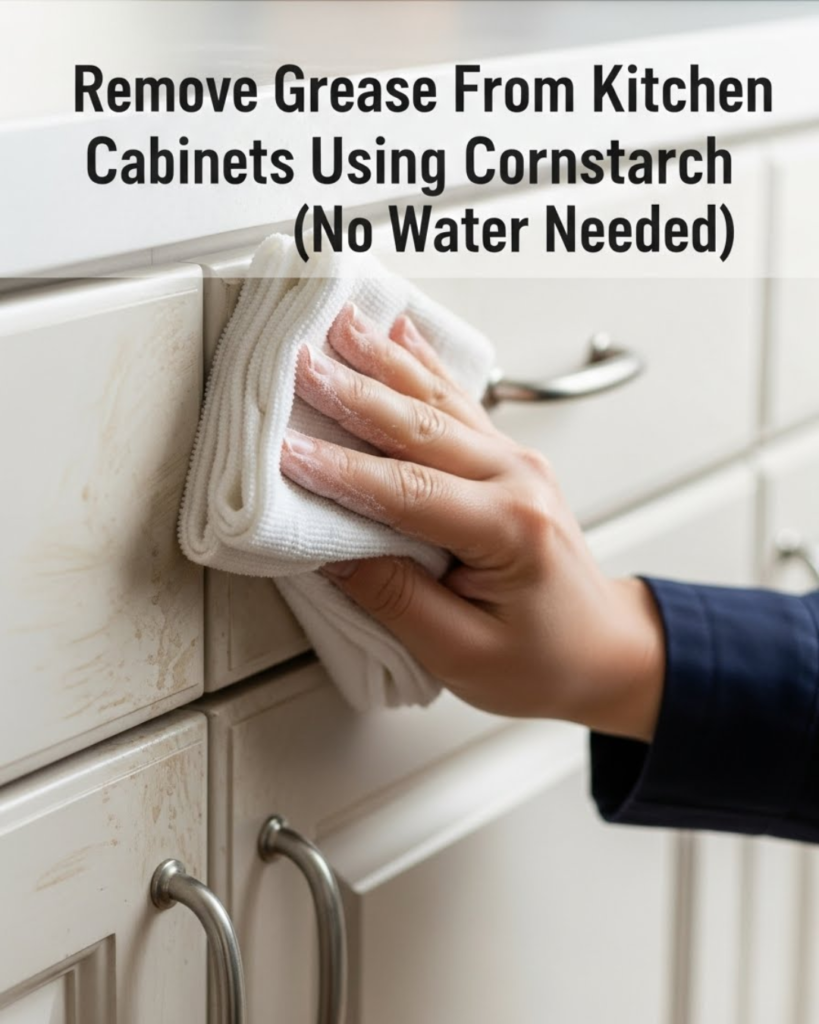
Why Kitchen Cabinets Get So Greasy
Kitchen grease isn’t just oil—it’s a stubborn mix of cooking fats, steam, dust, and airborne particles that slowly builds up over time.
The Real Source of Cabinet Grease
Grease comes from:
- Frying and sautéing oils
- Steam carrying fat particles upward
- Hands touching cabinet doors repeatedly
- Dust sticking to oily surfaces
Over time, this creates a thick, sticky film that regular wiping often spreads instead of removes.
Why Water Often Makes It Worse
Water-based cleaners can:
- Smear grease instead of lifting it
- Push oil deeper into wood grain
- Cause swelling or dull spots on cabinets
That’s why a dry absorption method works better.
Why Cornstarch Works So Well on Grease
Cornstarch isn’t just for cooking—it’s a powerful natural absorbent.
How Cornstarch Removes Grease
Cornstarch works by:
- Binding to oil molecules
- Absorbing grease without moisture
- Lifting residue off surfaces gently
Instead of dissolving grease, it pulls it away from the cabinet surface.
Safe for Most Cabinet Finishes
Cornstarch is:
- Non-abrasive
- Chemical-free
- Odorless
- Safe for delicate finishes
This makes it ideal for older cabinets or rental homes.
What You’ll Need (Simple Supplies)
You likely already have everything at home.
Basic Supplies
- Cornstarch
- Soft microfiber cloth or paper towel
- Small bowl or spoon
Optional:
- Soft-bristle brush (for grooves)
- Vacuum with brush attachment
No water. No sprays. No chemicals.
Step-by-Step: How to Remove Grease Using Cornstarch
This method is quick, low-effort, and surprisingly effective.
Step 1: Apply Cornstarch to the Greasy Area
- Sprinkle a small amount of cornstarch directly onto the greasy surface
- Focus on handles, edges, and areas near the stove
You don’t need a thick layer—less works better.
Step 2: Let It Sit
Allow the cornstarch to sit for:
- 10–15 minutes for light grease
- 20–30 minutes for heavy buildup
This gives it time to absorb the oil fully.
Step 3: Wipe Gently
Using a dry cloth:
- Wipe in gentle, circular motions
- Lift the cornstarch away along with the grease
You’ll feel the surface become dry and smooth.
Step 4: Repeat if Needed
For heavy grease:
- Apply a second light layer
- Let sit again
- Wipe clean
Stubborn spots may take two rounds.
Using Cornstarch on Different Cabinet Types
Not all cabinets are the same—here’s how to adapt safely.
Wood Cabinets
- Excellent results with cornstarch
- Always wipe with the grain
- Avoid scrubbing
Painted Cabinets
- Cornstarch prevents paint dulling
- Ideal for matte or satin finishes
Laminate Cabinets
- Works especially well on glossy surfaces
- Leaves no streaks
Cabinets With Grooves or Details
Use:
- A soft toothbrush or makeup brush
- Light brushing after absorption
Vacuum residue if needed.
Advanced Tips for Stubborn or Old Grease
If grease has been there for months or years, try these pro techniques.
Warm Air Boost
- Use a hair dryer on low heat for 30 seconds
- This softens hardened grease
- Apply cornstarch immediately
The warmth helps absorption.
Cornstarch Paste Option (Minimal Moisture)
For extreme buildup:
- Mix cornstarch with a few drops of oil (not water)
- Apply paste
- Let sit, then wipe dry
This keeps moisture out completely.
Common Mistakes to Avoid
Using Too Much Cornstarch
Excess powder:
- Makes cleanup harder
- Doesn’t improve results
A light dusting is enough.
Rubbing Too Hard
Aggressive scrubbing:
- Pushes grease around
- Can damage finishes
Gentle pressure works best.
Skipping Handles
Cabinet handles hold the most grease.
Always treat them separately.
How Often Should You Use This Method?
Maintenance Schedule
- Light grease: once every 2–3 weeks
- Heavy cooking kitchens: weekly spot cleaning
Regular maintenance prevents buildup.
Daily Prevention Tip
- Wipe handles with a dry cloth
- Turn on exhaust fan while cooking
Small habits reduce grease dramatically.
Frequently Asked Questions (Featured Snippet Section)
Can cornstarch really remove grease without water?
Yes. Cornstarch absorbs oil instead of spreading it, making it ideal for dry cleaning.
Is cornstarch safe for wood cabinets?
Yes, when used dry and wiped gently, it’s safe for most wood finishes.
Will it leave white residue?
No, as long as you wipe thoroughly with a clean cloth.
Can I use flour instead?
Flour is less effective and may leave residue. Cornstarch works best.
Internal Linking Opportunities
This article pairs well with:
- Natural kitchen cleaning hacks
- DIY cabinet care tips
- How to degrease stovetops naturally
- Non-toxic home cleaning methods
- Cleaning hacks for renters
Conclusion: A Simple Trick That Actually Works
Removing grease from kitchen cabinets doesn’t require harsh chemicals, buckets of water, or endless scrubbing. With cornstarch, you’re working with the problem instead of against it—absorbing grease gently and effectively.
This no-water method protects your cabinets, saves time, and delivers visible results fast. Try it once, and it’s likely to become your go-to cabinet cleaning trick. Simple, smart, and surprisingly powerful ✨