Your skin often acts as a mirror of your internal health. Skin color changes and their possible health meanings can reveal valuable clues about what is happening inside your body. While some changes may simply reflect environmental factors like sun exposure or temperature, others may signal nutritional imbalances, circulation issues, or underlying health conditions.
The human skin is the body’s largest organ and plays a vital role in protection, temperature regulation, and immune defense. Because of its close relationship with blood circulation and metabolic processes, the skin can quickly reflect changes occurring in the body. A shift in color—whether it appears as redness, paleness, yellowing, or darkening—may provide early insight into your physical well-being.
Understanding skin color changes and their possible health meanings empowers you to recognize when your body may be asking for attention. In this guide, you will explore the most common skin color changes, what they might indicate, and how to respond wisely while maintaining healthy skin and overall wellness.
Understanding What Determines Skin Color
Before exploring skin color changes, it helps to understand the factors that normally determine skin tone.
The Role of Melanin
Melanin is the natural pigment responsible for the color of your skin, hair, and eyes. It is produced by specialized cells called melanocytes.
Higher levels of melanin typically result in darker skin tones, while lower levels produce lighter skin tones. Melanin also protects the skin by absorbing ultraviolet radiation from the sun.
Blood Flow and Oxygen Levels
Skin color is also influenced by blood circulation and oxygen levels in the bloodstream.
When blood vessels expand or contract, they can affect how the skin appears. For example:
- Increased blood flow may cause redness
- Reduced oxygen levels may produce bluish tones
- Poor circulation can cause paleness
These subtle changes help explain why emotional stress, temperature changes, or illness may alter the skin’s appearance.
Environmental and Lifestyle Influences
Several everyday factors can influence skin color, including:
- Sun exposure
- Temperature changes
- Hydration levels
- Diet and nutrition
- Hormonal fluctuations
Understanding these influences helps distinguish normal skin changes from potential health signals.
Common Skin Color Changes and What They May Indicate
Many skin color changes are harmless and temporary, but some may suggest underlying health issues.
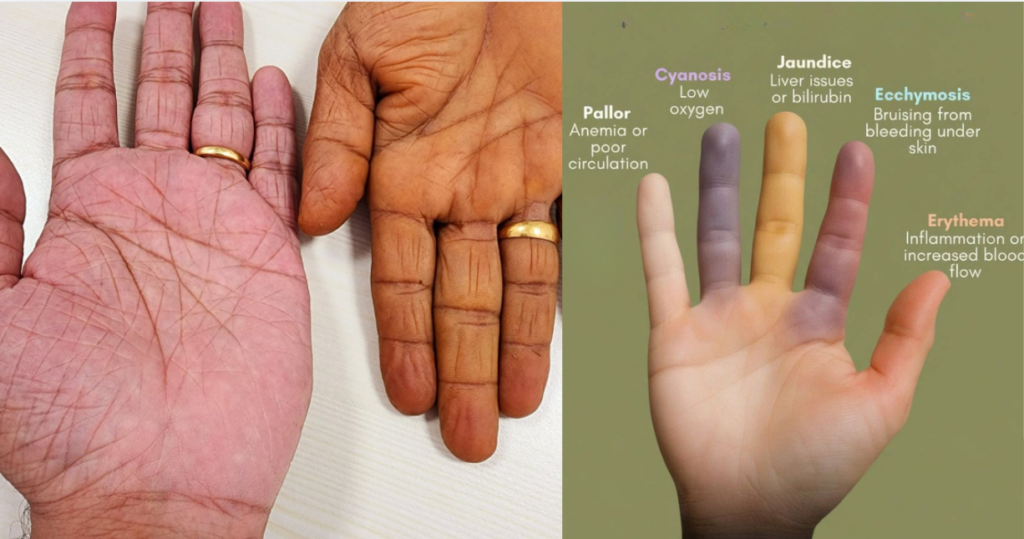
Redness (Erythema)
Red skin often occurs when blood vessels near the surface of the skin expand.
Possible Causes of Skin Redness
Redness may be triggered by:
- Physical exercise
- Emotional stress
- Sunburn
- Skin irritation or allergic reactions
- Inflammation or infection
Temporary redness is common, but persistent redness may require attention.
When Redness Might Signal a Problem
Chronic redness may sometimes be associated with conditions such as:
- Rosacea
- Skin infections
- Autoimmune inflammation
Monitoring the duration and location of redness can provide helpful information.
Pale or Lightened Skin
Paleness may occur when blood flow to the skin decreases.
Possible Causes of Pale Skin
Common factors include:
- Cold temperatures
- Fatigue or lack of sleep
- Emotional shock
In some cases, paleness may also reflect lower levels of red blood cells.
Potential Health Associations
Persistent pale skin may sometimes be linked to:
- Iron deficiency
- Low blood pressure
- Circulatory issues
A balanced diet and proper medical evaluation may help address these concerns.
Yellowing of the Skin
Yellow skin, known medically as jaundice, occurs when a pigment called bilirubin builds up in the body.
Why Yellowing Happens
Bilirubin forms when red blood cells break down. The liver normally processes and removes it from the body.
If the liver cannot process bilirubin effectively, it may accumulate in the skin and eyes.
Possible Health Implications
Yellowing may sometimes be associated with:
- Liver stress
- Gallbladder issues
- Certain metabolic conditions
Because jaundice may indicate underlying health concerns, it is important to seek medical evaluation if it occurs.
Bluish or Purple Skin (Cyanosis)
A bluish tint to the skin can occur when oxygen levels in the blood are reduced.
Where Cyanosis May Appear
Bluish discoloration may appear in areas such as:
- Lips
- Fingertips
- Toes
This occurs when oxygen-poor blood circulates near the skin’s surface.
Possible Causes
Some potential factors include:
- Cold exposure
- Circulatory problems
- Respiratory conditions
Temporary changes due to cold are usually harmless, but persistent cyanosis should be evaluated.
Darkened or Hyperpigmented Areas
Hyperpigmentation refers to patches of skin that become darker than the surrounding area.
Why Hyperpigmentation Occurs
It may develop due to:
- Sun exposure
- Hormonal changes
- Skin injuries or inflammation
Melanin production increases in response to certain triggers, creating darker areas of skin.
Common Examples
Hyperpigmentation may appear as:
- Age spots
- Melasma during pregnancy
- Post-inflammatory pigmentation after acne or skin irritation
Protecting skin from excessive sun exposure can help reduce these effects.
How to Identify Concerning Skin Color Changes
Not every change in skin color indicates a health issue, but some patterns may require attention.
Signs Worth Monitoring
Consider observing skin changes if they include:
- Sudden or unexplained color changes
- Discoloration that spreads or worsens
- Skin color changes accompanied by fatigue, fever, or pain
Documenting these symptoms can help healthcare professionals evaluate possible causes.
Duration and Location Matter
Temporary color changes from temperature or emotions typically fade quickly.
However, persistent changes that last several days or appear in unusual locations may warrant medical consultation.
Quick Answer: What Do Skin Color Changes Mean?
Skin color changes and their possible health meanings may include:
- Redness – increased blood flow or inflammation
- Pale skin – reduced circulation or possible anemia
- Yellow skin – buildup of bilirubin related to liver function
- Blue or purple skin – reduced oxygen in the blood
- Dark patches – increased melanin production
These signs do not automatically indicate illness, but they can provide useful clues about internal health.
Strategies for Maintaining Healthy Skin
While some skin color changes are unavoidable, healthy habits can support skin and overall wellness.
Protect Your Skin From Sun Damage
Ultraviolet radiation can significantly affect skin tone and pigmentation.
Protective steps include:
- Wearing sunscreen
- Seeking shade during peak sunlight hours
- Wearing protective clothing
These habits help prevent premature aging and pigmentation changes.
Support Skin Health Through Nutrition
Nutrient-rich foods help maintain healthy skin.
Important nutrients include:
- Vitamin C for collagen production
- Vitamin A for skin renewal
- Iron for healthy blood circulation
A balanced diet supports both skin appearance and internal health.
Maintain Healthy Lifestyle Habits
Simple habits can help support skin and circulatory health:
- Regular physical activity
- Adequate hydration
- Quality sleep
These factors contribute to healthy blood flow and oxygen delivery to the skin.
Exploring Related Health Topics
If you want to better understand how the body communicates through physical signs, you might explore related topics such as:
- How nail health reflects internal wellness
- Strange body symptoms explained
- Signs of nutrient deficiencies
- How hydration affects skin health
These subjects expand your awareness of how the body signals potential imbalances.
Conclusion: Listening to the Messages Your Skin Sends
Your skin provides valuable insights into your health. By understanding skin color changes and their possible health meanings, you can become more aware of the signals your body sends every day.
While many changes are harmless responses to environment or lifestyle, some may reveal deeper physiological processes. Paying attention to these signals—and seeking professional guidance when necessary—helps ensure early awareness of potential health concerns.
By combining awareness, healthy habits, and regular medical care, you can support both skin health and overall well-being, allowing your body’s natural signals to guide you toward better health.
Important Disclaimer: This article is for informational purposes only and should not replace professional advice. For health-related topics, consult healthcare providers. Individual results may vary, and personal circumstances should always be considered when implementing any suggestions.