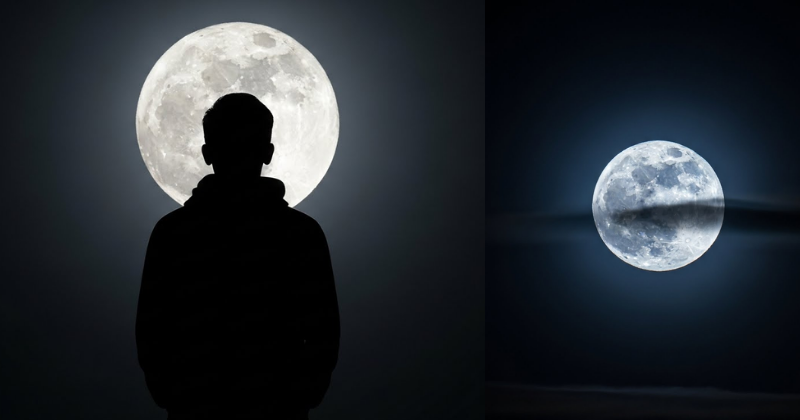
Some people feel more tired around lunar events due to shifts in sleep architecture and circadian rhythms. This analysis explores the science behind lunar fatigue.
The moon has served as Earth’s constant celestial companion for billions of years, dictating the ebb and flow of tides and providing a rhythmic pulse to the natural world. While its influence on the oceans is undeniable, its impact on human physiology has long been a subject of both folklore and scientific skepticism. However, modern chronobiological research is beginning to validate a phenomenon many have suspected for centuries: a significant portion of the population experiences tangible shifts in energy levels synchronized with the lunar cycle. Specifically, some people feel more tired around lunar events, experiencing a unique form of lethargy that coincides with the waxing and waning of our satellite.
This phenomenon, often referred to as the “lunar effect” on human fatigue, is not merely a product of imagination or cultural myth. Rigorous sleep studies and hormonal analyses have identified measurable changes in how humans rest during different lunar phases. From the brightness of the full moon to subtle fluctuations in the Earth’s magnetosphere, various mechanisms contribute to this systemic exhaustion. By examining the intersection of biology, physics, and evolutionary history, we can begin to understand why the lunar cycle remains a potent, if subtle, regulator of human vitality in the modern age.

What is the scientific basis for lunar-influenced fatigue?
To understand why some people feel more tired around lunar events, we must first look at the field of chronobiology—the study of internal biological clocks. Every human possesses a master clock located in the suprachiasmatic nucleus (SCN) of the brain, which regulates the circadian rhythm. While this clock is primarily synchronized by sunlight, emerging evidence suggests the existence of “circalunar” rhythms that operate on a roughly 29.5-day cycle.
Research published in journals such as Current Biology has demonstrated that even in controlled environments without windows, human sleep patterns fluctuate in alignment with the moon. Participants in these studies showed a decrease in deep sleep—the restorative stage known as Slow Wave Sleep (SWS)—during the days surrounding a full moon. When deep sleep is compromised, the body fails to complete essential repair processes, leading to the pervasive sense of heaviness and fatigue reported by many individuals as the lunar cycle reaches its peak.
How does lunar brightness affect melatonin production and sleep quality?
One of the most direct ways the moon influences energy levels is through light pollution. Before the advent of artificial lighting, the full moon was the only significant source of nocturnal illumination. Human biology is exquisitely sensitive to light; even low levels of evening light can suppress the production of melatonin, the hormone responsible for signaling the body that it is time to sleep.
During the waxing phase leading up to the full moon, the increase in sky brightness can delay the onset of melatonin secretion. This delay results in a shorter sleep window and a more fragmented sleep structure. Even if you sleep in a darkened room, evolutionary biology suggests our systems may be hardwired to remain more alert during bright nights—a survival mechanism from our ancestors who needed to stay vigilant against predators. This lingering biological “alertness” prevents the brain from entering the deepest, most refreshing stages of rest, explaining why some people feel more tired around lunar events despite spending the usual number of hours in bed.
Which biological mechanisms link tidal forces to human energy levels?
A more controversial but mathematically intriguing theory involves the gravitational pull of the moon. Just as the moon’s gravity causes the oceans to bulge, creating tides, some researchers hypothesize that it could exert a “biological tide” on the fluids within the human body. Given that the human body is approximately 60-70% water, the idea of gravitational influence on cellular fluid is a recurring theme in biophysics.
While the gravitational pull of the moon on a single human is technically minute, it may influence the movement of electrolytes and hormones across cell membranes. Some studies have noted changes in blood pressure and heart rate variability that correlate with lunar phases. If the body must work harder to maintain homeostasis against these subtle gravitational shifts, it could lead to an increase in metabolic demand. This subtle, constant internal adjustment may be why some people feel more tired around lunar events, as the body spends more “background energy” maintaining its internal equilibrium.
Why does sleep latency increase during the full moon?
Sleep latency refers to the amount of time it takes to transition from full wakefulness to sleep. In clinical observations, sleep latency has been shown to increase by an average of 20 to 30 minutes during the full moon phase. While half an hour might seem insignificant, it represents a disruption in the natural “winding down” process of the nervous system.
The increase in latency is often accompanied by a decrease in total sleep time. When the brain struggles to initiate sleep, it often skips the initial light stages and enters a more fitful rest. This disruption is particularly prevalent in the days preceding the full moon. As the moon grows brighter and its gravitational position shifts, the nervous system may experience a state of heightened sympathetic activity (the “fight or flight” system), making it difficult for the parasympathetic system to take over and initiate deep recovery.
How do lunar cycles interact with the human endocrine system?
The endocrine system is a complex network of glands that produce hormones regulating metabolism, growth, and sleep. Beyond melatonin, other hormones like cortisol and estrogen appear to fluctuate in subtle harmony with the moon. For many, the full moon coincides with a slight rise in nocturnal cortisol—the “stress hormone.”
Normally, cortisol levels should be at their lowest at midnight to allow for tissue repair. However, if lunar events trigger a slight cortisol spike, the body remains in a state of low-level metabolic stress. This prevents the heart rate from dropping to its ideal resting state. Over the course of several nights, this hormonal imbalance accumulates, resulting in the systemic lethargy known as lunar fatigue. This explains why the exhaustion often feels “heavy” or “drained” rather than just sleepy; it is a result of hormonal overexertion.
What role does the Earth’s magnetosphere play in lunar fatigue?
Recent research has explored the possibility that the moon affects Earth’s magnetic field, which in turn influences human biology. As the moon orbits the Earth, it passes through the magnetotail—the region of the magnetosphere pushed away from the sun by solar wind. This passage can create subtle electromagnetic fluctuations on the Earth’s surface.
Humans possess a protein called cryptochrome in the retina, which is sensitive to blue light and magnetic fields. It is theorized that some individuals are more “magnetosensitive” than others. For these sensitive people, the electromagnetic shifts occurring during lunar events may interfere with the brain’s alpha waves, which are prominent during relaxation and light sleep. If alpha wave activity is disrupted, the transition into restorative sleep becomes jagged and incomplete, leading to the sensation that some people feel more tired around lunar events.
Which psychological factors contribute to the perception of lunar exhaustion?
While the physical evidence is mounting, we cannot ignore the psychological component of lunar fatigue. This is not to say the fatigue is “fake,” but rather that the human mind is a powerful biological regulator. The “Lunar Effect” can sometimes manifest through the power of expectation and social synchronization.
However, modern studies often use “blind” data—where participants’ sleep is tracked without them knowing the current lunar phase—and the results still show a correlation between the moon and sleep disruption. This suggests that while psychological factors may amplify the feeling of being tired, there is a legitimate physiological foundation. The narrative of the moon affecting behavior and energy is so deeply ingrained in the human psyche because it likely reflects a genuine, ancient biological reality that we are only now beginning to quantify with modern sensors.
How can individuals mitigate the effects of lunar-related tiredness?
If you find that you are among those who feel more tired around lunar events, there are evidence-based strategies to help stabilize your energy. The goal is to reinforce your circadian rhythm to override the subtle circalunar disruptions.
- Light Control: During the week of the full moon, ensure your bedroom is completely dark. Use blackout curtains to block the increased sky brightness.
- Magnesium Supplementation: Magnesium supports the parasympathetic nervous system and can help counteract the slight cortisol spikes associated with lunar phases.
- Consistent Sleep Anchors: Maintaining a strict wake-up time, even on weekends, helps the SCN stay “locked in,” making it harder for lunar cycles to drift your internal clock.
- Morning Sunlight: Increasing your exposure to bright natural light in the morning can help “reset” your melatonin production, ensuring it peaks at the right time in the evening despite the lunar influence.
Conclusion
The intersection of lunar cycles and human fatigue is a fascinating example of how we remain connected to the rhythms of the natural world. From the suppression of melatonin due to nocturnal brightness to the potential electromagnetic shifts in the Earth’s magnetosphere, several scientifically plausible factors explain why some people feel more tired around lunar events. While we are no longer dependent on the moon for nighttime navigation or hunting, our biological “hardware” still carries the imprints of these ancient cycles. By recognizing these patterns and adjusting our sleep hygiene accordingly, we can navigate the lunar month with greater energy and resilience, honoring our celestial connection without sacrificing our daily vitality.