
Our bodies send signals every day — some obvious, others confusing, and a few downright strange. From random muscle twitches to buzzing sensations in your legs, you may have experienced unusual symptoms that made you wonder, “Is this normal?”
The good news: many strange body sensations have simple, harmless explanations. In this article, we break down the most common odd symptoms people experience, why they happen, and when you should pay attention.
This guide helps you understand:
• Why strange sensations appear
• What triggers them
• The science behind these reactions
• When a symptom is typically harmless
• When to consider seeking medical advice
This is educational only, not a diagnosis — but it will help you make sense of your body’s signals.
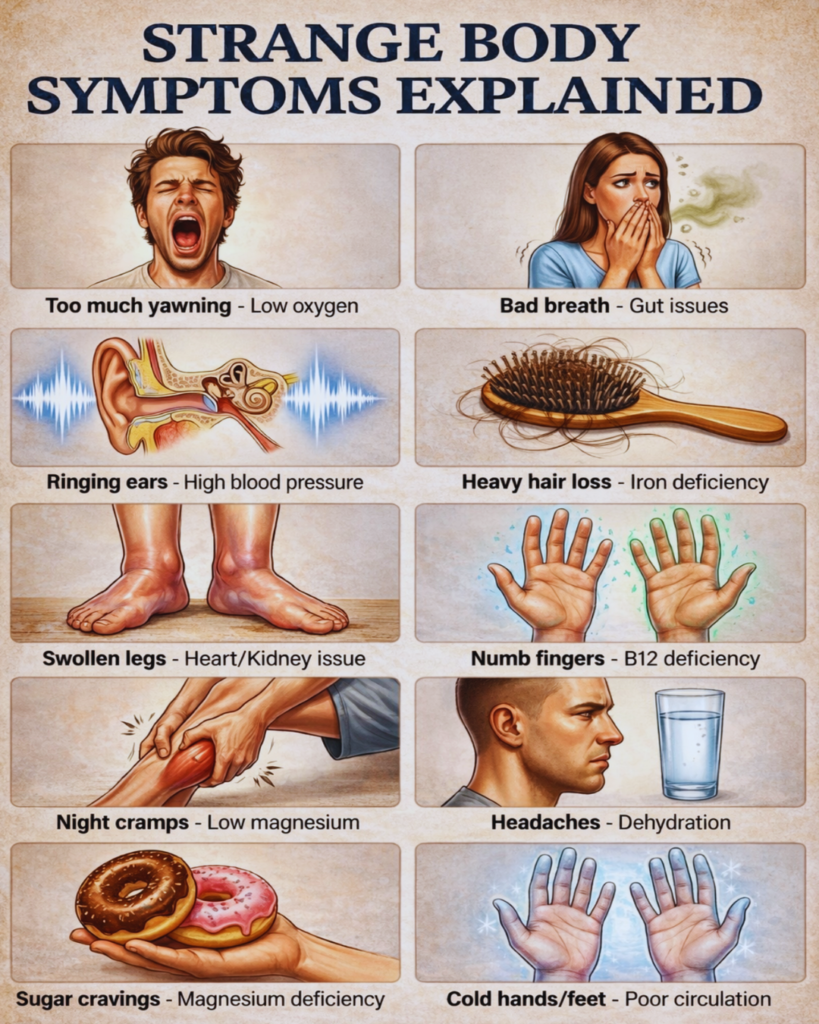
1. Random Muscle Twitching
You’re sitting still, minding your business, and suddenly your eyelid, arm, or calf starts twitching. It feels weird, but in many cases it’s harmless.
Why it happens:
- Fatigue or lack of sleep
- Stress or anxiety
- Caffeine intake
- Temporary nerve overactivity
When it’s usually harmless:
Occasional, small twitches that go away on their own.
Helpful habits:
• Rest more
• Reduce caffeine
• Relax your face or muscles when twitching starts
2. Sudden “Electric Shock” Feelings
A quick zap sensation in the hands, legs, or back can feel alarming.
Possible explanations:
- A compressed or irritated nerve
- Poor posture
- Sitting in one position for too long
Why it happens:
When a nerve gets pressured, it fires off signals in a quick “zap.”
This often improves when posture changes.
Helpful habit:
Take short movement breaks every 45–60 minutes.
3. Feeling Dizzy When Standing Up
If you stand up fast and feel lightheaded for a moment, you’re not alone.
Common causes:
- Standing up too quickly
- Dehydration
- Low blood sugar after long hours without eating
What’s happening:
Your blood pressure drops for a moment, and your brain gets less oxygen — causing a brief dizzy spell.
Helpful habits:
• Drink more water
• Avoid skipping meals
• Stand up gradually
4. Random Heart “Flutters”
Not painful, not constant — just a quick flutter, skip, or thump.
Common explanations:
- Stress
- Lack of sleep
- Too much caffeine
- Intense emotions
Your heart has electrical signals, and small changes can create a noticeable “extra” beat that many people feel occasionally.
When it’s usually harmless:
If it happens rarely and goes away quickly.
5. A Buzzing or Vibration Sensation in the Legs
This “phone vibrating” feeling in the leg is more common than you think.
Possible reasons:
- Sitting too long
- Nerve irritation
- Muscle fatigue
- Stress-related tension
What’s happening:
Small nerves fire randomly, creating a buzz-like effect.
Helpful habit:
Stretch your legs or walk for a few minutes.
6. Sudden Itchy Skin With No Rash
You’re fine… and suddenly your arm or back feels itchy.
Typical causes:
- Dry skin
- Clothing friction
- Sweat and heat
- Skin reacting to dust or fabric textures
Helpful habits:
• Moisturize often
• Wear breathable fabrics
• Shower after sweating
7. Hearing Your Heartbeat in Your Ear
A “whooshing” or pulsing sound in one ear can feel unsettling.
Common reasons:
- Pressure changes
- Stress or tension
- Exercising recently
- Lying on one side
This sensation happens when blood flow near the ear becomes more noticeable.
8. Sudden Cold Shiver or “Chill”
You might get a random shiver even when you’re not cold.
Why it happens:
- A tiny temperature shift
- Emotional reaction
- Your body trying to regulate heat
- Fatigue
These “mini chills” are usually just your nervous system reacting.
9. Hiccups That Appear Out of Nowhere
Annoying but common.
Typical triggers:
- Eating too fast
- Drinking carbonated drinks
- Sudden temperature changes
- Laughing too hard
Hiccups happen when the diaphragm contracts involuntarily.
10. Yawning Even When You’re Not Tired
Yawning isn’t just about being tired.
Other causes:
- Stress
- Boredom
- Needing more oxygen
- Seeing someone else yawn
Yawning helps your body regulate temperature and oxygen.
Conclusion
Strange body symptoms can feel surprising, but many are simply your body adjusting, reacting, or sending harmless signals. By understanding these sensations, you can feel more in tune with your body and less alarmed when they happen.
If a symptom becomes frequent, painful, or persistent, it’s always best to talk to a healthcare professional — but for the occasional odd twitch or buzz, your body is usually just doing what bodies do.