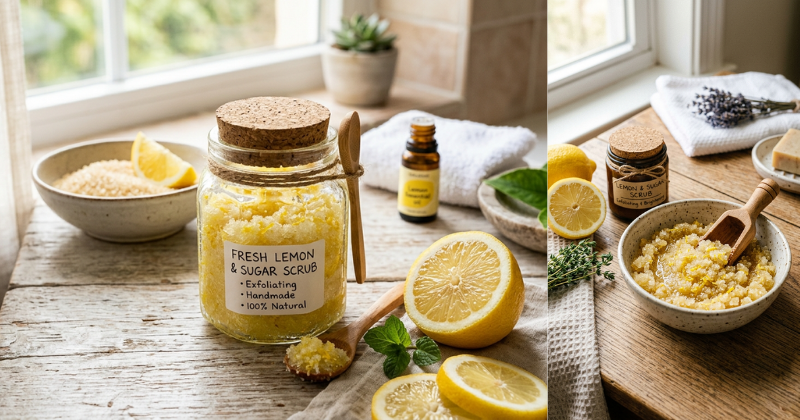
If you enjoy simple, natural skincare remedies, a sugar and lemon scrub is one of the easiest treatments you can make at home. With just two basic ingredients often found in the kitchen, this scrub can help remove dead skin cells, improve skin texture, and leave your skin feeling softer and brighter.
Natural exfoliation is an important step in many skincare routines because it helps the skin renew itself. Over time, dead skin cells accumulate on the surface of the skin, which can make it appear dull or rough. A gentle exfoliating scrub like sugar combined with the refreshing properties of lemon can help improve the skin’s overall appearance.
However, while this popular DIY remedy has benefits, it’s important to understand how it works, how to use it properly, and when to be cautious.
In this article, you’ll learn the science behind sugar and lemon scrubs, their benefits, the correct way to make them at home, and tips to avoid common mistakes.
Why Exfoliation Is Important for Healthy Skin
Your skin naturally renews itself approximately every 28–40 days. During this process, new skin cells form while older cells move to the surface and eventually shed.
Sometimes dead skin cells do not shed efficiently. When this happens, they can accumulate and cause:
- Dull-looking skin
- Rough texture
- Uneven tone
- Clogged pores
Exfoliation helps remove this buildup, allowing fresher skin to appear and helping moisturizers absorb more effectively.
There are two main types of exfoliation:
Physical exfoliation – uses small particles to manually remove dead skin cells.
Chemical exfoliation – uses acids or enzymes to dissolve dead skin.
A sugar and lemon scrub combines both methods in a gentle way.
The Benefits of a Sugar and Lemon Scrub
When used correctly, this simple DIY scrub can offer several skincare benefits.
1. Natural Physical Exfoliation
Sugar crystals act as a gentle physical exfoliant.
As you massage the scrub onto the skin, the small granules help loosen and remove dead skin cells from the surface.
Unlike some harsher scrubs, sugar particles tend to dissolve as they are rubbed into the skin, making them relatively mild.
2. Skin Brightening Effect
Lemon juice contains citric acid, a natural alpha-hydroxy acid (AHA).
AHAs can help:
- Improve skin brightness
- Promote mild exfoliation
- Support skin cell turnover
This is one reason lemon is commonly used in DIY beauty remedies for dull skin.
However, lemon should always be used carefully and in small amounts because it is acidic.
3. Helps Improve Skin Texture
Regular gentle exfoliation can make the skin feel smoother and softer.
By removing dead skin cells, the scrub may help reduce the appearance of rough areas such as:
- Elbows
- Knees
- Hands
- Feet
These areas often benefit from mild physical exfoliation.
4. Supports Better Moisture Absorption
When dead skin cells accumulate, they can prevent moisturizers from penetrating the skin effectively.
After exfoliation, the skin may absorb lotions or oils more easily, helping maintain hydration.
Sugar and Lemon Scrub DIY Recipe
Making a sugar and lemon scrub at home is simple and requires only a few ingredients.
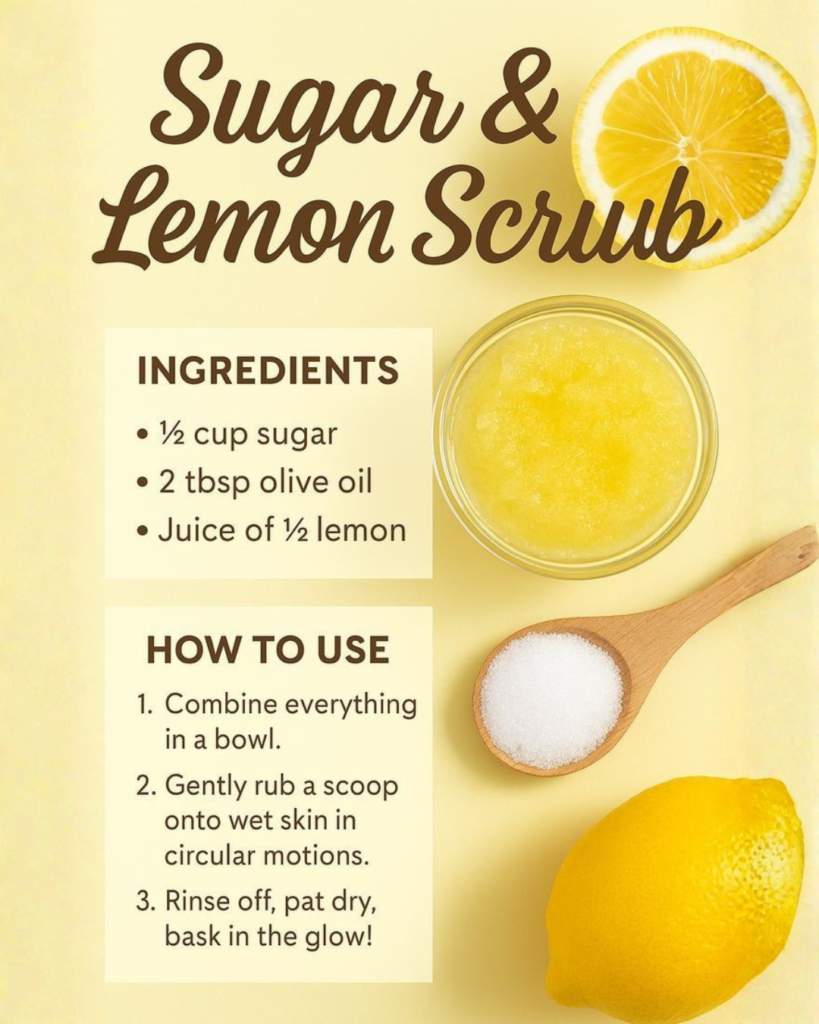
Ingredients
- 1 tablespoon sugar (white or brown)
- 1 teaspoon fresh lemon juice
- 1 teaspoon honey or olive oil (optional for extra moisture)
Honey and olive oil help balance the acidity of lemon and make the scrub gentler on the skin.
Tools
- Small mixing bowl
- Spoon
- Clean container (optional for storage)
Preparation
- Add the sugar to the bowl.
- Mix in the lemon juice slowly.
- If using honey or olive oil, add it to the mixture.
- Stir until the scrub forms a slightly thick, grainy paste.
The mixture should be easy to spread but still contain visible sugar crystals.
How to Use the Scrub
Using the scrub correctly helps prevent irritation and ensures better results.
Step 1: Start With Clean Skin
Wash the area with lukewarm water and a gentle cleanser.
Step 2: Apply the Scrub
Take a small amount and gently massage it onto the skin using circular motions.
Focus on rough areas but avoid delicate skin such as the eye area.
Step 3: Massage for 30–60 Seconds
Do not scrub too hard. Gentle pressure is enough to exfoliate the skin.
Step 4: Rinse With Lukewarm Water
Rinse thoroughly to remove all sugar particles.
Step 5: Moisturize
Apply a moisturizer or natural oil afterward to help maintain skin hydration.
How Often Should You Use It?
Exfoliation should be done in moderation.
For most skin types:
- 1–2 times per week is usually enough
- Over-exfoliating may cause irritation or dryness
If you have sensitive skin, consider using the scrub less frequently.
Important Safety Tips
Although sugar and lemon scrubs are popular DIY remedies, they should be used carefully.
Avoid Sun Exposure Immediately After
Lemon juice can make the skin more sensitive to sunlight.
After using the scrub, avoid direct sun exposure or apply sunscreen if the area will be exposed.
Do a Patch Test
Before using any DIY skincare treatment, test a small amount on a small area of skin to check for irritation.
Avoid Broken or Irritated Skin
Do not use the scrub on:
- Cuts
- Sunburn
- Active acne lesions
- Irritated skin
This can worsen irritation.
Be Gentle
Exfoliation should never feel painful. Scrubbing too hard can damage the skin barrier.
Common Mistakes to Avoid
Many people misuse DIY scrubs, which can reduce their benefits.
Using Too Much Lemon
Lemon juice is acidic, and too much can irritate the skin.
Always use a small amount and dilute it with sugar and moisturizing ingredients.
Scrubbing Too Frequently
More exfoliation does not mean better results. Over-exfoliating can lead to redness, dryness, and sensitivity.
Using Large Sugar Crystals on the Face
For facial exfoliation, fine sugar is usually better than coarse sugar to reduce the risk of irritation.
Skipping Moisturizer
Exfoliation removes dead skin but also temporarily reduces the skin’s natural oils.
Applying moisturizer afterward helps restore balance.
Who Should Avoid Lemon Scrubs?
Some people may need to avoid lemon-based skincare treatments.
These include individuals with:
- Very sensitive skin
- Rosacea-prone skin
- Recent chemical peels
- Skin barrier damage
In these cases, a gentler exfoliant without citrus may be more suitable.
Conclusion
A sugar and lemon scrub is a simple DIY skincare remedy that can help exfoliate the skin, improve texture, and support a brighter appearance when used correctly.
Sugar provides gentle physical exfoliation, while lemon contains natural acids that may help refresh dull skin. However, moderation and proper usage are important to avoid irritation.
By using this scrub carefully, limiting exfoliation to a few times per week, and always moisturizing afterward, you can safely incorporate this natural remedy into your skincare routine.
The key to healthy skin is balance—gentle exfoliation combined with proper hydration and sun protection.