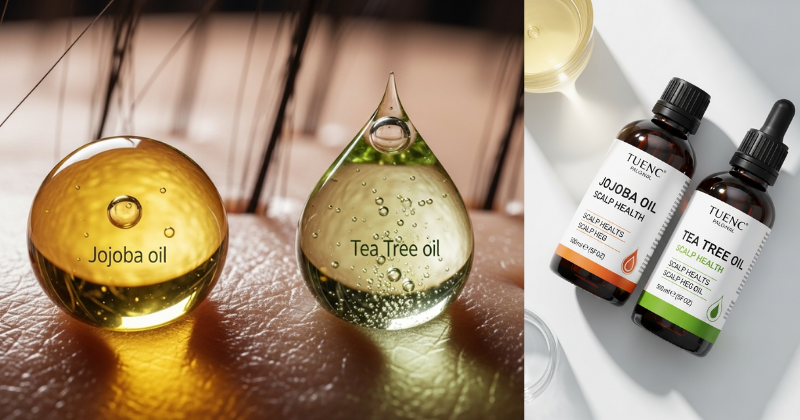
Scalp health is the biological foundation upon which every aspect of hair quality, density, and growth ultimately depends — yet it remains one of the most systematically neglected dimensions of hair care. Two botanical compounds, when combined in scientifically appropriate ratios, address the scalp’s most prevalent pathological conditions through complementary, non-overlapping mechanisms that neither ingredient achieves independently. Jojoba oil (Simmondsia chinensis) and tea tree oil (Melaleuca alternifolia) constitute a biochemically sophisticated pairing: one mimicking the scalp’s own sebum chemistry to restore barrier homeostasis, the other delivering targeted antimicrobial and anti-inflammatory activity against the microbial populations driving dandruff, seborrheic dermatitis, and follicular inflammation. Understanding precisely how this combination works at the molecular level transforms it from an intuitive folk remedy into a purposefully deployed therapeutic tool — one supported by clinical evidence and mechanistic science.
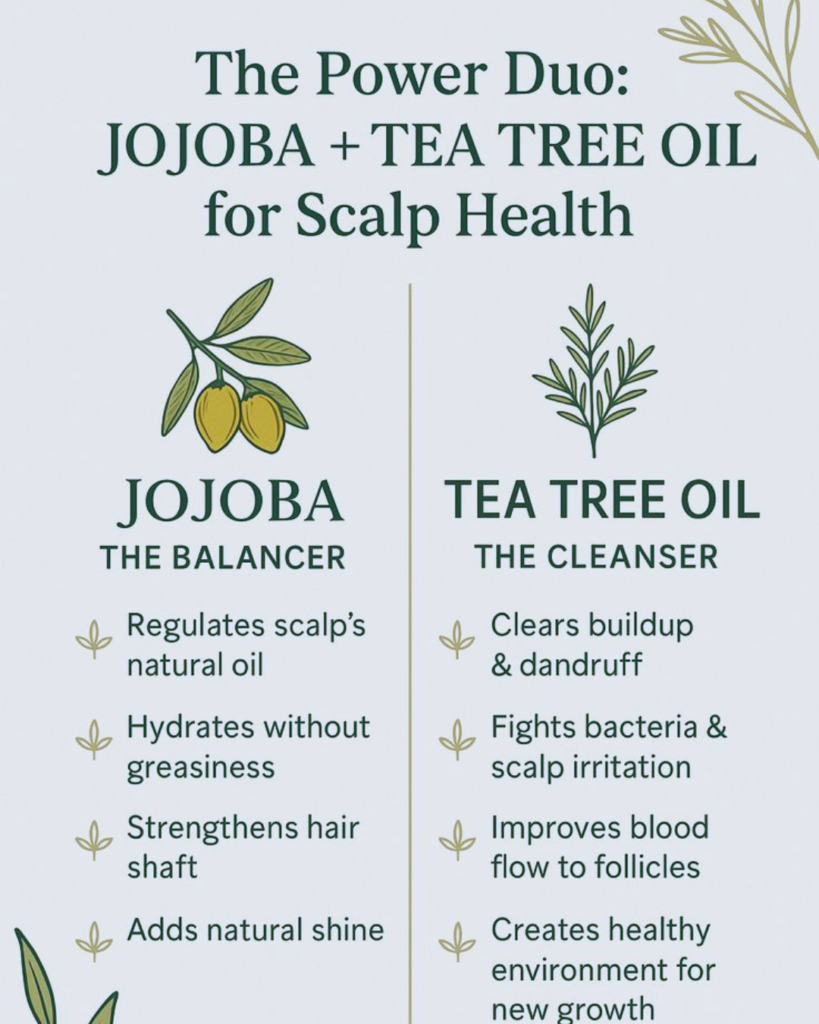
The Scalp Microenvironment: Why Most Approaches Fail
The scalp represents a uniquely demanding biological environment that differs fundamentally from facial or body skin in ways that explain why generalized skincare approaches consistently underperform when applied to scalp conditions.
Sebaceous Gland Density and the Lipid Balance Problem
The scalp contains the highest density of sebaceous glands in the human body — approximately 900 glands per square centimeter, compared to 400-900 per square centimeter on the face and fewer than 100 per square centimeter on most body surfaces. These glands produce sebum — a complex mixture of triglycerides (57%), wax esters (26%), squalene (12%), and free fatty acids — at rates that vary dramatically between individuals based on androgen levels, genetic factors, and environmental conditions.
This high sebaceous density creates a paradox: the very lipid secretion that should protect the scalp becomes a substrate for the microbial populations that drive its most common disorders. Malassezia species — lipophilic yeasts naturally present on all human scalps — metabolize triglycerides in sebum through secreted lipases, generating free oleic acid in quantities that penetrate the stratum corneum barrier, triggering inflammatory responses that manifest as dandruff, seborrheic dermatitis, and scalp irritation. Understanding this cascade — sebum secretion → Malassezia lipase activity → oleic acid generation → barrier disruption → inflammation — reveals why effective scalp treatment requires both barrier restoration and antimicrobial activity simultaneously.
The Follicular Canal as a Microbial Reservoir
Each of the approximately 100,000 hair follicles on the scalp provides an anatomical niche that creates unique challenges for topical treatment. The follicular canal extends 3-5mm below the skin surface, creating a warm, sebum-rich, relatively anaerobic microenvironment where both Malassezia and bacterial species including Cutibacterium acnes and Staphylococcus epidermidis establish communities. Topical treatments that act only on the scalp surface address the manifestation of follicular microbial activity while leaving the reservoir population largely untouched.
Effective scalp treatments must therefore demonstrate follicular penetration — the ability to travel down the infundibulum to reach deeper follicular populations. This requirement shapes the selection of carrier systems for active compounds and explains why the vehicle (jojoba oil) matters as much as the active ingredient (tea tree oil) in this power duo.
Jojoba Oil: Biochemistry of the Perfect Scalp Carrier
Jojoba oil is, in a precise botanical sense, not an oil at all — it is a liquid wax ester, the only plant-derived wax ester of significance, and this structural distinction explains virtually everything that makes it exceptional for scalp applications.
Wax Ester Chemistry and Sebum Mimicry
Triglyceride-based oils (virtually all common carrier oils including coconut, argan, and sweet almond) consist of three fatty acid chains esterified to a glycerol backbone. Human sebum, by contrast, contains approximately 26% wax esters — fatty acids esterified directly to fatty alcohols without the glycerol bridge. Jojoba oil is composed primarily of long-chain wax esters (C20-C24) in proportions remarkably similar to human sebum’s wax ester fraction.
This structural similarity has profound practical implications. When applied to the scalp, jojoba’s wax esters integrate into the existing sebum layer and the lamellar lipid structures of the stratum corneum with far greater compatibility than triglyceride-based oils. Rather than sitting on the surface or occluding follicular openings (a significant concern with heavier oils like coconut), jojoba is recognized by sebaceous gland receptors as chemically similar to endogenous wax esters, facilitating incorporation into the scalp’s native lipid matrix. This integration restores barrier function from within rather than simply coating the surface.
Follicular Penetration and the “Sebum Channel” Effect
Research using fluorescence microscopy has demonstrated that wax esters preferentially follow sebum pathways — tracking down follicular canals via the same channels that sebum uses for surface delivery. This “sebum channel” penetration pathway explains why jojoba oil-based preparations reach follicular depths inaccessible to aqueous formulations and many triglyceride oils. For delivering tea tree oil’s active compounds to follicular Malassezia populations, this penetration advantage is mechanistically critical.
Additionally, jojoba contains tocopheryls (vitamin E isomers) at approximately 250-350 ppm that provide antioxidant protection against lipid peroxidation — relevant because oxidized sebum components are themselves irritating to the follicular epithelium and can exacerbate inflammatory responses independent of microbial activity.
Sebum Regulation Through Feedback Modulation
A widely observed but mechanistically underappreciated property of jojoba oil involves its apparent sebum-regulating effects. Scalps that are either excessively oily (seborrhea) or abnormally dry (asteatosis) often normalize with regular jojoba application. The proposed mechanism involves jojoba’s wax esters binding to sebocyte (sebaceous gland cell) receptors that normally detect wax ester concentration in follicular sebum. When wax ester concentrations are artificially elevated by jojoba application, negative feedback reduces sebocyte synthetic activity, moderating overproduction. Conversely, in dry conditions, the supplemental wax esters improve barrier function and reduce the transepidermal water loss that signals sebaceous glands to increase output. This bidirectional normalization makes jojoba appropriate for all scalp types — a versatility that most carrier oils lack.
Tea Tree Oil: Mechanisms of Antimicrobial and Anti-Inflammatory Action
Tea tree oil (Melaleuca alternifolia essential oil) contains over 100 identified monoterpene and sesquiterpene compounds, with terpinen-4-ol — constituting 30-48% of quality tea tree oil by ISO standard 4730 — responsible for the majority of its documented biological activities.
Terpinen-4-ol: Multi-Target Antimicrobial Mechanisms
Terpinen-4-ol’s antimicrobial efficacy against Malassezia species, bacteria, and dermatophytes proceeds through several simultaneous mechanisms that make resistance development significantly more difficult than with single-target synthetic antimicrobials. The compound disrupts microbial membrane integrity by intercalating into the phospholipid bilayer, increasing membrane fluidity and creating ion conductance pathways that compromise the electrochemical gradient essential for ATP synthesis. This membrane disruption is concentration-dependent: at sublethal concentrations (below the minimum inhibitory concentration), terpinen-4-ol induces membrane permeability changes that sensitize microorganisms to co-applied compounds; at therapeutic concentrations, it produces irreversible membrane damage leading to cytoplasmic leakage and cell death.
Against Malassezia globosa and Malassezia restricta — the two species most implicated in dandruff and seborrheic dermatitis — research by Hammer, Carson, and Riley documented minimum inhibitory concentrations of 0.25-0.5% for terpinen-4-ol in vitro. A landmark randomized controlled trial by Satchell et al. published in the Journal of the American Academy of Dermatology demonstrated that 5% tea tree oil shampoo produced a 41% improvement in dandruff severity scores compared to 11% for placebo — a highly statistically significant difference reflecting genuine therapeutic efficacy rather than cosmetic effect.
Anti-Inflammatory Activity Through Multiple Signaling Pathways
Beyond its antimicrobial properties, terpinen-4-ol exhibits documented anti-inflammatory activity through mechanisms that address scalp inflammation both downstream of microbial triggers and independently. Terpinen-4-ol suppresses LPS-stimulated production of pro-inflammatory cytokines — including TNF-α, IL-1β, and IL-10 — through inhibition of NF-κB signaling pathways in monocytes and macrophages. It also modulates arachidonic acid metabolism, reducing prostaglandin E2 synthesis through partial COX-2 inhibition.
In the scalp context, these anti-inflammatory mechanisms address the oleic acid-triggered inflammatory cascade — reducing the inflammatory response to Malassezia metabolites even before the microbial population itself is fully controlled. This dual action (antimicrobial + anti-inflammatory) produces faster symptomatic relief than antimicrobial action alone, explaining why tea tree oil treatments often reduce scalp itching and irritation within days while Malassezia population reduction requires weeks of consistent application.
How to Use Jojoba and Tea Tree Oil Together: Application Protocol
The synergistic benefits of this combination depend on appropriate concentration ratios, application technique, and treatment frequency. Getting these parameters right determines whether you experience the full therapeutic potential or merely pleasant-smelling scalp massage.
Concentration Calibration: The Critical Variable
Tea tree oil must be diluted before scalp application — undiluted application of any essential oil to scalp skin risks chemical burns, sensitization, and paradoxical irritation that worsens the conditions you’re treating. The therapeutic window for tea tree oil in scalp applications has been established across multiple studies: 2-5% concentration in the carrier provides genuine antimicrobial and anti-inflammatory efficacy, while concentrations below 1% are generally subtherapeutic and concentrations above 5% increase irritation risk without proportionally increasing benefit.
For a practical scalp treatment blend, combine 1ml tea tree oil with 19ml jojoba oil (yielding a 5% dilution — appropriate for active scalp conditions) or 1ml tea tree oil in 49ml jojoba oil (2% — appropriate for maintenance and prevention in healthy scalps). These concentrations can be adjusted based on individual tolerance, with sensitive scalps starting at 2% and increasing to 5% after two weeks of confirmed tolerance.
Step-by-Step Application for Scalp Treatment
Step 1: Pre-Application Scalp Assessment. Before applying, part your hair in multiple sections and examine the scalp in good lighting. Note the pattern and severity of any scaling, redness, or visible follicular inflammation. This baseline assessment enables objective monitoring of treatment response over subsequent weeks.
Step 2: Warm the Preparation. Place your measured blend (typically 2-3ml for short hair, 4-6ml for long hair, concentrated at the scalp rather than the hair shaft) in your palm and warm it briefly between your hands. Slightly elevated temperature reduces viscosity for more even distribution and enhances follicular penetration by increasing skin blood flow.
Step 3: Section and Apply Directly to the Scalp. Part hair in 1-2cm sections and apply the blend directly to the scalp surface using your fingertips or a dropper applicator. Work systematically across the entire scalp rather than concentrating product in accessible areas only. Focus additional product on zones of greatest concern — typically the crown and along the hairline.
Step 4: Massage With Purposeful Technique. Using the pads of your fingertips (never nails), massage with small, firm circular motions for 3-5 minutes. This step accomplishes multiple simultaneous objectives: it mechanically distributes the blend across the scalp surface, stimulates blood flow that enhances follicular delivery of active compounds, encourages follicular penetration through the physical pressure that drives product into the infundibulum, and provides the mechanical stimulation that independently promotes hair follicle cycling activity.
Step 5: Contact Time and Removal. Leave the treatment on the scalp for a minimum of 30 minutes. An overnight treatment (covered with a loose shower cap to prevent pillow transfer) provides extended contact time that allows maximal follicular penetration and sustained antimicrobial activity. Wash out with a gentle, sulfate-free shampoo using two lathering cycles to ensure complete removal. Jojoba’s waxy texture requires thorough emulsification — incomplete removal leaves a coating that attracts environmental particulates.
Treatment Frequency: For active scalp conditions (dandruff, seborrheic dermatitis, folliculitis), apply 2-3 times weekly for the first month. For maintenance once symptoms resolve, weekly application sustains the improvements achieved during active treatment.
Advanced Strategies and Synergistic Enhancements
Expanding the Formula With Complementary Botanicals
The jojoba and tea tree oil base accepts additional evidence-supported compounds that address scalp health dimensions not covered by the core pairing. Rosemary essential oil (Rosmarinus officinalis), added at 1-2% of the final formulation alongside tea tree oil, provides 5-alpha reductase inhibition through rosmarinic acid and ursolic acid — reducing the DHT-mediated follicular miniaturization that contributes to androgenetic hair thinning. A landmark randomized controlled trial demonstrated rosemary oil’s equivalence to 2% minoxidil for hair density improvement after 6 months, making this addition particularly valuable for individuals with both scalp conditions and thinning hair.
Peppermint essential oil at 0.5-1% provides vasodilatory effects through menthol’s TRPM8 receptor activation and downstream nitric oxide release — increasing scalp microcirculation in ways that may support follicular nutrient delivery independent of the antimicrobial and barrier restoration mechanisms of the core duo. Research in a 2016 animal study documented that peppermint oil application increased dermal thickness, follicle number, and follicle depth compared to control and minoxidil groups, providing preliminary mechanistic evidence for its hair growth-supportive effects.
Scalp Microbiome Considerations
Contemporary trichology increasingly recognizes that optimal scalp health involves not simply eliminating pathogenic species but maintaining a diverse, balanced scalp microbiome. The scalp microbiome of individuals without scalp conditions is dominated by Cutibacterium (formerly Propionibacterium), Staphylococcus epidermidis, and moderate populations of non-pathogenic Malassezia species that collectively provide colonization resistance against more virulent strains. Overly aggressive antimicrobial approaches can disrupt this protective diversity, potentially creating ecological vacuums that allow pathogenic overgrowth after treatment cessation.
Tea tree oil at 2-5% concentrations targets pathogenic species most effectively due to their higher baseline susceptibility, while the resident protective species generally demonstrate greater tolerance at these concentrations. This differential susceptibility — analogous to the mechanism of selective antibiotics — suggests that moderate tea tree oil concentrations can reduce pathogen burden while preserving beneficial microbiome diversity, whereas higher concentrations (above 10%) would more indiscriminately disrupt all microbial populations.
Troubleshooting Common Challenges
Initial Flare Before Improvement
A subset of individuals experience temporary worsening of scalp symptoms in the first 1-2 weeks of tea tree oil treatment. This phenomenon — a Herxheimer-like reaction involving inflammatory responses to increased microbial cell wall debris released as Malassezia populations are disrupted — is transient and actually indicates effective antimicrobial activity. Managing it involves reducing treatment frequency to once weekly temporarily, ensuring thorough rinsing after each treatment, and recognizing that this initial inflammatory response typically resolves within 2-3 weeks as microbial populations decrease beyond the threshold that triggers significant inflammatory responses.
Persistent Oiliness Despite Jojoba Application
Counterintuitively, individuals with oily scalps sometimes report that jojoba application initially seems to increase oiliness before normalization occurs. This reflects the timeline of the sebum feedback mechanism — it takes 2-4 weeks of consistent jojoba application before sebocyte receptor-mediated feedback produces measurable reductions in sebum output. During this initial period, the combination of endogenous sebum and applied jojoba can feel heavier than either alone. Persistence through this adaptation period, combined with adjusting treatment frequency to every other day rather than daily, typically resolves the concern as sebum regulation normalizes.
Maximizing Long-Term Scalp Health
The most durable scalp health outcomes emerge from treating the jojoba and tea tree oil combination not as an acute remedy but as a consistent maintenance practice embedded within a comprehensive scalp health framework. Scalp microbiome composition responds to cumulative treatment history — weekly maintenance applications sustain the Malassezia population control achieved during intensive initial treatment, preventing the cyclical recurrence that characterizes many scalp conditions when treatment is discontinued prematurely.
Diet contributes measurably to scalp health through its influence on sebum composition and systemic inflammation. High glycemic index diets increase androgen levels that stimulate sebaceous activity, while omega-3 fatty acid consumption modulates the inflammatory prostaglandin balance that determines scalp skin’s inflammatory reactivity to Malassezia metabolites. Combining topical jojoba and tea tree oil treatment with dietary modifications that support anti-inflammatory signaling creates a synergy between topical and systemic approaches that produces outcomes neither achieves independently.
Conclusion
Jojoba oil and tea tree oil represent a scientifically coherent pairing in which the carrier and active compound are as carefully matched as pharmaceutical drug-vehicle formulations — the wax ester chemistry of jojoba enables follicular penetration that delivers tea tree oil’s terpinen-4-ol to the microbial populations responsible for the majority of common scalp disorders. Barrier restoration, sebum regulation, antimicrobial activity, and anti-inflammatory modulation work simultaneously through distinct but reinforcing mechanisms. Begin with a 2% dilution applied twice weekly, monitor scalp condition objectively over four to six weeks, and adjust concentration and frequency based on your individual response. The scalp health transformation this evidence-based combination can achieve is both measurable and sustainable — built on biochemistry rather than marketing claims.
Important Disclaimer: This article is for informational purposes only and should not replace professional advice. For persistent or severe scalp conditions, consult a dermatologist. Individual results may vary. Always patch test new topical preparations before full application.