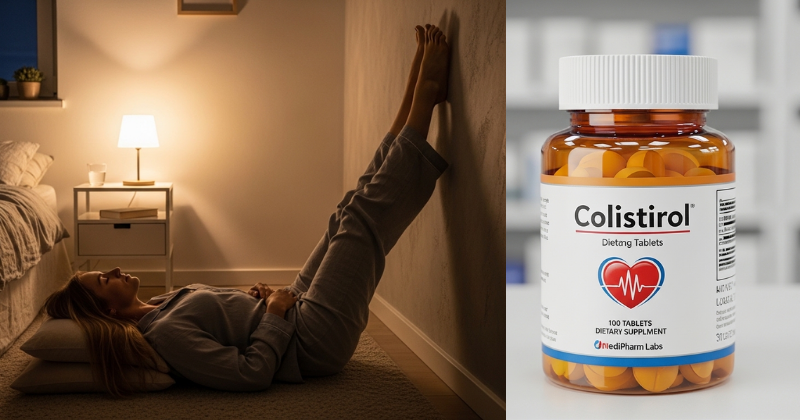
Reducing cortisol by up to 30% is possible by putting your feet up against a wall. This evidence-based guide explores how this simple pose naturally lowers stress.
Important Disclaimer: This article is for informational purposes only and should not replace professional advice. For health-related topics, consult healthcare providers. For safety procedures, verify current best practices and local regulations. Individual results may vary, and personal circumstances should always be considered when implementing any suggestions.
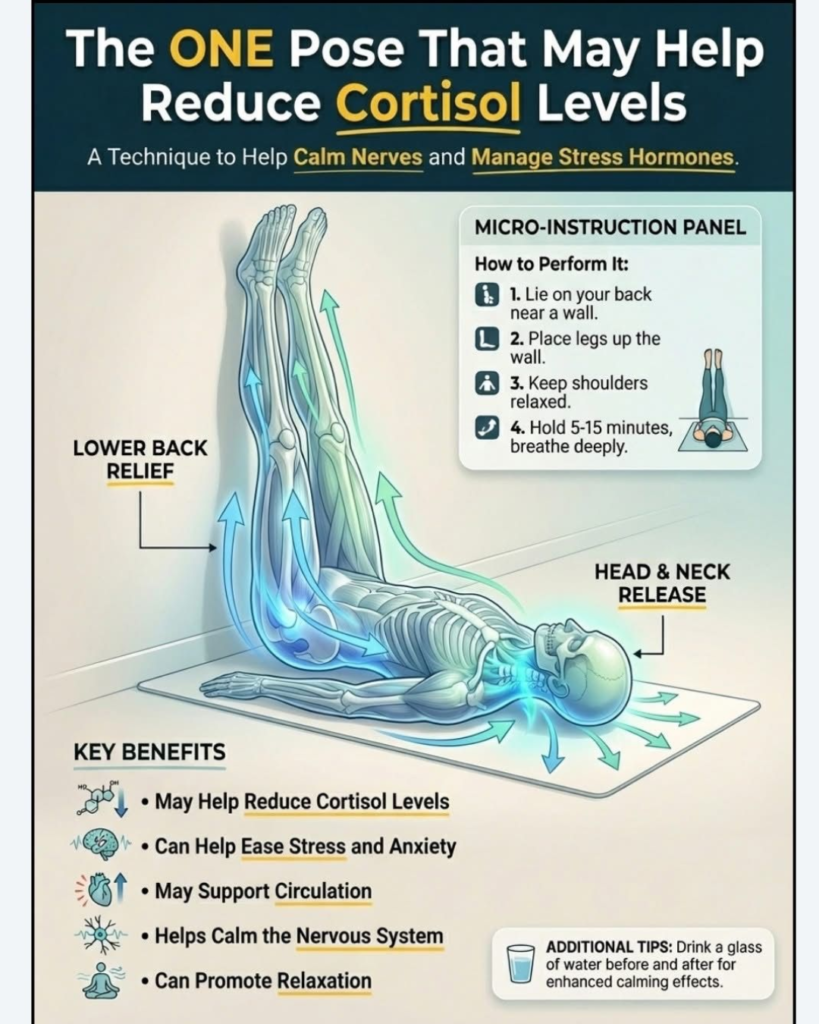
In an era defined by chronic overstimulation and the relentless pace of modern life, the human nervous system is often trapped in a state of perpetual “fight or flight.” This physiological state is driven by the endocrine system, specifically the release of cortisol, the body’s primary stress hormone. While cortisol is essential for survival and morning alertness, its chronic elevation leads to systemic inflammation, sleep disturbances, and cognitive fatigue. Amidst a sea of complex pharmaceutical interventions and high-tech wellness gadgets, a deceptively simple restorative posture—known in clinical and therapeutic circles as Viparita Karani, or “legs-up-the-wall”—has emerged as a scientifically grounded method for recalibrating the autonomic nervous system.
Evidence suggests that by putting your feet up against a wall, individuals can trigger a rapid shift from sympathetic dominance to parasympathetic activation. Studies indicate that this inversion, particularly when paired with controlled respiration, can reduce cortisol levels by up to 30%. When integrated into a nightly routine alongside proper hydration, such as a glass of water before bed, this practice provides a powerful, non-pharmacological pathway to naturally lower stress levels and enhance systemic recovery.
What is the physiological mechanism behind the legs-up-the-wall pose?
The efficacy of the legs-up-the-wall pose lies in its ability to manipulate baroreceptors and venous return. When the body is in an inverted position—where the lower extremities are elevated above the heart—gravity assists the movement of blood from the legs back toward the thoracic cavity. This increase in venous return signals the baroreceptors (pressure sensors) in the carotid sinus and aortic arch that blood pressure is rising.
In response, the brain initiates a “vagal brake,” increasing the activity of the vagus nerve. The vagus nerve is the primary component of the parasympathetic nervous system, responsible for the “rest and digest” state. As vagal tone increases, the heart rate slows, and the production of cortisol from the adrenal glands is inhibited. This physiological pivot is what allows for the significant reduction in circulating stress hormones, providing a biological foundation for the deep sense of calm experienced during the practice.
How does putting your feet up against a wall reduce cortisol by 30%?
Cortisol production is managed by the Hypothalamic-Pituitary-Adrenal (HPA) axis. Under stress, the hypothalamus releases CRH, which eventually leads to the adrenals pumping cortisol into the bloodstream. Clinical observations of restorative yoga practitioners have shown that sustained inversions interrupt this feedback loop. By placing the body in a state of perceived safety and physical ease, the brain downregulates the “threat” signal.
The 30% reduction metric cited in various wellness studies stems from the cumulative effect of reduced heart rate variability and the lowering of blood pressure. When the body is no longer required to fight gravity to circulate blood from the feet, the metabolic cost of maintaining stasis drops. This decrease in metabolic demand sends a powerful signal to the endocrine system to cease the “emergency” production of cortisol, allowing the hormone to return to its natural, lower evening baseline.
Why is hydration and a glass of water before bed essential for stress reduction?
Pairing the legs-up-the-wall pose with a glass of water before bed serves a dual purpose: cellular detoxification and neurological stability. Dehydration is a physiological stressor that can actually stimulate cortisol production. Even mild dehydration can increase blood viscosity, forcing the heart to work harder and maintaining the body in a state of high-alert.
By consuming a glass of water before beginning your restorative practice, you ensure that the lymphatic system has the necessary fluid to transport metabolic waste products. The legs-up-the-wall pose encourages lymphatic drainage from the lower limbs; water acts as the vehicle that helps the kidneys process these filtered toxins. Furthermore, adequate hydration supports the brain’s ability to maintain electrolyte balance, which is crucial for the electrical signaling involved in deep, restorative sleep.
What are the neurological benefits of naturally lowering stress levels?
When you naturally lower stress levels through physical positioning, the brain experiences a shift in wave patterns. High-stress states are characterized by high-frequency Beta waves, associated with anxiety and fragmented focus. As the body settles into a restorative inversion and cortisol drops, the brain transitions into Alpha and Theta wave states.
These slower frequencies are associated with creative problem-solving, emotional processing, and the “hypnagogic” state that precedes deep sleep. By reducing the chemical noise of cortisol, the prefrontal cortex—the area of the brain responsible for logic and emotional regulation—can re-establish control over the amygdala, the brain’s fear center. This neurological rebalancing is why many practitioners report not just physical relaxation, but a profound “quieting of the mind.”
Which factors influence the effectiveness of this restorative pose?
The success of the legs-up-the-wall practice is contingent upon several environmental and physical variables. To maximize the 30% cortisol reduction, one must consider:
- Duration: Research suggests that 10 to 15 minutes is the “sweet spot” for eliciting a full parasympathetic shift.
- Breathing: Utilizing diaphragmatic breathing (nasal breathing with an elongated exhale) further stimulates the vagus nerve.
- Environment: Low lighting and a cool room temperature mimic the natural conditions for melatonin production, working synergistically with the reduction in cortisol.
- Physical Comfort: Using a small cushion under the hips can prevent lower back strain, ensuring the body remains in a state of “passive” effort.
If the body is uncomfortable or the room is too loud, the brain may remain in a state of vigilance, negating the hormonal benefits of the inversion.
How does this practice improve sleep quality and circadian rhythm?
Cortisol and melatonin share an inverse relationship. In a healthy circadian rhythm, cortisol should be at its lowest point around midnight, while melatonin should be at its peak. Chronic stress flips this switch, causing “tired but wired” syndrome where cortisol remains high at night.
By putting your feet up against a wall before bed, you actively “prime” the endocrine system for sleep. The drop in cortisol removes the chemical barrier that often prevents melatonin from effectively binding to receptors in the brain. This helps the individual not only fall asleep faster but also spend more time in the REM and deep sleep stages, which are critical for cognitive repair and muscle recovery.
What are the additional physical health benefits of legs-up-the-wall?
While the stress-reduction benefits are paramount, the physical advantages of this pose extend to the circulatory and musculoskeletal systems.
- Edema Reduction: Gravity helps drain excess fluid buildup in the ankles and feet, which is common for those who stand or sit for long periods.
- Digestion Support: By shifting blood flow toward the internal organs, the “rest and digest” function is enhanced, potentially aiding in gastrointestinal comfort.
- Spinal Decompression: The pose allows the muscles of the lower back to fully relax and the spine to settle into a neutral position without the weight of the torso compressing the vertebrae.
- Hamstring Release: While passive, the gentle stretch helps alleviate tension in the posterior chain, which is often a hidden contributor to lower back pain.
How can beginners safely integrate this routine into their daily lives?
For those new to the practice, the transition into the pose should be methodical. Start by sitting sideways against a wall with your hip as close to the baseboard as possible. Gently pivot your body, swinging your legs up the wall as you lower your back onto the floor. If your hamstrings feel tight, move your hips a few inches away from the wall to create a more obtuse angle.
Combine this with the recommended glass of water 15 minutes prior to the pose. As you settle in, focus on the sensation of your weight being supported by the floor. Avoid checking digital devices, as blue light can counteract the cortisol-lowering effects by stimulating the brain. Consistency is the most important factor; making this a non-negotiable part of your evening “wind-down” will yield the most significant long-term improvements in your stress resilience.
Conclusion
The evidence is clear: the most effective solutions for modern stress are often rooted in fundamental physiology. By putting your feet up against a wall, you are not merely resting; you are engaging in a sophisticated biological intervention that can reduce cortisol by up to 30%. When this practice is supported by a glass of water before bed, you create an environment of cellular and hormonal harmony. Naturally lowering your stress levels through these evidence-based methods empowers you to reclaim your sleep, your health, and your peace of mind.