
The day I discovered vinegar spray’s transformative power, my existence shifted from constant struggle to harmonious equilibrium with my living spaces and well-being. This humble solution—born from desperation during a particularly challenging period—evolved into a life-altering practice that revolutionized everything from household cleanliness to personal health, proving that sometimes the most profound revelations arrive in the simplest forms.
What began as a frantic search for non-toxic cleaning alternatives during a health crisis transformed into a comprehensive philosophy of natural living, where a single bottle of vinegar spray became my compass through countless challenges. This narrative explores not merely the practical applications of this remarkable solution, but the deeper wisdom it revealed about simplicity, sustainability, and the extraordinary healing potential residing within ordinary pantry ingredients.
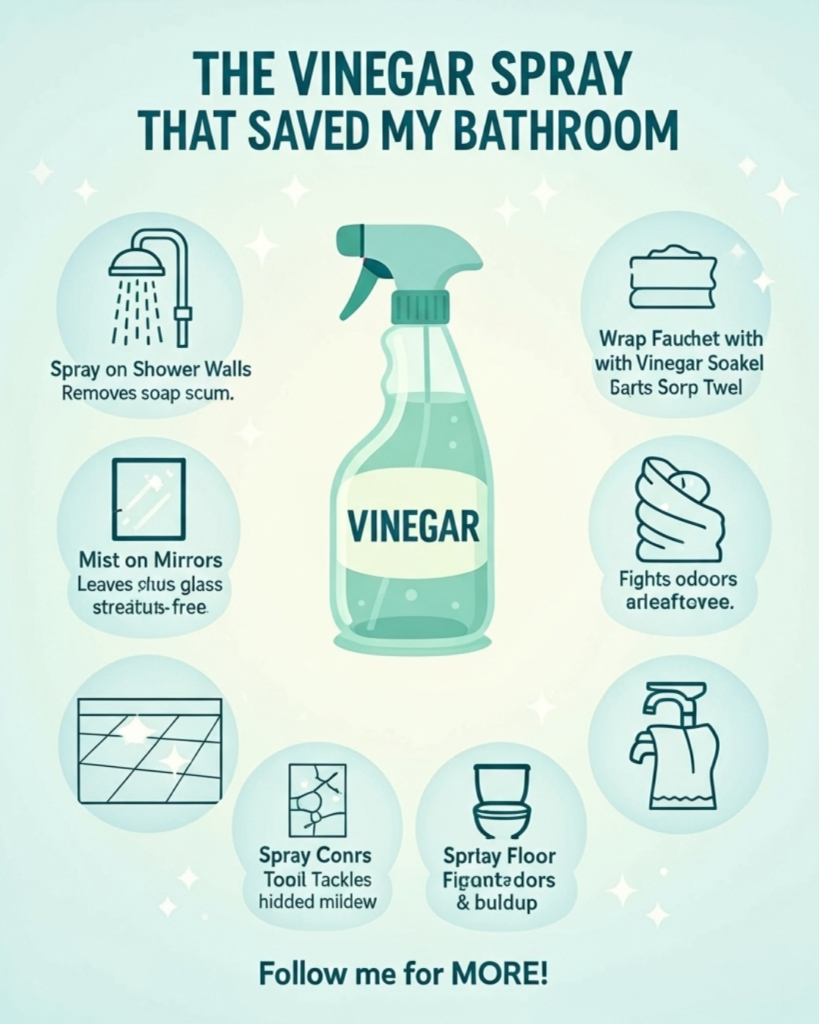
The Awakening: When Chemical Sensitivity Forced a Revolution
My journey into the world of vinegar spray began not through choice, but through necessity—a dramatic health episode that stripped away my tolerance for conventional cleaning products and forced me to reimagine my entire relationship with household maintenance. The migraines had become unbearable, arriving with increasing frequency each time I cleaned my home, transforming routine chores into hazardous undertakings that left me incapacitated for hours afterward.
The medical investigations revealed what many fail to recognize: the average household contains over 60 volatile organic compounds released by commercial cleaning products, creating an invisible toxic atmosphere that accumulates with each spray, each wipe, each well-intentioned attempt at cleanliness. My body, in its wisdom, had begun rejecting these synthetic invaders through increasingly severe reactions—a blessing disguised as crisis, forcing me toward solutions I might otherwise never have discovered.
The Chemistry of Transformation
Vinegar—specifically distilled white vinegar containing 5% acetic acid—represents one of humanity’s oldest and most versatile cleaning agents, employed for millennia across cultures before the chemical industry convinced us we needed something “stronger.” The acetic acid molecule’s structure enables it to dissolve mineral deposits, cut through grease, neutralize odors at their molecular source, and create inhospitable environments for many bacteria and molds—all without the respiratory irritants, endocrine disruptors, or environmental persistence characterizing modern chemical cleaners.
The scientific literature, though often overlooked in favor of marketing claims from chemical manufacturers, validates vinegar’s antimicrobial properties extensively. Studies published in journals including the International Journal of Food Microbiology document acetic acid’s effectiveness against pathogens including E. coli, Salmonella, and various mold species, with kill rates approaching 90-99% depending on concentration and contact time. This evidence, combined with vinegar’s complete biodegradability and absence of toxic residues, illuminated why this ancient solution remained relevant despite centuries of “progress.”
The Personal Crisis That Catalyzed Change
The breaking point arrived during a seemingly ordinary Saturday morning. I had embarked on ambitious house cleaning using my usual arsenal of commercial products—bathroom cleaners, kitchen degreasers, window solutions, floor treatments. Within an hour, the migraine descended with unprecedented ferocity, accompanied by respiratory distress, skin irritation, and an overwhelming sense that my body was rejecting the very environment I inhabited.
That afternoon, collapsed on my couch waiting for symptoms to subside, I began researching with the desperate focus that crisis inspires. The revelation that simple household vinegar could potentially replace the dozen toxic products I’d just subjected myself to seemed almost too simple to believe—yet the historical evidence, scientific validation, and countless testimonials created a compelling case for experimentation. That evening, I prepared my first vinegar spray, a tentative mixture that would ultimately transform not just my cleaning routine, but my entire approach to household management and personal wellness.
Crafting the Perfect Vinegar Spray: A Symphony of Simplicity
Creating an effective vinegar spray involves understanding the delicate balance between acidity sufficient for cleaning efficacy and dilution appropriate for various surfaces and applications. My initial formulations were crude experiments, but through systematic testing and refinement, I developed protocols addressing diverse cleaning needs while maintaining the purity and non-toxicity that motivated this journey.
The Foundation Formula
The basic vinegar spray begins with distilled white vinegar—the clear, unpretentious variety derived from grain alcohol fermentation. While apple cider vinegar and other varieties possess their own virtues for culinary and health applications, distilled white vinegar’s neutral odor profile and consistent acidity make it ideal for household cleaning purposes. The standard dilution—equal parts water and vinegar—provides balanced cleaning power appropriate for most surfaces without the aggressive acidity that might damage delicate materials.
I fill a glass spray bottle (never plastic, which may leach compounds into the solution) with 250ml distilled water, then add 250ml white vinegar, creating approximately 2.5% acetic acid concentration. This ratio accomplishes several objectives simultaneously: sufficient acidity to dissolve mineral deposits and neutralize alkaline residues, adequate dilution to prevent damage to most household surfaces, and reduced vinegar odor that dissipates rapidly as the solution evaporates, leaving no lingering scent.
The transformation of these two simple liquids into a cleaning solution feels almost ceremonial—watching them combine, shaking gently to integrate, then labeling the bottle with date and contents. This mindful preparation contrasts sharply with the mindless grabbing of commercial products from under the sink, creating awareness and intentionality around the very act of cleaning.
Aromatic Enhancements: When Function Meets Sensory Pleasure
While basic vinegar spray accomplishes remarkable cleaning feats, the addition of essential oils elevates the experience from purely functional to genuinely pleasurable—transforming cleaning from chore to ritual. Essential oils contribute more than fragrance; many possess additional antimicrobial properties, creating synergistic effects that enhance the spray’s overall efficacy while making application a sensory delight rather than olfactory endurance test.
For general cleaning, I add 20-30 drops of essential oils per 500ml batch. Lemon essential oil (Citrus limon) provides bright, uplifting fragrance while contributing d-limonene—a natural solvent effective against grease and adhesive residues. Tea tree oil (Melaleuca alternifolia) offers potent antimicrobial properties documented in numerous studies, particularly effective against molds and fungi. Lavender (Lavandula angustifolia) creates calming atmosphere while providing additional antibacterial effects and the psychological benefits of its well-documented aromatherapeutic properties.
The ritual of selecting and blending essential oils for each batch connects me to botanical traditions spanning millennia—herbalists and healers who understood that cleaning spaces involves not merely removing visible dirt but transforming energetic atmosphere, creating environments that nourish rather than deplete those who inhabit them.
The Multidimensional Applications: Beyond Surface Cleaning
What initially seemed a simple cleaning solution revealed itself as remarkably versatile tool addressing challenges I hadn’t even considered connecting to household maintenance. The vinegar spray’s applications extend far beyond wiping countertops, encompassing aspects of home life, personal care, and even wellness that conventional cleaning products could never address.
Kitchen Alchemy: Where Food Safety Meets Natural Purity
The kitchen—that sacred space where nourishment originates—became the primary testing ground for vinegar spray’s capabilities. I discovered that lightly misting cutting boards post-washing and allowing brief contact before rinsing eliminated lingering odors from garlic, onions, and fish while reducing bacterial loads that survive conventional soap-and-water washing. Research from food safety laboratories validates this practice, documenting that vinegar treatment reduces bacterial counts on food preparation surfaces by 90% or more when properly applied.
Refrigerator maintenance transformed from dreaded quarterly ordeal to simple weekly ritual. Removing shelves and drawers, spraying liberally with vinegar solution, allowing several minutes contact time, then wiping with clean cloth eliminates odors at their source while preventing mold growth in those perpetually damp crisper drawers where produce languishes. The absence of chemical residues means no concern about food contact with cleaned surfaces—a stark contrast to commercial cleaners requiring extensive rinsing to prevent contamination.
The microwave, that repository of splattered remnants and mysterious odors, surrenders completely to vinegar spray. I place microwave-safe bowl containing equal parts water and vinegar inside, heat on high for three minutes until solution boils and steam permeates the interior, then carefully remove bowl and wipe surfaces with cloth. The steam loosens all residues while the acetic acid neutralizes odors, leaving the microwave pristine without any scrubbing or harsh chemicals.
Bathroom Revelations: Conquering Mold, Mildew, and Mineral Deposits
The bathroom presented my vinegar spray’s greatest challenge—an environment of persistent moisture, mineral-rich water deposits, and biological growth that commercial cleaning products attack with frightening arrays of toxic compounds. Yet vinegar’s natural acidity proved remarkably effective against these challenges when applied with understanding and patience.
For shower tiles and glass doors plagued by hard water deposits and soap scum, I developed a protocol involving thorough spray application, ten-minute contact time allowing the acetic acid to dissolve mineral crystals, then scrubbing with non-abrasive sponge and rinsing thoroughly. Repeating this process weekly prevents the dramatic buildup requiring aggressive scrubbing with harsh chemicals, maintaining surfaces through gentle, consistent attention rather than periodic chemical warfare.
Mold and mildew—those persistent bathroom inhabitants thriving in humid darkness—respond to vinegar spray application with surprising vulnerability. While vinegar cannot penetrate porous materials to eliminate deeply embedded mold (which requires professional remediation), surface mold surrenders to direct spray application and brief contact time. I spray affected areas liberally, wait 15-20 minutes, then scrub with brush and rinse. The key lies in addressing moisture sources and improving ventilation rather than simply fighting visible growth—treating causes rather than symptoms.
The toilet, that fixture we paradoxically maintain with such toxic chemicals despite its design for containing waste, becomes remarkably clean through simple vinegar spray application to exterior surfaces and addition of undiluted vinegar to the bowl, allowing overnight contact before morning scrubbing. This gentle approach maintains cleanliness without the respiratory assault of conventional toilet cleaners.
Air Quality Enhancement: The Invisible Transformation
Perhaps vinegar spray’s most profound impact involves air quality improvement—an invisible benefit I didn’t anticipate but now consider essential to the “life-saving” designation in this article’s title. The elimination of volatile organic compounds from my home atmosphere, replaced with vinegar’s briefly-present acetic acid that dissipates completely within minutes, transformed my respiratory health and general wellbeing in ways I hadn’t realized were compromised.
Commercial air fresheners and cleaning products release chemicals that accumulate in indoor air, creating concentrations often exceeding outdoor pollution levels according to Environmental Protection Agency studies. These compounds—including formaldehyde, benzene, toluene, and phthalates—contribute to respiratory issues, headaches, hormonal disruption, and long-term health consequences that emerge gradually, making causal connections difficult to establish until dramatic reactions occur.
The transition to vinegar-based cleaning meant my home’s air gradually cleared of these invisible contaminants, a detoxification process I monitored through both subjective experience (headaches diminishing, sleep improving, respiratory clarity increasing) and objective measures (purchasing an indoor air quality monitor that documented declining VOC levels over several weeks). This atmospheric transformation represented the spray’s most significant “life-saving” contribution—not dramatic rescue from acute crisis, but gentle liberation from chronic low-level poisoning I hadn’t fully recognized.
Advanced Techniques: The Art of Specialized Applications
As my confidence with basic vinegar spray grew, I began exploring specialized applications addressing specific challenges requiring customized approaches. These advanced techniques demonstrate vinegar spray’s remarkable adaptability when combined with understanding of chemistry, surfaces, and problem-solving creativity.
The Overnight Soak Method for Extreme Buildup
For fixtures suffering severe hard water buildup—showerheads clogged with mineral deposits, faucet aerators barely flowing—direct spray proves insufficient. Instead, I employ overnight immersion therapy: removing affected components when possible, submerging in undiluted white vinegar overnight, then scrubbing and rinsing the following morning. The extended contact time allows acetic acid to completely dissolve even substantial mineral accumulations, restoring full function without replacement or harsh chemical treatments.
For fixed fixtures like shower walls with extreme buildup, I spray liberally with undiluted vinegar, then immediately press paper towels against the surface, keeping them saturated with additional spray applications. This creates extended contact despite vertical orientation, with the paper towels preventing rapid evaporation and runoff. After several hours, I remove towels and scrub the softened deposits, revealing clean surfaces beneath years of neglect.
The Steam Enhancement Protocol
Combining vinegar spray with steam amplifies cleaning power dramatically, particularly for kitchen grease and bathroom grime. I heat water until boiling, carefully pour into bowl, add cup of white vinegar, then position my face over the bowl (carefully, avoiding burns) beneath towel creating tent that traps steam. This facial steam, incidentally, provides wonderful skin benefits—opening pores and promoting circulation—but the primary application involves directing vinegar-infused steam toward surfaces requiring deep cleaning.
For particularly stubborn areas, I spray vinegar solution while simultaneously applying steam from handheld steamer or even from kettle positioned safely nearby. The heat accelerates chemical reactions between acetic acid and deposits, while moisture prevents rapid evaporation, creating ideal conditions for maximum cleaning efficacy.
Fabric and Carpet Applications
Vinegar spray extends beyond hard surfaces into textile care, though requiring dilution and caution to prevent discoloration or damage to certain fabrics. For carpet spot cleaning, I use highly diluted solution (1 part vinegar to 4 parts water), testing inconspicuous areas first, then lightly misting stains, blotting with clean cloth, and allowing complete air drying. The vinegar neutralizes odors trapped in carpet fibers—particularly pet odors—while gentle acidity helps lift stains without harsh chemical treatments.
Upholstered furniture benefits from similar approach, though again testing hidden areas first and using minimal moisture to prevent water staining. The key lies in barely dampening rather than saturating fabric, allowing the vinegar to work on surface layers without penetrating deeply into cushion materials where it might create moisture problems or damage internal structures.
Troubleshooting Common Challenges and Misconceptions
Despite vinegar spray’s remarkable versatility, certain limitations and challenges require acknowledgment for realistic expectations and appropriate application. Understanding what vinegar spray cannot do proves as important as celebrating its capabilities.
Surface Compatibility Considerations
Vinegar’s acidity, while gentle compared to commercial cleaners, can damage certain materials requiring alkaline or neutral cleaning solutions. Natural stone surfaces—including granite, marble, and limestone—suffer etching from acidic cleaners, with repeated exposure creating dull, damaged appearance. For these materials, I use pH-neutral cleaners specifically formulated for stone, reserving vinegar spray for other household areas.
Hardwood floors similarly require caution—while some sources recommend vinegar for wood cleaning, the acidity can gradually degrade protective finishes, leading to dullness and water damage susceptibility. I use manufacturer-recommended wood floor cleaners for these surfaces, applying vinegar spray only to surrounding baseboards and trim.
Certain metals—particularly cast iron and aluminum—may experience corrosion or discoloration from vinegar exposure. I avoid spraying these materials directly, instead using alternative cleaning methods appropriate to their specific characteristics.
The Persistent Vinegar Odor Challenge
The most common complaint about vinegar cleaning involves its characteristic sharp odor during application. While this scent dissipates within minutes as the acetic acid evaporates, many find the temporary smell unpleasant. Beyond essential oil additions discussed earlier, several strategies minimize olfactory impact: ensuring adequate ventilation during cleaning, timing applications when you’ll be absent while odor dissipates, and remembering that the brief vinegar scent vastly preferable to the persistent chemical odors and invisible VOC emissions from conventional products.
Interestingly, I’ve developed appreciation for vinegar’s clean, sharp scent—associating it with the transformation occurring, the purification of space, the elimination of truly harmful invisible contaminants. What initially seemed unpleasant now signals safety and cleanliness in ways synthetic fragrances never could.
Vinegar Spray Limitations: What It Cannot Do
Realistic expectations prevent disappointment and ensure appropriate tool selection for various challenges. Vinegar spray does not effectively disinfect against certain pathogens—particularly viruses and bacterial spores—that require stronger antimicrobial agents or specific contact times and concentrations beyond household vinegar’s capabilities. For true disinfection needs, particularly during illness or when immunocompromised individuals inhabit the space, I supplement vinegar cleaning with appropriate disinfectants or sanitizing protocols.
Extremely greasy or oily residues sometimes resist vinegar spray alone, requiring mechanical action (scrubbing) or grease-cutting dish soap addition before vinegar application. I’ve learned to recognize when supplementary approaches prove necessary rather than expecting vinegar to magically dissolve all residues without additional effort.
Deeply embedded stains, particularly on porous surfaces like unsealed grout or aged fabrics, often prove resistant to vinegar spray treatment alone. These situations may require specialized stain removers, professional cleaning, or acceptance that some marks represent permanent character rather than removable defects.
Maximizing Long-Term Benefits: A Sustainable Practice
The true transformation vinegar spray enabled extends beyond immediate cleaning results to encompass fundamental shifts in how I conceptualize household maintenance, personal health, and environmental responsibility. These long-term benefits accumulate gradually, creating lifestyle changes that prove far more valuable than any single cleaning achievement.
Economic Liberation Through Simplicity
The financial implications of switching to vinegar spray transcend simple cost comparison between products. A gallon of distilled white vinegar—costing approximately $3-4—replaces dozens of specialized commercial cleaners collectively costing hundreds of dollars annually. This dramatic reduction in cleaning product expenses redirects resources toward higher priorities while simultaneously eliminating the mental burden of tracking numerous specialized products, remembering which cleaner serves which purpose, and maintaining stocked inventory of multiple items.
The simplicity itself becomes valuable—one bottle, one solution, endless applications. The cognitive load reduction, the physical space reclaimed from eliminated products, the freedom from marketing manipulation convincing us we need ever-more-specialized solutions for increasingly specific purposes—these intangible benefits complement the obvious financial savings.
Environmental Stewardship Through Conscious Choice
Every spray bottle of vinegar solution represents small act of environmental care—biodegradable ingredients returning harmlessly to ecosystems, no plastic packaging for multiple specialized products, no chemical contamination of waterways, no contribution to the petrochemical industry’s environmental devastation. While individual choices seem insignificant against global challenges, the cumulative impact of millions making similar transitions creates meaningful change.
I’ve found that this environmental consciousness spreads beyond cleaning into other life areas—once you recognize the possibility of effective natural alternatives in one domain, you begin questioning other accepted “necessities,” discovering simplicity and sustainability across consumption patterns previously considered inevitable.
Health Transformation: The Invisible Healing
The most profound “life-saving” aspect of my vinegar spray journey involves the gradual health improvements emerging over months and years of reduced toxic exposure. The migraines that catalyzed this transformation have diminished dramatically—not eliminated entirely, as they respond to multiple triggers, but reduced in frequency and severity to manageable levels no longer dominating my existence.
Beyond migraines, I’ve experienced improvements in sleep quality, respiratory clarity, skin conditions, and general wellbeing—changes subtle enough that I might have attributed them to other factors if not for their clear temporal correlation with my switch to natural cleaning. The human body possesses remarkable healing capacity when we remove obstacles and reduce toxic burden, allowing inherent regenerative processes to operate optimally.
Conclusion: The Spray That Transforms More Than Surfaces
The vinegar spray that “saved my life” accomplished this not through dramatic rescue from immediate danger, but through gentle, persistent transformation of my daily environment, removing invisible threats and replacing them with simple, effective, harmonious alternatives. This humble solution—two ingredients combined with intention—became gateway to broader life changes, teaching me that sometimes the most profound transformations emerge from embracing simplicity rather than pursuing complexity.
Your own vinegar spray journey awaits—perhaps motivated by health concerns like mine, or by environmental consciousness, financial considerations, or simple curiosity about natural alternatives. Begin with basic formula, experiment with applications, discover through experience what this remarkable solution can accomplish in your unique circumstances. The transformation extends beyond clean surfaces into realms of empowerment, consciousness, and recognition that we need far less than commercial interests convince us to believe.
The bottle sits on my counter now, unremarkable in appearance yet revolutionary in impact—a daily reminder that solutions to complex problems often arrive in simple forms, requiring only willingness to question assumptions and embrace alternatives hiding in plain sight. May your own discoveries be as transformative as mine, may your spaces become sanctuaries rather than sources of invisible harm, and may you find in this simple spray the same life-changing potential I discovered—not because vinegar possesses magical properties, but because choosing consciously, living simply, and trusting in nature’s wisdom creates transformation extending far beyond sparkling surfaces into the very quality of existence itself.