
Meta description (first 150–160 characters):
Discover vegetables that grow better together using companion planting. Boost garden health, yields, soil quality, and natural pest control with smart pairings.
Growing a thriving vegetable garden isn’t just about soil, sunlight, and watering schedules. How you pair your plants can make all the difference. Some vegetables grow better together, encouraging faster growth, reducing pests, improving soil nutrients, and boosting harvest yields. This strategy, known as companion planting, helps you create a more resilient garden ecosystem that supports itself—naturally. When you understand which vegetables make good neighbors, you unlock hidden benefits nature already designed for success.
If you’ve ever wondered why certain crops fail while others thrive, you may be missing these simple planting partnerships. In this guide, you’ll learn practical, science-supported combinations to transform your growing space. Whether you’re tending a backyard garden, balcony planters, or raised beds, these vegetable companions can elevate your entire garden.
Getting Started With Companion Planting
Companion planting is an age-old gardening technique that places crops together so they support each other’s growth. If you’re new to the idea of pairing vegetables intentionally, don’t worry—this section gives you the foundation you need to succeed.
What does companion planting mean?
Companion planting refers to planting different crops side-by-side to improve overall health, enhance nutrient exchange, deter pests, and optimize space. It’s a natural approach that mimics how plants coexist in the wild.
Why do vegetables grow better together?
Some vegetables offer protection, while others boost nutrients or attract helpful insects. Together, they create balance and reduce stress on your garden ecosystem.
Basic benefits of companion planting
- Improved soil structure
- Higher yields and better flavor
- Natural pest and disease control
- Efficient space use in small gardens
- Reduced chemical fertilizer and pesticide use
These benefits alone can transform your garden into a productive and sustainable space.
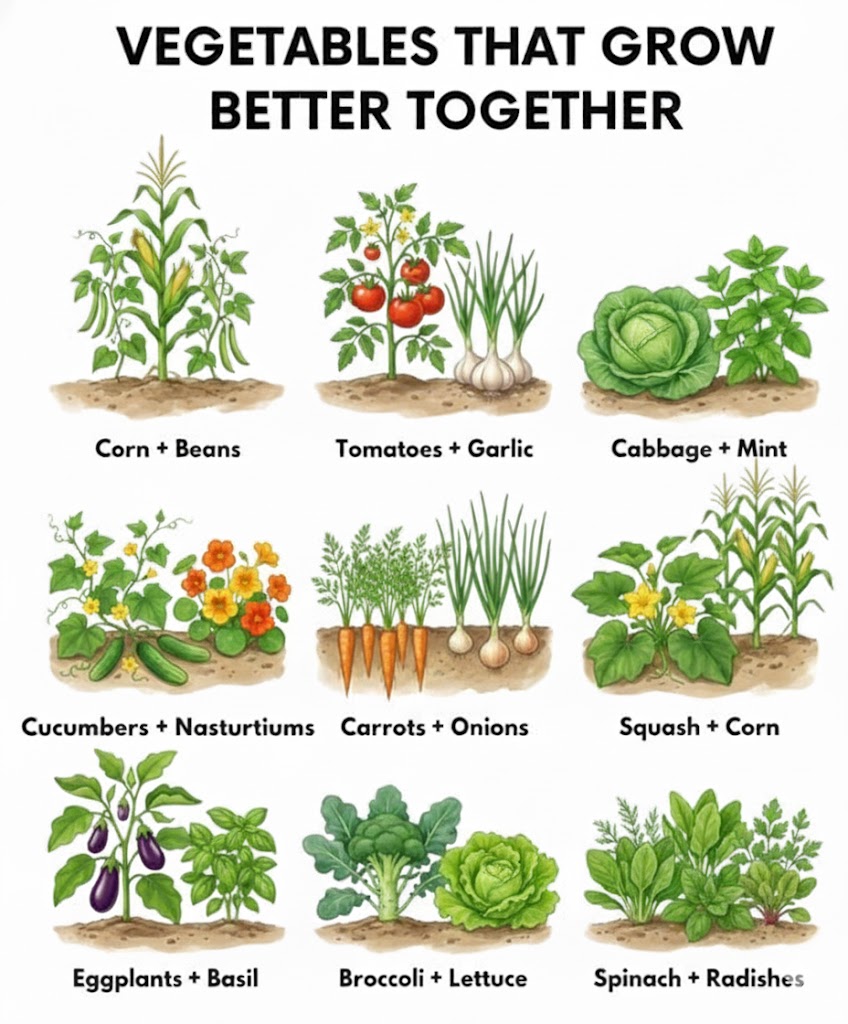
How to Pair Vegetables That Grow Better Together
Here, we break down core planting methods you can use immediately. Once you learn the patterns, you’ll be able to design successful combinations confidently.
Step 1: Understand plant families
Plants in the same family often suffer from the same pests. Avoid clustering too many together.
Common families:
- Nightshades: tomatoes, peppers, eggplant
- Brassicas: cabbage, broccoli, kale
- Legumes: beans, peas
- Cucurbits: cucumbers, squash, zucchini
Step 2: Identify complementary needs
Pair vegetables with matching watering, soil, and sun preferences. Avoid pairing plants that compete for identical nutrients.
Step 3: Match function
Plants can complement each other through specific ecosystem roles.
Examples:
- Nitrogen fixers supply nutrients
- Aromatic herbs repel pests
- Tall plants provide shade
- Ground cover prevents weeds
Step 4: Try these classic combinations
These tried-and-true partnerships are beginner-friendly and highly effective.
Tomatoes + Basil + Marigolds
- Basil enhances tomato flavor and repels pests
- Marigolds deter root nematodes
Corn + Beans + Squash (The Three Sisters)
- Beans fix nitrogen for corn
- Corn acts as a pole for climbing beans
- Squash shades soil to prevent weeds
Carrots + Onions
- Onion scent repels carrot flies
- Carrots aerate the soil
Advanced Pairing Strategies and Creative Garden Combinations
Once you grasp the foundation, companion planting becomes an exciting design process. You can experiment with arrangements and layering for maximum harvests.
Use vertical and horizontal layers
This increases space efficiency and reduces competition.
Example layers:
- Tall crop: corn
- Middle crop: peppers
- Ground cover: squash
Rotate plant families each season
This maintains soil health and prevents pest buildup. When you rotate companions, beneficial microbes stay balanced.
Intercropping for soil enrichment
Plant legumes among heavy feeders (tomatoes, cabbage) to restore nitrogen. You’ll notice greener leaves and stronger stems.
Aromatic herbs as protectors
These herbs confuse insects and mask plant scents:
- Parsley
- Dill
- Mint
- Sage
Plant herbs along borders to form a living pest shield.
Troubleshooting: Why Some Vegetables Don’t Grow Well Together
Even natural systems can clash. Some vegetables simply compete or attract harmful pests to each other.
Common planting mistakes
- Pairing crops with similar nutrient needs
- Overcrowding plants too closely
- Ignoring sun exposure differences
- Planting incompatible families together
Pairings to avoid
These combinations often struggle or attract pests.
- Beans + Onions
- Tomatoes + Potatoes
- Cucumbers + Aromatic herbs like sage
- Peppers + Fennel
Preventing challenges
- Give plants enough root space
- Monitor soil moisture consistency
- Space out strong feeders
- Research each crop before pairing
Maximizing Results With Smart Companion Planting
Smart companion planting creates long-term balance in your garden.
Use successions for continuous harvesting
After quick growers like radishes finish, plant lettuce or carrots in their place.
Feed the soil naturally
Companion planting reduces fertilizer use. Add compost, mulch, and green manure crops to support soil life.
Encourage beneficial insects
Plant flowers among vegetables to attract pollinators. This increases yields for squash, cucumbers, tomatoes, and peppers.
Combine containers and raised beds
You can practice companion planting even in small spaces. Try pots grouped together to create micro-ecosystems.
Classic Vegetables That Grow Better Together (Featured Snippet Section)
Below is a simplified list of vegetables that grow better together for quick reference:
- Tomatoes with basil, onions, carrots
- Carrots with onions or leeks
- Peas with lettuce or carrots
- Lettuce with radishes or cucumbers
- Squash with beans and corn
- Beets with cabbage family crops
- Spinach with strawberries
These partnerships build healthier soil and reduce pests naturally.
Internal Linking Topic Suggestions
These topics can link well with this article:
- How to build raised garden beds
- Organic pest control methods
- Beginner gardening mistakes to avoid
- Composting for soil health
- How to extend your growing season
Conclusion
You’ve now learned how vegetables that grow better together can transform your garden into a thriving, interconnected ecosystem. By using companion planting strategies, you can improve soil health, boost yields, save garden space, and reduce pests naturally. Remember, gardening is a partnership with nature.
Start small, observe what works in your climate, and experiment with combinations. Each season offers new lessons and new successes. With every pairing you plant intentionally, you’re strengthening a resilient garden rooted in collaboration.
Now go outside, get your hands in the soil, and let your garden grow into something extraordinary.