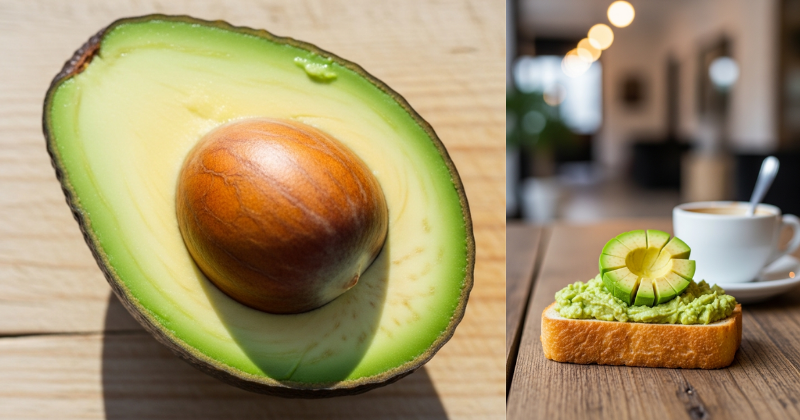
Learn exactly when to eat an avocado to enjoy peak ripeness. Discover the best time of day for digestion and how to ripen avocados quickly for your next meal today.
Have you ever sliced into a beautiful-looking avocado only to find a hard, rubbery interior or, even worse, a brown, stringy mess? It is a frustration shared by food lovers everywhere. The window of perfection for this creamy superfood seems incredibly small, but mastering the timing is easier than you think. Knowing when to eat an avocado is the secret to unlocking its rich flavor and heart-healthy benefits.
In this guide, we are going to transform your relationship with this green fruit. You will discover the physical signs of peak ripeness, the optimal time of day for your body to process those healthy fats, and how to manipulate the ripening process at home. You have the capability to stop wasting money on bruised produce and start enjoying perfect guacamole every single time. Let’s dive into the science and art of avocado timing!
Foundation: Identifying the Perfect Ripeness
Before you decide which meal to add it to, you must build confidence in your ability to choose a ready-to-eat fruit. Many beginners hesitate at the grocery store, unsure of what they are looking for.
The Gentle Pressure Test
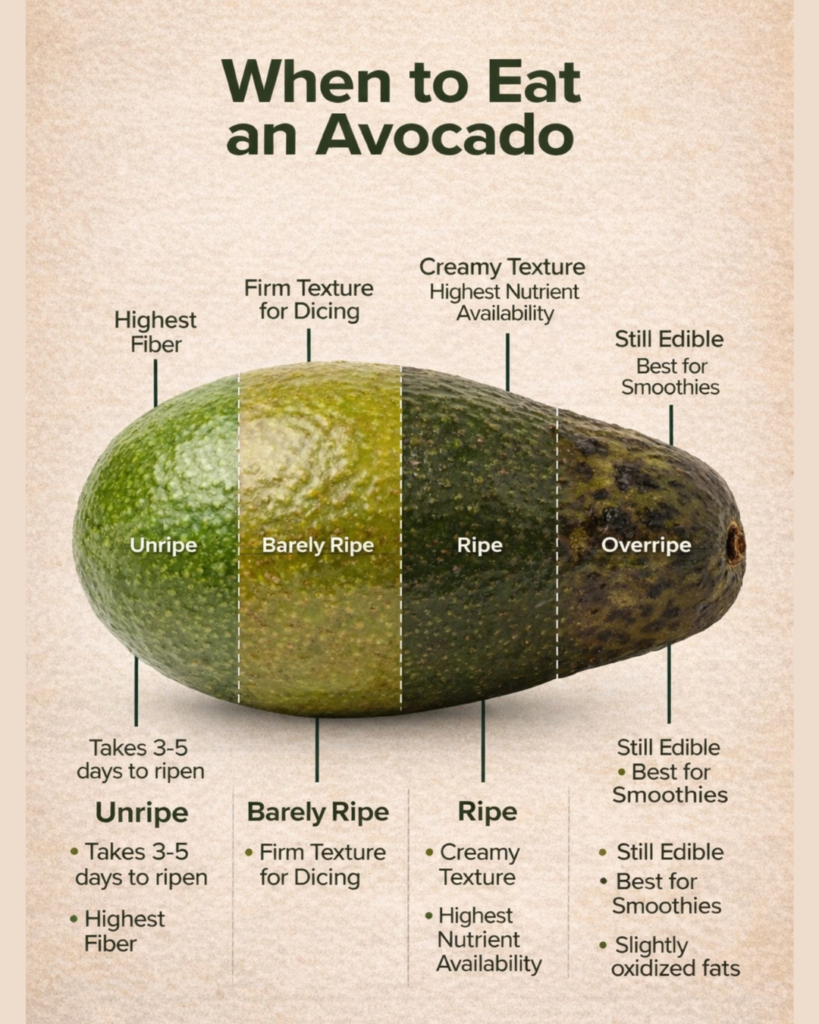
The most reliable way to tell when to eat an avocado is through touch. Place the avocado in the palm of your hand and squeeze gently with your fingers.
- Hard as a rock: It needs 4–5 more days.
- Slight give: It is “breaking” and will be ready in 1–2 days.
- Soft but firm: This is the “Goldilocks” zone—perfect for slicing or mashing.
- Mushy or indented: It is likely overripe and brown inside.
The “Stem Peek” Hack
If you are still unsure, look at the small stem (the cap) at the top. Flick it off with your fingernail. If the area underneath is bright green, the avocado is ready. If it’s brown, it’s past its prime. If the stem won’t come off at all, it’s still too early to enjoy. This simple [home DIY tip for foodies] saves you from the “cut-and-regret” cycle.
Why Quality Matters
Selecting the right avocado isn’t just about taste; it’s about nutrition. A perfectly ripe avocado has reached its peak concentration of oleic acid and carotenoids. If you’ve been working on [sustainable lifestyle changes] like eating more whole, plant-based foods, getting the most out of your produce is essential for your success.
Step-by-Step: How to Time Your Avocado Consumption
Knowing when to eat an avocado also involves timing your meals to maximize energy and digestion. Follow these steps to integrate avocados into your daily routine.
1. Morning Energy Boost
Avocados are packed with healthy fats and fiber, making them an incredible breakfast addition.
- The Step: Replace your morning butter or sugary jam with mashed avocado on whole-grain toast.
- The Benefit: The slow-burning fats provide sustained energy, helping you avoid the mid-morning crash that often follows high-carb breakfasts.
2. Pre-Workout Fuel
If you are planning a workout, timing is everything.
- The Timing: Eat a small portion of avocado about 60–90 minutes before your exercise.
- Why it works: Unlike quick sugars, the monounsaturated fats in avocados provide a steady stream of fuel for longer endurance sessions.
3. The Evening Satiety Hack
Including avocado in your dinner can prevent late-night snacking.
- The Action: Add half an avocado to your evening salad or taco bowl.
- The Result: The high fiber content signals to your brain that you are full, supporting [weight loss goals] and helping you wake up feeling lighter.
Advanced Strategies: Controlling the Ripening Process
Sometimes you buy an avocado for a specific event, only to find it’s not cooperating. Share these expert-level insights to take total control of the timeline.
The Paper Bag Method (Fast-Forward)
If you need an avocado ready in 24 hours, place it in a brown paper bag with an apple or a banana. These fruits release ethylene gas, a natural ripening agent. Fold the top of the bag to trap the gas. This is a classic [kitchen DIY shortcut] that works every time.
The Refrigerator Trick (Pause Button)
If your avocado is perfectly ripe but you aren’t ready to eat it yet, move it to the refrigerator immediately. The cold temperature slows down the metabolic process of the fruit, giving you an extra 2–3 days of peak ripeness.
Creative Storage for Leftovers
Once cut, avocados oxidize (turn brown) quickly. You can share expert-level insights by explaining how to store the half with the pit still in. Squeeze a bit of lemon or lime juice over the surface and wrap it tightly in plastic wrap, ensuring no air bubbles are present. This prevents the chemical reaction between oxygen and the enzymes in the fruit.
Troubleshooting: Common Avocado Challenges
Even with careful planning, things can go wrong. Here is how to handle frequent obstacles with encouragement.
“I cut it too early and it’s hard!”
- The Solution: Don’t throw it away! You can actually “cook” an underripe avocado. Grate it into a salad or sauté slices in a pan with a little olive oil. The heat softens the texture, making it palatable.
- Alternative Approach: You can also blend a hard avocado into a smoothie with a handful of spinach and a banana. You’ll still get all the [wellness benefits] without the rubbery texture.
“There are black spots or strings inside.”
- The Fix: Small brown spots are usually just bruising and are safe to eat, though they may taste slightly bitter. If the fruit is mostly brown or smells fermented, it is better to compost it.
- Preventive Measure: Always store avocados away from high-traffic areas on your counter where they might get bumped or dropped.
“My avocado is ripening too unevenly.”
- The Adjustment: This often happens in very cold kitchens. Try moving your avocado to a warmer spot, like on top of the refrigerator, to encourage a more uniform ripening process.
Maximizing Results: Avocado and Long-Term Health
To build upon your success, view the avocado as a foundational part of a vibrant, healthy diet.
Nutritional Synergies
Avocados are “nutrient boosters.” Many vitamins, such as Vitamin A, D, E, and K, are fat-soluble, meaning your body needs fat to absorb them. By eating avocado with your carrots or kale, you are actually increasing the amount of nutrition your body receives from those vegetables. It’s a [simple wellness strategy] with massive rewards.
Maintenance of the Fruit
If you find yourself buying avocados frequently, consider the variety. Hass avocados are the most common and have a high fat content, while Florida avocados are larger and lower in fat. Depending on your [nutritional goals], you might prefer one over the other.
Featured Snippet: When is the best time to eat an avocado?
The best time to eat an avocado is when it is slightly soft to a gentle squeeze and the skin has turned a dark green or nearly black color. For nutritional benefits, eating an avocado in the morning or at lunch provides sustained energy and helps you stay full longer. To check for ripeness at the store, flick off the small stem; if it’s green underneath, it’s ready to eat.
Conclusion
Mastering when to eat an avocado is an achievable skill that elevates your daily meals and supports your long-term health. You have discovered that you have the capability to succeed by using your senses—touch, sight, and even a little bit of chemistry. By timing your purchase and your consumption, you achieve a level of kitchen confidence that saves money and reduces food waste.
You’ve got this! Start by checking the stem on that avocado sitting in your fruit bowl right now. Whether you are prepping for a morning workout or a cozy dinner, the perfect avocado is waiting for you.