
That persistent musty odor infiltrating your living space can feel like an invisible intruder, subtly compromising your home’s atmosphere even when thorough inspections reveal no mold growth. Understanding why your house smells musty without visible mold opens a pathway to reclaiming the fresh, inviting environment you deserve. This mysterious scent, reminiscent of damp earth and forgotten spaces, often stems from overlooked sources that have nothing to do with fungal colonization yet create similarly unwelcome aromatic experiences.
The Chemistry Behind Musty Odors
Musty smells emerge from a complex orchestration of volatile organic compounds (VOCs) released through various environmental processes. These molecular messengers travel through your home’s air, triggering olfactory responses that signal something requires attention.
Understanding Microvolt Organic Compound Release
The characteristic musty scent typically involves compounds called geosmin and 2-methylisoborneol, both produced by bacteria and actinomycetes thriving in damp environments. These microorganisms flourish in moisture without requiring mold’s presence, creating earthy, basement-like aromas that permeate fabrics, walls, and ventilation systems.
Even when mold testing reveals clean results, bacterial populations in hidden moisture pockets generate these distinctive odor molecules. Your nose detects geosmin at concentrations as low as five parts per trillion, making it remarkably sensitive to even minimal bacterial activity.
The Moisture-Odor Connection
Humidity levels above 60% create ideal conditions for odor-producing bacteria while simultaneously causing building materials to release their own aromatic compounds. Wood, drywall, insulation, and adhesives all contain organic materials that, when repeatedly exposed to moisture cycles, begin breaking down and emitting musty volatiles.
This degradation process happens gradually, often imperceptibly, until accumulated compounds reach noticeable concentrations. Your home essentially exhales the story of its moisture history through these persistent scents.
Hidden Sources of Musty Smells Without Mold
Discovering the origin of mysterious odors requires detective work through your home’s less-traveled territories and forgotten corners.
The HVAC System’s Secret Life
Your heating, ventilation, and air conditioning system functions as your home’s respiratory network, and like human lungs, it can harbor unwelcome passengers. Dust accumulation in ductwork combines with condensation from temperature differentials, creating bacterial breeding grounds that distribute musty odors throughout every room.
Air conditioning coils develop biofilm layers where bacteria thrive in perpetual darkness and moisture. These invisible colonies release odor compounds directly into your conditioned air stream, ensuring comprehensive distribution of mustiness regardless of the smell’s localized origin.
Dirty air filters compound the problem by restricting airflow, increasing condensation, and trapping organic particles that become bacterial fuel sources. The filter itself transforms into an odor generator rather than maintaining its protective function.
Fabric Memory and Moisture Absorption
Textiles possess remarkable capacity to absorb and retain both moisture and odors, creating long-lasting aromatic problems even after the original moisture source disappears. Carpets, upholstery, curtains, and bedding act as three-dimensional storage systems for volatile compounds.
That musty smell embedded in your favorite couch may represent months or years of humidity exposure, cooking odors, pet dander, and environmental dust compressed into fibers. The fabric doesn’t merely trap these elements—it provides surfaces where bacteria can establish communities, continuously generating fresh waves of musty compounds.
Mattresses deserve particular attention as they absorb body moisture nightly while remaining largely unventilated. A standard mattress can contain millions of dust mites whose waste products contribute significantly to musty bedroom odors, despite having nothing to do with mold.
The Forgotten Basement and Crawlspace Chronicles
Below-grade spaces maintain naturally higher humidity due to their proximity to groundwater and reduced air circulation. Even homes without active water intrusion experience moisture migration through concrete foundations, a process called vapor transmission.
This continuous moisture supply supports bacterial populations in soil, wooden structural elements, stored items, and insulation materials. The musty odor you detect upstairs often originates from these subterranean realms, traveling through floor gaps, utility penetrations, and HVAC returns.
Crawlspaces with exposed dirt floors essentially invite the earth’s natural mustiness directly into your home’s environment. That primordial, damp soil aroma represents countless bacteria processing organic matter—a normal outdoor process that becomes problematic when occurring beneath your living space.
Appliance Moisture Traps
Modern appliances paradoxically create moisture problems while providing convenience. Front-loading washing machines develop notorious rubber gasket odors where water pools between wash cycles, fostering bacterial growth that produces intensely musty smells transferring to supposedly clean laundry.
Dishwashers accumulate food particles in filters and drain assemblies, creating organic slurries that ferment between cycles. The combination of warmth, moisture, and food residue creates optimal conditions for odor-producing bacteria.
Refrigerator drip pans, designed to collect condensation from defrost cycles, often sit forgotten beneath units for years. These shallow reservoirs become bacterial ecosystems generating surprising odor intensity relative to their modest size.
Strategic Solutions for Eliminating Mysterious Mustiness
Transforming your home’s aromatic profile requires systematic intervention addressing both existing odors and their underlying moisture sources.
Mastering Indoor Humidity Control
Maintaining indoor relative humidity between 30-50% fundamentally disrupts bacterial odor production while protecting building materials from moisture damage. Achieving this balance requires understanding your home’s specific moisture dynamics and implementing appropriate control strategies.
Dehumidifiers function as workhorses in moisture management, actively removing water vapor from air before it condenses on surfaces or saturates materials. Place units strategically in basements, laundry rooms, and other high-humidity zones, emptying collection tanks regularly or connecting continuous drainage when possible.
Exhaust fans in bathrooms and kitchens serve critical roles by immediately evacuating moisture-laden air before it disperses throughout your home. Run bathroom fans during showers and for 20-30 minutes afterward, ensuring steamy air exits rather than settling into walls and cabinets.
Deep Cleaning Beyond Surface Appearances
Surface cleaning addresses visible dirt while leaving odor sources untouched in hidden layers. Comprehensive odor elimination demands deeper intervention targeting the three-dimensional nature of fabrics and porous materials.
Steam cleaning carpets and upholstery penetrates fibers, heating embedded bacteria to lethal temperatures while flushing odor compounds toward extraction. Follow professional cleaning with thorough drying using fans and dehumidifiers, preventing residual moisture from creating new bacterial populations.
Washing machine maintenance involves monthly cleaning cycles using hot water and specialized cleaning products designed to dissolve biofilm accumulations in hoses, pumps, and gaskets. Leave the door open between uses, allowing interior surfaces to dry completely.
HVAC system cleaning by professionals removes years of accumulated dust, debris, and biofilm from ductwork and components. This investment dramatically improves air quality while eliminating a major odor distribution network.
Material Replacement When Necessary
Some materials reach saturation points where cleaning cannot eliminate embedded odors. Carpet padding, in particular, acts as permanent moisture sponge once compromised, requiring replacement rather than remediation.
Mattresses older than eight years often harbor sufficient dust mite populations and absorbed moisture to generate persistent odors regardless of cleaning efforts. Modern mattress encasements prevent future moisture absorption and mite colonization, protecting your investment.
Basement insulation exposed to repeated moisture events loses both insulating value and becomes permanent odor generator. Replacing compromised insulation while addressing moisture sources resolves problems definitively rather than temporarily masking symptoms.
Prevention Strategies for Long-Term Freshness
Maintaining a fresh-smelling home requires ongoing attention to moisture sources and circulation patterns rather than periodic intervention.
Ventilation as Lifestyle Practice
Fresh air circulation prevents stagnant conditions where bacteria thrive. Opening windows during mild weather creates cross-ventilation that exchanges indoor air, reducing humidity and dispersing odor compounds before they accumulate to noticeable concentrations.
Ceiling fans promote constant air movement, preventing moisture from settling on surfaces and creating bacterial growth sites. Running fans on low settings continuously costs minimal energy while providing substantial freshness benefits.
Monitoring and Early Intervention
Inexpensive hygrometers placed in various rooms provide real-time humidity feedback, alerting you to conditions requiring adjustment before odor problems develop. Humidity spikes above 60% warrant immediate dehumidifier activation or increased ventilation.
Regular inspection routines for appliances, HVAC components, and below-grade spaces allow early detection of moisture issues. Monthly five-minute walkthroughs with attention to unusual smells, visible condensation, or material degradation prevent minor concerns from becoming pervasive problems.
Natural Odor Absorption and Air Purification
Activated charcoal and baking soda passively absorb odor molecules and excess moisture, providing gentle ongoing freshness maintenance. Place open containers in closets, basements, and near odor-prone appliances, refreshing monthly for continued effectiveness.
Air purifiers with HEPA and activated carbon filters mechanically remove both particulates and gaseous compounds, including musty VOCs. These devices complement humidity control by addressing odor molecules already present in air while moisture management prevents new generation.
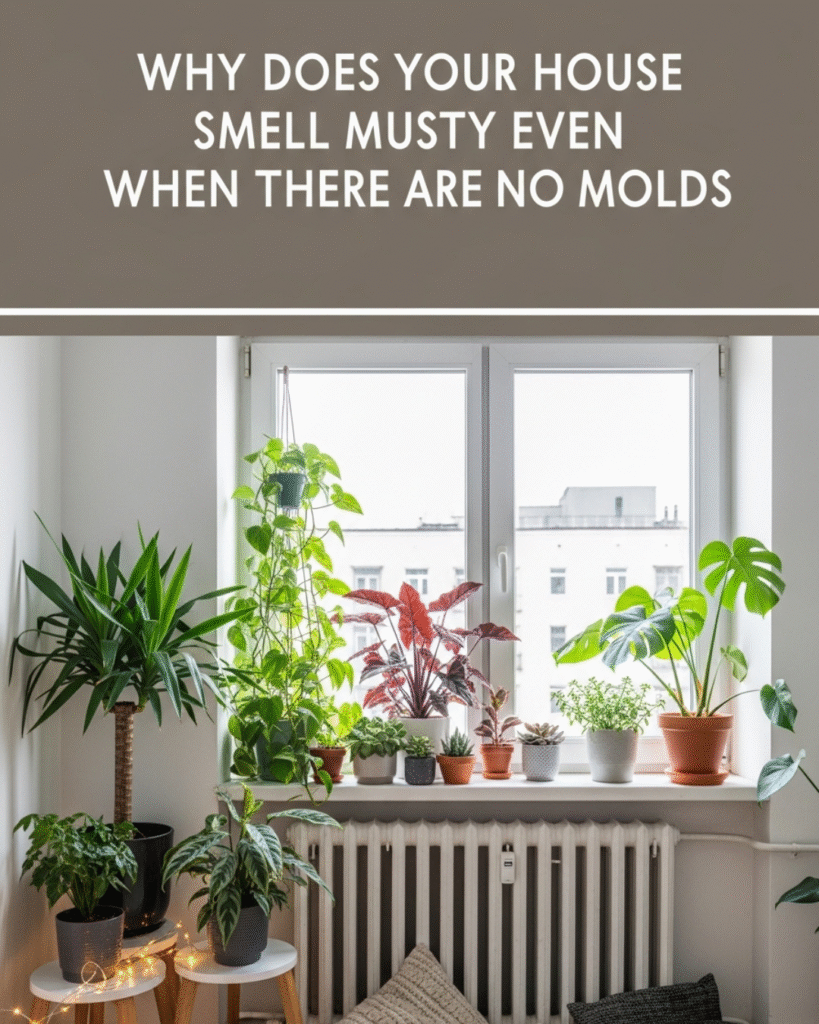
Houseplants contribute modest air purification while signaling humidity problems through their responses. Overly moist conditions promote fungus gnats around plants, while excessive dryness causes leaf browning—both serving as natural environmental indicators.
Seasonal Considerations and Regional Adaptations
Climate patterns significantly influence indoor mustiness, requiring adapted approaches throughout the year.
Humid summer months challenge even well-maintained homes with moisture infiltration. Continuous dehumidifier operation during peak humidity seasons prevents accumulation that causes persistent fall and winter odors. Air conditioning naturally dehumidifies while cooling, though supplemental dehumidification may prove necessary in extremely humid climates.
Winter heating paradoxically creates moisture problems in cold climates through condensation on cold surfaces. Proper insulation and vapor barriers prevent warm, moist indoor air from contacting cold exterior walls where condensation spawns bacterial growth.
Transitional seasons benefit from aggressive ventilation, flushing accumulated indoor air while outdoor temperatures remain comfortable. These windows of opportunity provide natural freshness boosts requiring no energy expenditure beyond opening windows strategically.
Musty home odors without mold presence represent solvable challenges rather than permanent conditions. By understanding the bacterial and moisture dynamics creating these unwelcome scents, you can implement targeted solutions that transform your indoor environment. The journey from musty to fresh requires patience and systematic attention to hidden moisture sources, but the reward—a home that welcomes you with clean, inviting air—makes every effort worthwhile. Your living space deserves to smell as good as it looks, and with these strategies, you hold the power to make that vision a reality.