
Bad breath can be embarrassing and frustrating—especially when it doesn’t go away even after brushing your teeth or using mouthwash. While occasional bad breath is common, persistent bad breath may indicate underlying issues related to oral hygiene, diet, or overall health.
Understanding the hidden causes of bad breath can help you address the root of the problem instead of just masking the odor.
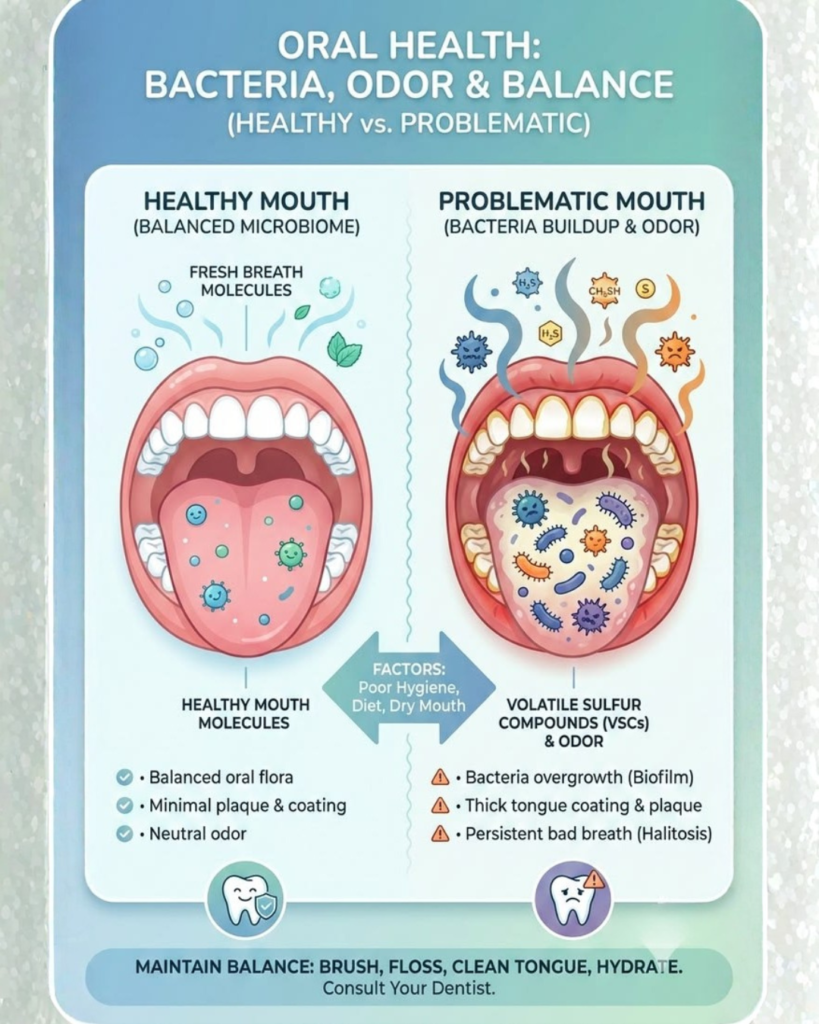
What Is Chronic Bad Breath?
Chronic bad breath, sometimes called persistent oral odor, occurs when unpleasant breath continues despite normal oral care routines.
This condition can be influenced by factors such as:
- Bacteria in the mouth
- Dry mouth
- Diet and digestion
- Gum health
- Lifestyle habits
In many cases, identifying the cause can significantly improve breath freshness.
1. Bacteria on the Tongue
The tongue’s rough surface can trap bacteria, food particles, and dead cells. These bacteria break down proteins and release sulfur compounds, which often cause unpleasant breath.
Signs
- White or yellow coating on the tongue
- Persistent bad taste in the mouth
What helps
- Gently brushing the tongue
- Using a tongue scraper
- Staying hydrated
2. Dry Mouth
Saliva plays an important role in washing away bacteria and food particles. When saliva production decreases, bacteria may grow more easily.
Dry mouth can occur due to:
- Dehydration
- Mouth breathing
- Certain medications
- Sleeping with your mouth open
Drinking water regularly and chewing sugar-free gum may help stimulate saliva production.
3. Food Trapped Between Teeth
Even small food particles stuck between teeth can contribute to bad breath as bacteria break them down.
Prevention tips
- Floss daily
- Use interdental brushes
- Rinse the mouth after meals
These habits help remove debris that brushing alone may miss.
4. Gum Problems
Gum inflammation or infection can create pockets where bacteria grow. This may produce persistent unpleasant breath.
Signs of gum problems may include:
- Bleeding gums
- Redness or swelling
- Sensitivity when brushing
Regular dental cleanings and proper oral hygiene can help reduce these risks.
5. Certain Foods
Foods with strong compounds can temporarily affect breath.
Common examples include:
- Garlic
- Onions
- Coffee
- Certain spices
These foods release sulfur compounds that may circulate through the bloodstream and affect breath until fully digested.
6. Digestive Issues
Sometimes bad breath may be related to digestive factors. Conditions affecting digestion may contribute to unusual breath odors.
For example, acid reflux can occasionally allow stomach contents to move upward, which may influence breath odor.
If digestive symptoms occur alongside persistent bad breath, medical advice may be helpful.
7. Smoking and Tobacco
Tobacco use can contribute to bad breath by:
- Drying the mouth
- Increasing bacterial growth
- Affecting gum health
Smoking may also dull the sense of smell, making it harder to notice breath odor.
8. Sinus or Throat Issues
Postnasal drip or sinus infections can sometimes contribute to unpleasant breath.
This happens because mucus and bacteria may accumulate in the throat or nasal passages.
Symptoms may include:
- Nasal congestion
- Thick mucus
- Throat irritation
Treating the underlying issue often helps improve breath.
Simple Habits to Improve Breath
Maintaining good daily habits can help keep breath fresh.
Brush and Floss Regularly
Brush twice a day and floss daily to remove plaque and food particles.
Clean Your Tongue
Using a tongue scraper or gently brushing the tongue can reduce odor-causing bacteria.
Stay Hydrated
Drinking water supports saliva production and helps wash away bacteria.
Eat Crunchy Fruits and Vegetables
Foods like apples and carrots may help naturally clean the teeth and stimulate saliva.
Visit the Dentist Regularly
Routine dental checkups help detect gum issues, cavities, and other oral health problems that may contribute to bad breath.
When to See a Professional
Occasional bad breath is normal, but persistent bad breath may benefit from professional evaluation.
Consider speaking with a dentist or healthcare professional if:
- Bad breath continues despite good oral hygiene
- You experience gum pain or bleeding
- There are signs of infection or severe dryness
Identifying the cause early can help protect both oral and overall health.
Conclusion
Bad breath that won’t go away often has underlying causes beyond simple brushing. Bacteria on the tongue, dry mouth, gum health, diet, and lifestyle habits can all play a role.
By improving daily oral care and paying attention to potential triggers, many people can significantly improve breath freshness and maintain better oral health.