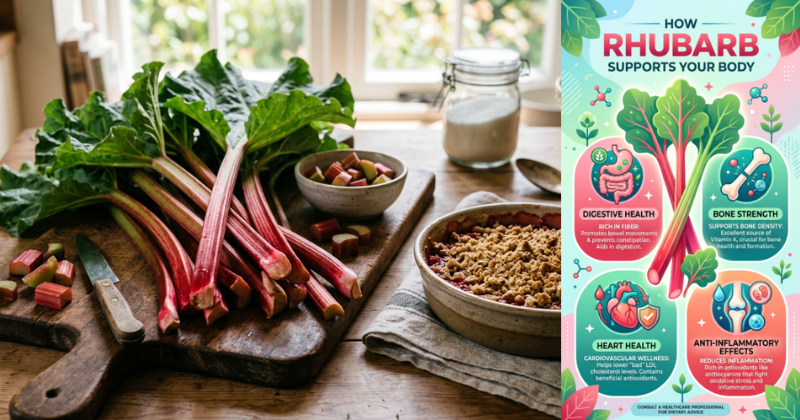
Most people only think of rhubarb when they see it in a strawberry-rhubarb pie or a spring farmers’ market display. Yet this tart, vibrant stalk is far more than a dessert ingredient. Rhubarb has been used for centuries in traditional medicine, and modern research now confirms it offers real, everyday support for digestion, bone health, blood sugar balance, and inflammation control. In this guide you’ll learn exactly how rhubarb supports your body, the key nutrients and compounds responsible, practical ways to add it to your meals safely, and simple recipes you can start using today. Whether you want better gut comfort, stronger bones, or a natural way to ease everyday inflammation, rhubarb is a low-calorie, nutrient-dense food that fits easily into a balanced lifestyle. Best of all, it’s inexpensive, seasonal, and surprisingly versatile once you know how to prepare it.
Nutritional Profile: What Makes Rhubarb Special
One cup (about 122 g) of cooked rhubarb delivers impressive nutrition with almost no calories (just 26 kcal). It provides:
- Vitamin K: Over 45% of the daily value — essential for bone metabolism and blood clotting.
- Vitamin C: About 15–20% of daily needs — supports collagen production and immune function.
- Fiber: 2–3 g per cup — mostly insoluble fiber that promotes regular bowel movements.
- Calcium: A modest but helpful amount that works with vitamin K for bone strength.
- Antioxidants: Anthraquinones, polyphenols, and flavonoids that fight oxidative stress.
These nutrients come packaged in a low-sugar, high-water food, making rhubarb one of the most nutrient-dense options in the produce aisle during spring and early summer.
How Rhubarb Supports Digestion and Gut Health
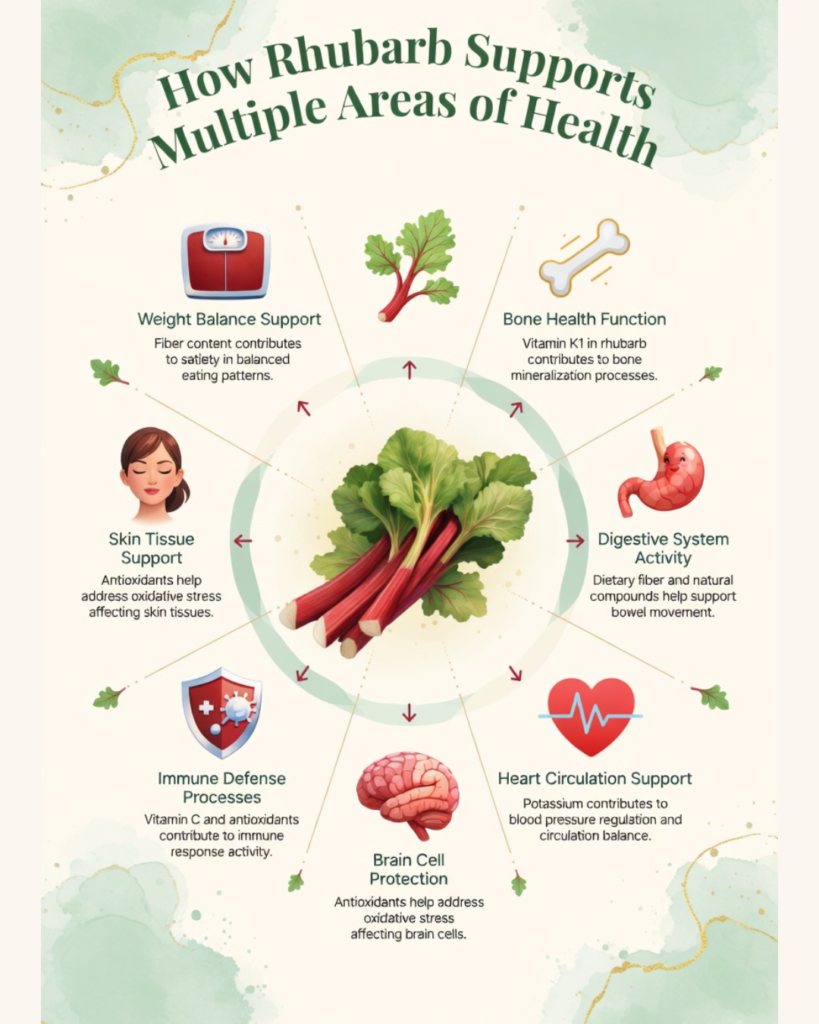
Rhubarb’s high fiber content is its most well-known benefit. The insoluble fiber adds bulk to stool and helps move food through the digestive tract more efficiently. Traditional herbal medicine has used rhubarb for centuries as a gentle laxative, and modern studies support this: the anthraquinones in rhubarb stimulate smooth-muscle contractions in the colon without the harsh effects of synthetic laxatives. A 2021 review in Phytotherapy Research noted that rhubarb extracts improved constipation symptoms in participants within days while also supporting a healthier gut microbiome by feeding beneficial bacteria. For anyone dealing with occasional sluggish digestion or bloating, adding cooked rhubarb a few times a week can provide noticeable relief.
Bone Health and Calcium Absorption
Vitamin K2 (menaquinone) in rhubarb helps direct calcium into bones rather than soft tissues or arteries. When paired with rhubarb’s natural calcium content, this creates a synergistic effect that supports bone density — especially important for women after age 40 when estrogen levels decline. Research published in Osteoporosis International shows that consistent vitamin K intake from food sources like rhubarb is linked to higher bone mineral density and lower fracture risk. Unlike supplements, the natural matrix of rhubarb delivers vitamin K alongside fiber and antioxidants, giving your bones well-rounded support.
Blood Sugar Balance and Metabolic Support
Despite its tart taste, rhubarb has a surprisingly low glycemic impact. The fiber slows sugar absorption, while polyphenols may improve insulin sensitivity. A small human study in Journal of Medicinal Food found that rhubarb extract helped stabilize post-meal blood sugar spikes. For people managing weight or blood sugar concerns, adding rhubarb to meals or snacks can be a smart, low-calorie way to satisfy a sweet tooth without the crash that comes from refined sugars.
Anti-Inflammatory and Antioxidant Effects
Chronic low-grade inflammation contributes to many modern health issues. Rhubarb’s polyphenols and anthraquinones act as natural anti-inflammatory agents. Laboratory and animal studies show these compounds reduce markers of inflammation (such as CRP) and protect cells from oxidative damage. While rhubarb is not a cure-all, regular moderate intake can be part of an overall anti-inflammatory eating pattern that supports joint comfort and long-term wellness.
Heart Health and Cholesterol Management
The fiber in rhubarb binds to bile acids in the gut, prompting the liver to use more cholesterol to make new bile. This process can help lower circulating LDL cholesterol over time. Combined with rhubarb’s potassium content, which supports healthy blood pressure, the stalk offers gentle cardiovascular support. Population studies link higher intake of fiber-rich vegetables like rhubarb to better heart-health markers.
Safe and Practical Ways to Add Rhubarb to Your Diet
Always use only the stalks — the leaves contain high levels of oxalic acid and are toxic. Cooked rhubarb has much lower oxalate levels than raw, making it safer for regular use. Here are easy ways to enjoy it:
- Stewed Rhubarb: Simmer chopped stalks with a splash of water and a touch of honey or maple syrup for a versatile topping.
- Rhubarb in Smoothies: Blend ½ cup cooked rhubarb with banana, spinach, and protein powder.
- Rhubarb Crisp or Crumble: Use almond flour and oats for a lower-sugar version.
- Rhubarb Sauce: Cook with strawberries or apples and spoon over yogurt or oatmeal.
- Savory Twist: Roast rhubarb with olive oil, salt, and herbs to pair with grilled chicken or fish.
Start with ½–1 cup cooked rhubarb 3–4 times per week and see how your body responds.
Common Mistakes and Important Cautions
- Eating the leaves (toxic — always discard them).
- Over-consuming raw rhubarb (high oxalates can irritate kidneys or contribute to stones in susceptible people).
- Adding too much sugar (defeats the low-calorie benefit).
- Ignoring portion size if you have kidney issues or take blood-thinning medication (vitamin K can interact).
If you have kidney disease, gout, or are on certain medications, check with your doctor before adding rhubarb regularly.
Simple 7-Day Starter Plan
Days 1–3: Add ½ cup stewed rhubarb to breakfast yogurt or oatmeal. Days 4–7: Include rhubarb in one savory or sweet meal daily (smoothie, sauce, or roasted side). Track energy, digestion, and how your skin looks after one week.
Conclusion: Rhubarb Is a Simple, Powerful Addition to Your Plate
Rhubarb supports your body in practical, everyday ways — better digestion, stronger bones, steadier blood sugar, reduced inflammation, and gentle heart-health support — all while adding bright flavor and almost no calories. Its unique combination of fiber, vitamin K, and antioxidants makes it a smart seasonal choice that fits easily into real life. Start with one small serving of cooked rhubarb this week and notice how your energy, digestion, and overall comfort improve. Your body will thank you for this simple, natural upgrade. Save this guide, share it with friends who love fresh, seasonal eating, and enjoy the quiet power of rhubarb working for your wellness every day.