
A burning pain in your upper abdomen that worsens on an empty stomach, bloating, nausea, or that constant “gnawing” feeling after meals — these are classic signs of a peptic ulcer, a condition that affects millions of people worldwide. While many reach for antacids or prescription medications, more people are turning to supportive natural strategies to help their body heal alongside conventional care. In this guide, you’ll learn what peptic ulcers really are, the most common causes and symptoms, the science behind natural support, practical daily remedies you can start today, lifestyle changes that make a real difference, and important safety guidelines. These evidence-based tips focus on gentle, food-first approaches that may ease discomfort, support healing, and help prevent recurrence — all while working safely with your doctor’s guidance. No extreme diets or unproven cures — just realistic, practical strategies rooted in wellness science.
What Is a Peptic Ulcer and Why Does It Happen?
A peptic ulcer is an open sore that forms on the inner lining of the stomach or the upper part of the small intestine (duodenum). The two main types are gastric ulcers (in the stomach) and duodenal ulcers (in the duodenum). Normally, a thick layer of mucus protects the digestive tract from the strong acids that break down food. When this protective barrier weakens, acid can erode the lining and create an ulcer.
The most common triggers are:
- Infection with Helicobacter pylori (H. pylori) bacteria
- Long-term use of nonsteroidal anti-inflammatory drugs (NSAIDs) like ibuprofen or aspirin
- Excessive stomach acid production
Stress, smoking, alcohol, and spicy foods do not directly cause ulcers, but they can worsen symptoms and slow healing. Understanding these root factors is the first step toward effective relief.
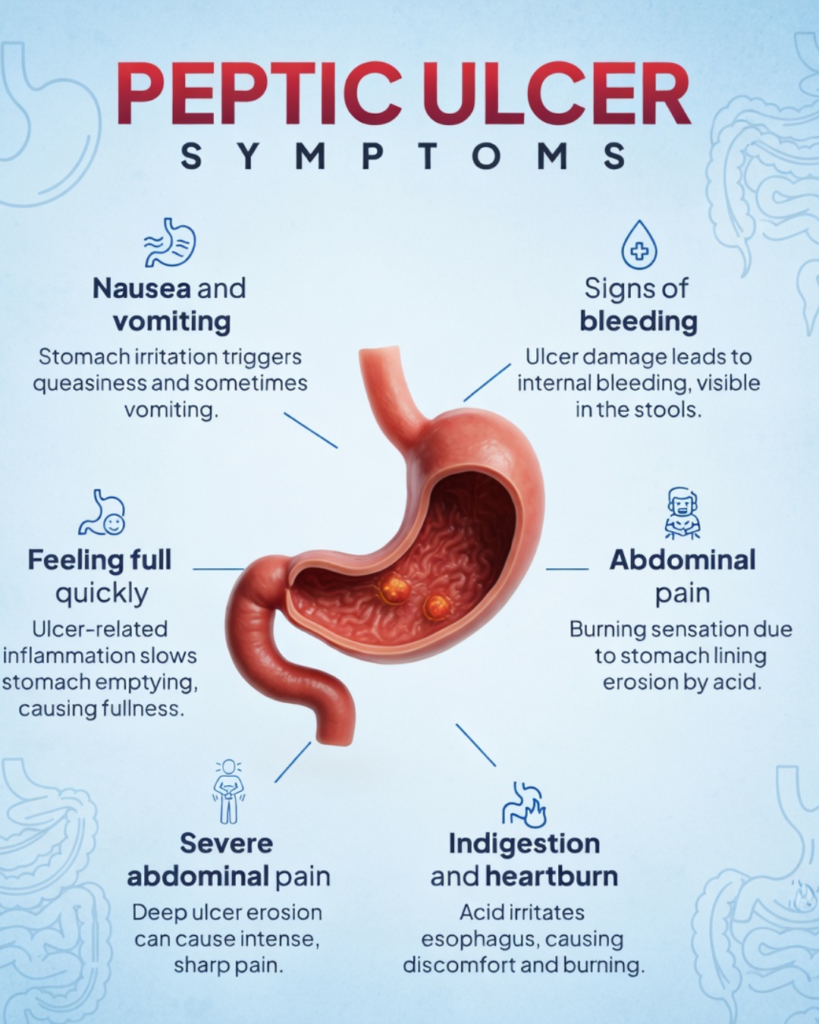
Common Symptoms of Peptic Ulcers
Symptoms can range from mild to severe and often come and go. Watch for:
- Burning or gnawing pain in the upper abdomen (often between meals or at night)
- Bloating, belching, or feeling full quickly
- Nausea or vomiting
- Heartburn or acid reflux
- Dark or tarry stools (a sign of bleeding — seek medical help immediately)
- Unexplained weight loss or fatigue
If you experience severe pain, vomiting blood, or black stools, contact a doctor right away — these can indicate complications like bleeding or perforation.
The Science Behind Natural Support for Peptic Ulcers
Modern research shows that certain foods, herbs, and lifestyle habits can support the body’s natural healing processes. For example:
- Cabbage juice contains compounds that help strengthen the mucosal lining.
- Probiotic-rich foods may help fight H. pylori and restore gut balance.
- Anti-inflammatory herbs like turmeric and licorice root can calm irritation without the side effects of long-term medication.
A 2022 review in Nutrients noted that dietary interventions rich in antioxidants and fiber can reduce inflammation and support mucosal repair when used alongside standard medical treatment. These approaches do not replace antibiotics or acid-suppressing medications prescribed by your doctor — they work as supportive tools to help your body heal faster and feel better.
8 Natural Remedies and Daily Strategies to Support Healing
Here are practical, step-by-step ways to support your body while working with your healthcare provider.
1. Cabbage Juice (Classic Healing Remedy) Cabbage is rich in vitamin U, a compound shown in older clinical studies to help ulcers heal faster. How to make it: Blend ½ head of green cabbage with a little water, strain, and drink ½ cup 2–3 times daily on an empty stomach. Start with small amounts to avoid gas.
2. Probiotic-Rich Foods Yogurt, kefir, sauerkraut, and kimchi introduce beneficial bacteria that may help fight H. pylori. How to use: Eat ½–1 cup plain yogurt or kefir daily, ideally with meals.
3. Manuka Honey Its antibacterial properties may help suppress H. pylori and soothe the stomach lining. How to use: Take 1 teaspoon of Manuka honey (UMF 10+ or higher) 30 minutes before meals, up to 3 times daily.
4. Aloe Vera Juice Aloe soothes inflammation and supports mucosal repair. How to use: Drink 1–2 ounces of pure, inner-leaf aloe vera juice diluted in water, once or twice daily.
5. Turmeric Golden Milk Curcumin in turmeric has strong anti-inflammatory effects. How to make it: Warm 1 cup milk (dairy or plant-based), stir in ½ tsp turmeric, a pinch of black pepper, and a touch of honey. Drink in the evening.
6. Slippery Elm or Marshmallow Root Tea These herbs form a soothing gel that coats the stomach lining. How to make it: Steep 1 tsp of powder in hot water for 10 minutes and sip slowly between meals.
7. Small, Frequent Meals Eating smaller portions every 3–4 hours prevents excess acid buildup. How to do it: Focus on easy-to-digest foods like bananas, oatmeal, steamed vegetables, and lean proteins.
8. Stress-Reduction Practices Chronic stress increases acid production. How to do it: Practice 5–10 minutes of deep breathing or gentle walking daily.
Foods to Eat and Avoid for Better Healing
Eat more: Bananas, oatmeal, cooked vegetables, lean proteins, bone broth, and fermented foods. Limit or avoid: Spicy foods, citrus juices, caffeine, alcohol, chocolate, tomato-based products, and NSAIDs.
Lifestyle Changes That Support Long-Term Relief
- Quit smoking and limit alcohol.
- Manage stress with daily movement or meditation.
- Maintain a healthy weight to reduce pressure on the stomach.
- Work with your doctor for H. pylori testing and appropriate treatment.
When to See a Doctor
Natural approaches are supportive only. Seek medical care immediately if you have severe pain, vomiting blood, black stools, unexplained weight loss, or symptoms that last longer than 2 weeks. Peptic ulcers can lead to serious complications if left untreated.
Conclusion: Support Your Healing Naturally and Safely
Peptic ulcers can be painful and disruptive, but with the right combination of medical care and supportive natural strategies, most people experience significant relief and faster healing. By focusing on soothing foods, gentle herbs, small frequent meals, and stress management, you give your body the environment it needs to repair the digestive lining. Start with one or two remedies this week — perhaps cabbage juice or golden milk — and notice how your symptoms improve. Always work closely with your doctor, especially if you’re on medication. Your digestive system is remarkably resilient, and these practical steps can help you feel better while supporting long-term gut health. Save this guide, share it with anyone dealing with similar symptoms, and take the first step toward lasting comfort and better wellness.