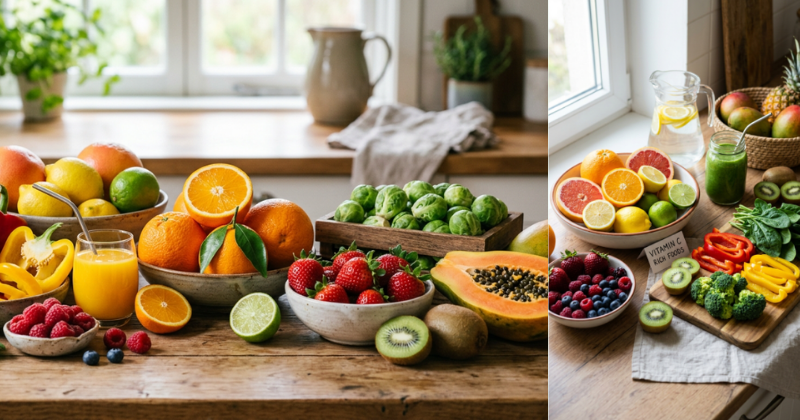
Feeling run down, noticing dull skin, or catching every cold that goes around? You might be low on vitamin C—one of the most powerful nutrients for everyday wellness. Unlike many vitamins, your body can’t make or store vitamin C, so you need a steady supply from food every single day. The good news? Nature provides dozens of delicious, affordable options that deliver far more than supplements ever could.
Vitamin C (ascorbic acid) is a water-soluble antioxidant that supports immunity, collagen production, iron absorption, and even mood stability. In this complete guide you will discover the top vitamin C rich foods, exactly how much each provides, the science-backed benefits, practical ways to add them to your meals, easy recipes that fit the “different foods for different feelings” approach we’ve covered before, and smart tips to preserve every milligram. You’ll also see how these foods slot perfectly into a healthy lifestyle—pairing beautifully with daily walking, magnesium lotion, and your DIY calendula-rosehip face cream for inside-out glow.
Why Vitamin C Matters More Than Ever
The Recommended Dietary Allowance is 75–90 mg daily for adults, yet many people fall short because of processed diets and stress (which burns through vitamin C faster). A 2023 review in the journal Nutrients showed that consistent intake above 100 mg daily reduces cold duration by up to 14 % and supports faster wound healing. Vitamin C also regenerates other antioxidants like vitamin E, protects skin from UV damage, and helps the body produce collagen—the protein that keeps skin firm and joints flexible.
Because it is water-soluble, any excess is simply flushed out, making food sources the safest and most effective way to meet your needs without worry of overdoing it.
Top 12 Vitamin C Rich Foods (With Exact Amounts)
Here are the standout natural sources ranked by vitamin C content per typical serving. All values are approximate and based on raw or lightly cooked portions:
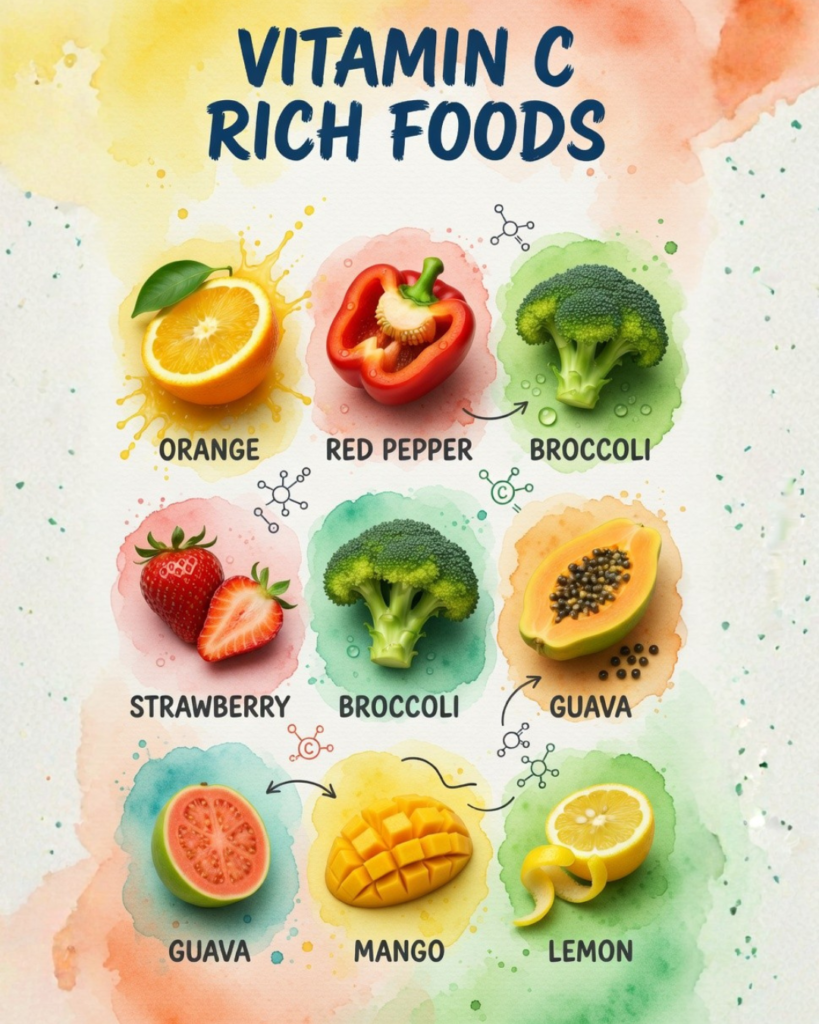
- Red Bell Peppers – 190 mg per medium pepper (more than 200 % of daily needs). They’re sweet, crunchy, and perfect raw in salads or lightly stir-fried.
- Kiwi – 70 mg per single fruit. One kiwi meets nearly your full daily requirement and provides fiber for steady energy.
- Strawberries – 98 mg per cup. These bright berries also deliver mood-lifting antioxidants that pair perfectly with the “foods for different feelings” guide.
- Orange – 70 mg per medium fruit. Classic and portable—eat the whole fruit for extra fiber.
- Broccoli – 81 mg per cup chopped. Steam or roast lightly to keep most of the vitamin intact.
- Kale – 80 mg per cup raw. Massaged with a little lemon juice, it becomes a nutrient-packed salad base.
- Papaya – 88 mg per cup cubed. Its enzymes aid digestion while delivering a tropical vitamin boost.
- Guava – 125 mg per single fruit. One of the highest per piece—sweet, pink-fleshed, and often overlooked.
- Brussels Sprouts – 75 mg per cup roasted. Roasting brings out sweetness without destroying too much vitamin C.
- Pineapple – 79 mg per cup chunks. Bromelain in pineapple helps reduce inflammation.
- Mango – 60 mg per medium fruit. Creamy texture makes it ideal for smoothies.
- Cauliflower – 52 mg per cup raw. Roast or rice it for a low-carb vitamin C side.
Bonus mentions: lemons, limes, grapefruit, and spinach—all easy to squeeze into daily meals.
Science-Backed Benefits of Eating Vitamin C Rich Foods
• Immunity – Vitamin C increases white blood cell production and improves their ability to fight infection. • Glowing Skin – It boosts collagen synthesis and fights free radicals from sun and pollution. Regular intake visibly improves skin elasticity and reduces dark spots—making these foods the perfect natural partner for your calendula-rosehip face cream. • Energy & Mood – By helping absorb iron, vitamin C prevents fatigue. It also supports neurotransmitter production, so strawberries or kiwi can be your go-to “lift you up” foods when feeling low. • Heart & Joint Health – Antioxidants lower inflammation and may help manage cholesterol levels alongside your daily walking habit. • Iron Absorption – Pair vitamin C foods with plant-based iron sources (lentils, spinach) and absorption jumps up to 67 %.
Studies from the American Journal of Clinical Nutrition confirm that people who get vitamin C from whole foods show better long-term blood levels and fewer oxidative stress markers than supplement users.
Easy Ways to Add Vitamin C Rich Foods to Your Daily Routine
Breakfast: Kiwi and strawberry smoothie or orange slices with yogurt. Lunch: Red bell pepper strips in a salad or roasted broccoli on the side. Snack: Guava or papaya chunks—keep pre-cut in the fridge. Dinner: Brussels sprouts or cauliflower roasted with a squeeze of lemon. Dessert: Mango or pineapple for a naturally sweet, mood-boosting treat.
Pro tip: Eat them raw or lightly cooked. Vitamin C is heat-sensitive, so steaming or quick stir-frying preserves more than boiling.
Simple Recipes That Maximize Vitamin C
Immune-Boosting Morning Bowl 1 cup strawberries + 1 kiwi + ½ red bell pepper (chopped) + handful kale. Top with a sprinkle of pumpkin seeds. Ready in 5 minutes and delivers over 250 mg vitamin C.
Glow-from-Within Salad Chopped red bell pepper, broccoli florets, mango cubes, and a lemon-olive oil dressing. Add grilled chicken or chickpeas for protein. This pairs perfectly with your healthy lifestyle walking routine.
Stress-Relief Green Smoothie 1 cup kale + 1 orange (peeled) + ½ cup pineapple + magnesium-rich almond milk. Blend and sip for calm energy.
These recipes tie directly into the mood-supporting foods we discussed earlier and cost pennies compared to supplements.
Tips to Get the Most Vitamin C (And Avoid Common Mistakes)
- Store produce in the fridge and eat within a few days—vitamin C levels drop over time.
- Choose colorful, firm fruits and vegetables; they have the highest content.
- Pair with iron-rich meals for better absorption.
- Avoid overcooking or keeping cut produce in water.
- Don’t rely only on supplements—whole foods deliver fiber, other vitamins, and better absorption.
- Smokers need an extra 35 mg daily because smoking depletes vitamin C faster.
How Vitamin C Fits Your Overall Healthy Lifestyle
These foods work synergistically with everything we’ve covered:
- Add strawberries or kiwi to your “foods for different feelings” when mood dips.
- Use lemon in your magnesium lotion recipes for extra skin-loving benefits.
- Enjoy a vitamin C-rich salad after your one-hour daily walk to support recovery and immunity.
- The natural vitamin C in these foods enhances the collagen-boosting effects of your DIY calendula-rosehip face cream.
Conclusion
Vitamin C rich foods are one of the easiest, most delicious ways to support immunity, radiant skin, steady energy, and overall wellness. By choosing red bell peppers, kiwi, strawberries, broccoli, and the other top sources daily, you give your body the consistent supply it needs—without pills or complicated routines. Start today with just one or two new additions: a red pepper in your lunch or a kiwi as an afternoon snack. In two weeks you’ll likely notice brighter skin, fewer sniffles, and more stable energy.
Small, colorful choices really do create big health wins. Combine these foods with your daily walk, magnesium lotion, natural skincare, and stress-relief habits and you build a truly sustainable healthy lifestyle from the inside out. Your immune system, skin, and energy levels will thank you—one juicy, vitamin-packed bite at a time.